
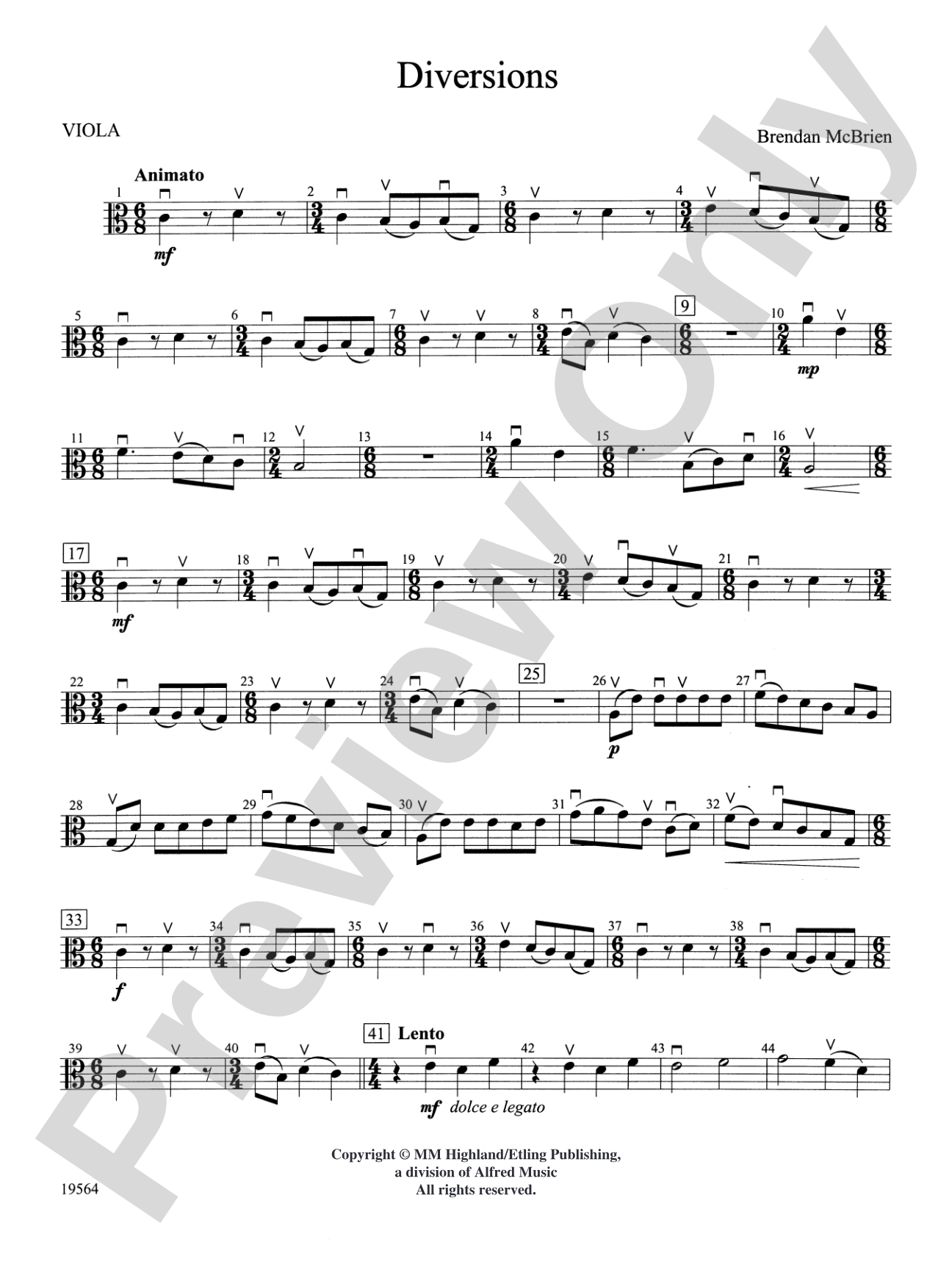

Diversions: Viola
By Brendan McBrien
Grade: 3
Item: 00-PC-0016166_VA1
$5.99
Pickup currently not available
Description
Constantly changing meters and modern harmonies give this piece a contemporary sound not often found in string music for young orchestras. Your students will really take to the rhythmic and driving introductory section and will love the harmonies and mild dissonances of the poignant interlude that follows. Interesting and challenging parts for all sections throughout. Quite different! This title is available in MakeMusic Cloud.


Don't just read it, hear it, play along with it, and watch your students grow with it. In MakeMusic Cloud, Diversions: Viola comes alive with professional accompaniment, adjustable tempo, and built-in practice tools that turn solo practice into real progress.
Open in the Player
Jump straight in and assign it today.
Start Your Free Trial
Open this title and explore the full library in minutes.
Sample Audio
1
Audio File
--:--
0:00
0:00
Sample Video
No sample videos found.
Additional Details
Series:
Highland/Etling String Orchestra
Publisher:
Alfred Music
Page Count:
124
SKU:
00-PC-0016166_VA1
More about this title
About the Composer: Brendan McBrien

Brendan McBrien studied composition and conducting at California State University, Long Beach, where he earned both bachelor's and master's degrees. A French horn player for over 30 years in professional orchestras across Los Angeles and Orange County, he brought his performance experience directly into his work as a composer and arranger. His publications through Alfred, Kendor, Kjos, and Wingert-Jones Music Companies are performed internationally by student and professional ensembles.
McBrien has shaped music education for decades as a middle school director, clinician, and adjudicator. He has taught arranging at California State University, Long Beach, served four terms on the board of the Southern California School Band and Orchestra Association, and earned recognition as Middle School Teacher of the Year from the Irvine Unified School District. His workshop presentations at state and local conventions reflect his commitment to strengthening music instruction at all levels.
Why we love this
McBrien writes for young orchestras with a refreshing ear for what engages middle school players. The opening rhythmic drive hooks students immediately, while the shifting meters and modern harmonies in the interlude stretch their musical thinking without overwhelming them. This is exactly the kind of contemporary piece that shows young string players there is vibrant music being written for their level right now.
What to expect
The piece launches with visceral rhythmic energy that feels urgent and modern, then pivots into a more introspective space where subtle harmonies and mild clashes create emotional texture. The constant meter shifts give the whole work a restless, forward-moving quality that keeps students engaged and listeners intrigued.
Who it's for
Middle school string orchestras seeking substantive contemporary repertoire that challenges musicianship without veering into advanced technical demands. This works equally well for groups preparing contest selections or building a concert program that spans multiple styles.
How to get the most out of it
- Lock the rhythmic precision in the opening section by isolating the meter changes in sectional rehearsals; once players trust the pulse, the driving energy pays off.
- Shape the dynamics through the interlude carefully to let the mild dissonances speak; heavy-handed playing will muddy the harmonic interest.
- Balance all sections evenly throughout since the interesting parts are distributed across the ensemble, not concentrated in the first violins.
- Allow time for players to hear how the changing meters sound in context before expecting clean ensemble execution; tap conducting or scale patterns help bridge the gap between reading and listening.
How to use it
Program this as a centerpiece that balances lighter or more traditional pieces in the same concert; its contemporary voice and contest-festival credentials make it ideal for demonstrations of ensemble maturity and range. The moderate length and interesting orchestration work well alongside standard repertoire without needing a themed program to justify its presence.
Skills your students will build
- Reading and executing constantly changing meters with accuracy
- Intonation in modern harmonic contexts with mild dissonances
- Dynamic control and balance across all sections
- Rhythmic precision and ensemble cohesion in driving, syncopated passages
- Interpreting contemporary compositional techniques and articulation