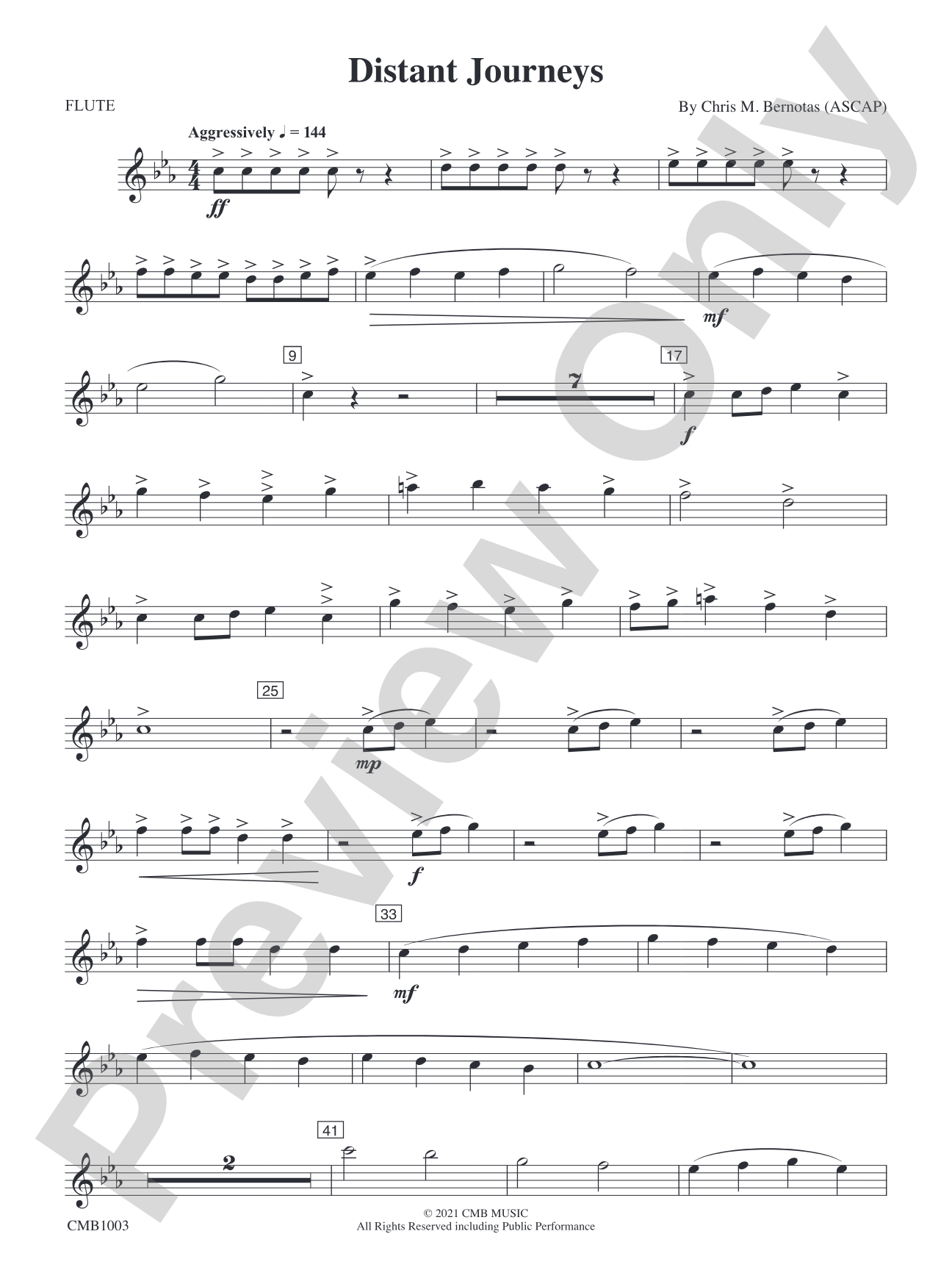
Distant Journeys: Flute Sheet Music Preview

Distant Journeys: Flute

By Chris M. Bernotas

Grade: 1

Item: 00-PC-0018735_F1

Digital Download
$3.00
Description
A strong sense of rhythm, dramatic melodic lines, and tension and release characterize the sound and feel of Distant Journeys by Chris M. Bernotas. The rhythmic nature of this piece gives the sense of traveling and adventure, perhaps through the hot sands of a desert, or through a thick jungle. Let your students use their imagination to create their own journey through this piece. (2:20)

Distant Journeys: Flute isn't in MakeMusic Cloud just yet...but it could be. Let us know you'd like to see it, and you'll help shape what comes next. In the meantime, start a free trial and dive into thousands of interactive titles your students can play along with today.

Sample Audio
1 Audio File --:--
2 Audio File --:--

Audio File

0:00
0:00
Sample Video
Additional Details
Series: Alfred Digital Concert Band
SKU: 00-PC-0018735_F1

More about this title

About the Composer: Chris M. Bernotas

Chris M. Bernotas

Chris M. Bernotas has shaped music education for over 25 years as a composer, conductor, and educator. As Director of Instrumental Publications for Alfred Music, he designs resources that serve band and orchestra programs across the globe, drawing on deep classroom experience to understand what teachers and students actually need.

Bernotas's compositions balance accessibility with genuine musical substance, performed by ensembles ranging from beginning groups to advanced ensembles worldwide. Beyond the page, he remains active as a guest conductor and clinician, leading honor bands and workshops while co-authoring pedagogical resources including Sound Innovations Ensemble Development and Sound Artistry. His work continues to advocate for music education that fosters both technical growth and creative expression.

Why we love this

Bernotas writes Grade 1 music that respects young musicians' intelligence while delivering genuine dramatic arc. The rhythmic propulsion in Distant Journeys gives beginning bands something concrete to lock into, making ensemble cohesion feel achievable rather than aspirational. The programmatic framing invites students to bring interpretive choices to their playing, transforming a concert piece into a storytelling experience.

What to expect

Distant Journeys pulses with forward momentum and discovery. Rhythmic figures suggest footsteps or the hum of travel, while dramatic melodic arcs soar above the texture, creating moments of expansion and moments of intimate focus that keep the listener engaged throughout the journey.

Who it's for

Beginning concert bands ready to move beyond purely technical exercises into pieces with narrative scope and musical direction. Grade 1 ensembles will find accessible ranges and straightforward rhythms alongside parts that demand attention to blend and phrasing.

How to get the most out of it

  • Establish a steady pulse early in rehearsal using the rhythmic figures that drive the piece; this foundation makes the melodic lines sit cleanly on top.
  • Encourage your lead voices to shape the melodic statements with a clear destination, treating each phrase as part of a larger journey rather than isolated moments.
  • Balance the accompaniment so that rhythmic texture supports rather than overwhelms the featured lines; this clarifies the dramatic shape for your audience.
  • Allow some flexibility in tempo transitions to emphasize tension and release, rather than locking to a metronomic pace throughout.

How to use it

Program this as an opener or early main concert selection to establish energy and engagement with your audience. The two-minute-twenty duration and strong dramatic arc make it ideal for contest festivals, and the programmatic nature pairs well with other descriptive works that invite visual imagination.

Skills your students will build

  • Maintaining rhythmic precision in ensemble while executing rhythmic figures that define the piece's character
  • Balancing accompaniment textures to support melodic content
  • Shaping phrases with intention and direction rather than playing note-to-note
  • Responding to dynamic and tempo changes that create dramatic tension and release
  • Coordinate ensemble entries and transitions that support the programmatic narrative

You May Also Like