Disco Inferno (arr. Rogier Ijmker) Sheet Music Preview

Disco Inferno (arr. Rogier Ijmker): SSAAAA Choral Octavo

As performed by The Trammps / Arranged by Rogier Ijmker

Item: 35-DS00487119

Digital Download
$2.99
Description

Disco Inferno (arr. Rogier Ijmker): SSAAAA Choral Octavo isn't in MakeMusic Cloud just yet...but it could be. Let us know you'd like to see it, and you'll help shape what comes next. In the meantime, start a free trial and dive into thousands of interactive titles your students can play along with today.

Sample Audio
No sample audio found.
Sample Video
Additional Details
Publisher: Hal Leonard
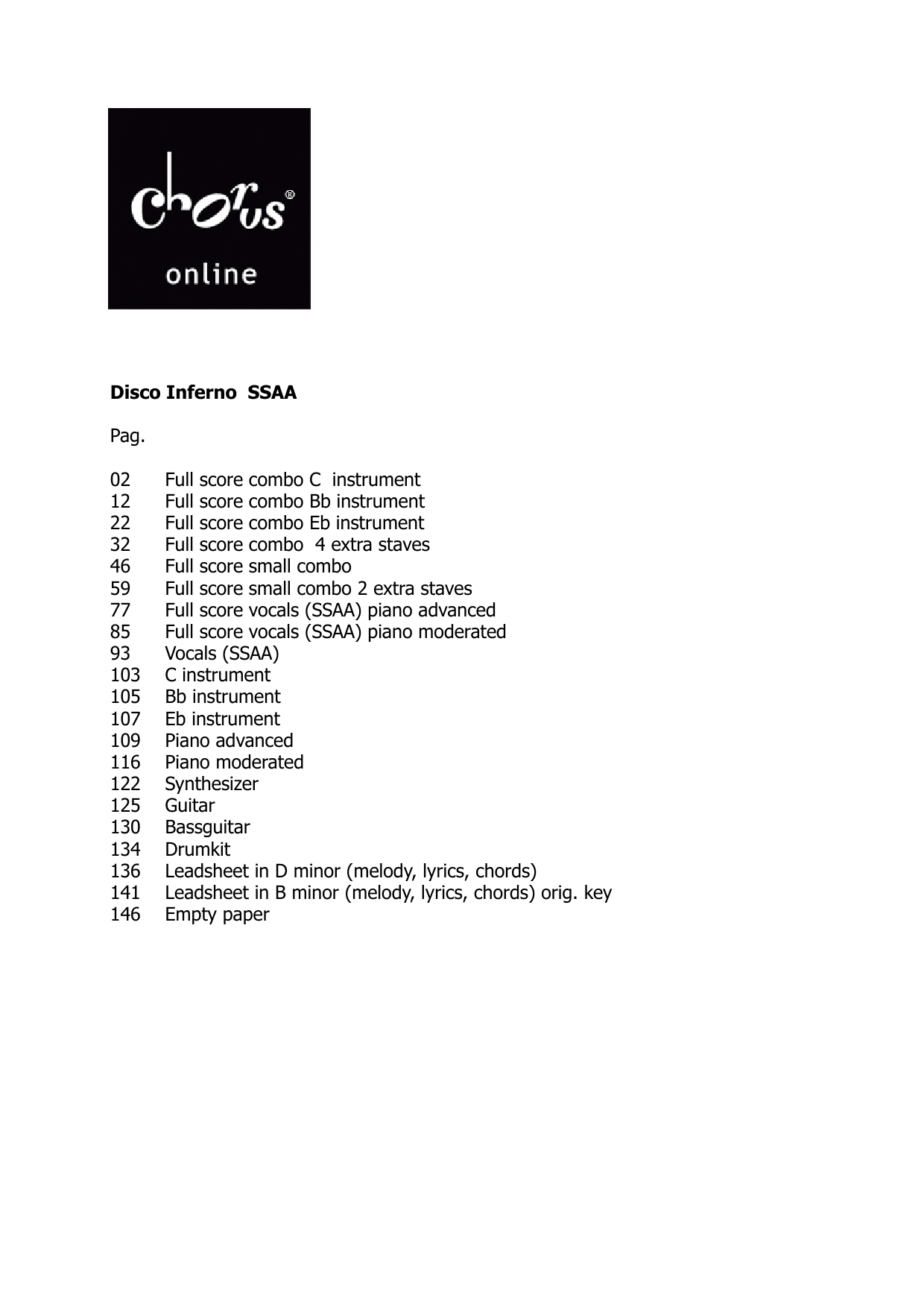
Page Count: 148
SKU: 35-DS00487119

More about this title

About the Artist: The Trammps

The Trammps emerged from Philadelphia in the early 1970s as one of the most electrifying forces in disco and funk music. The group's ability to blend infectious grooves with powerful vocal performances made them studio and live powerhouses, earning them a permanent place in the pantheon of disco innovation. Their 1976 hit "Disco Inferno" became an anthem of the era and remains one of the genre's defining moments.

Why we love this

Rogier Ijmker's arrangement captures the propulsive energy of the original while making it genuinely singable across six vocal lines. The arranger respects the song's structural hooks yet opens up plenty of space for ensemble blend and textural clarity, avoiding the wall-of-sound approach that can cloud disco arrangements. Your students will feel the era without sounding dated.

What to expect

The energy is immediate and infectious; students step into a groove that feels both familiar and genuinely fun to execute. There's swagger in the writing without pretense, and the kind of rhythmic vitality that reminds singers why they joined choir in the first place. The ensemble moments create that rare sense of unified power that lingers after the final note.

Who it's for

Choirs seeking a contemporary piece with genuine showmanship appeal and strong rhythmic engagement. This works for high school and college ensembles looking to demonstrate their range beyond classical and jazz standards. Groups comfortable with funk vocabulary and rhythm section coordination will find the most satisfaction here.

How to get the most out of it

  • Lock the rhythmic precision early. The groove depends on unanimity in articulation and subdivision, especially in the lower voices. Spend rehearsals on the foundational rhythm section parts before adding upper lines.
  • Keep the funk in the phrasing. These are not eighth-note runs to be rushed; they need space and pocket. Encourage singers to think about where the beat sits rather than landing on top of it.
  • Balance the solos carefully if the arrangement includes them. Soloists should cut through without the choir disappearing; practice dynamics that let both layers breathe.
  • Use the recorded accompaniment to establish the groove, but eventually have the choir develop internal independence. A strong piano or rhythm section can replace the track for more interactive performances.

How to use it

This fits perfectly into a program that celebrates the history of popular music and its vocal traditions. Consider placing it alongside other arrangements from the 1970s and 1980s to show the era's vocal innovations, or pair it with contrasting classical or jazz selections to demonstrate your ensemble's versatility. It works as a concert closer or a memorable second-half opener that energizes an audience.

Skills your students will build

  • Funk groove coordination across multiple rhythmic lines
  • Pocket singing and rhythmic independence from the downbeat
  • Blend and balance in six-part writing
  • Stylistically informed phrasing in contemporary popular music
  • Integration of rhythm section vocabulary (emphasis on syncopation and subdivision)

You May Also Like