
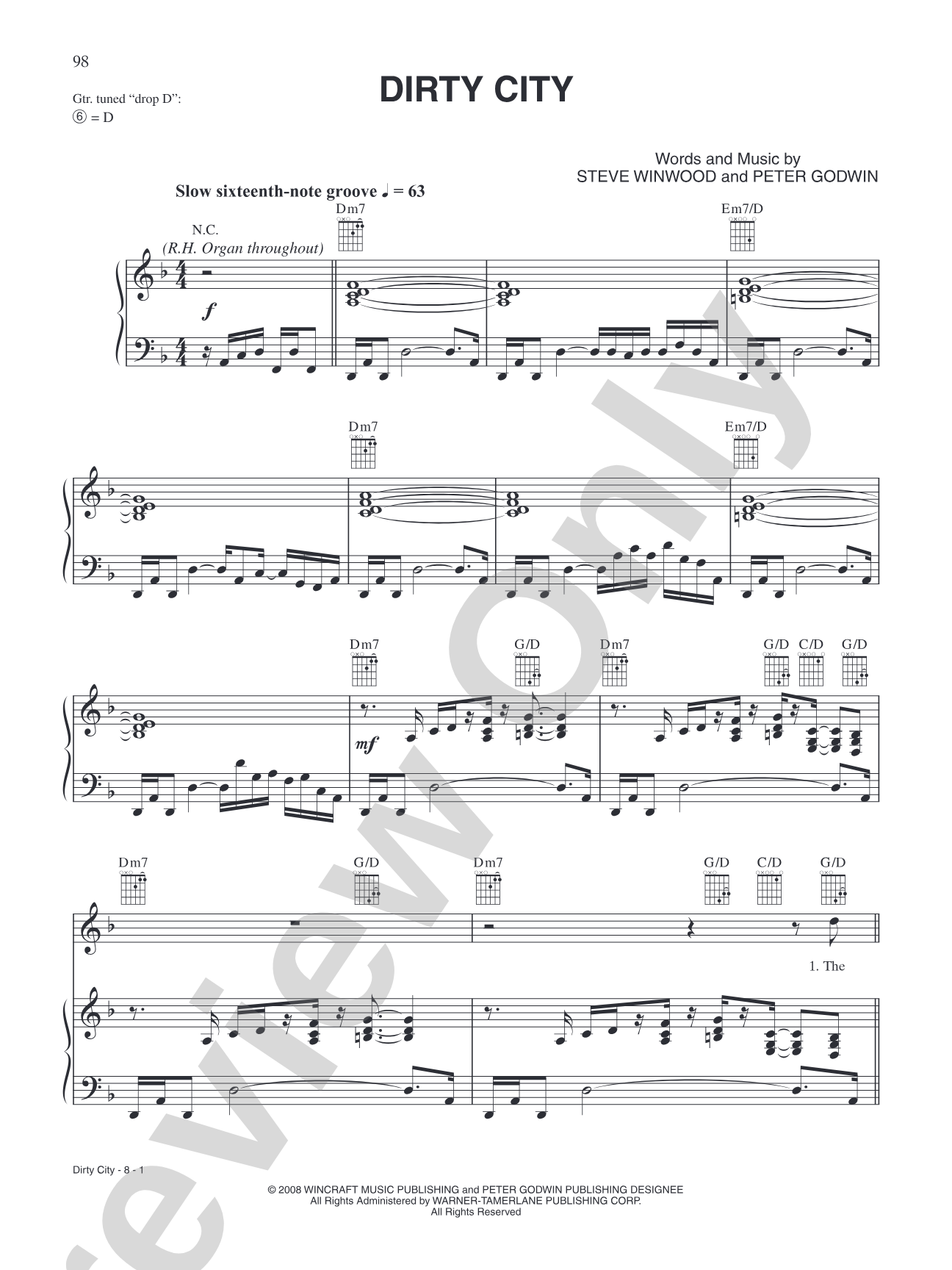
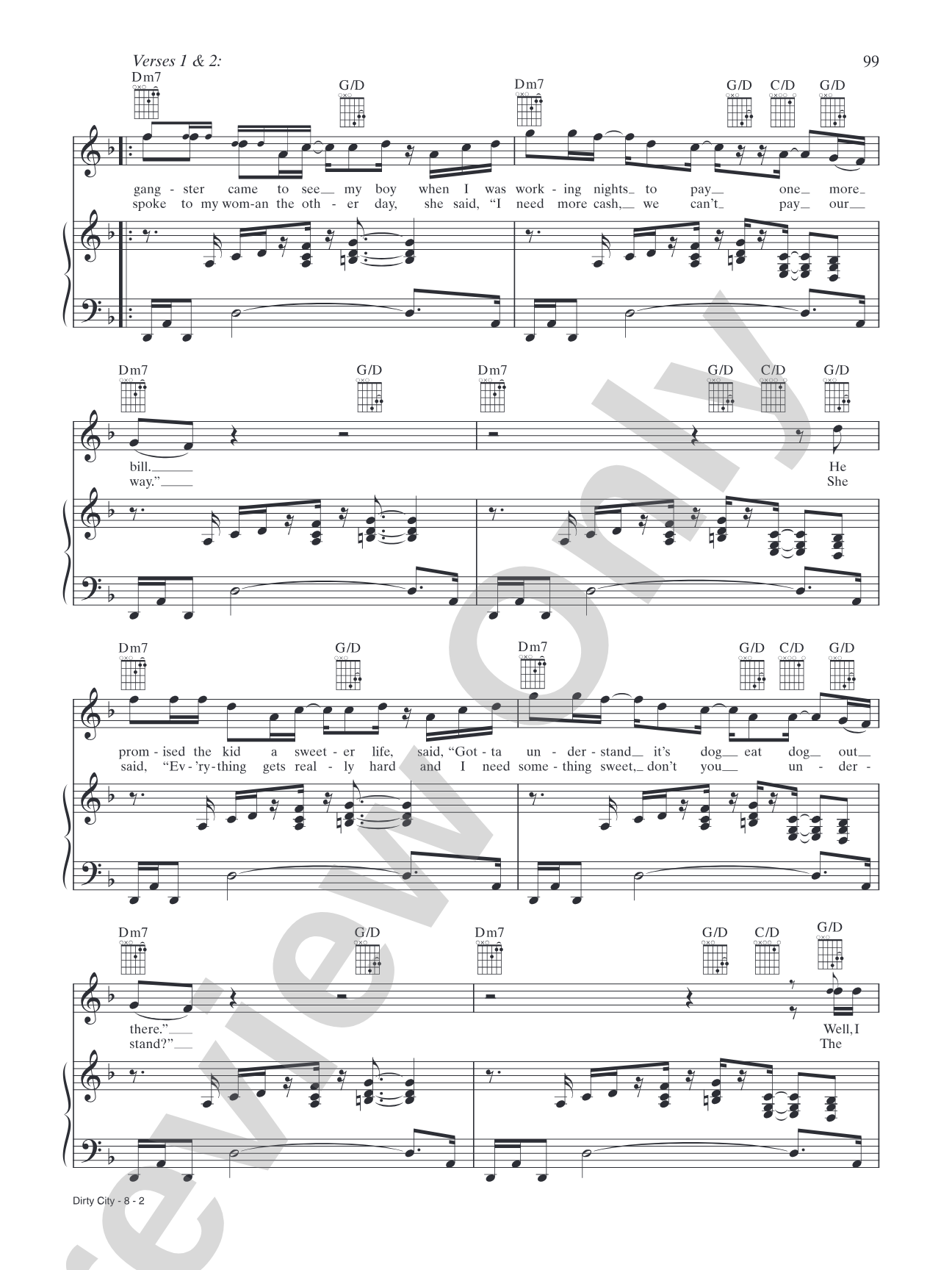

Dirty City: Piano/Vocal/Chords
Play the Hits of Steve Winwood, Blind Faith, Spencer Davis Group, and Traffic
Steve Winwood
Item: 00-XS-0000311
$3.99
One moment…
Description
Hailed by Rolling Stone magazine as one of the greatest singers of all-time, Steve Winwood is also universally lauded as one of rock's most skilled and soulful piano and Hammond B-3 players. From the rollicking rhythm and blues of the Spencer Davis Group and the immortal songs of Blind Faith, to the improvisational jam rock of Traffic and Winwood's numerous solo hits, this deluxe anthology contains more than 120 pages of sheet music transcriptions for unlimited hours of fun at the keyboard. Titles: * Back in the High Life Again * Can't Find My Way Home * Dear Mr. Fantasy * Dirty City * Empty Pages * The Finer Things * Freedom Rider * Gimme Some Lovin' * Glad * Had to Cry Today * Higher Love * I'm a Man * The Low Spark of High-Heeled Boys * Pearly Queen * Presence of the Lord * Roll With It * Valerie * Well All Right * While You See a Chance.


Dirty City: Piano/Vocal/Chords isn't in MakeMusic Cloud just yet...but it could be. Let us know you'd like to see it, and you'll help shape what comes next. In the meantime, start a free trial and dive into thousands of interactive titles your students can play along with today.
Request This Title
Tell us you want it.
Start Your Free Trial
Explore everything that's ready to play right now.
Sample Audio
No sample audio found.
Sample Video
No sample videos found.
Additional Details
Publisher:
Alfred Music
Page Count:
128
SKU:
00-XS-0000311
More about this title
About the Composer: Steve Winwood
Steve Winwood emerged in the 1960s as a multi-instrumentalist prodigy, first gaining attention as keyboardist and vocalist for the Spencer Davis Group before co-founding Blind Faith, one of rock's first supergroups. His career spans five decades of genre-defying work with Traffic, his solo output, and countless collaborations, establishing him as both a vocalist of extraordinary range and emotional depth and a keyboard player whose technical command and improvisational instincts shaped rock and soul music.
Winwood's approach to the piano and Hammond B-3 organ reflects deep roots in blues, R&B, and soul music. His ability to blend structured songwriting with spontaneous, soulful playing makes his work a masterclass in how keyboard playing can anchor a song, drive its emotional arc, and serve as a vehicle for improvisation. For musicians studying how to balance precision with feeling, Winwood's catalog offers essential lessons.
Why we love this
This anthology captures one of rock's most distinctive keyboard voices across five decades of hits and deep cuts, giving pianists direct access to Winwood's own approach to comping, melody, and soloing. The collection spans genres and eras within rock and soul, so pianists encounter varied harmonic language, groove sensibilities, and compositional techniques all grounded in the work of a single master musician. Whether your students are learning to play with soul or building jazz-inflected rock vocabulary, these transcriptions reveal how Winwood constructs his arrangements and voicings.
What to expect
These songs breathe with the soulfulness and groove-centered energy that defined Winwood's best work. Whether exploring the rollicking, blues-drenched energy of "Gimme Some Lovin'," the contemplative introspection of "Can't Find My Way Home," or the synth-driven sophistication of "Higher Love," the collection moves through textures that range from raw rhythm and blues to polished pop production, all unified by Winwood's instinct for emotional directness and musical sophistication.
Who it's for
This book serves pianists and keyboardists who want to learn from one of rock's most accomplished players, whether they're developing a repertoire of intermediate-to-advanced rock and soul standards or studying how to apply blues and soul sensibilities to rock playing. It's equally valuable for guitar players using the chord symbols to understand Winwood's harmonic choices and for singers looking to deepen their relationship with these songs through the keyboard parts.
How to get the most out of it
- Study how Winwood voices chords on keyboards before locking into the notated voicings; his recordings often feature rich, layered textures that suggest improvisation within structure. Listening to the original recordings alongside the transcriptions reveals where comping flexibility lives within the written page.
- Pay attention to the rhythmic precision underneath the soulful phrasing. Many of these songs sit on intricate grooves (especially the Spencer Davis Group and Traffic material), so locking the rhythm section timing is essential before layering in any interpretive freedom.
- Balance both hands equally in passages where the right hand carries melody while the left hand maintains the harmonic foundation. Winwood's playing rarely lets accompaniment recede; every voice contributes color and forward motion.
- Use the chord symbols to explore reharmonization and substitution, particularly in the solo sections. Winwood's improvisations often work from the harmonic skeleton rather than the melody, so building comfort with the changes opens doors to your own interpretations.
How to use it
These transcriptions work well as study material for ensembles building a rock repertoire or for solo pianists developing a recital program that draws from multiple decades of popular music. You might sequence several of these pieces across a season to show your students how one musician's sensibility evolves across genres and eras, or select a smaller subset for a special program celebrating rock keyboard legacies.
Skills your students will build
- Voice leading in jazz-influenced rock voicings
- Comping flexibility within structured grooves
- Reading chord symbols and realizing them idiomatically
- Understanding blues and soul phrasing applied to rock contexts
- Balancing melody, harmony, and rhythmic precision across both hands
- Recognizing how keyboard parts anchor arrangements without overstating them