Dir, Seele Des Weltalls Sheet Music Preview

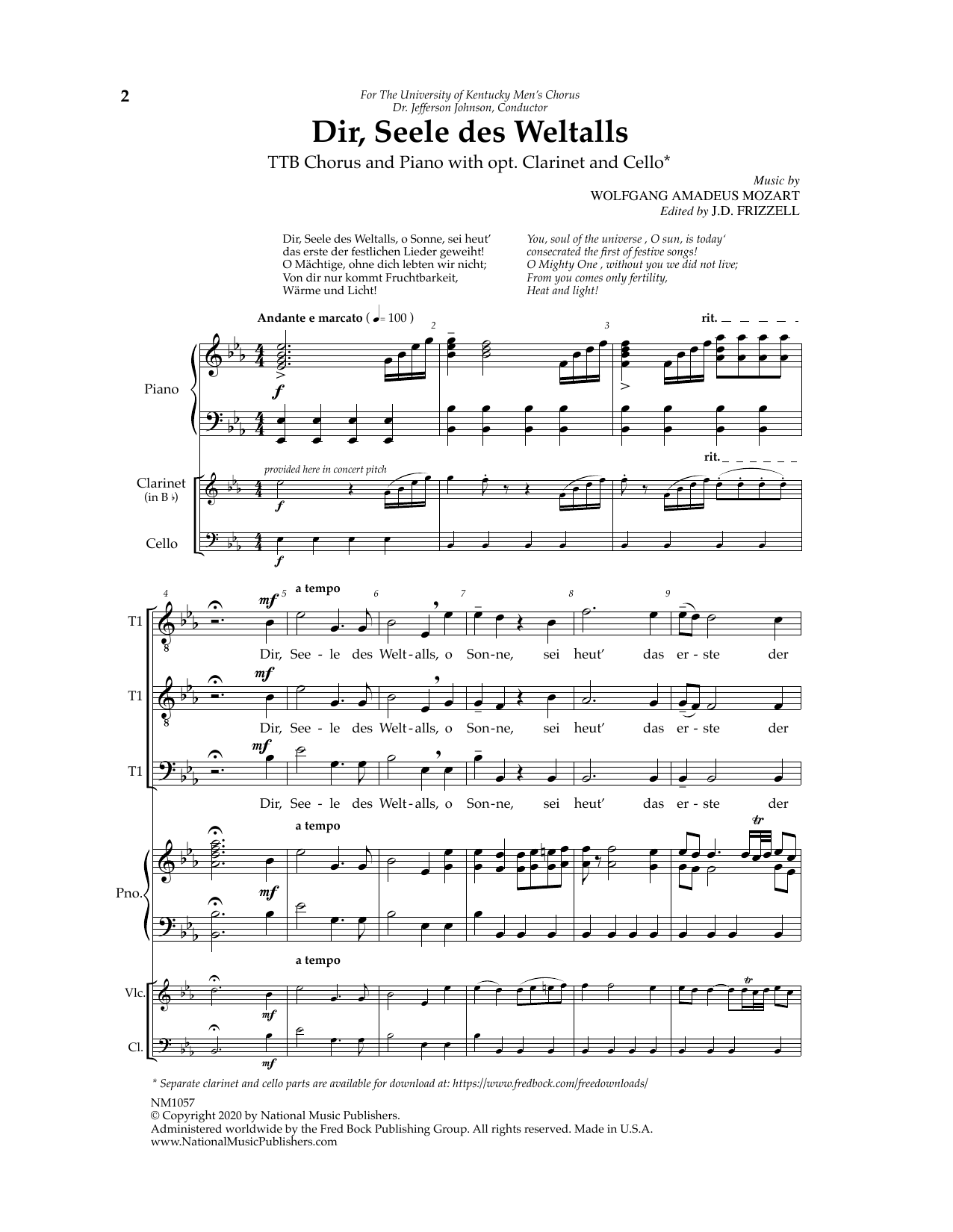
Dir, Seele Des Weltalls: TTB Choral Octavo

By Wolfgang Amadeus Mozart / Edited by J.D. Frizzell

Item: 35-DS00467865

Digital Download
$2.99
Description

Dir, Seele Des Weltalls: TTB Choral Octavo isn't in MakeMusic Cloud just yet...but it could be. Let us know you'd like to see it, and you'll help shape what comes next. In the meantime, start a free trial and dive into thousands of interactive titles your students can play along with today.

Sample Audio
No sample audio found.
Sample Video
Additional Details
Publisher: Hal Leonard
Page Count: 11
SKU: 35-DS00467865

More about this title

About the Composer: Wolfgang Amadeus Mozart

Wolfgang Amadeus Mozart (1756-1791) was an Austrian composer whose prolific output across every major genre established him as one of the foundational figures in Western classical music. His choral writing demonstrates the same elegance and harmonic sophistication that characterizes his symphonies and operas, with an ability to craft singable vocal lines that never sacrifice musical substance.

For educators, Mozart's secular choral works offer students direct access to 18th-century compositional craft. His pieces reward careful attention to phrase shaping, balance among voices, and the interplay between text and music, making them invaluable for building singers' musicianship.

Why we love this

This setting captures the contemplative, almost spiritual quality of its German Enlightenment text without relying on religious framework, making it a sophisticated choice for concert programs seeking secular repertoire with genuine depth. The harmonic language is accessible to singers yet musically substantial, rewarding both the ensemble and their audience with moments of real beauty.

What to expect

The piece unfolds with quiet reverence, its German text addressing the soul of the universe with philosophical dignity. Mozart's harmonic movement creates subtle emotional shifts, moving between moments of introspection and gentle affirmation, all delivered through elegantly crafted voice leading that feels both inevitable and refined.

Who it's for

This octavo works well for mixed or treble choirs with solid vocal control and an interest in 18th-century repertoire. Directors seeking concert material that avoids both heavy sacred traditions and popular arrangements will find a genuinely artistic option here.

How to get the most out of it

  • Balance the text clarity with the flowing vocal lines; resist the urge to separate syllables too sharply, as Mozart's phrasing assumes connected vowel sounds.
  • Attend to the harmonic rhythm in slower sections. Even when voices move in quarter notes, the underlying harmonic changes should feel intentional rather than mechanical.
  • Shape phrases toward the strongest harmonic or textual moments rather than toward final notes of phrases. This forward momentum is characteristic of Mozart's musical language.

How to use it

Consider pairing this with other secular choral works from the Classical era to build a program exploring Enlightenment values and musical style. It works particularly well on a concert that balances more dramatic or contemporary selections, offering an intermission piece or closing number that lets audiences hear Mozart's compositional voice in miniature.

Skills your students will build

  • Balancing clarity of text with legit vocal production
  • Recognizing and executing harmonic rhythm
  • Shaping Classical-era phrase structures
  • Reading and performing 18th-century choral textures
  • Sustaining line through multiple harmonic changes

You May Also Like