
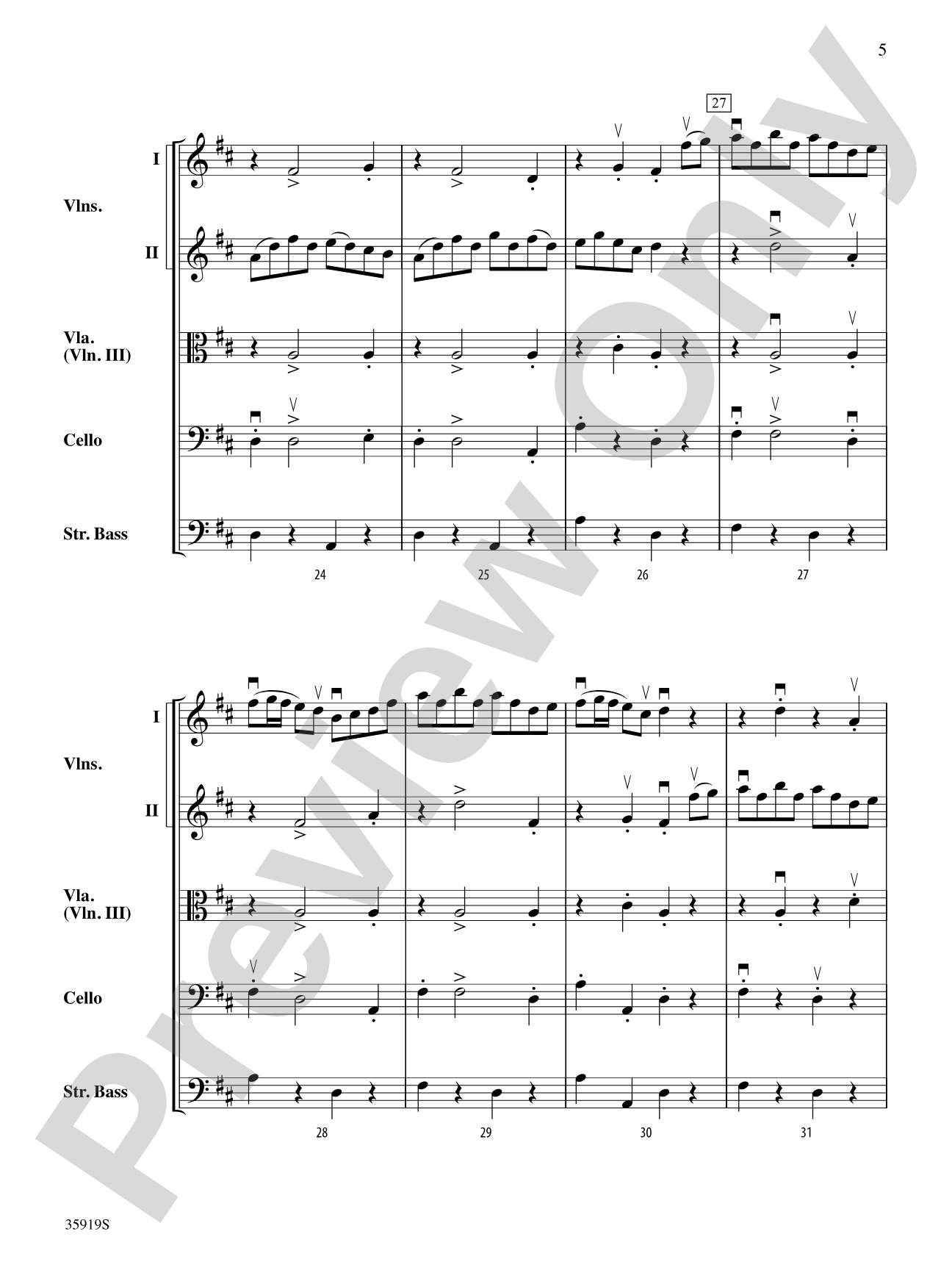
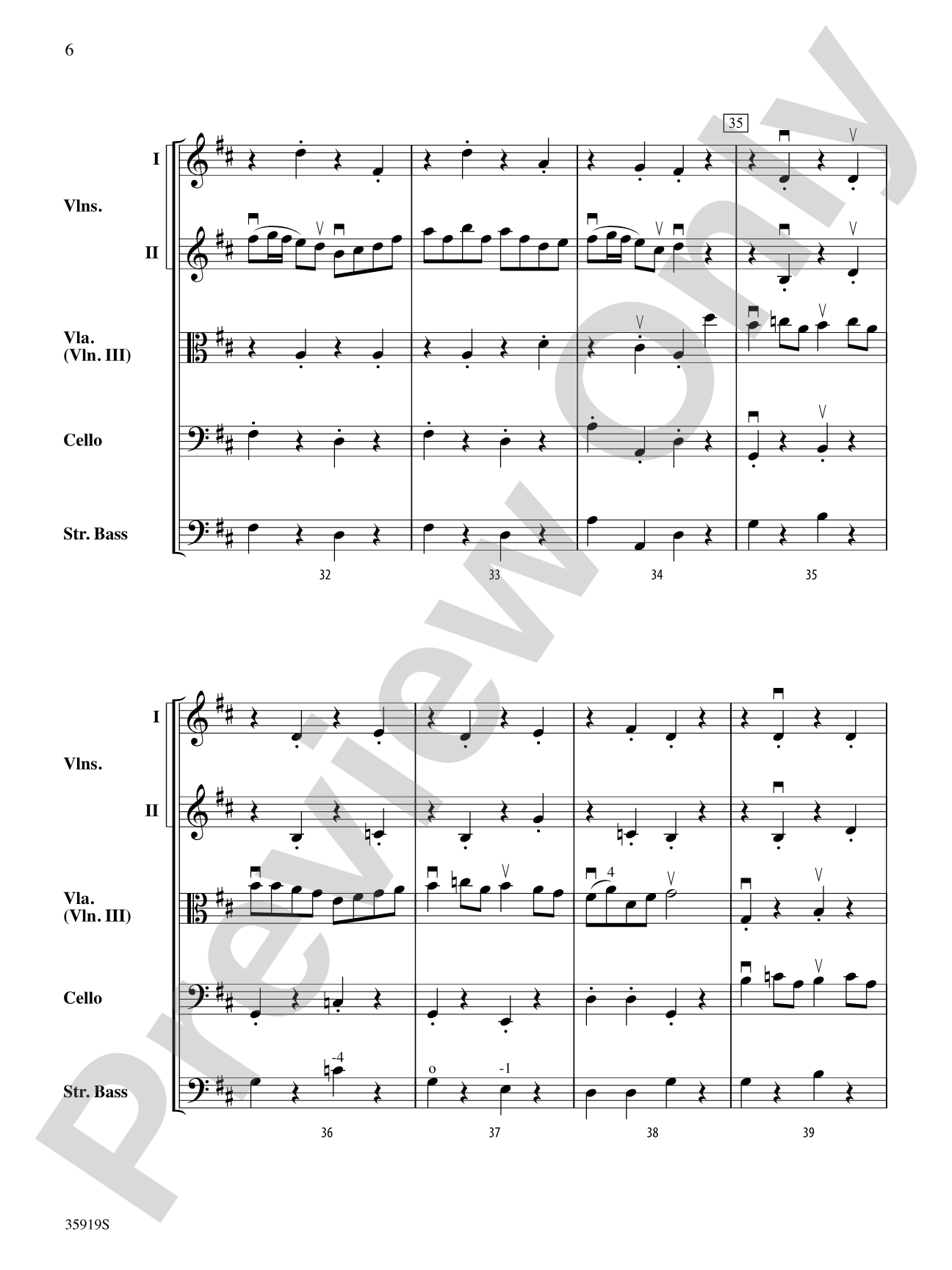
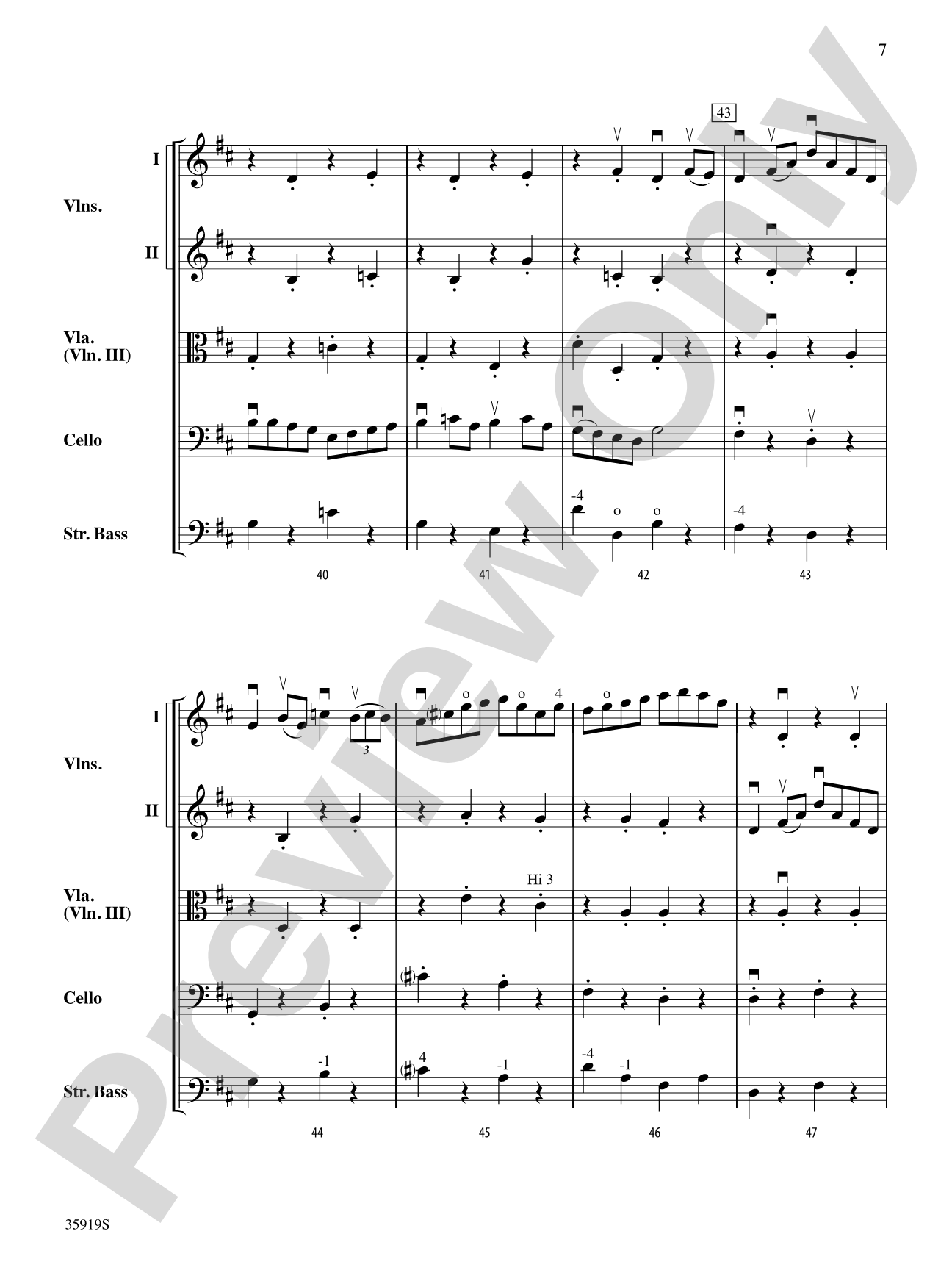
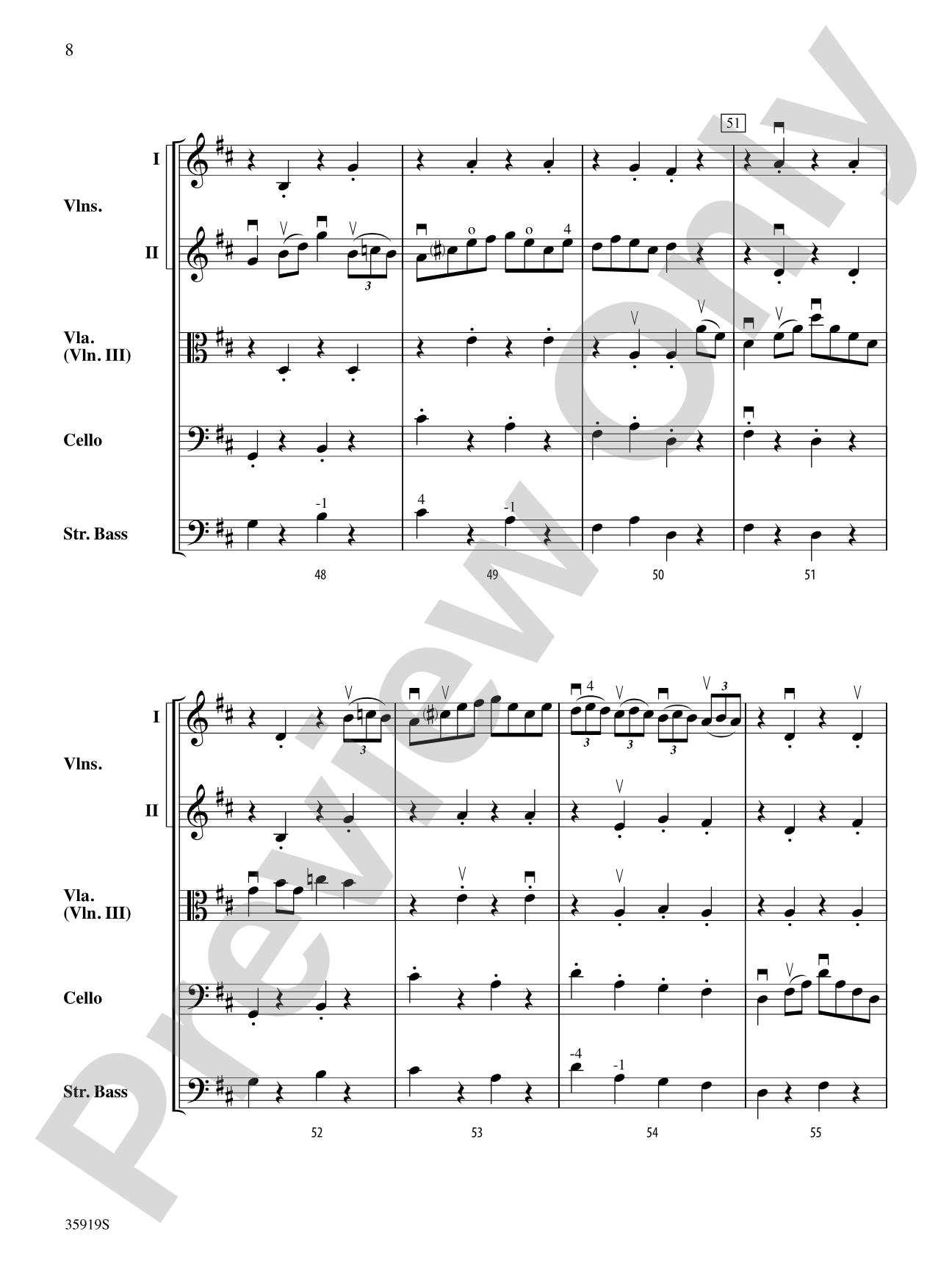
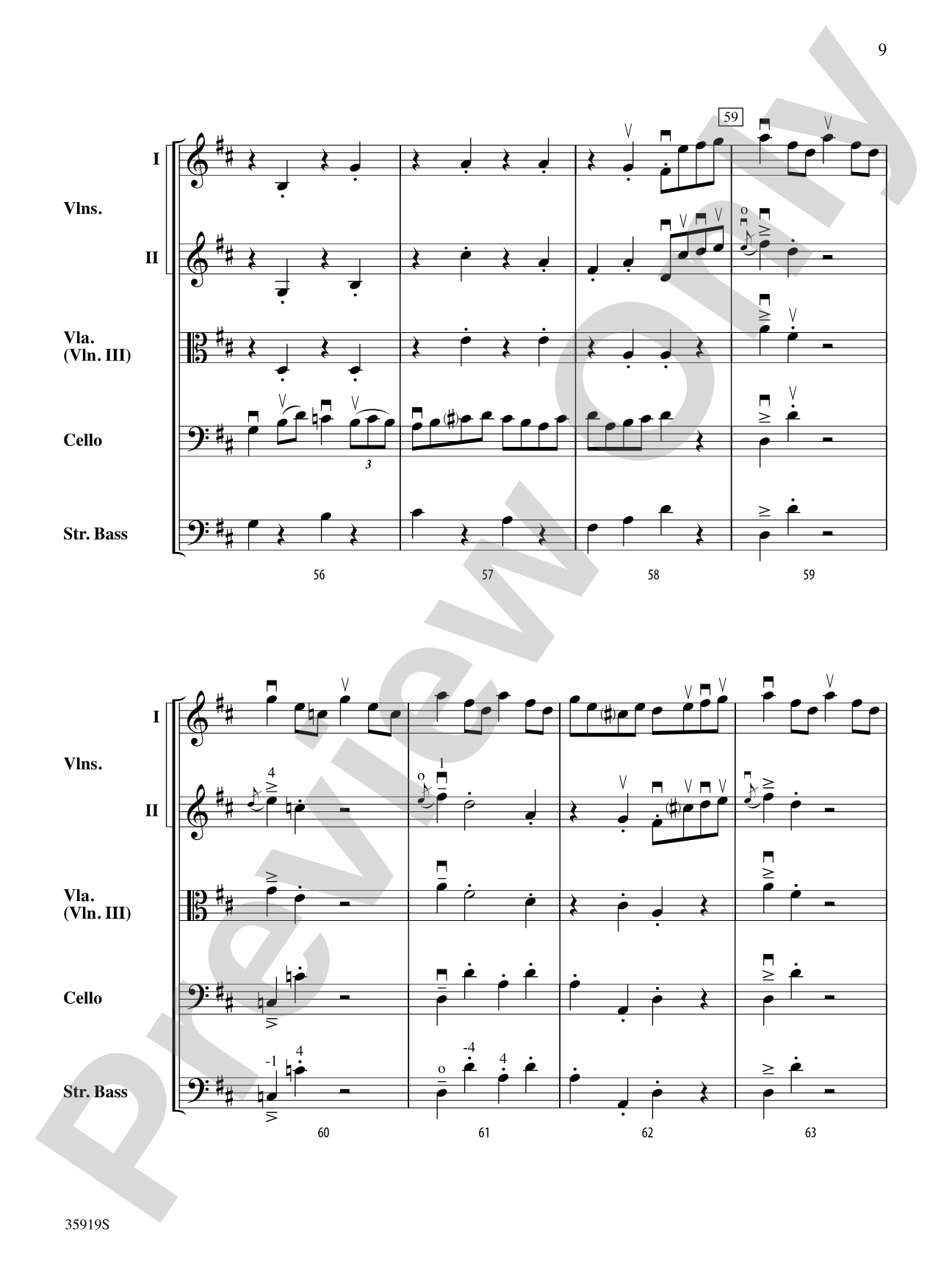
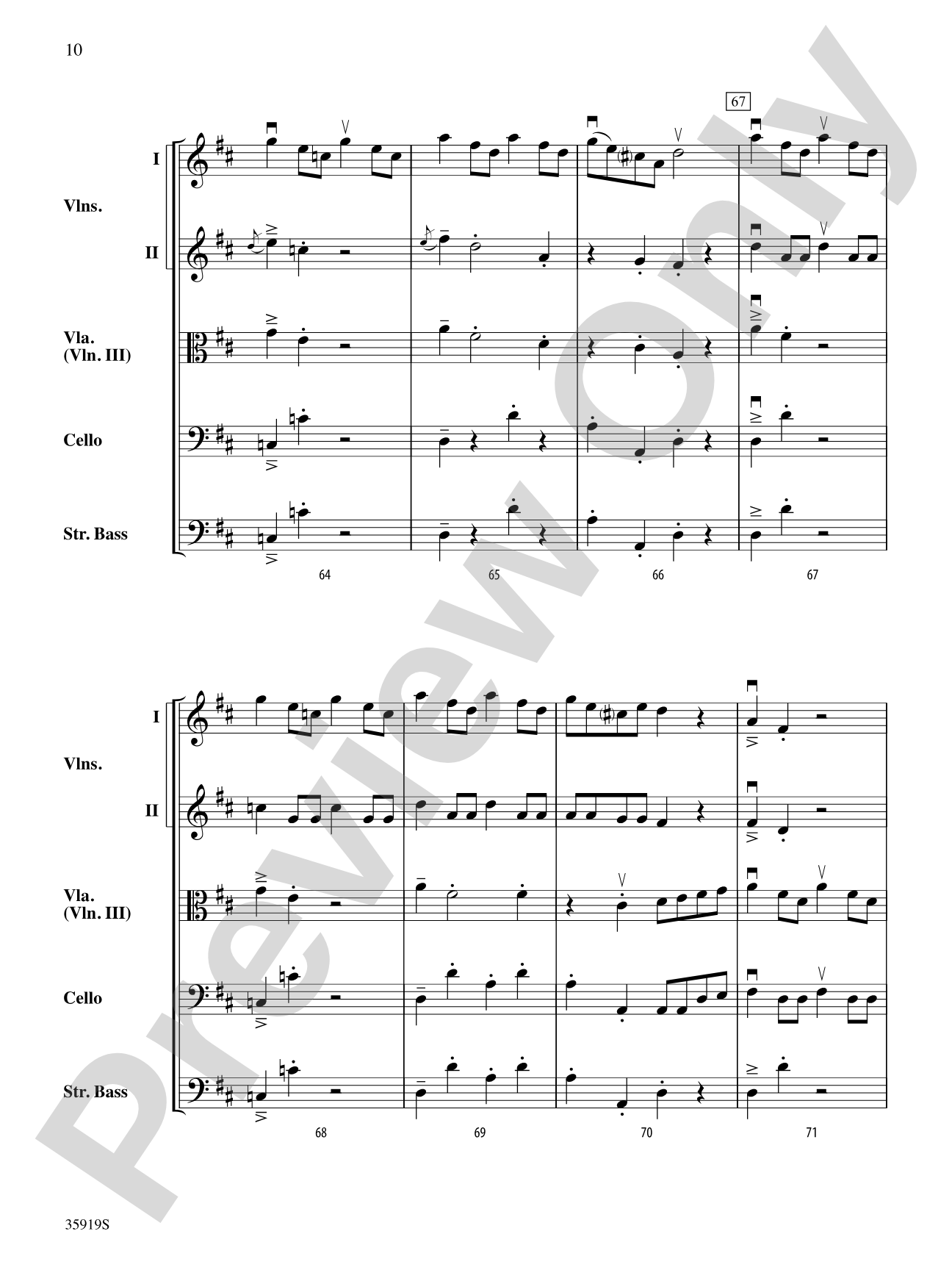
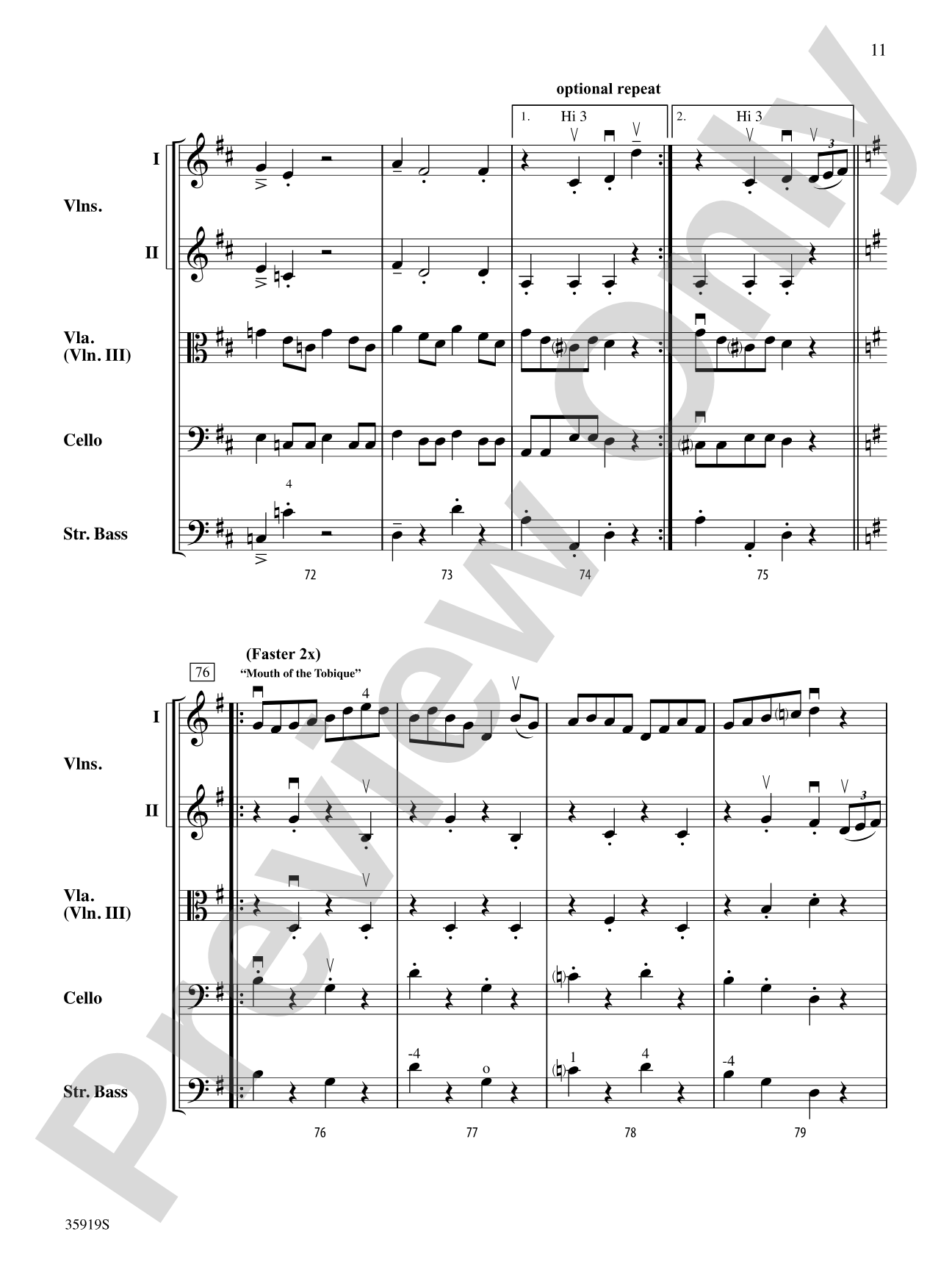
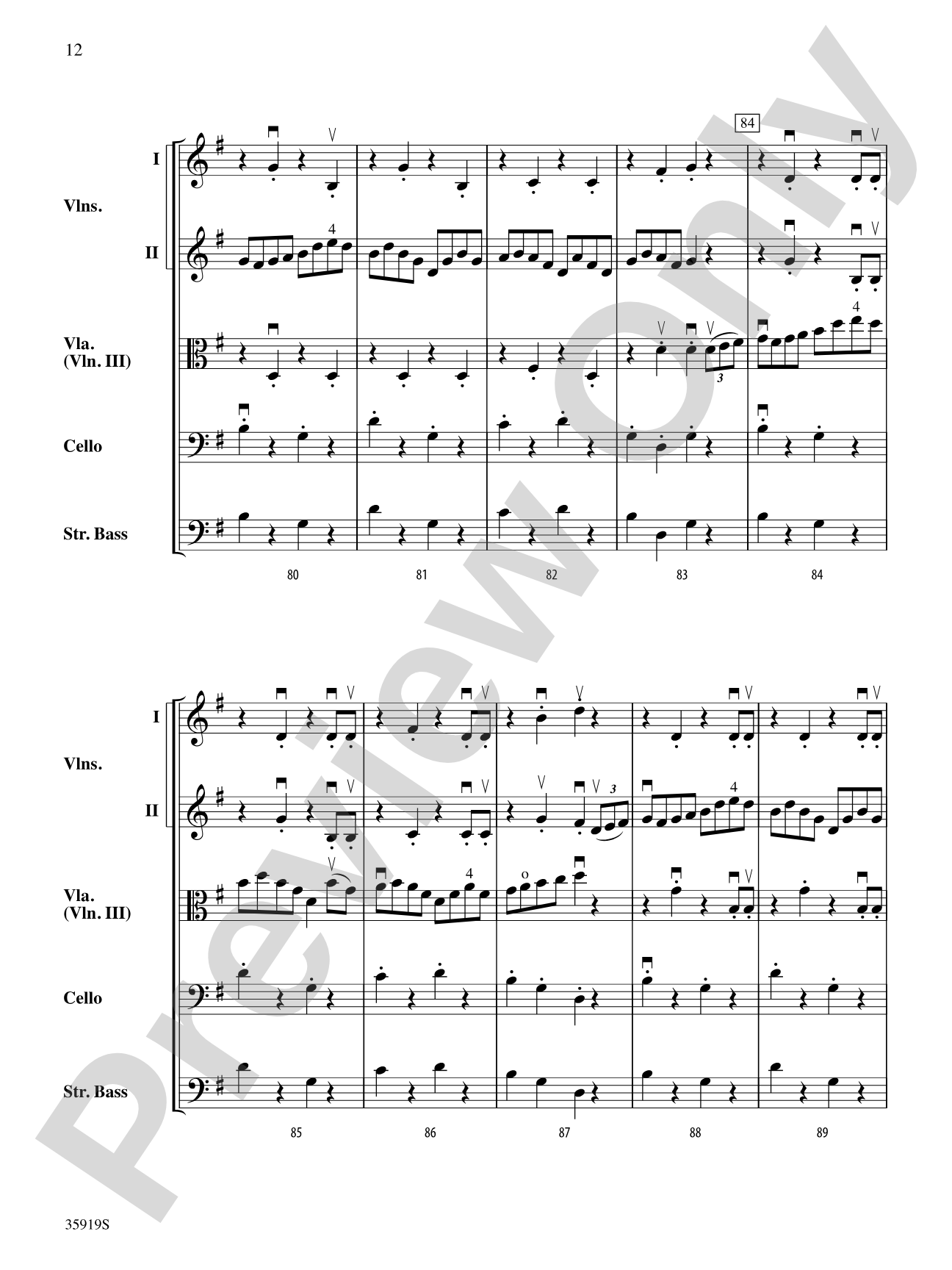
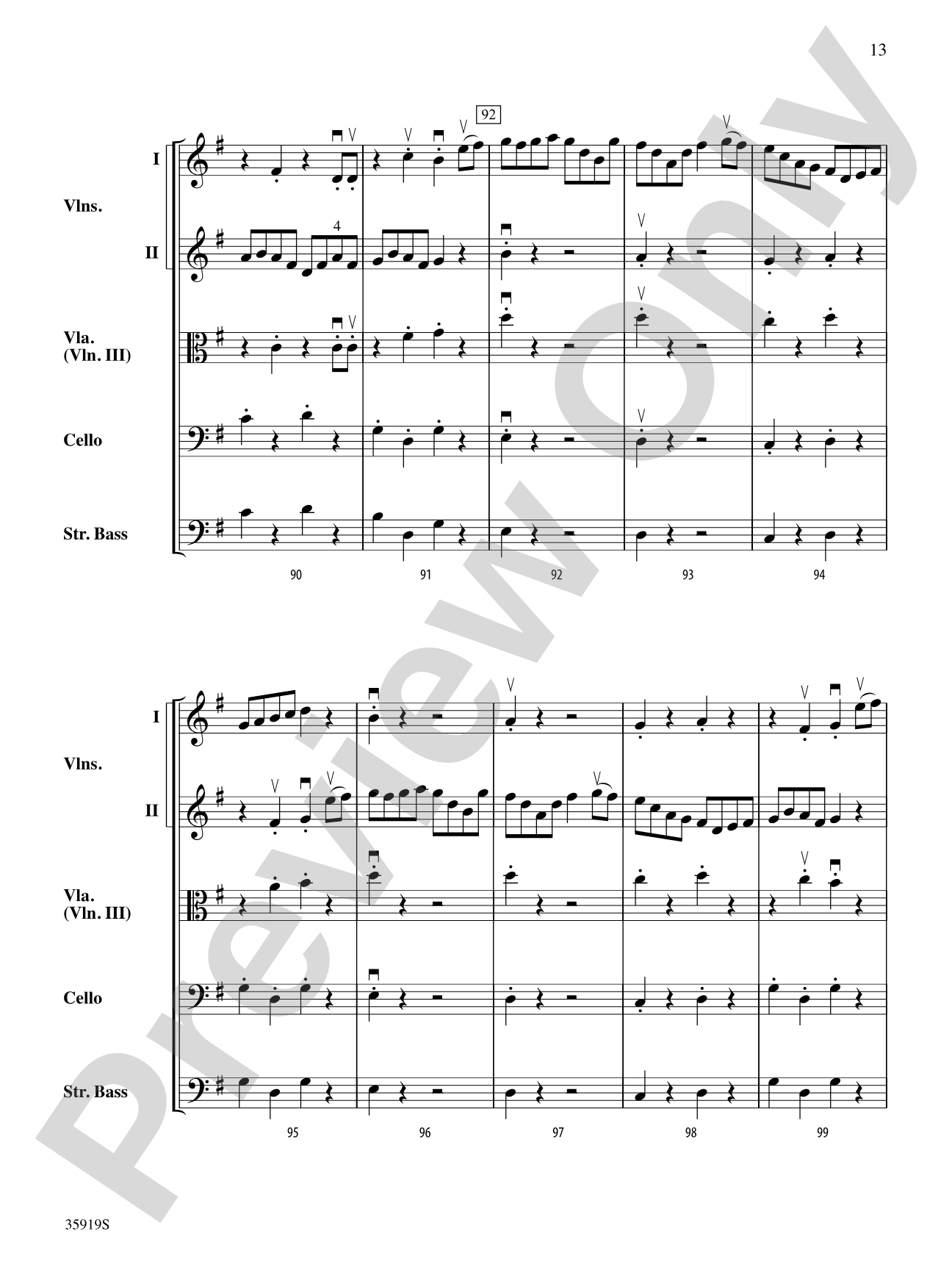
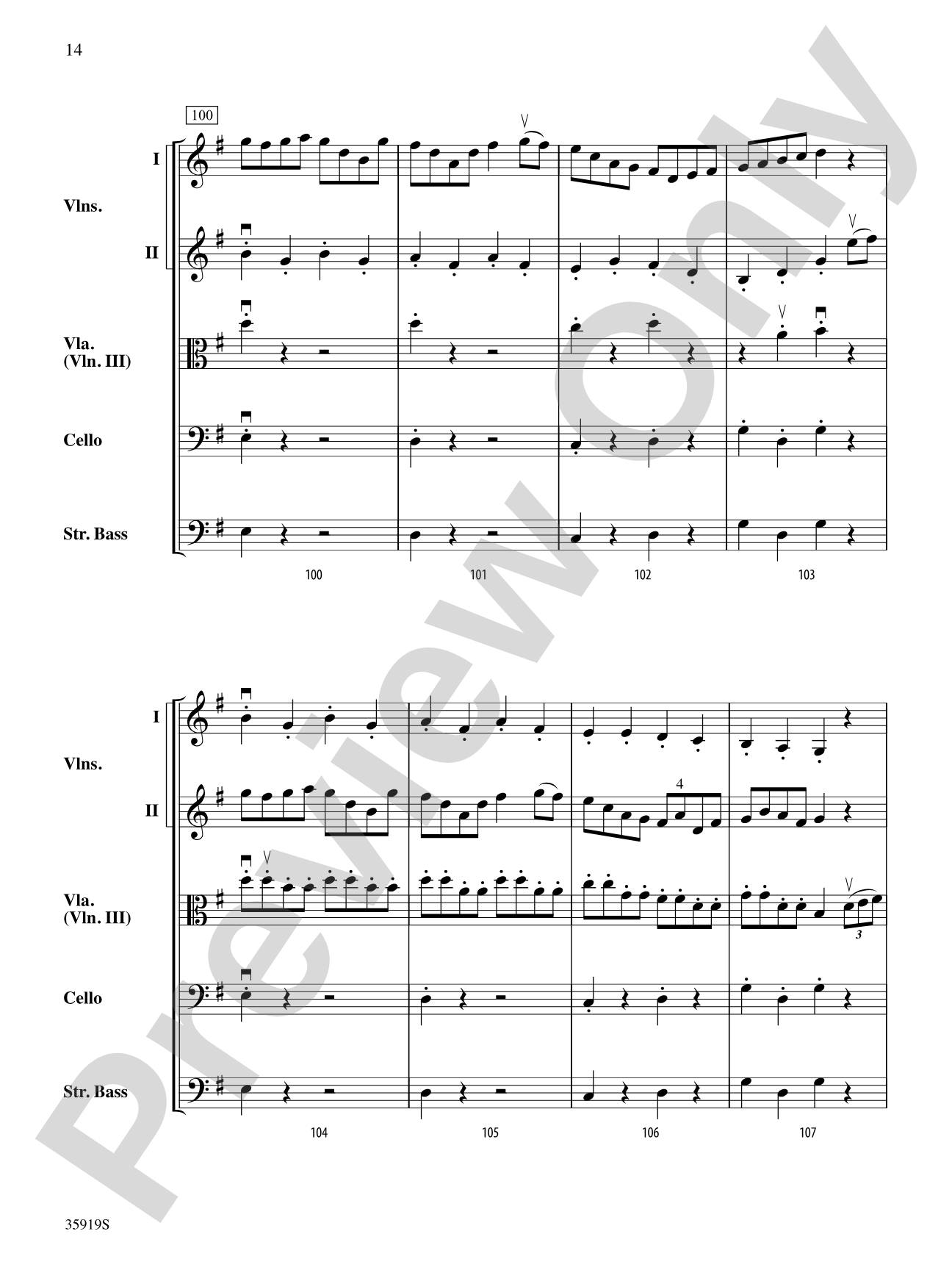
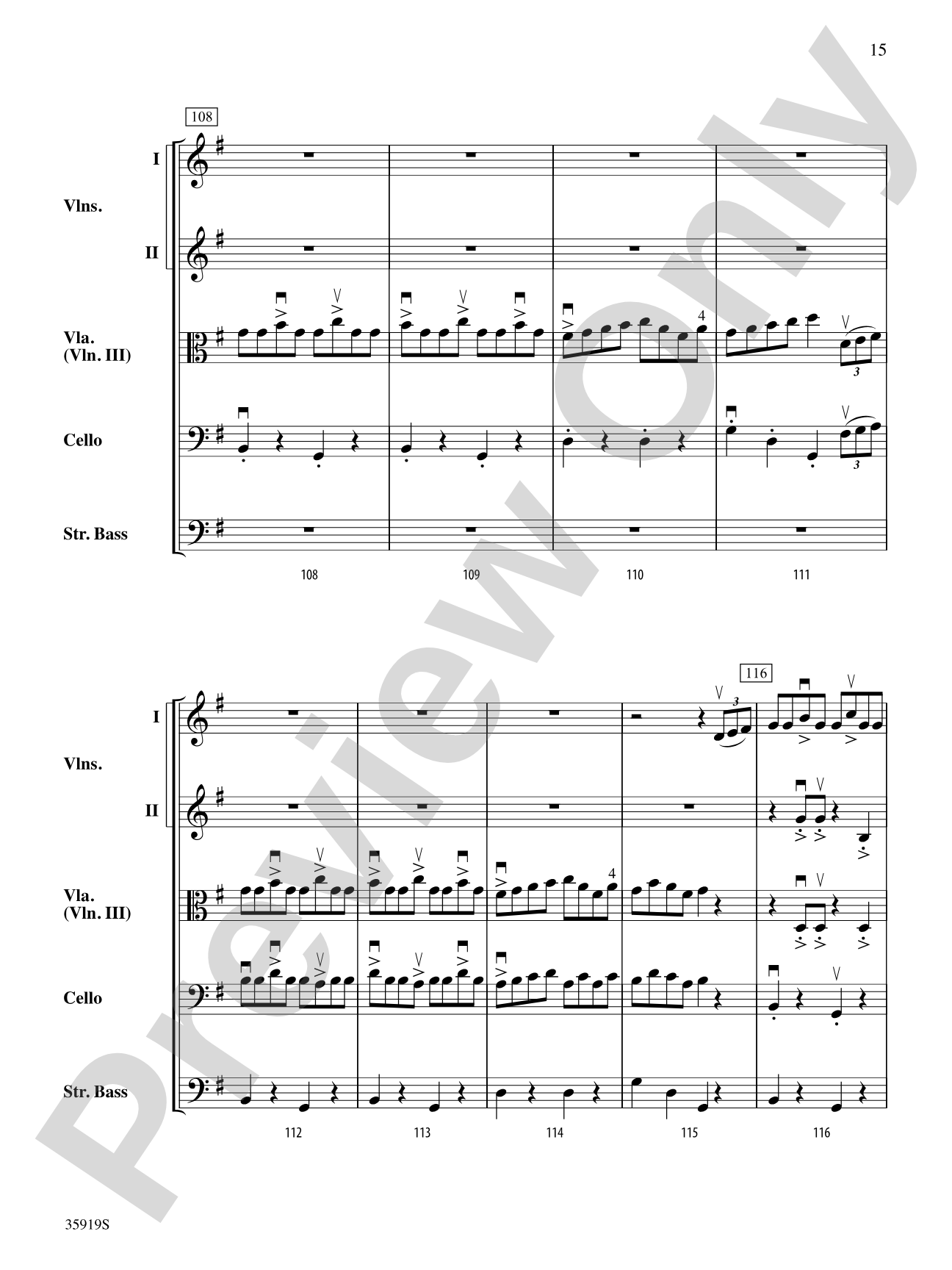
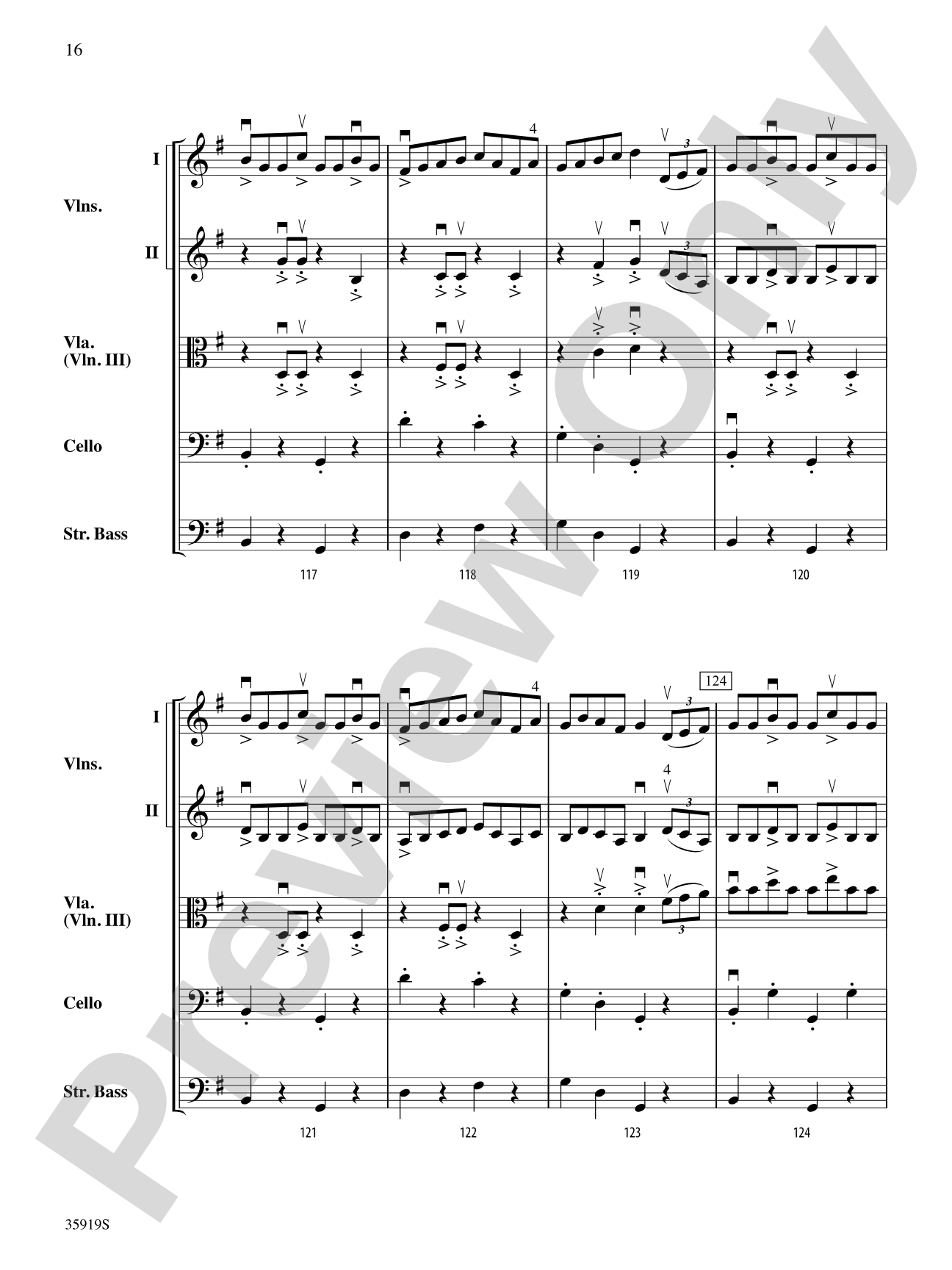
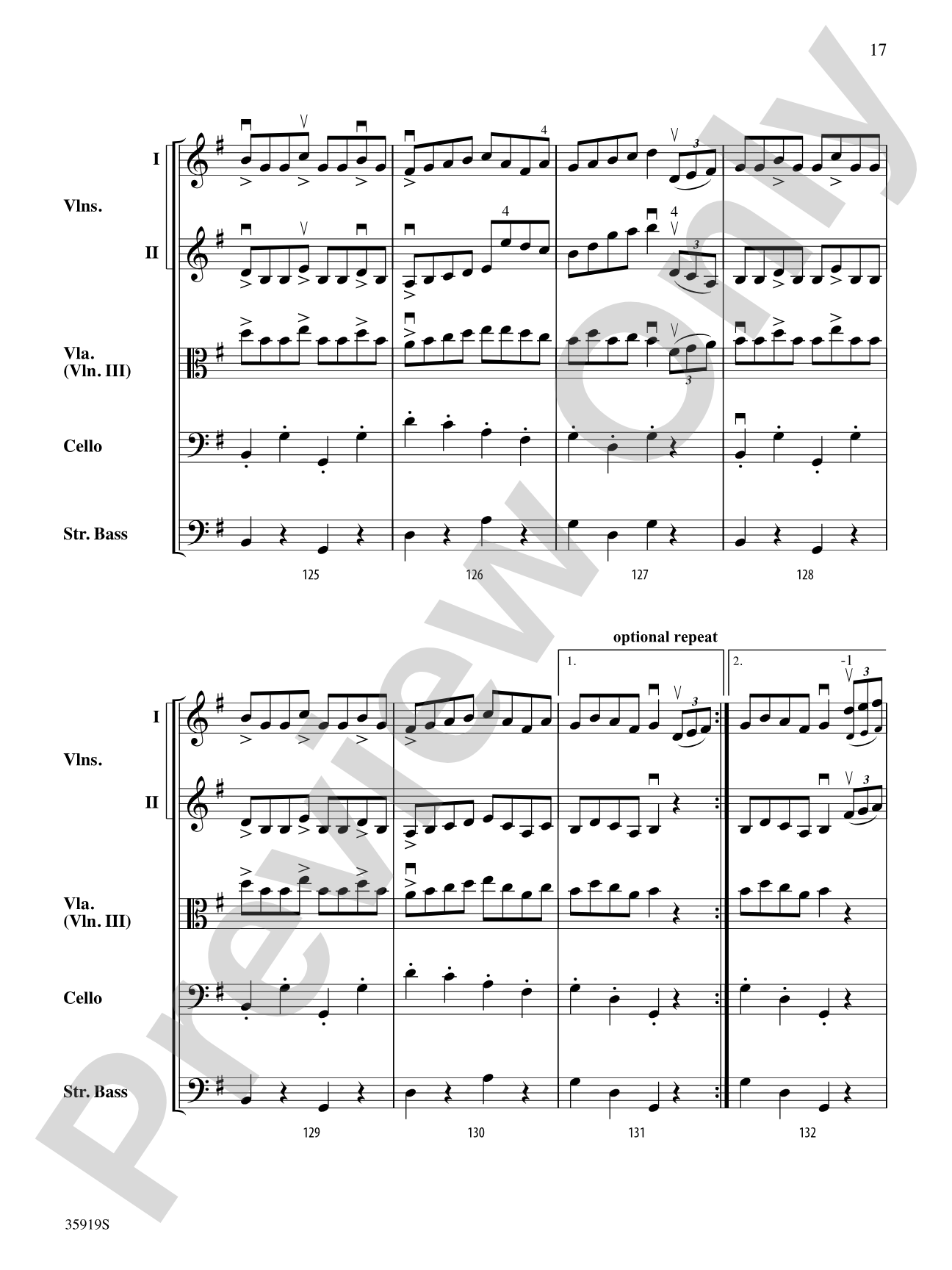
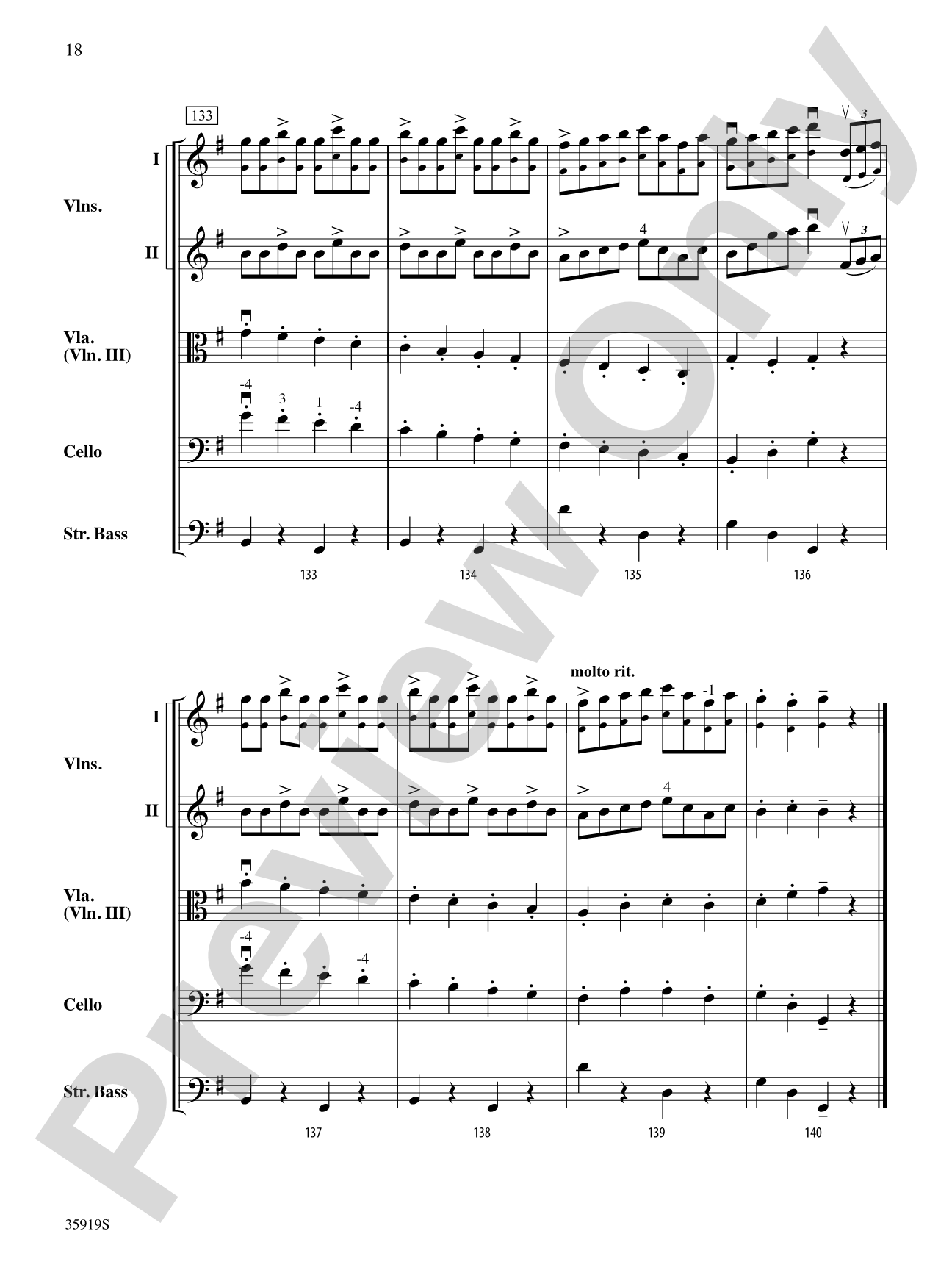



Dionne Reel and Mouth of the Tobique: String Orchestra Conductor Score & Parts
Traditional / arr. Nick Neumann
Grade: 3
Item: 00-PK-0004715

$45.00
Pickup currently not available
Buy Extra Parts (Digital PDF Download)
Parts Added to Cart!
Description
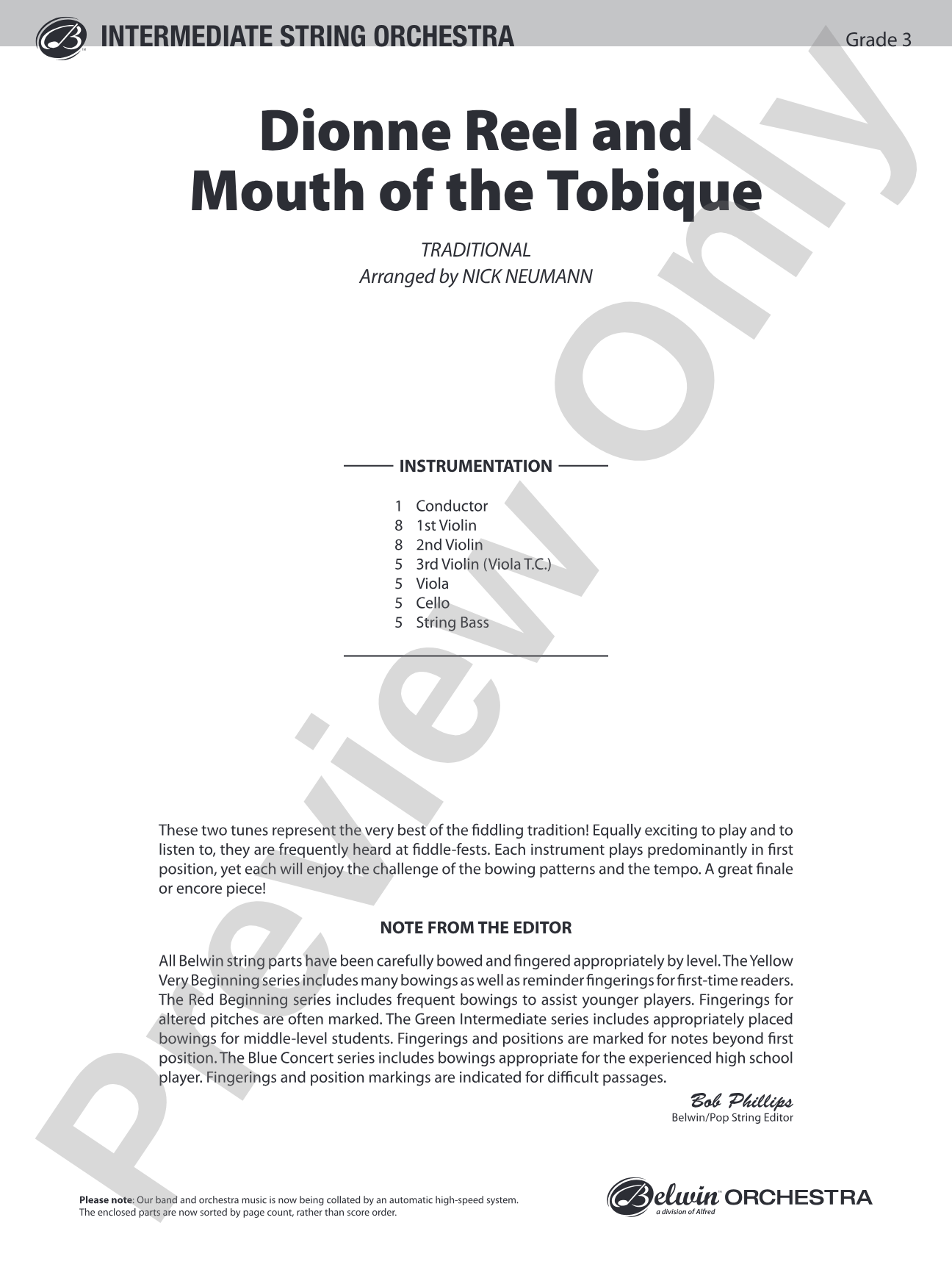
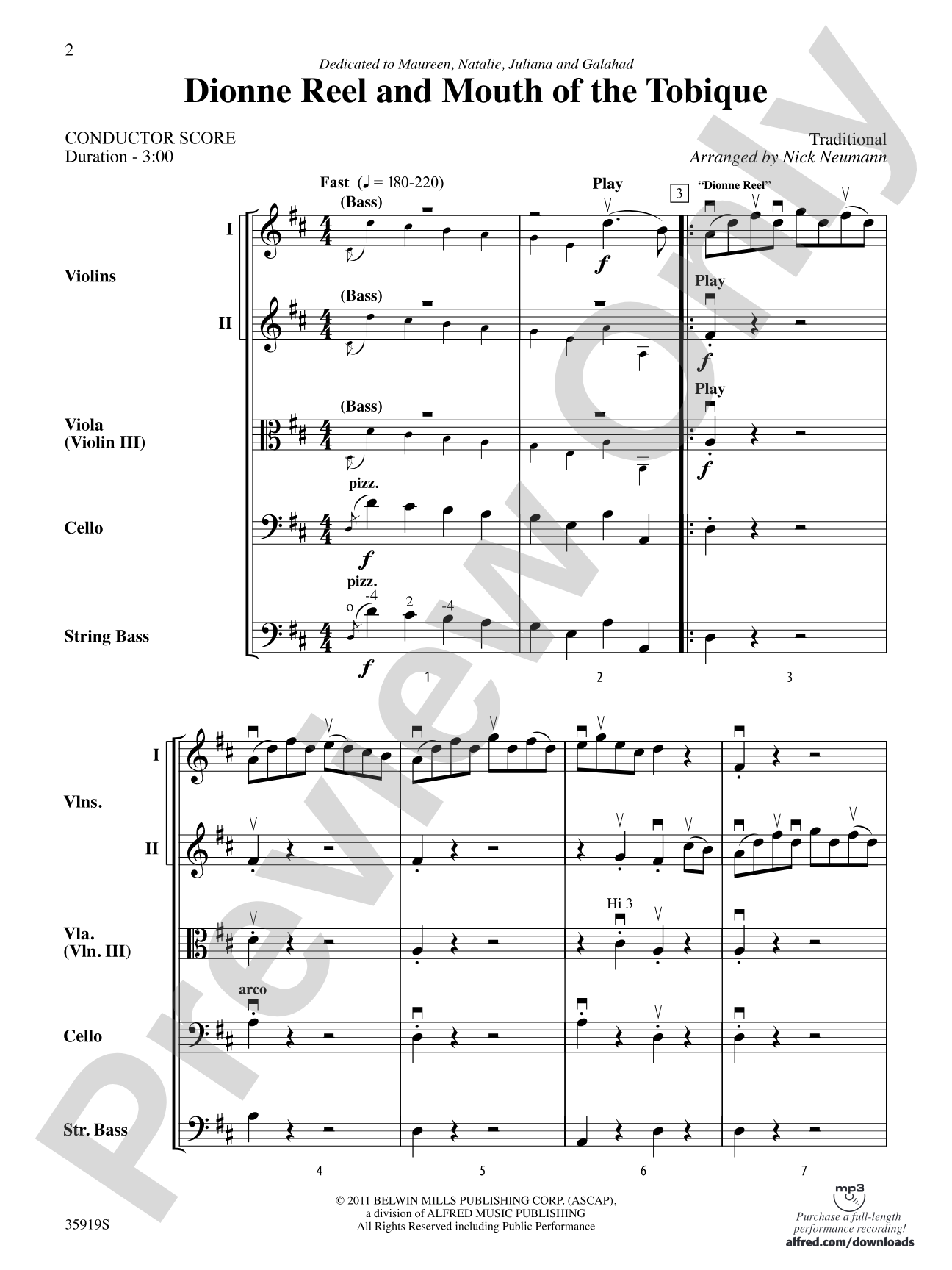
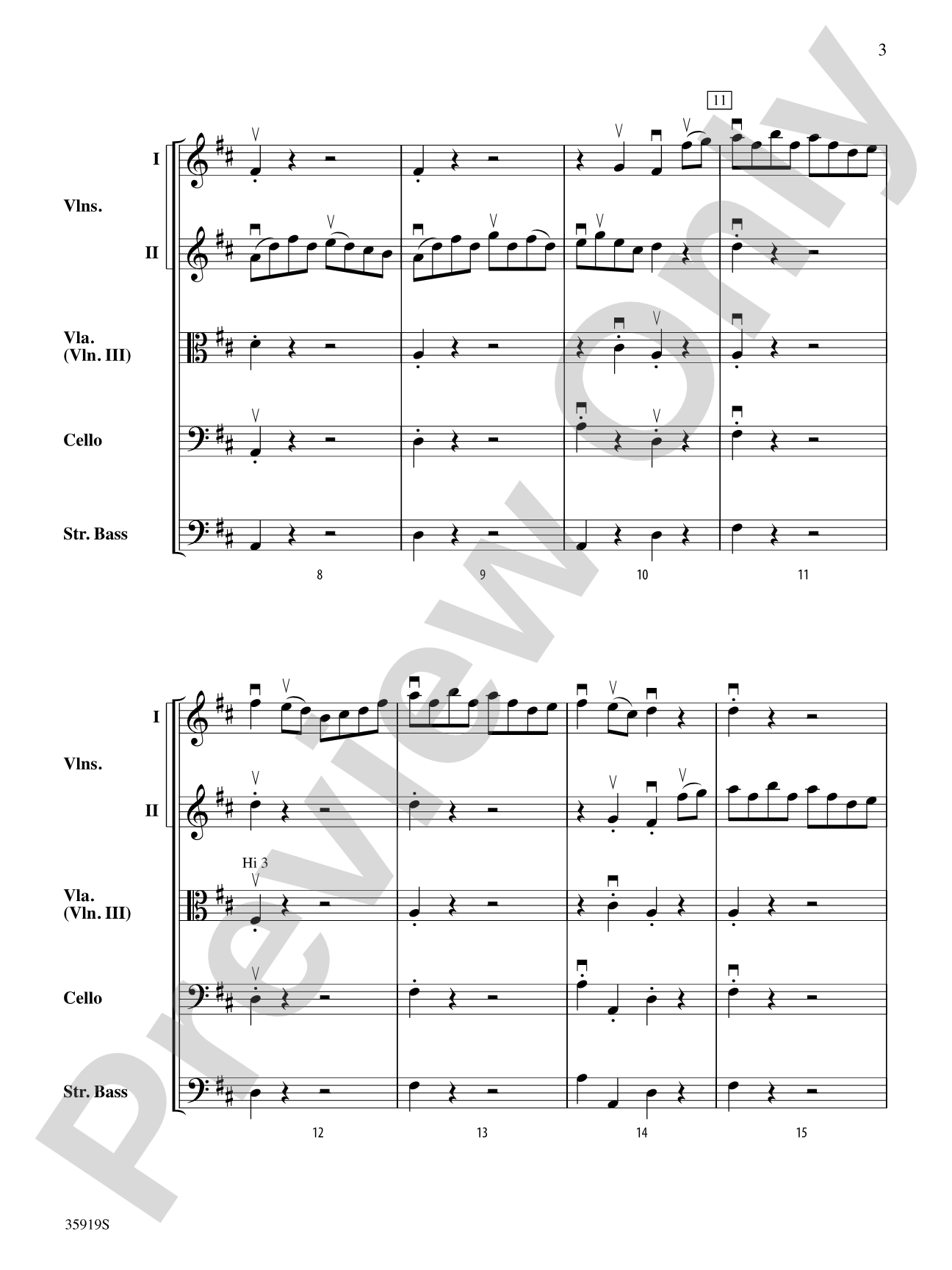
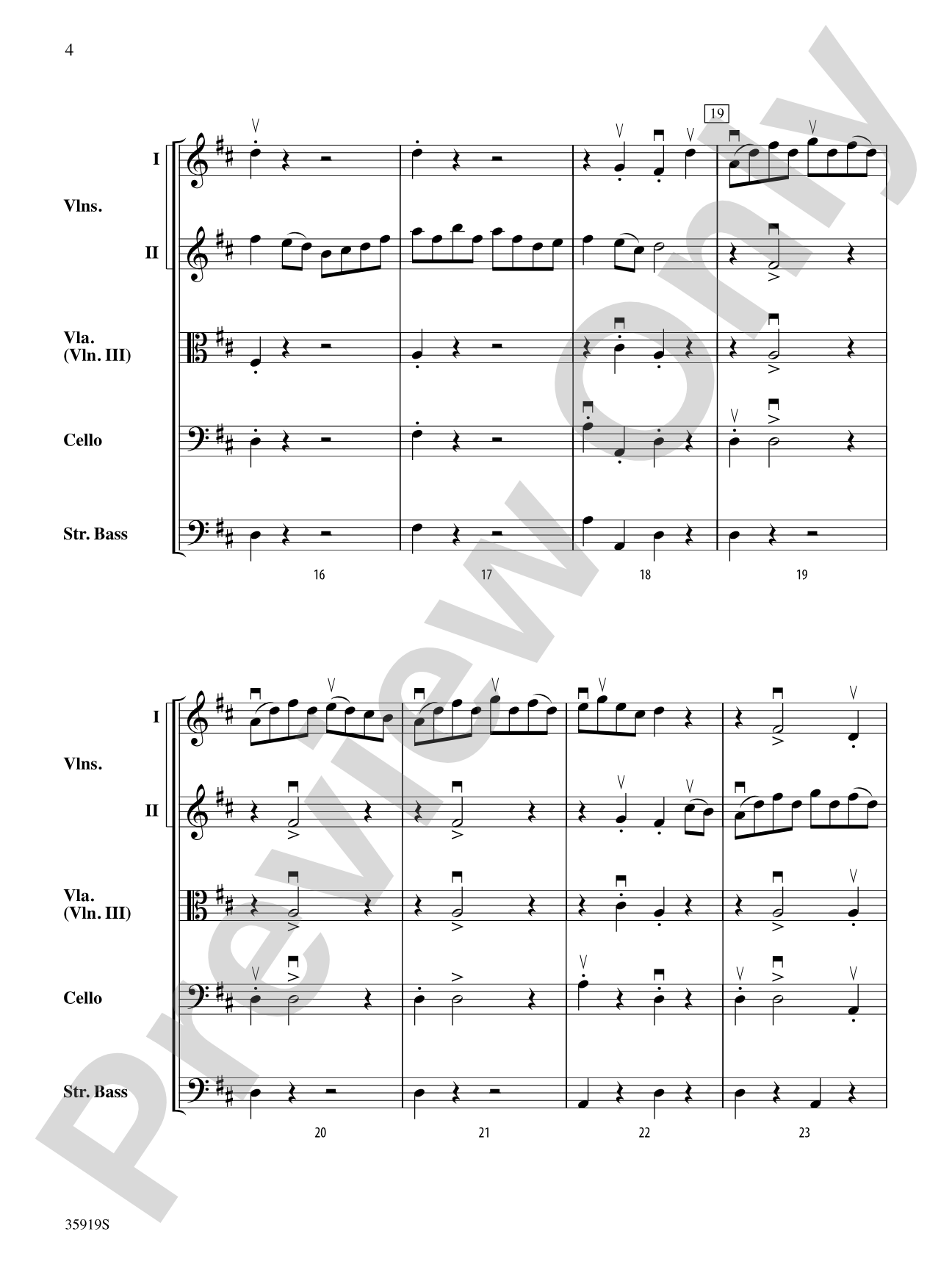
These two tunes represent the very best of the fiddling tradition! Equally exciting to play and to listen to, they are frequently heard at fiddle-fests. Each instrument plays predominantly in first position, yet each will enjoy the challenge of the bowing patterns and the tempo. A great finale or encore piece!


Don't just read it, hear it, play along with it, and watch your students grow with it. In MakeMusic Cloud, Dionne Reel and Mouth of the Tobique: String Orchestra Conductor Score & Parts comes alive with professional accompaniment, adjustable tempo, and built-in practice tools that turn solo practice into real progress.
Open in the Player
Jump straight in and assign it today.
Start Your Free Trial
Open this title and explore the full library in minutes.
Sample Audio
1
Audio File
--:--
0:00
0:00
Sample Video
No sample videos found.
Additional Details
Series:
Belwin Intermediate String Orchestra
Publisher:
Alfred Music
Page Count:
144
SKU:
00-PK-0004715
Instrumentation:
strings w/ vln 3
More about this title
Why we love this
Nick Neumann has crafted an arrangement that honors the driving energy of these traditional reels while keeping the technical demands reasonable for Grade 3 players. The bowing patterns are where the real learning lives here; students get to grapple with articulation and rhythmic precision without stretching into uncomfortable positions. It's the kind of piece that sounds far more advanced than it is, which means your audience will be genuinely impressed.
What to expect
These reels capture the infectious energy of a fiddle-fest, with driving rhythms and melodic lines that feel both spirited and grounded. The arrangement sparkles with motion and joy, giving every player something active to do while maintaining the warm, acoustic character of traditional string music.
Who it's for
String orchestras at the Grade 3 level who are ready to tackle vibrant traditional material with real stylistic demands. Students need secure intonation and reliable bow control, but positioning remains accessible in first position throughout.
How to get the most out of it
- Establish the tempo confidently in rehearsal before the ensemble joins in. These reels thrive on rhythmic momentum, so locking in the pulse early prevents the piece from sagging.
- Pay special attention to uniform bowing across each section, particularly on the repeated figures that anchor the melody. Slight variations in stroke length or pressure will muddy the traditional character.
- Let the fiddling tradition inform your interpretation. Listen to a quality recording of these tunes played by folk musicians to hear how ornamentation and swing should feel, then guide your players toward that liveliness without sacrificing clarity.
How to use it
Reserve this for a concert finale or encore where you want the audience to leave with genuine excitement. The folk heritage and immediate appeal make it an excellent bridge between classical and contemporary concert programming, and the infectious energy naturally energizes both players and listeners after a longer program.
Skills your students will build
- Crisp articulation in fast-moving passages
- Consistent bowing patterns across repeated figures
- First-position intonation at tempo
- Stylistic awareness of traditional folk idioms
- Rhythmic precision in reel meter and phrasing