
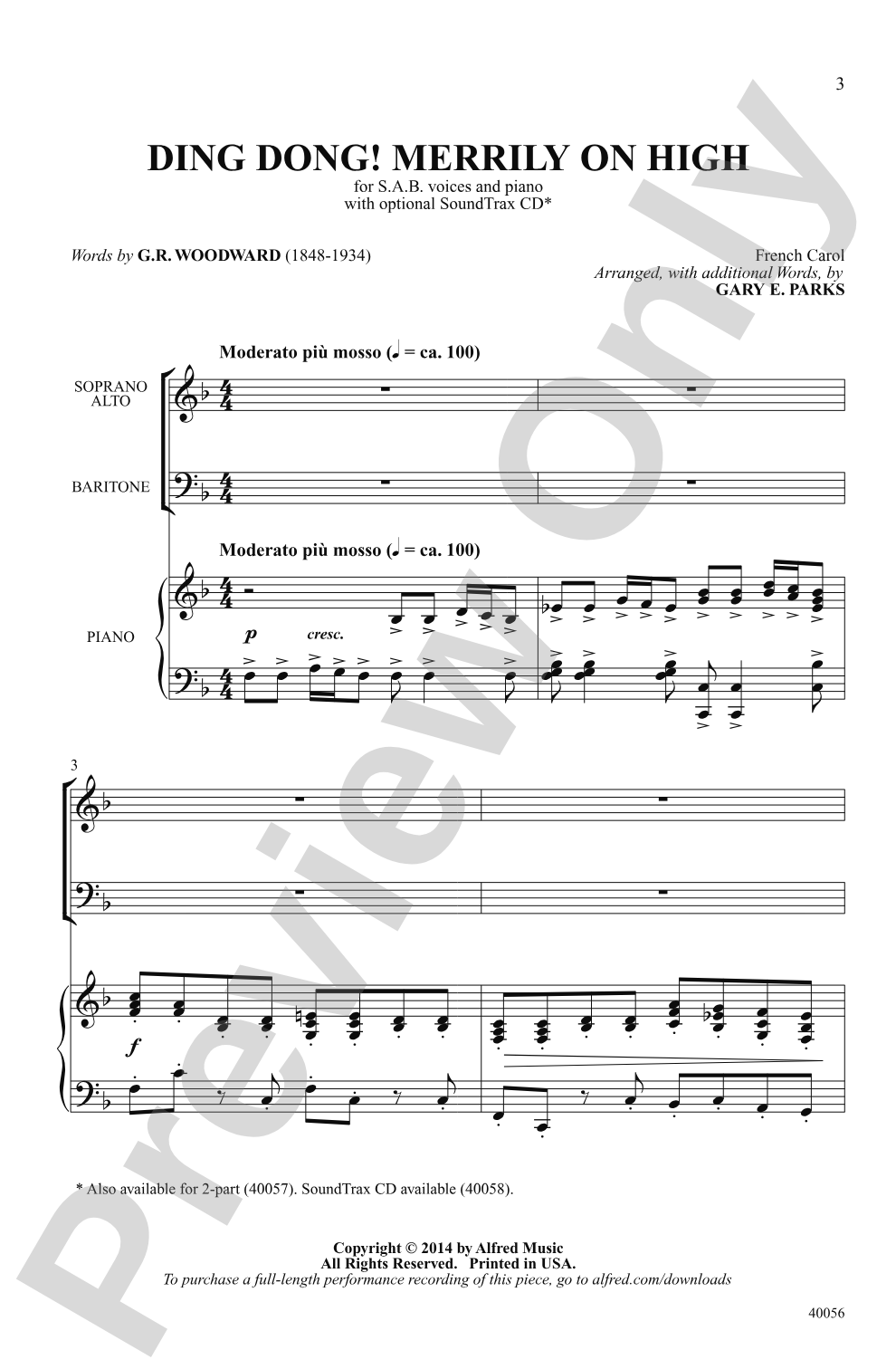

Ding Dong! Merrily on High: SAB Choral Octavo
French Carol, words by G. R. Woodward / arr., with additional words, by Gary E. Parks
Item: 00-PO-0001770
$1.85
Minimum order quantity: 20 copies
Pickup currently not available
Related Items
Ding Dong! Merrily on High: SoundTrax Digital Audio Download |
$27.99
|
View | |
Ding Dong! Merrily on High: 2-Part Choral Octavo |
$1.85
|
View | |
Ding Dong! Merrily on High: SAB Choral Octavo |
$1.85
|
View | |
Ding Dong! Merrily on High: 2-Part Choral Octavo |
$1.85
|
View | |
Ding Dong! Merrily on High: Choral Octavo SoundTrax CD |
$27.99
|
View |
Description
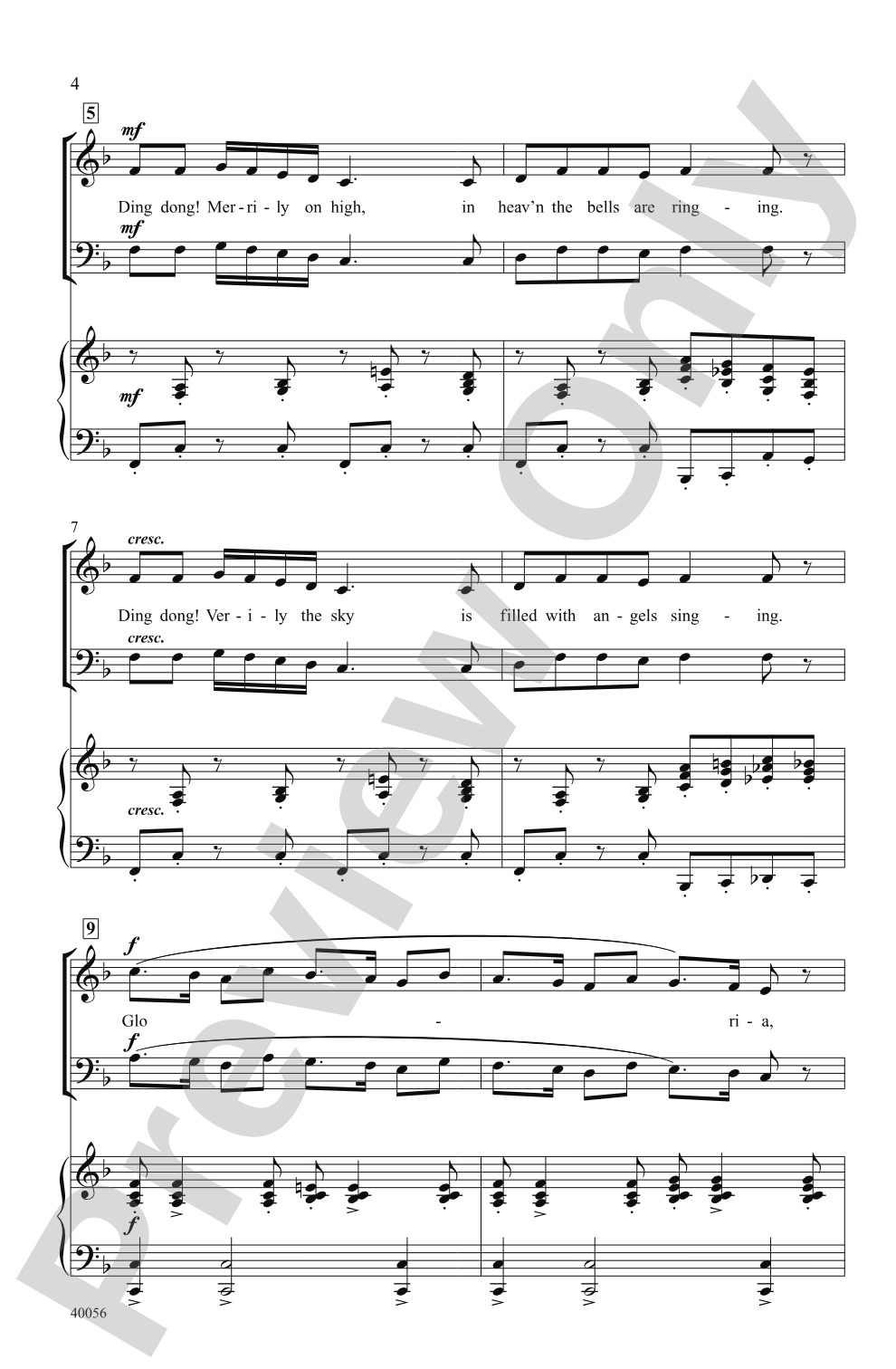
Crafted especially for developing groups, this joyful carol arrangement is equal parts achievable and interesting. Simplified runs are countered with intriguing meter changes, melodic counterlines are interspersed with full harmonies. Festive and fun!


Ding Dong! Merrily on High: SAB Choral Octavo isn't in MakeMusic Cloud just yet...but it could be. Let us know you'd like to see it, and you'll help shape what comes next. In the meantime, start a free trial and dive into thousands of interactive titles your students can play along with today.
Request This Title
Tell us you want it.
Start Your Free Trial
Explore everything that's ready to play right now.
Sample Audio
1
Audio File
--:--
0:00
0:00
Sample Video
No sample videos found.
Additional Details
Series:
Alfred Choral Designs
Publisher:
Alfred Music
Page Count:
12
SKU:
00-PO-0001770
More about this title
About the Arranger: Gary E. Parks
Gary E. Parks has built a reputation for creating choral arrangements that balance accessibility with musical substance. His work across multiple voicings and styles demonstrates a clear understanding of what developing choirs need: repertoire that doesn't condescend but also doesn't overwhelm.
Why we love this
Parks strikes a genuine balance here between accessibility and musical interest. Rather than padding a simple arrangement with complexity for its own sake, he uses meter shifts and countermelodies to keep the singers engaged without overwhelming a developing group. The result feels fresh while remaining genuinely singable.
What to expect
Joyful and playful without losing the carol's inherent warmth. The intriguing meter changes give the arrangement a contemporary, almost gently surprising quality, while the full harmonies ground it firmly in the festive tradition. Singers feel like they're performing something thoughtfully crafted, not just singing a surface-level adaptation.
Who it's for
SAB choirs with developing singers who are ready for something more textured than basic arrangements but need the security of three clear voice parts. This arrangement works especially well for groups that have moved beyond unison or two-part writing but aren't yet ready for four-part voicing.
How to get the most out of it
- Prepare the meter changes (outlined in the score) during sectional rehearsals so singers understand where the pulse shifts and don't lose confidence. Mark them clearly in pencil if needed.
- The simplified runs sit well in the voice parts; shape them as melodic phrases rather than rushing through them as ornamental fills.
- Balance the counterlines against the full harmonies by listening carefully during rehearsal. The countermelodies should be heard but not overpower the main melodic material.
- If using the recorded accompaniment, have singers listen to it during an early rehearsal so they hear how their parts sit within the fuller harmonic context.
How to use it
Position this as an anchor carol in a holiday concert, especially if you're mixing familiar carols with less traditional arrangements. Its moderate difficulty makes it ideal for a mid-concert placement where your choir has warmed up but you want to showcase musical thoughtfulness rather than pure technical display. It also reads beautifully as a concert opener if your group enjoys starting strong with something characterful.
Skills your students will build
- Reading and executing meter changes (likely involving shifts between common and unusual meters)
- Singing independent melodic lines while maintaining awareness of surrounding harmonies
- Balancing countermelody with primary melody in a three-part texture
- Shaping ornamental figurations (runs) as lyrical elements rather than filler