
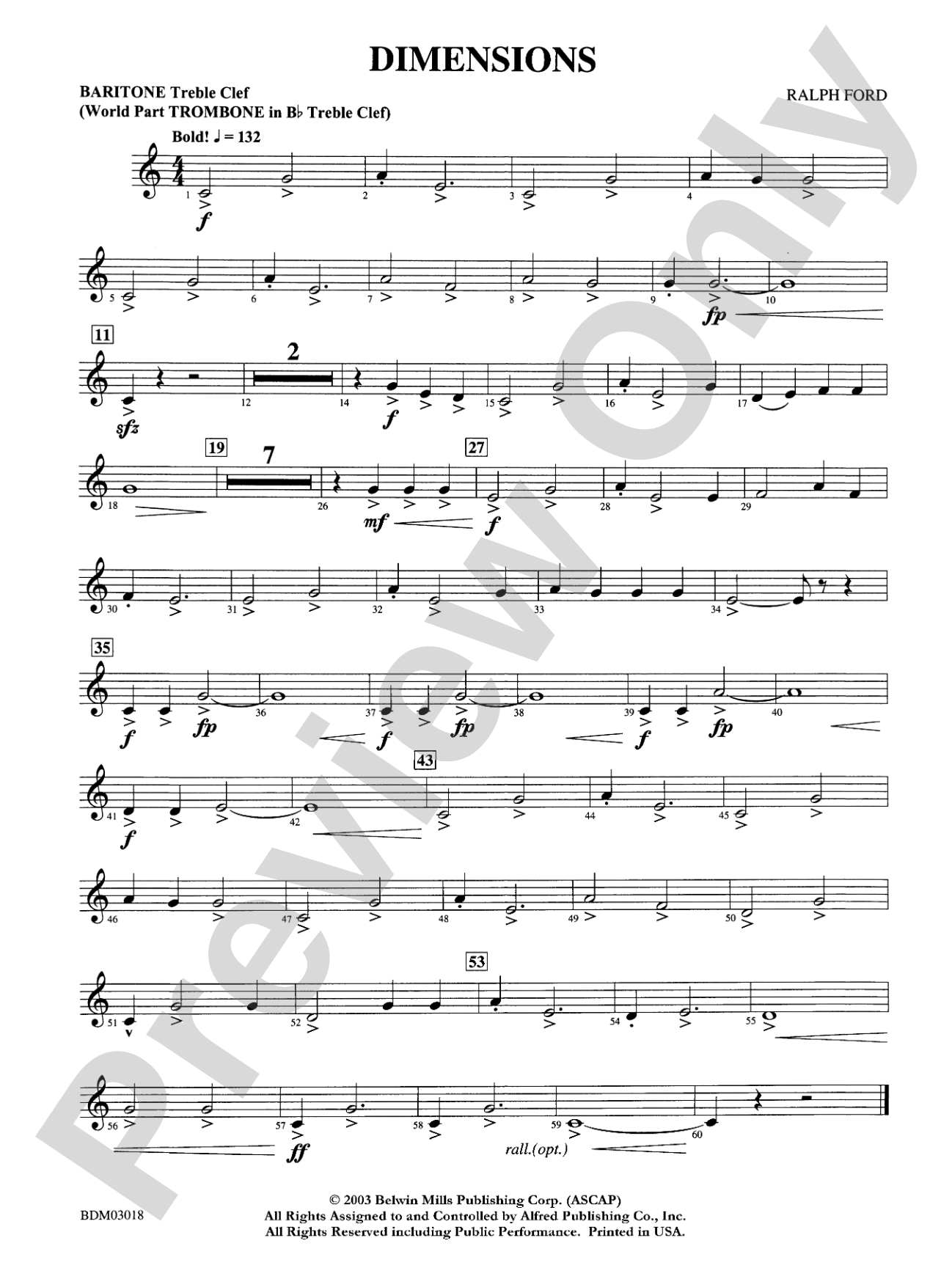

Dimensions: Baritone T.C.
By Ralph Ford
Grade: 0.5 (Very Easy)
Item: 00-PC-0002182_BTC1
$3.00
Pickup currently not available
Description
A grand opening is followed by a brass statement of the theme. Then the woodwinds take over, building to an exciting finish. This could easily be the first fanfare for your beginning band. Glorious and exciting, this will draw acclaim from all listeners. (1:52)


Don't just read it, hear it, play along with it, and watch your students grow with it. In MakeMusic Cloud, Dimensions: Baritone T.C. comes alive with professional accompaniment, adjustable tempo, and built-in practice tools that turn solo practice into real progress.
Open in the Player
Jump straight in and assign it today.
Start Your Free Trial
Open this title and explore the full library in minutes.
Sample Audio
1
Audio File
--:--
0:00
0:00
Sample Video
No sample videos found.
Additional Details
Series:
Belwin Very Beginning Band
Publisher:
Alfred Music
Page Count:
84
SKU:
00-PC-0002182_BTC1
More about this title
About the Composer: Ralph Ford

Ralph Ford is a composer, arranger, conductor, and clinician who has shaped music education and professional performance for decades. His career spans university instruction, media production, and exclusive composition for Alfred Music, where he has created over 250 works across orchestral, concert band, jazz ensemble, and marching band repertoire. Ford earned his Master of Science degree in 1988 and spent fifteen years on the music faculty at Troy State University, where he taught orchestration, arranging, theory, and applied brass while developing the university jazz program as a student.
Beyond the concert hall, Ford has worked extensively in broadcasting and media, composing news packages for national networks, scoring commercials and animation, and producing recordings across multiple platforms. His compositions have been premiered by university, military, professional, and school ensembles worldwide, and he has received international recognition for his work in advertising and multimedia production.
Why we love this
Dimensions delivers exactly what a beginning band needs: a piece that feels substantial without overwhelming young players. The architecture is smart. Ford opens with a grand gesture, hands the theme to the brass for a confident statement, then shifts the energy to woodwinds as the momentum builds. Your students get to experience the satisfaction of playing real musical phrases in a progression that makes musical sense, and your audience hears something polished and exciting from the very first concert.
What to expect
Dimensions opens like a fanfare you hear at important events, full of anticipation and bright brass color. When the theme passes to the woodwinds, the energy shifts into something building and alive, creating a sense of forward motion that carries through to an exciting finish. The whole arc feels celebratory and accomplished, yet never loses sight of accessibility.
Who it's for
This piece is ideal for beginning band programs that need a concert-opening work with genuine musical impact. Directors working with very young or newly formed ensembles will appreciate that Dimensions sounds polished and professional without requiring advanced technique or mature ensemble balance.
How to get the most out of it
- Balance the opening fanfare so it establishes the grandeur without drowning out the melodic content. The brass theme that follows needs to cut through clearly.
- Shape the woodwind section by encouraging individual voice independence. Even at this level, staggered entrances and countermotion create texture that lifts the piece beyond the page.
- Manage the final buildup carefully. With a very easy ensemble, gradual dynamic layering (adding instruments phrase by phrase rather than all at once) produces a more controlled crescendo than pulling for full volume immediately.
- Lock the ensemble's rhythmic pulse during the brass statement. This grounds the transitions between sections and gives the woodwinds something solid to rise against.
How to use it
Place Dimensions as your opening selection on a beginning band concert. Its 1:52 duration and fanfare structure make it an ideal anchor for the program's first half, setting a professional tone and energizing both ensemble and audience immediately. It also works well for festival or contest situations where a brief, impactful opening statement serves your ensemble well.
Skills your students will build
- Executing clear phrase shapes within simple rhythmic frameworks
- Balancing sectional entrances and transitions between instrumental groups
- Maintaining steady ensemble pulse during changes in texture and instrumentation
- Playing with consistent dynamic control through a multi-section form
- Reading basic concert band ranges and standard clefs with accuracy