Dill Pickles Sheet Music Preview

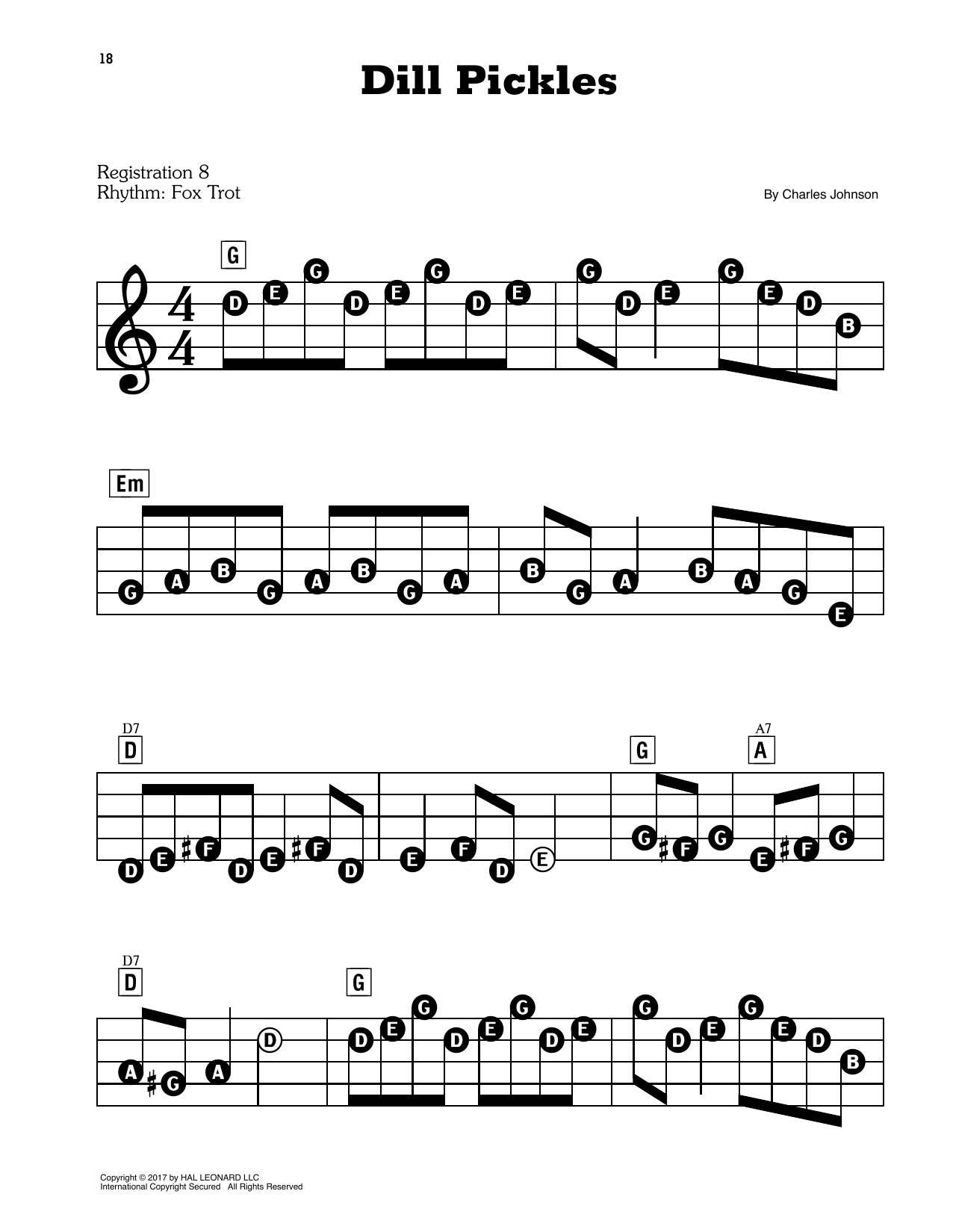
Dill Pickles: E-Z Play Today

Item: 35-DS00746155

Digital Download
$4.99
Description

Dill Pickles: E-Z Play Today isn't in MakeMusic Cloud just yet...but it could be. Let us know you'd like to see it, and you'll help shape what comes next. In the meantime, start a free trial and dive into thousands of interactive titles your students can play along with today.

Sample Audio
No sample audio found.
Sample Video
Additional Details
Publisher: Hal Leonard
Page Count: 4
SKU: 35-DS00746155

More about this title

About the Creator: Abe Olman

Abe Olman wrote "Dill Pickles" in 1906, and the piece became one of the most recorded rags of the early 20th century. His gift for memorable melody and infectious rhythmic vitality made his compositions favorites in both concert halls and dance venues of the era.

Olman's ability to craft accessible yet musically satisfying material helped define the rag idiom during its golden age. "Dill Pickles" exemplifies his knack for writing pieces that reward both casual players and serious musicians alike.

Why we love this

The E-Z Play arrangement strips away technical barriers without sacrificing the swagger and syncopation that make this rag so enjoyable. Students get an authentic taste of early jazz vocabulary and rhythmic sophistication at a level where they can actually perform it convincingly in public.

What to expect

Bright, bouncy, and irresistibly rhythmic, "Dill Pickles" captures the playful spirit of early ragtime with a memorable tune that lodges in your head immediately. The piece moves with infectious energy that makes both player and listener smile.

Who it's for

Elementary and early intermediate pianists ready for their first genuine jazz standard. This arrangement welcomes students who've built basic technique but haven't yet tackled complex voicings or unfamiliar harmonic territory.

How to get the most out of it

  • Keep the left hand steady and predictable; the syncopated melody depends on a rock-solid bass foundation to land properly
  • Lean into the swing feel of the written rhythms rather than playing them straight; let the syncopation breathe
  • Balance articulation between sections so the piece feels cohesive rather than choppy between melodic ideas

How to use it

Pair this with other rags or early jazz standards to create a cohesive set showcasing American vernacular music history. It's an ideal spring recital selection or a fun addition to a jazz history unit where students perform music rather than simply listen.

Skills your students will build

  • Reading and executing syncopated rhythms in a jazz context
  • Maintaining consistent left-hand accompaniment patterns while navigating syncopated melody
  • Interpreting swing feel and rhythmic interpretation without written swing notation
  • Balancing melody projection with accompaniment texture

You May Also Like