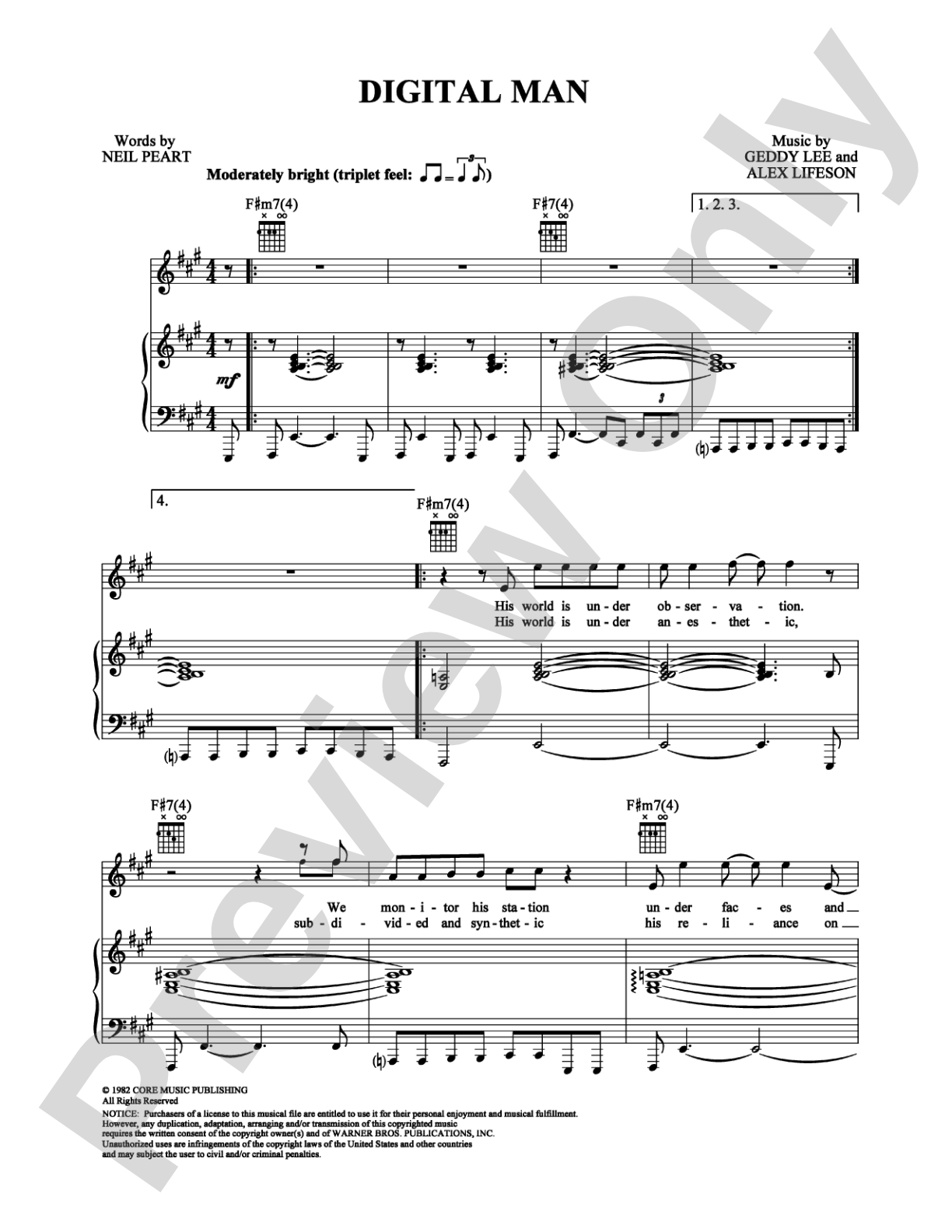
Digital Man: Piano/Vocal/Chords Digital Sheet Music

Digital Man: Piano/Vocal/Chords Digital Sheet Music

Rush, Geddy Lee, Alex Lifeson

Item: 00-PS-0004166

Digital Download
$3.99
Description

Digital Man: Piano/Vocal/Chords Digital Sheet Music isn't in MakeMusic Cloud just yet...but it could be. Let us know you'd like to see it, and you'll help shape what comes next. In the meantime, start a free trial and dive into thousands of interactive titles your students can play along with today.

Sample Audio
No sample audio found.
Sample Video
Additional Details
SKU: 00-PS-0004166

More about this title

About the Artist: Rush

Rush stands among rock music's most technically demanding and artistically ambitious ensembles. Formed in Toronto in 1968, the trio built a global following through complex song structures, virtuosic instrumental performances, and philosophical lyrics that elevated rock composition far beyond conventional pop-rock formulas. Their influence on progressive rock, metal, and educated rock audiences remains profound decades after their initial rise to prominence.

Why we love this

Digital Man captures Rush's gift for marrying intricate rhythmic frameworks with deeply singable melodic lines, making it an engaging choice for intermediate pianists and vocalists who want to explore rock composition beyond standard three-chord progressions. The song's keyboard-driven arrangement transfers beautifully to solo piano and voice, rewarding performers who can balance technical precision with expressive phrasing. Programming this for a student recital or rock ensemble showcase introduces young musicians to the harmonic sophistication that defines Rush's catalog.

What to expect

Digital Man carries Rush's characteristic blend of intellectual curiosity and emotional directness. The keyboard arrangement maintains the song's propulsive energy while creating intimate space for the vocal line, balancing the band's trademark technical sophistication with a melody that draws listeners in. The harmonic landscape shifts with unexpected turns, rewarding careful listening and rewarding performers who commit to precision.

Who it's for

Intermediate to advanced pianists comfortable with syncopated rhythms and contemporary harmonic movement will find this arrangement accessible and musically rewarding. Singers with rock or contemporary music experience can use this to expand their understanding of progressive rock vocal writing. Teachers seeking authentic rock literature that challenges students' technique and musicianship while remaining within reach will value this as a performance piece or study material.

How to get the most out of it

  • Study the original recording to internalize the rhythmic precision that defines this track; Rush's signature tight pocket requires careful attention to subdivision and tempo consistency.
  • Voice the chord voicings across both hands with clear separation between bass movement and upper structures to maintain harmonic clarity without relying on production textures.
  • Shape the vocal melody with dynamic control rather than relying on volume alone; the lyrics deserve space and intelligibility within the piano arrangement.
  • Identify sections where the piano and vocal rhythms interlock syncopically, then practice them separately before combining to ensure neither part overshadows the other.

How to use it

This works well on a recital featuring contemporary rock or popular music arrangements, especially in a concert that celebrates artists known for compositional depth. Include it alongside other progressive rock selections to demonstrate how Rush's influence extends across multiple genres and skill levels. It also serves as excellent study material for a student interested in how keyboard arrangements can preserve a song's identity while adapting it for smaller ensembles.

Skills your students will build

  • Reading syncopated rhythms in both hands simultaneously
  • Coordinating independent rhythmic patterns between piano and vocal line
  • Executing contemporary harmonic progressions with clear voice leading
  • Balancing technical keyboard work with vocal phrasing and interpretation
  • Managing rhythmic precision while maintaining musical expression

You May Also Like