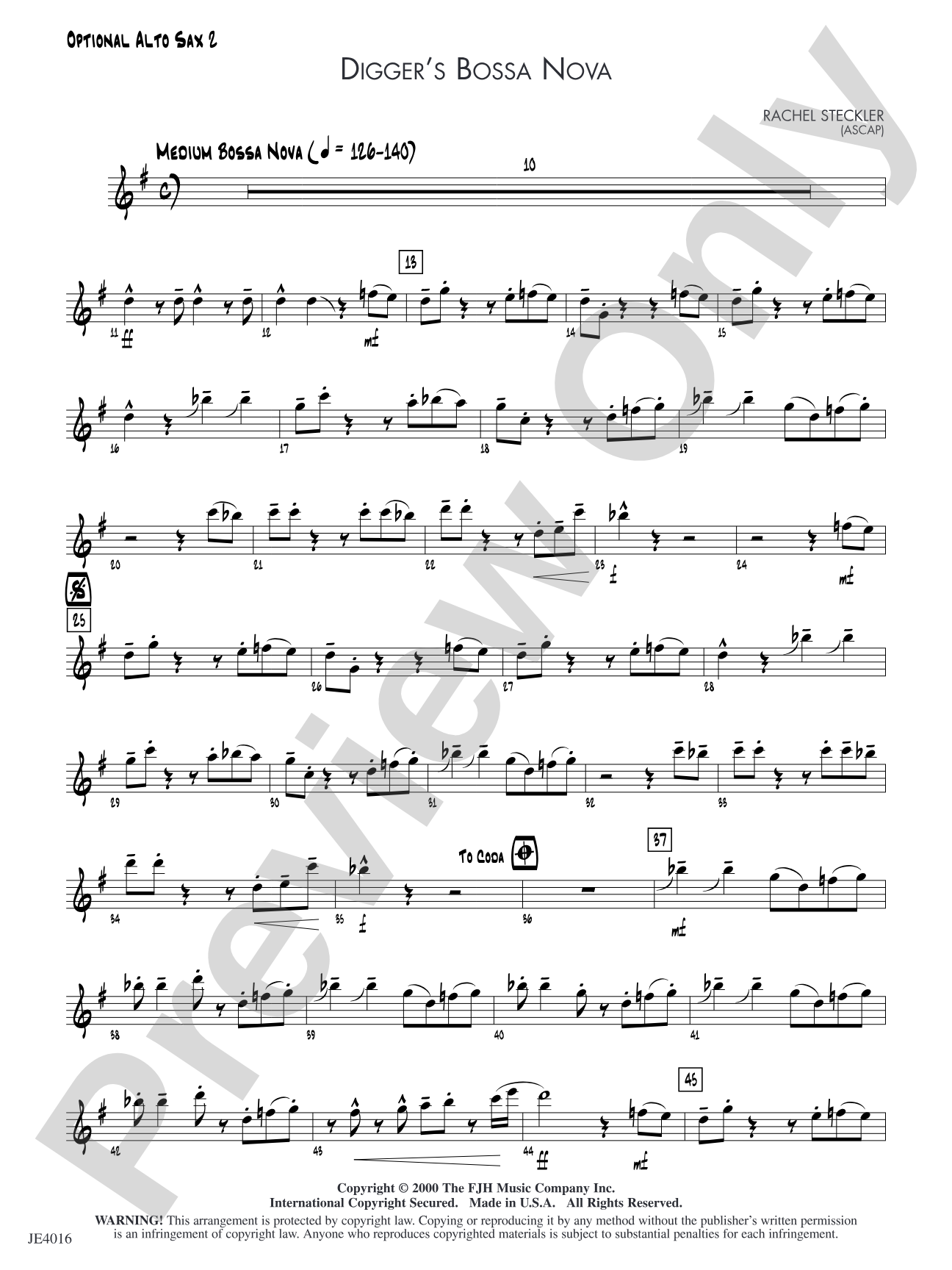
Digger's Bossa Nova: Optional Alto Sax 2 Sheet Music Preview

Digger's Bossa Nova: Optional Alto Sax 2

By Rachel Steckler

Grade: 4

Item: 98-PC-DJE4016_OAX2

Digital Download
$7.00
Description
Written with flute and piccolo or optional alto sax, this chart has lots of optional percussion to drive the bossa style. Cuica, triangle, cowbell, and shaker can be added to build up the intensity. Changes are written for flute, trumpet, and trombone. Written in the famous Quincy Jones style, this chart really cooks!

Digger's Bossa Nova: Optional Alto Sax 2 isn't in MakeMusic Cloud just yet...but it could be. Let us know you'd like to see it, and you'll help shape what comes next. In the meantime, start a free trial and dive into thousands of interactive titles your students can play along with today.

Sample Audio
0:00
0:00
Sample Video
Additional Details
Series: FJH Advanced Jazz Ensemble
Publisher: The FJH Music Company, Inc.
SKU: 98-PC-DJE4016_OAX2

More about this title

Why we love this

Steckler captures the groove and sophistication of Quincy Jones' orchestral jazz approach while keeping the ensemble writing accessible. The percussion layering system lets you build intensity gradually, so the chart works whether you have a full percussion section or just drums and bass. This is the kind of Latin jazz that sounds polished and intentional from the first rehearsal.

What to expect

Smooth, sophisticated groove with an unmistakable Afro-Cuban swagger. The optional percussion creates waves of rhythmic color that push the ensemble forward without overshadowing the soloists' space.

Who it's for

Grade 4 jazz ensembles with committed rhythm sections and soloists comfortable improvising. You need reliable percussion coverage to make the optional layers count, though the chart holds up fine with a leaner instrumentation.

How to get the most out of it

  • Build the percussion gradually across the form. Start with drums and shaker during the head, then add cowbell and triangle through the first solos, bringing in the cuica for the final shout chorus. This pacing keeps the energy arc feeling organic rather than static.
  • Lock the flute and alto sax (if used) into the clave rhythm during their trading sections. Even when improvising, the soloists should feel anchored to that fundamental Latin pulse.
  • Keep the rhythm section relaxed on the bossa feel. The chart cooks when the walking bass and comping stay light and conversational rather than aggressive.

How to use it

This works beautifully as the centerpiece of a Latin or world music concert, or as a statement piece mid-set at a winter jazz festival. Pair it with a samba or mambo to show contrast within the Latin tradition, or use it to bridge between straight-ahead bebop and the funk charts on your list.

Skills your students will build

  • Bossa nova clave rhythm recognition and execution
  • Solo space and improvisation over a complex Latin form
  • Ensemble balance when layering optional percussion parts
  • Stylistic interpretation of jazz articulation in a Latin context
  • Reading parts written across multiple tonalities and transpositions

You May Also Like