Dies Irae Sheet Music Preview

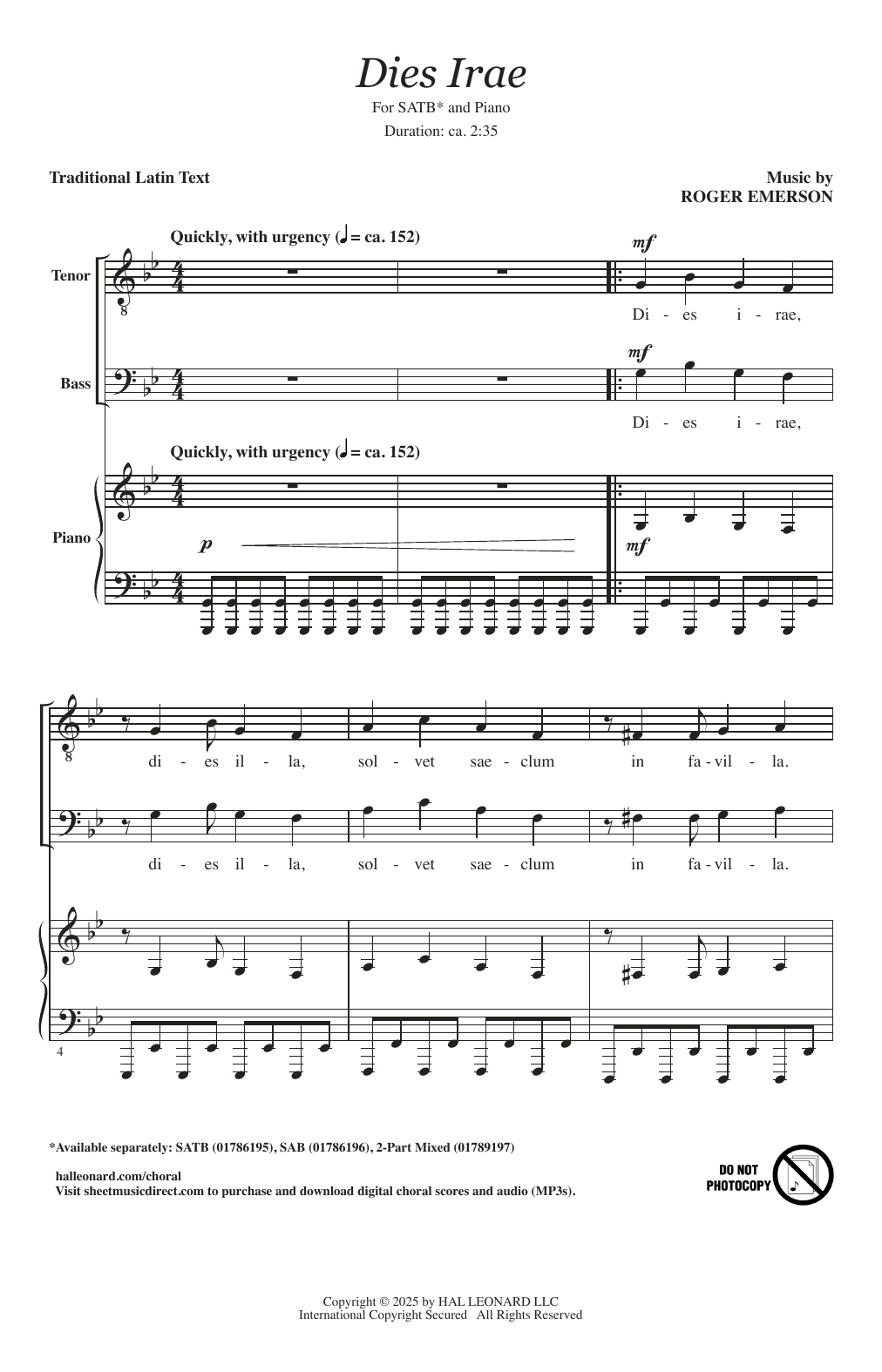
Dies Irae: SATB Choral Octavo

By Roger Emerson

Item: 35-DS01627547

Digital Download
$2.50
Description

Dies Irae: SATB Choral Octavo isn't in MakeMusic Cloud just yet...but it could be. Let us know you'd like to see it, and you'll help shape what comes next. In the meantime, start a free trial and dive into thousands of interactive titles your students can play along with today.

Sample Audio
No sample audio found.
Sample Video
Additional Details
Publisher: Hal Leonard
Page Count: 11
SKU: 35-DS01627547

More about this title

About the Composer: Roger Emerson

Roger Emerson has spent decades composing accessible choral music that challenges singers without overwhelming them. His arrangements and original compositions have become staples in high school and college choirs, known for their musical substance and practical voicing that works across skill levels.

Why we love this

Emerson's treatment of this sacred text avoids both saccharine sentimentality and academic coldness. The writing sits comfortably in the singers' voices while maintaining harmonic sophistication, making it equally suitable for a concert devoted entirely to sacred music or as a meaningful addition to a broader program.

What to expect

Meditative and reverent, with moments of quiet intensity. Emerson's harmonies create a sense of contemplation suited to the text, invoking the weight of the liturgical tradition while remaining emotionally direct and accessible.

Who it's for

Choirs with solid intonation and comfort reading four-part harmony will find this a rewarding challenge. High school and college sacred music programs, in particular, benefit from this kind of traditionally grounded yet contemporary voicing.

How to get the most out of it

  • Balance the inner voices carefully in the homophonic sections; the alto and tenor lines carry important harmonic color that can disappear if sopranos and basses dominate.
  • Shape phrases toward natural text inflection rather than against it. Emerson's part writing rewards singers who listen to where the Latin stress falls.
  • Mark your rehearsal letters or section breaks to avoid losing momentum during the longer sustained passages.
  • Experiment with dynamic contrast between sections to reveal the architecture of the piece. Pulling back on a verse before building to a refrain clarifies form that might otherwise feel static.

How to use it

This works as a centerpiece in a sacred music concert, or as a substantive closer that leaves audiences in reflection. It also pairs well with other settings of classical liturgical texts, whether from the Renaissance or fellow contemporary composers.

Skills your students will build

  • Latin text pronunciation and phrasing in a choral context
  • Four-part harmonic listening and blend
  • Sustaining long phrases with proper breath management
  • Reading through extended harmonic progressions with confidence
  • Balancing dynamic control across a 11-page work

You May Also Like