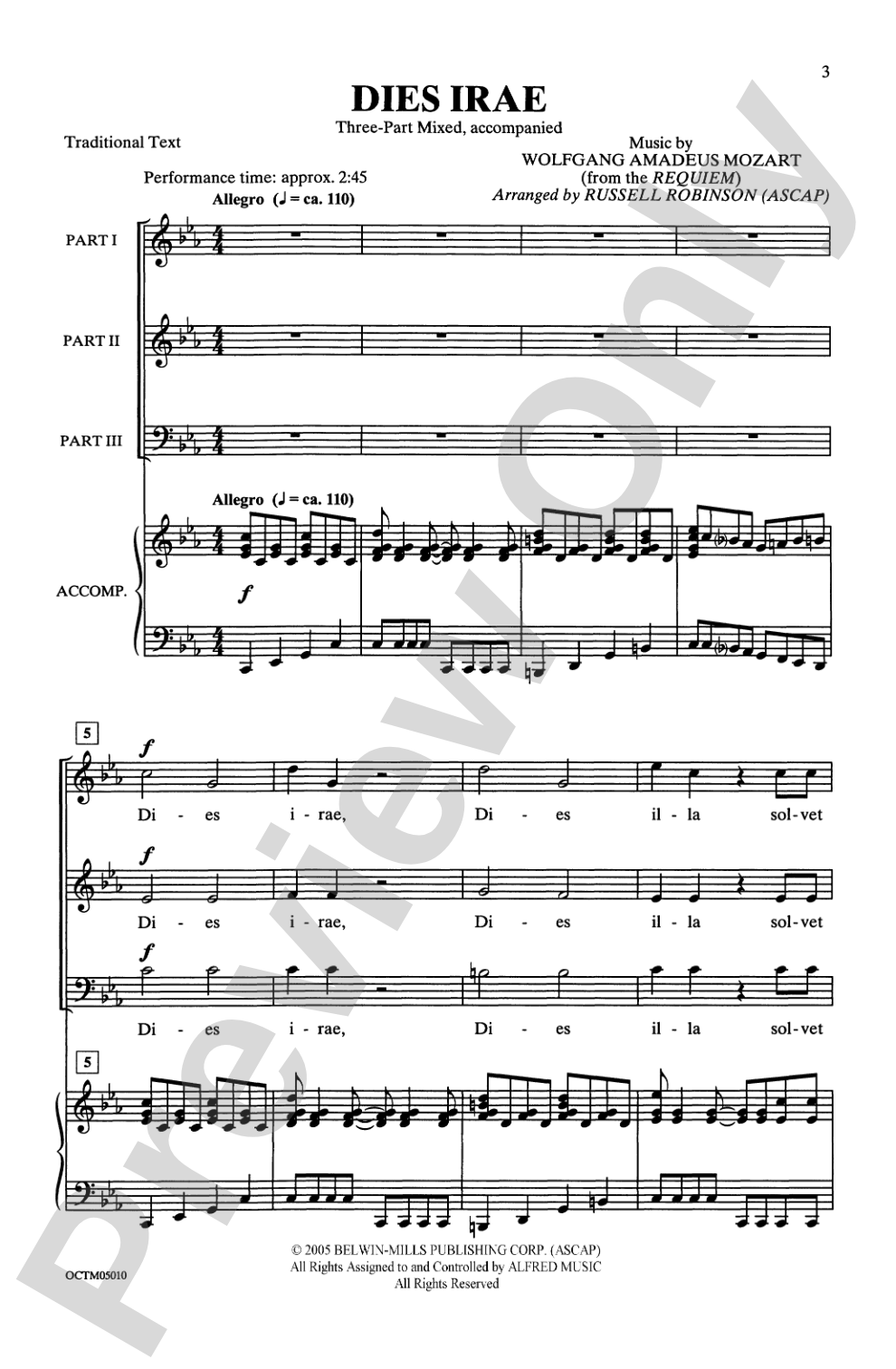
Dies Irae Sheet Music Preview

Dies Irae: 3-Part Mixed Choral Octavo

By Wolfgang Amadeus Mozart / arr. Russell Robinson

Level: Moderate

Item: 00-PO-0002718

Digital Download
$2.25

Minimum order quantity: 20 copies

Description
The classic selection from the Mozart Requiem is adapted for developing choirs in this new setting from Russell Robinson. Now your younger choirs can perform this exceptional selection.

Dies Irae: 3-Part Mixed Choral Octavo isn't in MakeMusic Cloud just yet...but it could be. Let us know you'd like to see it, and you'll help shape what comes next. In the meantime, start a free trial and dive into thousands of interactive titles your students can play along with today.

Sample Audio
0:00
0:00
Sample Video
Additional Details
Series: Alfred Archive Edition: Belwin Festival Series
Publisher: Alfred Music
Page Count: 12
SKU: 00-PO-0002718

More about this title

About the Composer: Wolfgang Amadeus Mozart

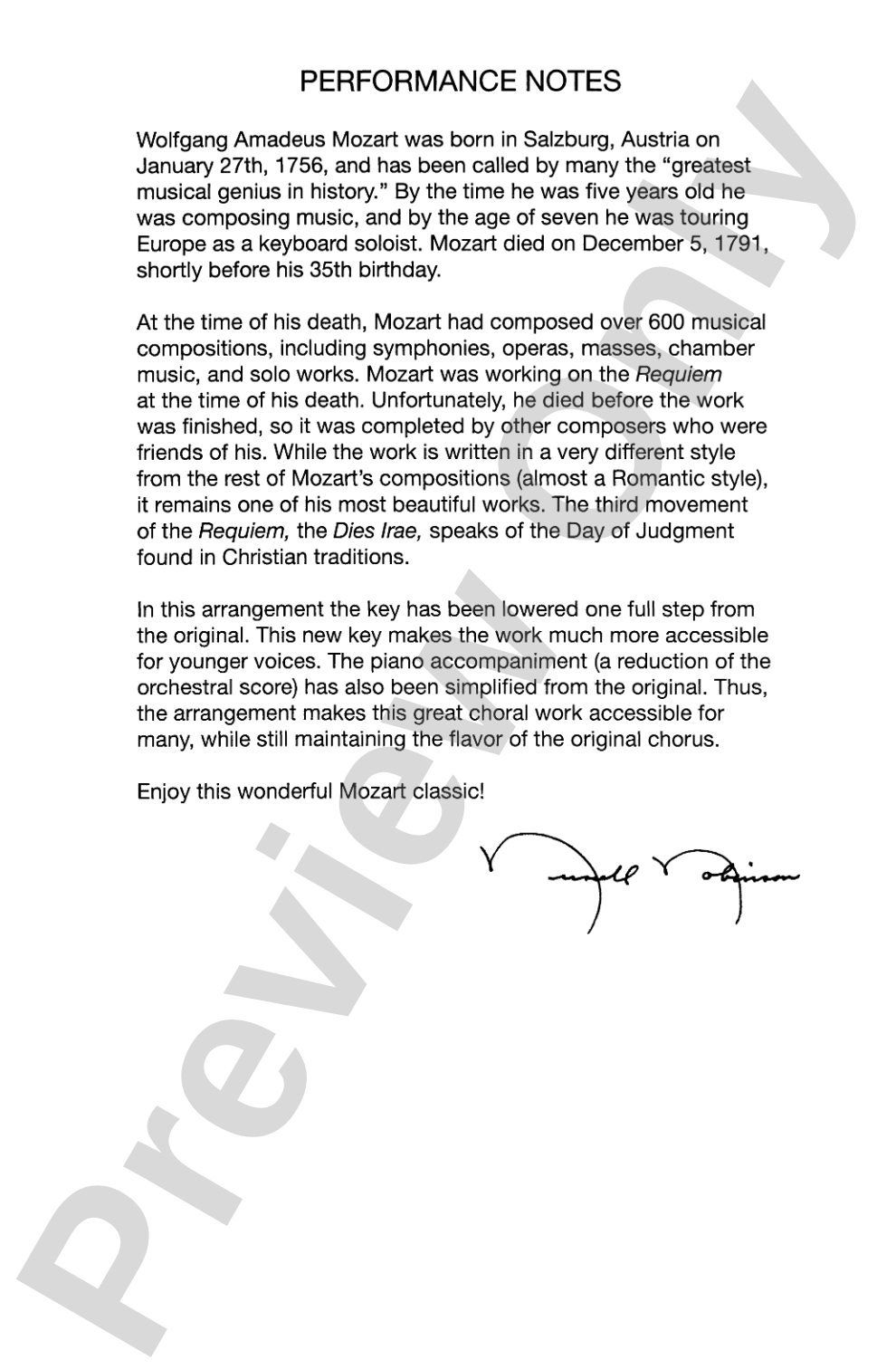
Wolfgang Amadeus Mozart (1756-1791) composed across every major genre of his time with a facility and inventiveness that still astonish musicians and scholars. His Requiem in D minor, left incomplete at his death and finished by Franz Xaver Süssmayr, stands as one of the pillars of choral literature and remains central to concert programming worldwide.

Why we love this

Russell Robinson's arrangement strips away nothing of Mozart's dramatic power while making the Dies Irae accessible to choirs still building ensemble maturity. The SAB voicing preserves the emotional weight of this masterwork without the vocal demands that typically restrict it to advanced groups, giving younger singers genuine contact with the classical repertoire at the heart of choral tradition.

What to expect

The Dies Irae carries its centuries-old weight into the room. Mozart's melody unfolds with grave inevitability, supported by harmonies that create real depth without overwhelming younger voices. The result is meditative and solemn, yet accessible enough that singers can focus on bringing conviction to the text rather than merely executing notes.

Who it's for

This octavo belongs in the hands of middle school and early high school choirs ready to tackle repertoire with serious musical content. Directors seeking to introduce students to the classical masterworks without waiting until advanced level will find an essential building block here.

How to get the most out of it

  • Shape the opening phrase with forward motion through the text; resist the temptation to linger on individual words at the expense of line continuity.
  • Balance the three parts so that the top line carries the melody clearly without the middle and lower voices fading into accompaniment.
  • Attend to the harmonic rhythm and allow slight elasticity in tempo during sustained passages to let full sonorities bloom.
  • Mark the dynamic transitions crisply; this arrangement relies on contrasts to maintain dramatic tension across the 12 pages.

How to use it

Pair this with lighter sacred or secular works to create programming that spans both introspection and joy. It works especially well in winter or spring concerts where the emotional arc can move from this profound moment into contrasting pieces. Consider pairing it with madrigals or spirituals to show choral music across styles and centuries.

Skills your students will build

  • Reading and performing classical harmonic language in three parts
  • Sustaining legit tone through longer phrases in a foreign language
  • Balancing vocal lines in SAB voicing where all three parts carry melodic weight
  • Interpreting text-driven expression and dynamic contrast in sacred music
  • Ensemble blend and intonation across a broader harmonic palette than pop or folk repertoire typically demands

You May Also Like