Die With A Smile (arr. Chris Larosa) Sheet Music Preview

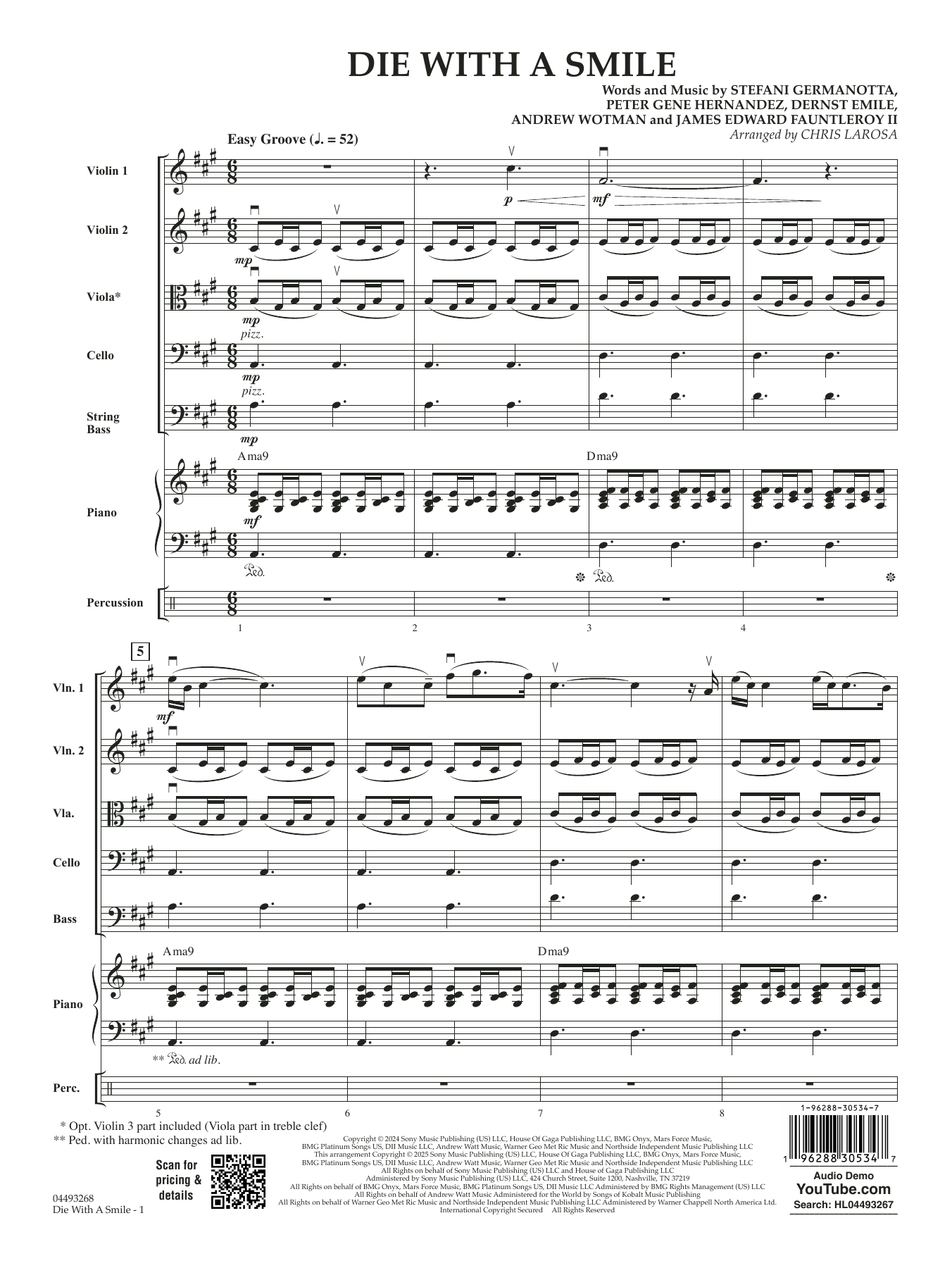
Die With A Smile (arr. Chris Larosa): String Orchestra Conductor Score & Parts

As performed by Bruno Mars Lady Gaga / Arranged by Chris Larosa

Grade: 3-4

Item: 35-PK01588289

Digital Download
$60.00

One moment…

Description
With beautiful harmonies and expert voicings, this great arrangement of the smash hit performed by Lady Gaga and Bruno Mars will be the highlight of your next concert program. Set in 6/8 time this is the perfect piece to teach and reinforce various rhythmical patterns. A piano and drum set part add the perfect flavor.

Die With A Smile (arr. Chris Larosa): String Orchestra Conductor Score & Parts isn't in MakeMusic Cloud just yet...but it could be. Let us know you'd like to see it, and you'll help shape what comes next. In the meantime, start a free trial and dive into thousands of interactive titles your students can play along with today.

Sample Audio
No sample audio found.
Sample Video
Additional Details
Publisher: Hal Leonard
SKU: 35-PK01588289

More about this title

About the Artist: Bruno Mars Lady Gaga

Bruno Mars is a singer, songwriter, and producer known for crafting meticulously arranged pop songs that blend retro influences with contemporary production. His work consistently demonstrates sophisticated harmonic thinking and rhythmic precision. Lady Gaga, born Stefani Germanotta, built her career on vocal virtuosity and theatrical presentation while maintaining deep knowledge of songwriting and arrangement. Together, their collaboration on 'Die With A Smile' showcases the kind of melodic clarity and emotional directness that translates beautifully to instrumental settings.

Why we love this

Chris Larosa's arrangement captures the emotional core of the original while making the piece accessible to string players at the 3-4 level. The 6/8 meter gives your ensemble a rhythmic anchor that feels fresh without becoming a teaching gimmick, and the addition of piano and drums grounds the strings in a contemporary sound that students genuinely want to play.

What to expect

The arrangement has a warm, cinematic quality that honors the intimacy of the original vocal performance. The 6/8 meter creates a gentle sway beneath soaring string lines, while the rhythm section adds just enough contemporary texture to keep the sound from feeling orchestral in a classical sense. This is music that invites your audience in rather than dazzling them with display.

Who it's for

Directors building a contemporary pop program or seeking to bridge the gap between what students hear on streaming services and what they play in rehearsal. String orchestras wanting to add a substantial concert piece that feels modern without sacrificing musicality or harmonic interest.

How to get the most out of it

  • Balance the melody between first violins and whatever voice carries it in a given passage; the beauty of the harmonies depends on equal weight across the upper voices rather than a solo-and-accompaniment texture.
  • Work the 6/8 pulse as a three with a walking heartbeat rather than six individual eighth notes; this creates the flowing character the arrangement needs.
  • Give the rhythm section space to breathe and lock in during rehearsals before adding strings; once the piano and drums establish the groove, the orchestral parts settle into place much faster.
  • Honor the dynamic curve of the original recording by creating subtle crescendos and diminuendos that match the vocal phrasing rather than hitting every marking as written.

How to use it

Place this piece in the second half of a concert after you've established your ensemble's capabilities with a more traditional selection. It works as a strong closer if you want to send the audience out humming something they recognize, or as a bridge between your classical and pops segments if you program thematically.

Skills your students will build

  • Reading and executing compound meter (6/8) with consistent subdivision
  • Balancing independent harmonic lines while maintaining blend
  • Responding to rhythmic leadership from a rhythm section
  • Interpreting dynamic curves that follow melodic contour rather than mechanical marking placement
  • Ensemble coordination across string sections with added percussion and keyboard

You May Also Like