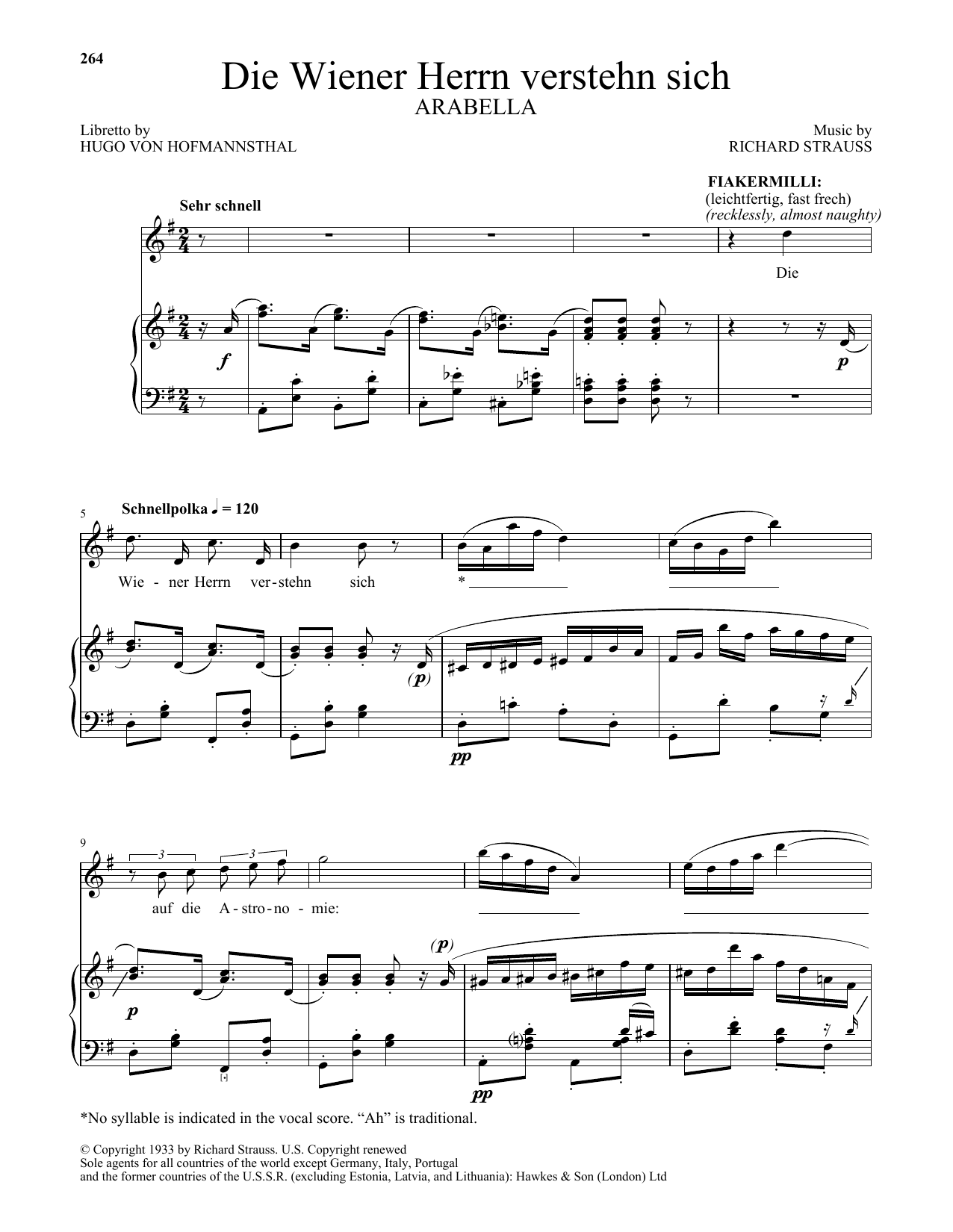
Die Wiener Herrn Verstehn Sich (from Arabella) Sheet Music Preview

Die Wiener Herrn Verstehn Sich (from Arabella): Piano Vocal

Edited by Richard Walters

Item: 35-DS00438423

Digital Download
$5.99

One moment…

One moment…

Description

Die Wiener Herrn Verstehn Sich (from Arabella): Piano Vocal isn't in MakeMusic Cloud just yet...but it could be. Let us know you'd like to see it, and you'll help shape what comes next. In the meantime, start a free trial and dive into thousands of interactive titles your students can play along with today.

Sample Audio
No sample audio found.
Sample Video
Additional Details
Publisher: Hal Leonard
Page Count: 5
SKU: 35-DS00438423

More about this title

About the Composer: Richard Strauss

Richard Strauss composed Arabella in 1932 as his final collaboration with librettist Hugo von Hofmannsthal. The opera represents a mature work from one of the twentieth century's greatest orchestrators, crafted during a period when Strauss was refining his gift for blending lyrical melody with sophisticated harmonic language. His ability to write for the human voice with warmth and expressivity shines throughout this score.

Why we love this

This aria captures a moment of social observation and humor that feels utterly natural on the stage. Strauss gives the soprano a conversational, almost spoken quality that lets the character's personality emerge through music rather than overshadow the text, making it an excellent teaching piece for young singers learning how to serve the drama.

What to expect

Urbane and observant, with the sparkle of Viennese society conversation set to music. The writing feels almost like a sophisticated parlor song, elegant without pretense, with Strauss allowing moments of gentle amusement to surface through the vocal line.

Who it's for

Soprano singers preparing operatic repertoire, whether for voice lessons, recitals, or ensemble performance. This excerpt works well for intermediate to advanced vocalists developing their ability to inhabit character through music.

How to get the most out of it

  • Approach the vocal line with conversational phrasing rather than legit operatic sweep; the wit depends on clarity and directness.
  • Balance the accompaniment so the piano supports without overwhelming a soprano voice that needs room to shape the text naturally.
  • Work out the rhythmic relationship between voice and piano early, as Strauss writes with specific coordination between the two parts that rewards precision.

How to use it

Include this in a voice recital exploring early twentieth-century opera excerpts, or pair it with other Strauss songs to create a focused program segment. It also serves well as an audition piece for students demonstrating their ability to handle character with musical sophistication.

Skills your students will build

  • Singing conversational, character-driven text with musical support
  • Managing longer melodic phrases with natural breath placement
  • Coordinating vocal phrasing with piano accompaniment
  • Interpreting Strauss's harmonic language and its expressive possibilities

You May Also Like