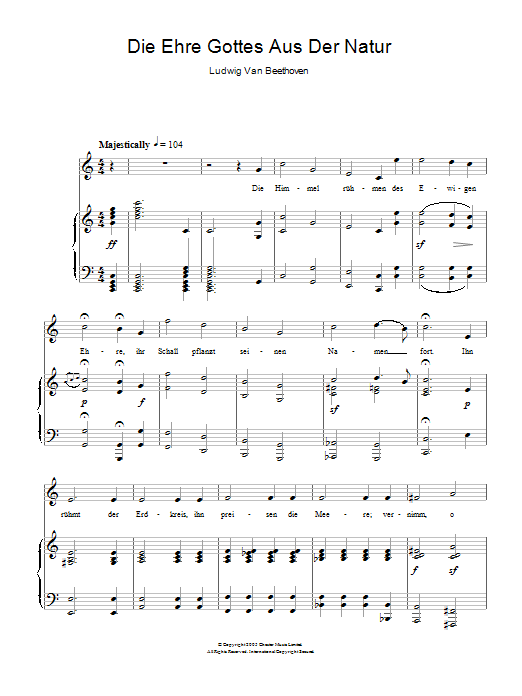
Die Ehre Gottes Aus Der Natur Op.48 No.4 Sheet Music Preview

Die Ehre Gottes Aus Der Natur Op.48 No.4: Piano Vocal

As performed by Ludwig Van Beethoven

Item: 35-DS00202757

Digital Download
$5.99
Description

Die Ehre Gottes Aus Der Natur Op.48 No.4: Piano Vocal isn't in MakeMusic Cloud just yet...but it could be. Let us know you'd like to see it, and you'll help shape what comes next. In the meantime, start a free trial and dive into thousands of interactive titles your students can play along with today.

Sample Audio
No sample audio found.
Sample Video
Additional Details
Publisher: Hal Leonard
Page Count: 3
SKU: 35-DS00202757

More about this title

About the Artist: Ludwig Van Beethoven

Beethoven's output of vocal music ranges from intimate lieder to monumental symphonies with chorus, yet his songs often get overlooked in favor of his instrumental works. His gift for melody and harmonic richness served him equally well in the art song, where he could distill profound ideas into compact, memorable forms.

As a composer navigating deafness, Beethoven's later vocal works reveal a composer still wrestling with questions of nature, mortality, and human dignity. His settings of German texts reflect the values of the Enlightenment and Romantic era in which he lived.

Why we love this

This song pairs Beethoven's instinct for melodic clarity with text that invites genuine vocal expression without demanding virtuosity. The three-page score sits comfortably for intermediate vocalists while offering pianists enough musical substance to engage with Beethoven's harmonic language directly.

What to expect

A moment of reflection and reverence. The song channels a sense of wonder at the natural world, moving with quiet dignity. The piano frames the vocal line like a meditation, allowing space for the singer's words to carry real weight.

Who it's for

High school and college-level vocalists looking for German Lieder that sit well on the voice and connect meaningfully to the text. Singers and pianists seeking repertoire that demonstrates Beethoven's craft beyond his symphonies will find genuine musical substance here.

How to get the most out of it

  • Shape the vocal line with long, connected phrases rather than breaking at bar lines; the text naturally suggests where to breathe, so follow the punctuation of the poetry first.
  • The piano part deserves clarity in its own right. Avoid burying the accompaniment beneath the voice; aim for a transparent balance where both partners sound complete.
  • Take time with the harmonic shifts in the middle section. These moments reward a slightly broader tempo and attentive listening from both singer and accompanist.

How to use it

Pair this with other German song literature in a recital or vocal concert, or feature it in a program exploring Beethoven's range as a composer. Its spiritual tone makes it equally suited to concert performances or sacred music contexts.

Skills your students will build

  • Sustaining long vocal lines with natural phrasing rather than mechanical breathing
  • Coordinate independent rhythmic and harmonic movement between voice and piano
  • Interpret Romantic-era German text with musical sensitivity
  • Execute clear articulation and dynamic control in the accompanying part

You May Also Like