
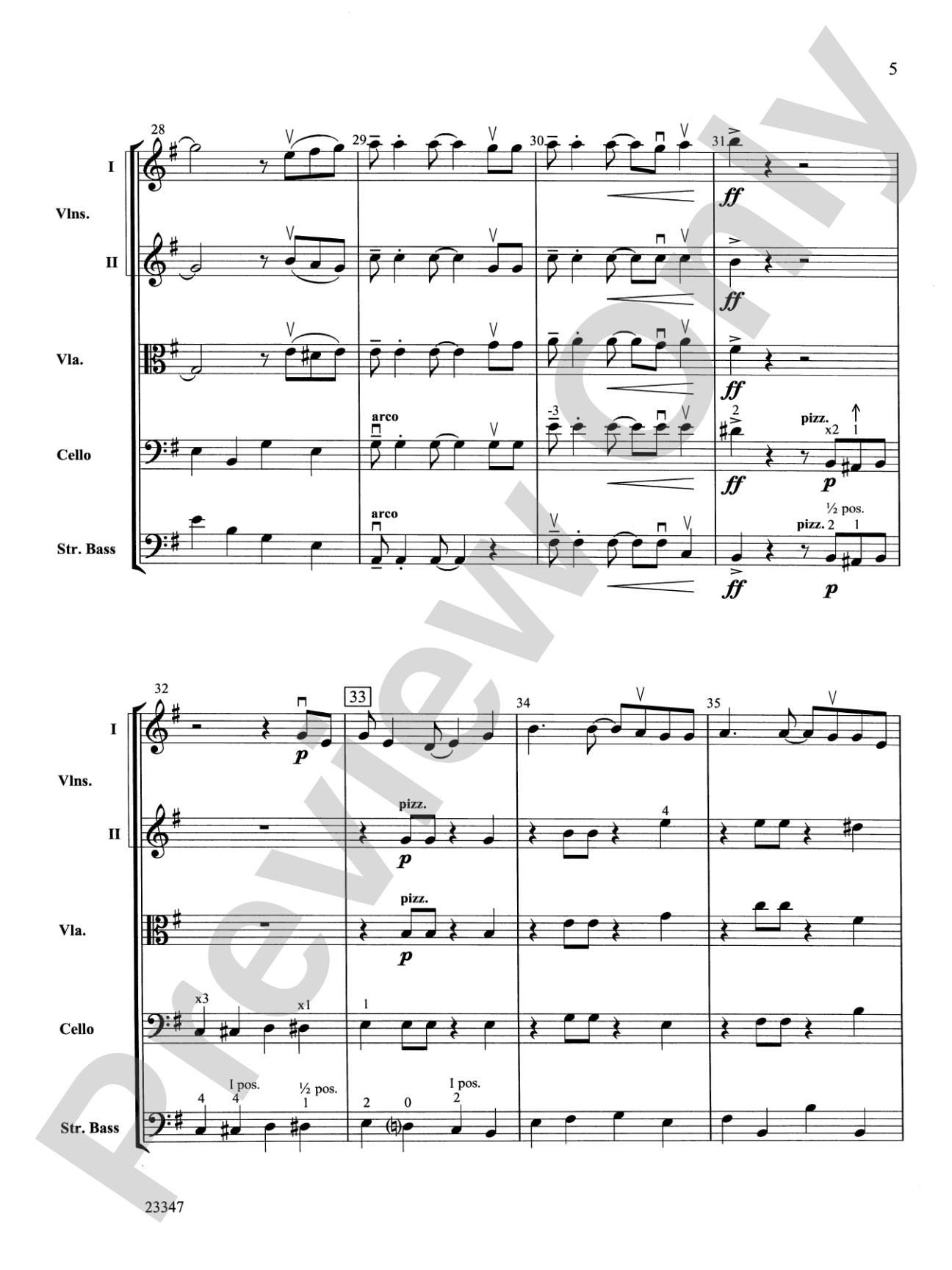
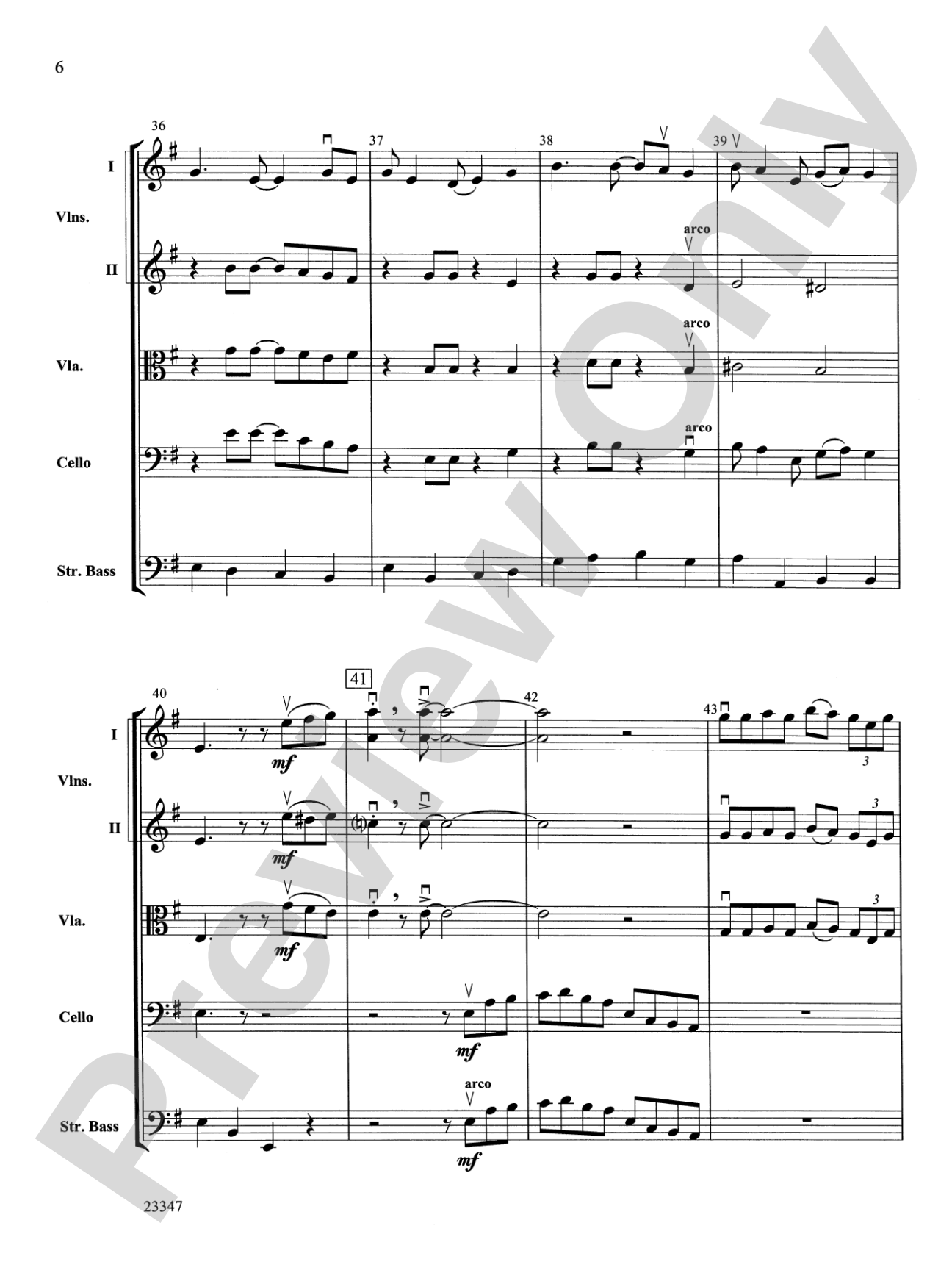
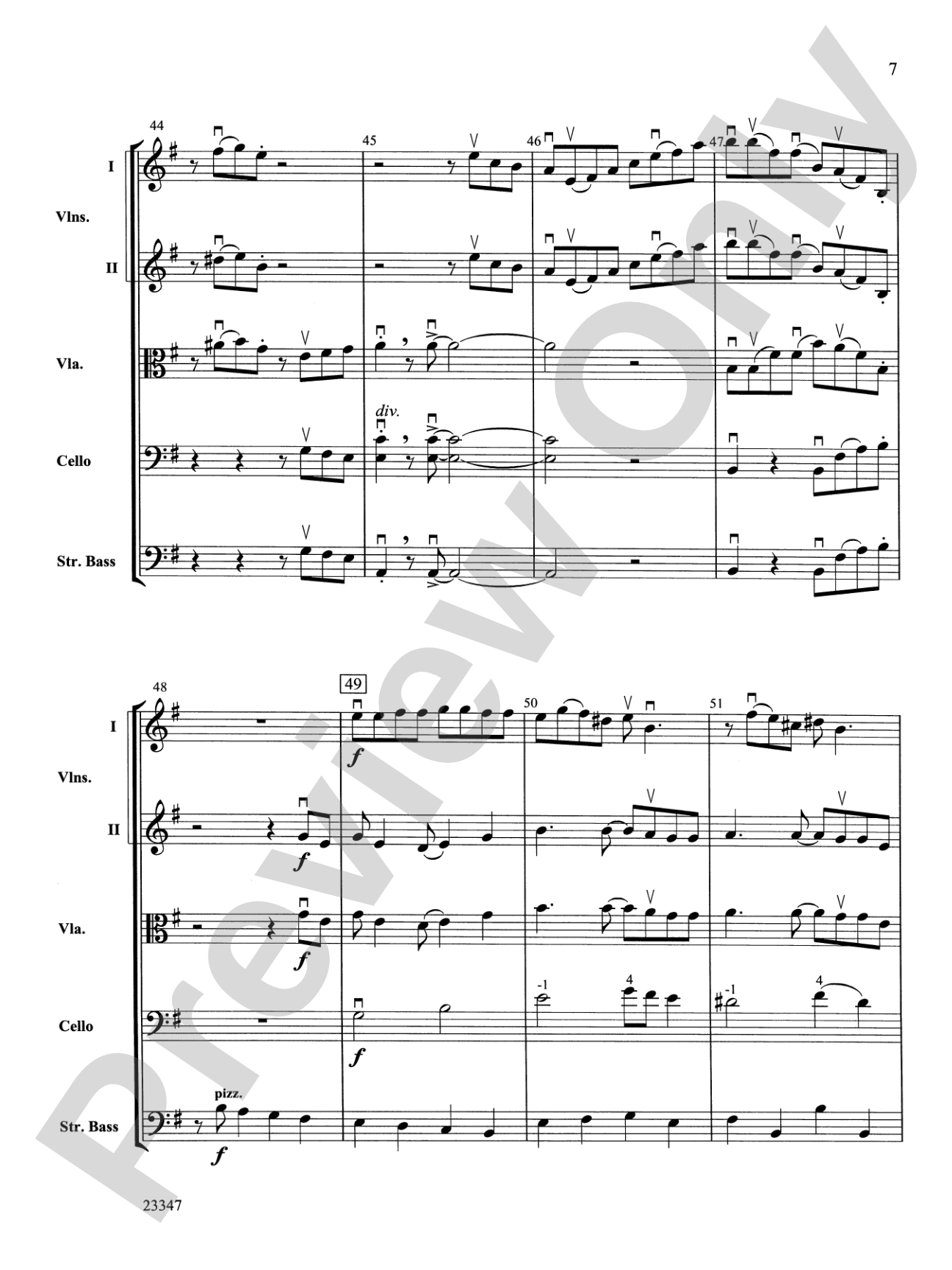
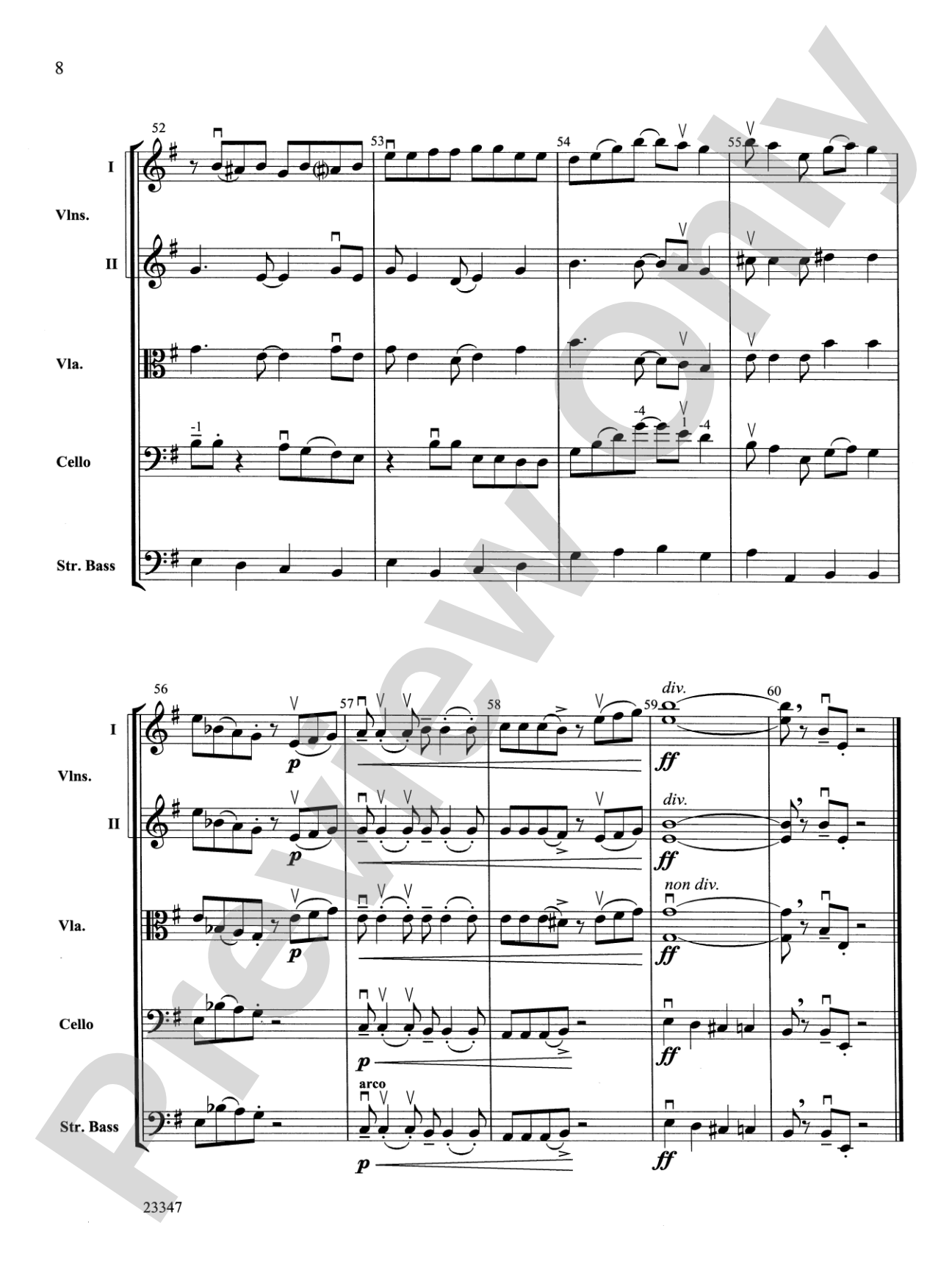

Didn't My Lord Deliver Daniel?: String Orchestra Conductor Score & Parts
African-American Spiritual / arr. Carrie Lane Gruselle
Grade: 2.5
Item: 00-PK-0000700

$46.00
Pickup currently not available
Buy Extra Parts (Digital PDF Download)
| Product | Price | Quantity |
|---|---|---|
| Didn't My Lord Deliver Daniel?: Score | $9.00 | |
| Didn't My Lord Deliver Daniel?: 1st Violin | $5.99 | |
| Didn't My Lord Deliver Daniel?: 2nd Violin | $5.99 | |
| Didn't My Lord Deliver Daniel?: Viola | $5.99 | |
| Didn't My Lord Deliver Daniel?: Cello | $5.99 | |
| Didn't My Lord Deliver Daniel?: String Bass | $5.99 |
Parts Added to Cart!
Description
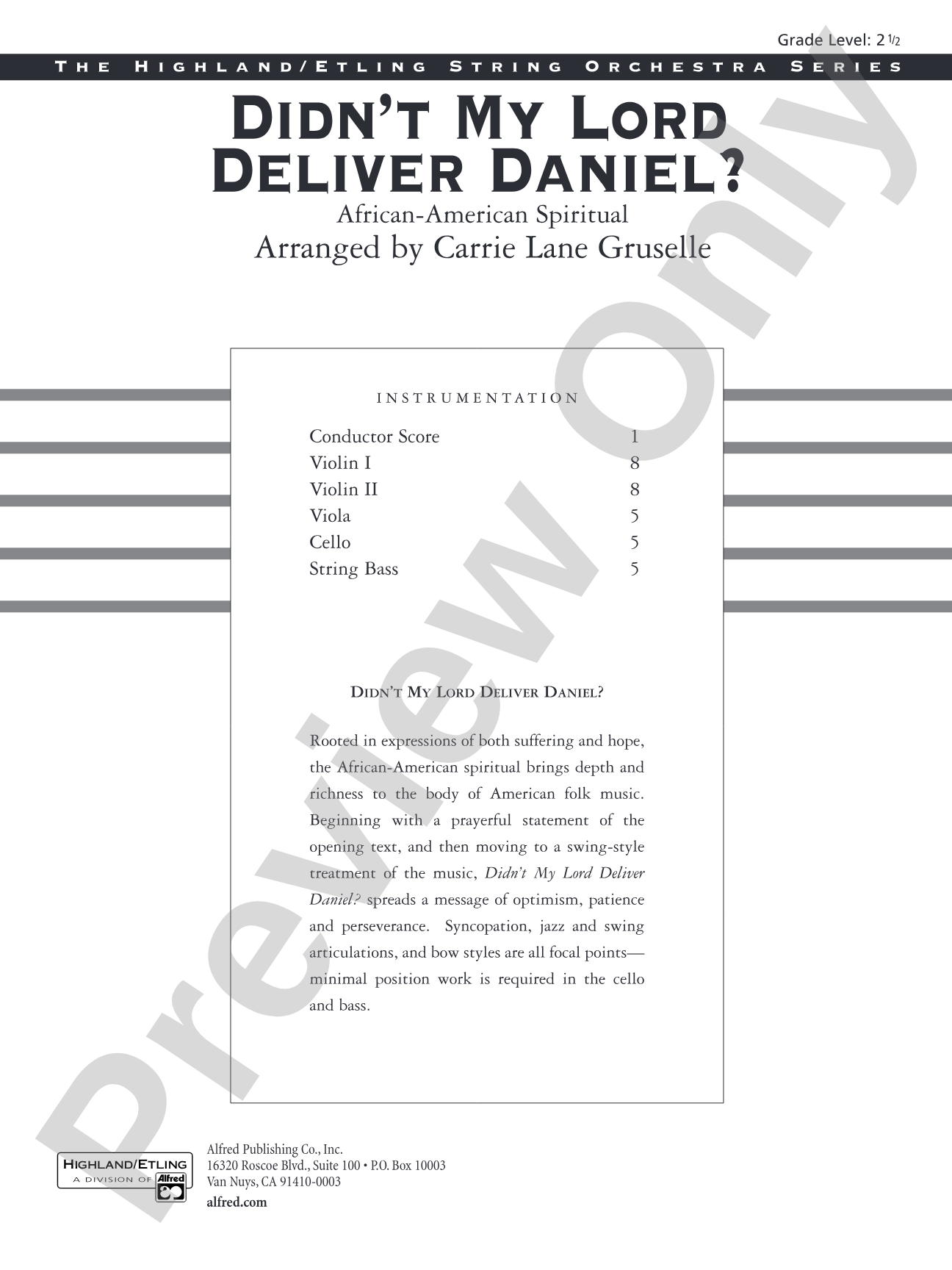
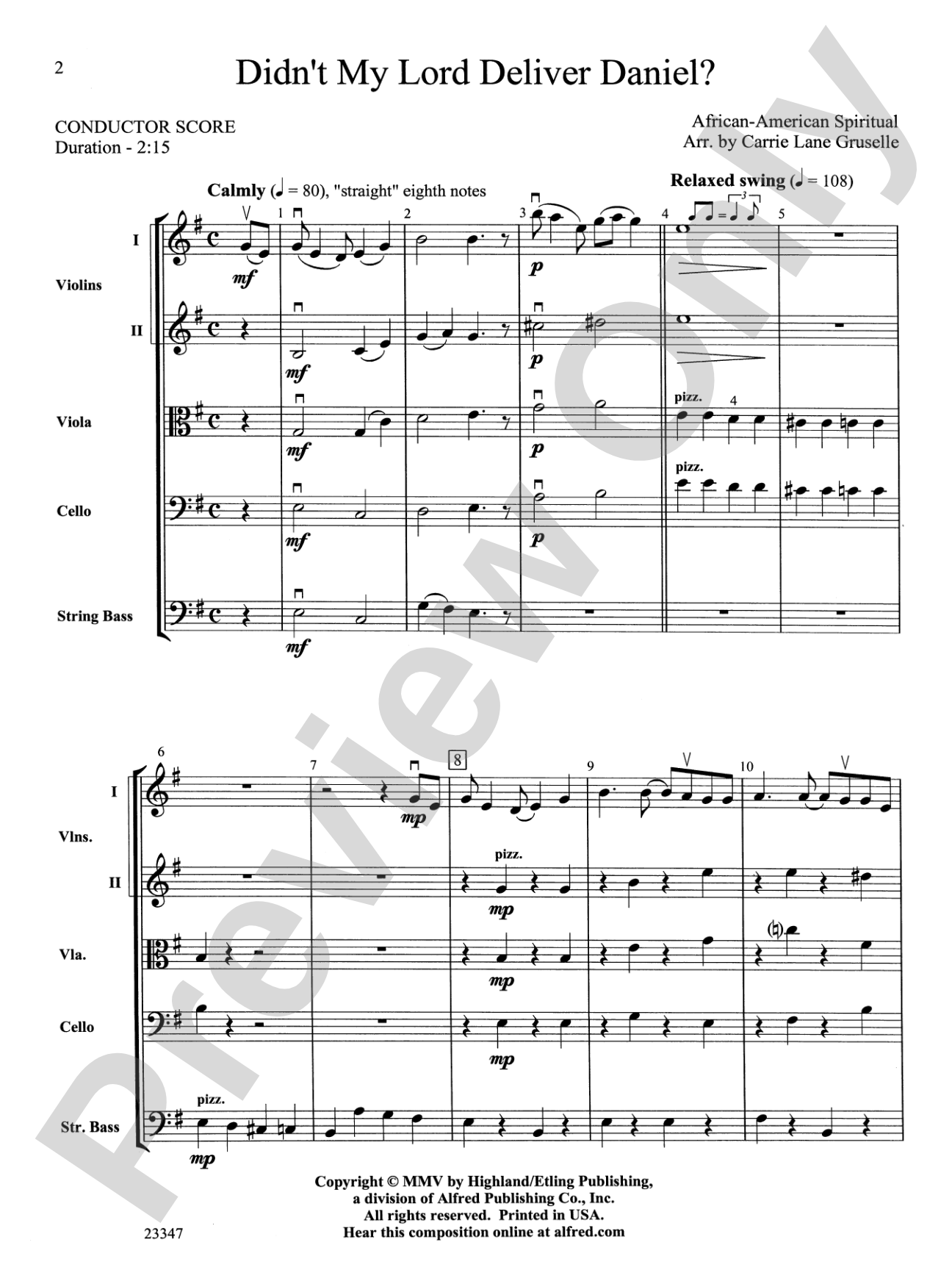
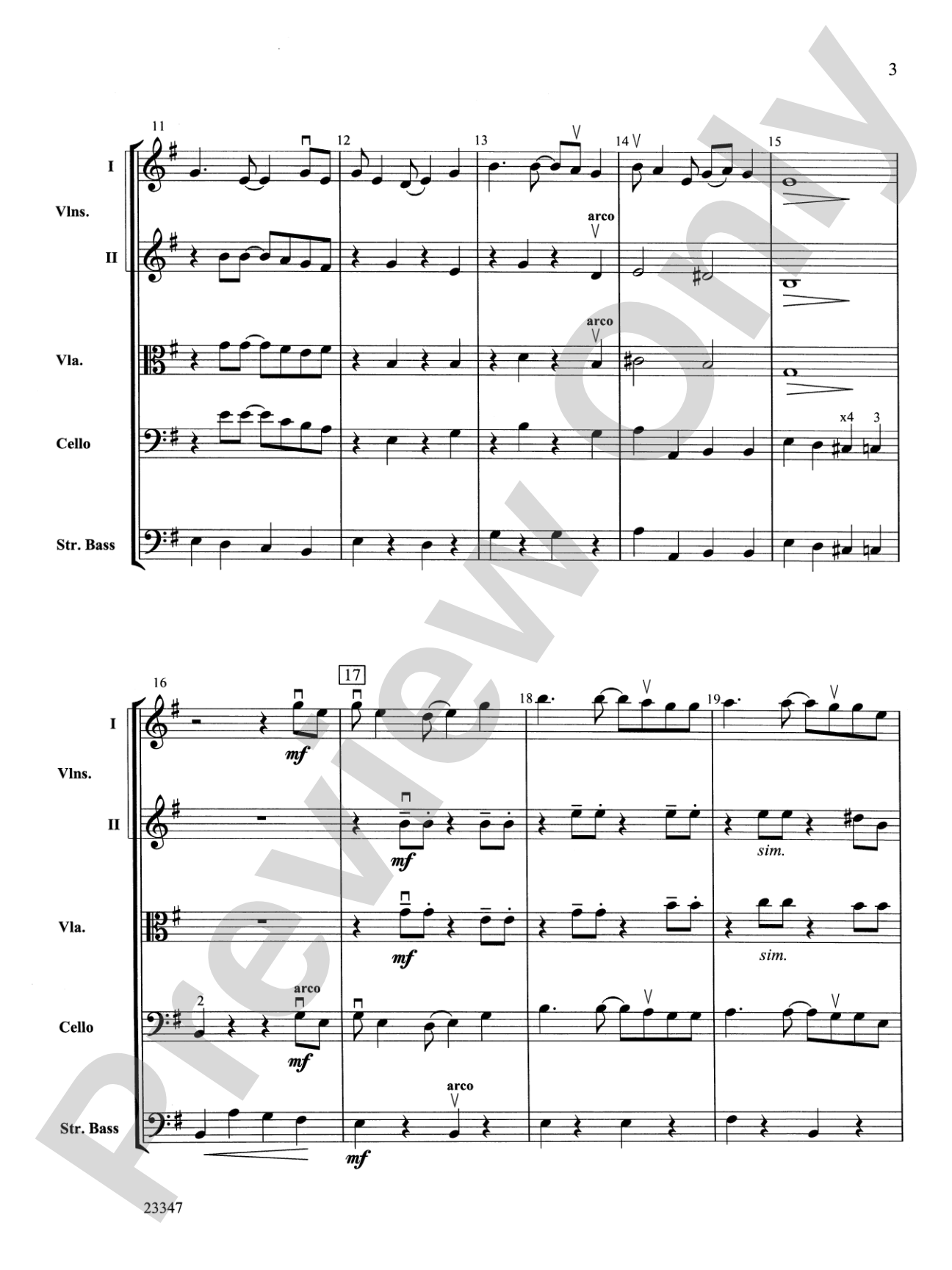
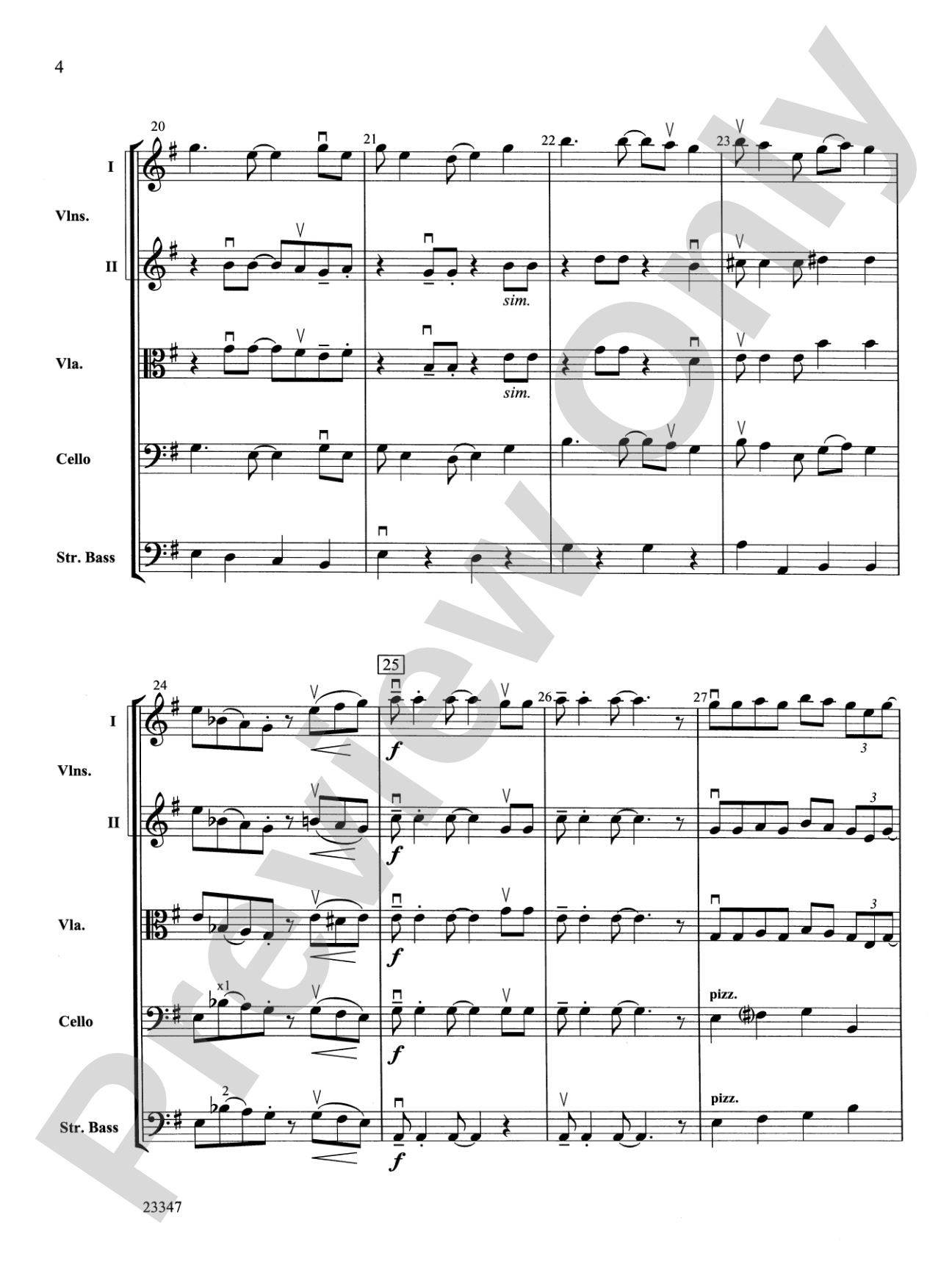
Rooted in expressions of both suffering and hope, the African-American spiritual brings depth and richness to the body of American folk music. Beginning with a prayerful statement of the opening text, and then moving to a swing-style treatment of the music, Didn't My Lord Deliver Daniel? spreads a message of optimism, patience and perseverance. Syncopation, jazz and swing articulations, and bow styles are all focal points-minimal position work is required in the cello and bass.


Don't just read it, hear it, play along with it, and watch your students grow with it. In MakeMusic Cloud, Didn't My Lord Deliver Daniel?: String Orchestra Conductor Score & Parts comes alive with professional accompaniment, adjustable tempo, and built-in practice tools that turn solo practice into real progress.
Open in the Player
Jump straight in and assign it today.
Start Your Free Trial
Open this title and explore the full library in minutes.
Sample Audio
1
Audio File
--:--
0:00
0:00
Sample Video
No sample videos found.
Additional Details
Series:
Highland/Etling String Orchestra
Publisher:
Alfred Music
Page Count:
62
SKU:
00-PK-0000700
More about this title
About the Arranger: Carrie Lane Gruselle
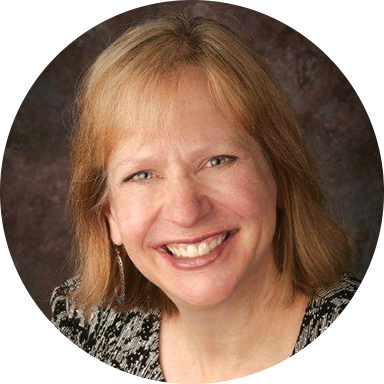
Carrie Lane Gruselle earned her Bachelor of Music Education from the University of Wisconsin–Eau Claire and her Masters of Music Education from the University of Wisconsin–Stevens Point, where she specialized in Suzuki pedagogy. She brings classroom and studio experience to her arranging work, teaching strings at the elementary and middle school levels in the Appleton Area School District while also maintaining a cello studio through the Lawrence University Arts Academy in Appleton, Wisconsin.
Why we love this
Gruselle navigates the spiritual's emotional arc with sophisticated ease, layering a tender opening against a propulsive swing section without losing the music's spiritual core. The arrangement prioritizes accessible string writing (minimal position shifts in lower voices) while still demanding real musicianship in articulation, syncopation, and style awareness. This is repertoire that meets developing orchestras where they are while asking them to engage meaningfully with an essential American tradition.
What to expect
The piece opens in quiet reflection, voices moving as one in prayer, then builds into something alive with rhythmic energy and hope. The swing section dances with syncopated figures and pointed bow strokes that feel contemporary while honoring the spiritual's deep roots. Throughout, there's a sense of resilience and joy breaking through hardship.
Who it's for
String orchestras at the intermediate level (high school or advanced middle school) looking to expand beyond standard classical repertoire while building technical and stylistic versatility. Directors who want to introduce students to jazz articulation, swing feel, and African-American musical traditions without oversimplifying the arrangement or the history it carries.
How to get the most out of it
- Shape the prayerful opening with long, connected bows and warm dynamics; this passage sets the emotional foundation for the entire arrangement.
- Establish a clear pulse before the swing section begins so students understand the rhythmic shift from lyrical to syncopated without losing ensemble cohesion.
- Work the articulation patterns in isolation (staccato, legato, and accented figures) before putting them back into context so the jazz language feels idiomatic rather than imposed.
- Balance the upper string melody against the rhythmic drive underneath; the violas and cellos carry important harmonic and rhythmic weight that supports rather than competes with the solo line.
How to use it
Program this as an anchor piece for a concert exploring spirituals and American folk traditions, pairing it with vocal arrangements or historical context to deepen student understanding. It also works beautifully as a bridge between classical and contemporary styles, showing how traditional forms can be reimagined without losing their essential meaning. The intermediate difficulty makes it ideal for mid-year programming when your orchestra has developed enough ensemble awareness to handle style changes within a single piece.
Skills your students will build
- Swing articulation and jazz style conventions
- Syncopation in ensemble context
- Stylistic shifts within a single piece (prayerful to energetic)
- Bow control for varied articulations (staccato, legato, accented)
- Upper and lower string balance in textured writing
- Intonation across harmonic movement in extended positions (while maintaining minimal position work)