
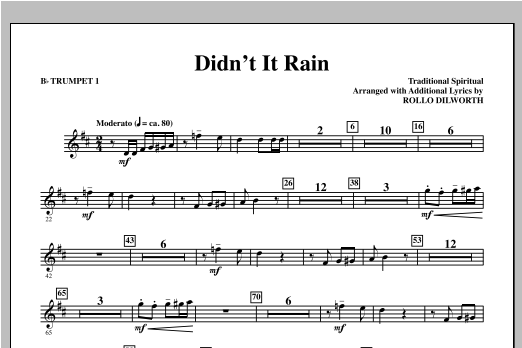

Didn't It Rain: Choral Instrumental Pak
As performed by Traditional Spiritual / Arranged by Rollo Dilworth
Item: 35-PK00244038
$20.00
Pickup currently not available
Buy Extra Parts (Digital PDF Download)
Parts Added to Cart!
Description
Based on the traditional African American spiritual, this setting depicts the story of Noah and the flood. After the baritone soloist introduces the chorus of the spiritual, the SSATB choir responds with a harmonized version. The audience gets the opportunity to participate in this gospel-style arrangement by making percussive rain sounds during the 2-measure breaks of the closing section. Duration: ca. 3:30.


Didn't It Rain: Choral Instrumental Pak isn't in MakeMusic Cloud just yet...but it could be. Let us know you'd like to see it, and you'll help shape what comes next. In the meantime, start a free trial and dive into thousands of interactive titles your students can play along with today.
Request This Title
Tell us you want it.
Start Your Free Trial
Explore everything that's ready to play right now.
Sample Audio
No sample audio found.
Sample Video
No sample videos found.
Additional Details
Publisher:
Hal Leonard
SKU:
35-PK00244038
More about this title
About the Artist: Traditional Spiritual
African American spirituals emerged from the enslaved communities of the American South, blending African musical traditions with Christian hymn texts and harmonies. These songs carried both spiritual faith and coded messages of resistance, hope, and resilience, becoming foundational to American musical culture. Spirituals remain essential repertoire for choral ensembles because they preserve a crucial historical voice while offering rich harmonic and rhythmic possibilities for contemporary singers.
The spiritual tradition continues to shape American music across genres, from classical concert settings to gospel, jazz, and popular styles. For music educators, teaching spirituals connects students to authentic cultural narratives and develops their understanding of how music serves communities through both spiritual expression and social witness.
Why we love this
Rollo Dilworth's arrangement invites your entire audience into the performance rather than positioning them as passive listeners. The closing section's call for percussive rain sounds creates a genuine moment of collective participation that energizes the room and leaves people talking about the experience long after the concert ends.
What to expect
The piece opens with intimate vocal storytelling before the choir enters with strong, grounded harmonies that anchor the spiritual's timeless message. As the arrangement builds toward the closing, the texture grows increasingly rhythmic and percussive, transforming the final moments into a communal soundscape where the boundary between performers and listeners dissolves.
Who it's for
Choirs wanting to include a spiritual that moves beyond concert-hall formality and invites genuine audience engagement. This works equally well for church choirs, high school and college ensembles, and community choruses seeking repertoire that sparks conversation about African American musical heritage.
How to get the most out of it
- Establish the rain sound effect in rehearsal well before the performance. Assign specific sections of the audience to different percussive approaches (snapping, patting legs, rustling programs) so the texture remains controlled and varied rather than chaotic.
- Shape the baritone solo with warmth and intimate storytelling in the opening; this solo frames the entire piece and sets the emotional tone for the choir's response.
- Balance the SSATB harmonization so that the individual voice parts remain audible rather than blending into a thick wash. Spirituals benefit from clarity between lines.
- Record a rehearsal of the closing section with audience participation to hear how your specific group's sound integrates with the accompaniment and percussion parts.
How to use it
Pair this with other spirituals or gospel-influenced pieces to create a thematic set that highlights the genre's emotional range and historical significance. It also serves as a stunning finale to a concert because the audience participation creates a memorable send-off that many ensembles save for their closing number.
Skills your students will build
- Gospel-style rhythmic phrasing and swing articulation
- Sustaining harmonic blend while maintaining SSATB independence
- Responding dynamically to a featured soloist within ensemble context
- Communicating musical intent to an audience through participatory engagement