Did You Not Hear My Lady Sheet Music Preview

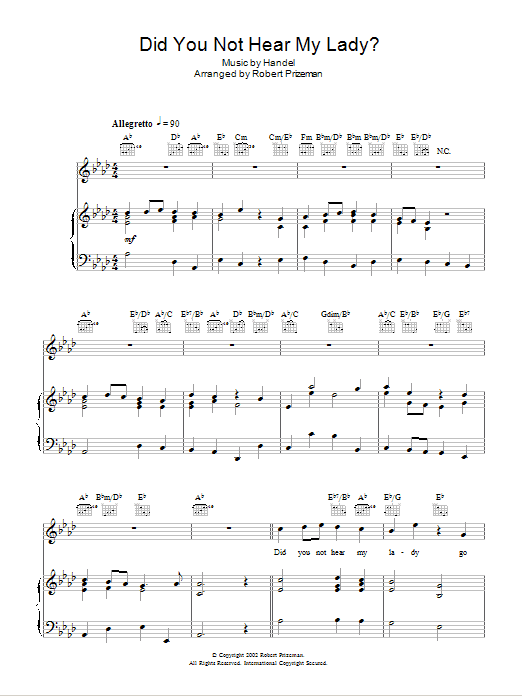
Did You Not Hear My Lady: Piano/Vocal/Guitar (Piano Accompaniment)

As performed by Aled Jones / Arranged by Robert Prizeman

Item: 35-DS00161163

Digital Download
$5.99

One moment…

One moment…

Description

Did You Not Hear My Lady: Piano/Vocal/Guitar (Piano Accompaniment) isn't in MakeMusic Cloud just yet...but it could be. Let us know you'd like to see it, and you'll help shape what comes next. In the meantime, start a free trial and dive into thousands of interactive titles your students can play along with today.

Sample Audio
No sample audio found.
Sample Video
Additional Details
Publisher: Hal Leonard
Page Count: 4
SKU: 35-DS00161163

More about this title

About the Artist: Aled Jones

Aled Jones is a Welsh singer and conductor whose career spans classical music, musical theatre, and sacred vocal repertoire. His interpretations of art songs and traditional material have made him a significant figure in bringing classical vocal literature to contemporary audiences, particularly through his work with choral and orchestral ensembles.

Why we love this

Robert Prizeman's arrangement captures the lyrical elegance of this classical vocal piece while keeping the piano accompaniment singable and supportive rather than ornamental. The four-page format strikes an ideal balance for rehearsal and performance; substantial enough to showcase genuine musicianship, but accessible enough for pianists at intermediate levels.

What to expect

A sophisticated, intimate song that values restraint and emotional directness. The musical language is refined without becoming overly complicated, allowing both performer and listener to focus on the text and the vocal melody's natural expressiveness.

Who it's for

This arrangement serves singers preparing recital repertoire, pianists accompanying in chamber settings, and guitarists looking to expand their classical vocal accompaniment skills. It works equally well in lesson study and formal performance contexts.

How to get the most out of it

  • Establish the vocal line as your priority; the piano should breathe with the singer rather than drive the tempo independently.
  • Pay attention to the relationship between lyrics and melodic shape. Let the text naturally inform phrasing choices rather than mechanically following bar lines.
  • Balance the accompaniment dynamics carefully so the voice remains prominent without the piano sounding thin or disconnected.
  • Work through any guitar voicings separately if using the guitar part, ensuring smooth transitions between chord positions that don't compromise vocal clarity.

How to use it

This works beautifully as a standalone art song recital piece or as part of a mixed-genre evening that includes both classical and contemporary material. It also serves as an excellent pedagogical choice for advanced students building confidence with classical vocal literature.

Skills your students will build

  • Maintaining vocal line independence while accompanying
  • Shaping phrases according to text declamation
  • Balancing accompaniment density in a trio texture (voice, piano, guitar)
  • Reading and interpreting classical song form
  • Collaborative listening and ensemble flexibility

You May Also Like