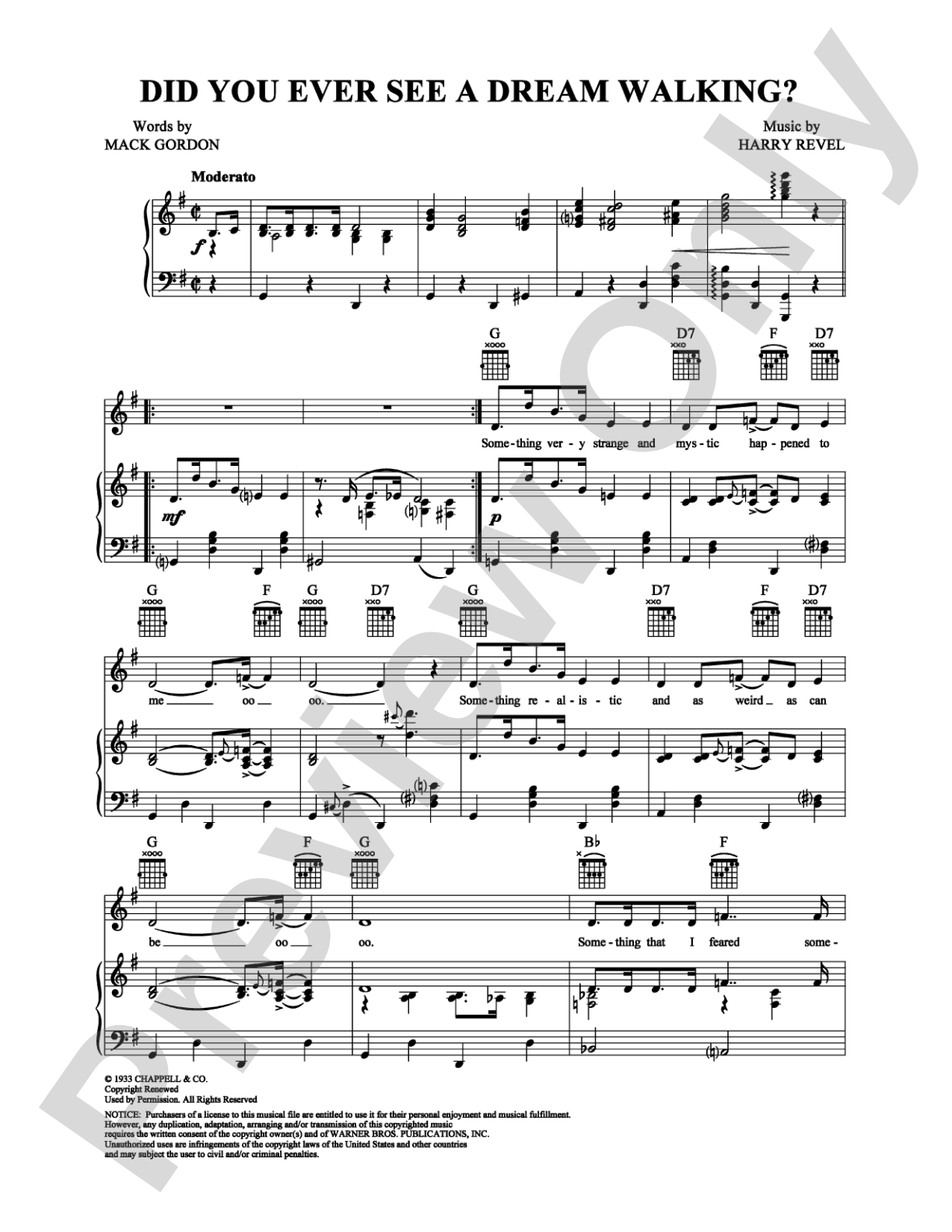
Did You Ever See a Dream Walking?: Piano/Vocal/Chords Digital Sheet Music

Did You Ever See a Dream Walking?: Piano/Vocal/Chords Digital Sheet Music

Eddie Duchin, Harry Revel

Item: 00-PS-0004499

Digital Download
$3.99
Description

Did You Ever See a Dream Walking?: Piano/Vocal/Chords Digital Sheet Music isn't in MakeMusic Cloud just yet...but it could be. Let us know you'd like to see it, and you'll help shape what comes next. In the meantime, start a free trial and dive into thousands of interactive titles your students can play along with today.

Sample Audio
No sample audio found.
Sample Video
Additional Details
SKU: 00-PS-0004499

More about this title

About the Artist: Eddie Duchin

Eddie Duchin (1909-1951) was a pianist and bandleader who became one of the most recognizable figures in American popular music during the 1930s and 1940s. His elegant touch at the keyboard and gift for interpreting the standard repertoire made him a favorite in hotel ballrooms and on radio broadcasts, where millions heard his refined approach to jazz and popular song.

Duchin's artistry centered on the piano as a lyrical instrument; he brought a vocalist's phrasing and emotional directness to melodies that might otherwise be treated as mere accompaniment material. For music educators, his recordings remain valuable models of how to shape a standard with taste and restraint, letting the song's architecture speak clearly while adding personal musicality.

Why we love this

This standard sits at the intersection of jazz sensibility and song craft, giving singers and pianists room to interpret without fighting an overly complex harmonic landscape. Duchin's era established how this tune should breathe, and teaching it from this arrangement preserves that tradition while inviting students to find their own voice within it.

What to expect

Dreamy and wistful, with a melody that floats above gentle jazz harmonies. The song invites rubato and space between phrases, creating an intimate atmosphere whether performed as a vocal solo with piano or as a piano feature.

Who it's for

Pianists and singers working in jazz and popular standards will find this a staple addition to their recital and audition repertoire. Voice students preparing for classical or cabaret recitals, and jazz pianists building solo repertoire, both benefit from the straightforward harmonic roadmap this chart provides.

How to get the most out of it

  • Shape the vocal line as if it were a conversation, not a recitation. Let the piano provide harmonic context while your voice carries the story; the lyrics matter here.
  • Balance vocal and piano parts so neither drowns the other. In a solo piano arrangement, you're both the instrument and the singer, so delegate clearly: be vocalist first, accompanyist second.
  • Lean into the jazz idiom by using rubato in both hands. Duchin's era treated standards with rhythmic flexibility; don't lock into a metronomic pulse.

How to use it

Pair this with other standards from the same era to create a vintage American song cycle on a recital program, or use it in a jazz ensemble setting where a vocalist or pianist takes a feature spot. Its moderate tempo and reflective mood make it an effective concert opener or an intermission piece.

Skills your students will build

  • Interpreting jazz harmony and chord extensions in real-time
  • Balancing melody and accompaniment in piano/vocal textures
  • Using rubato and phrasing to shape a standard idiomatically
  • Reading lead-sheet notation and vocal melody with chord symbols

You May Also Like