
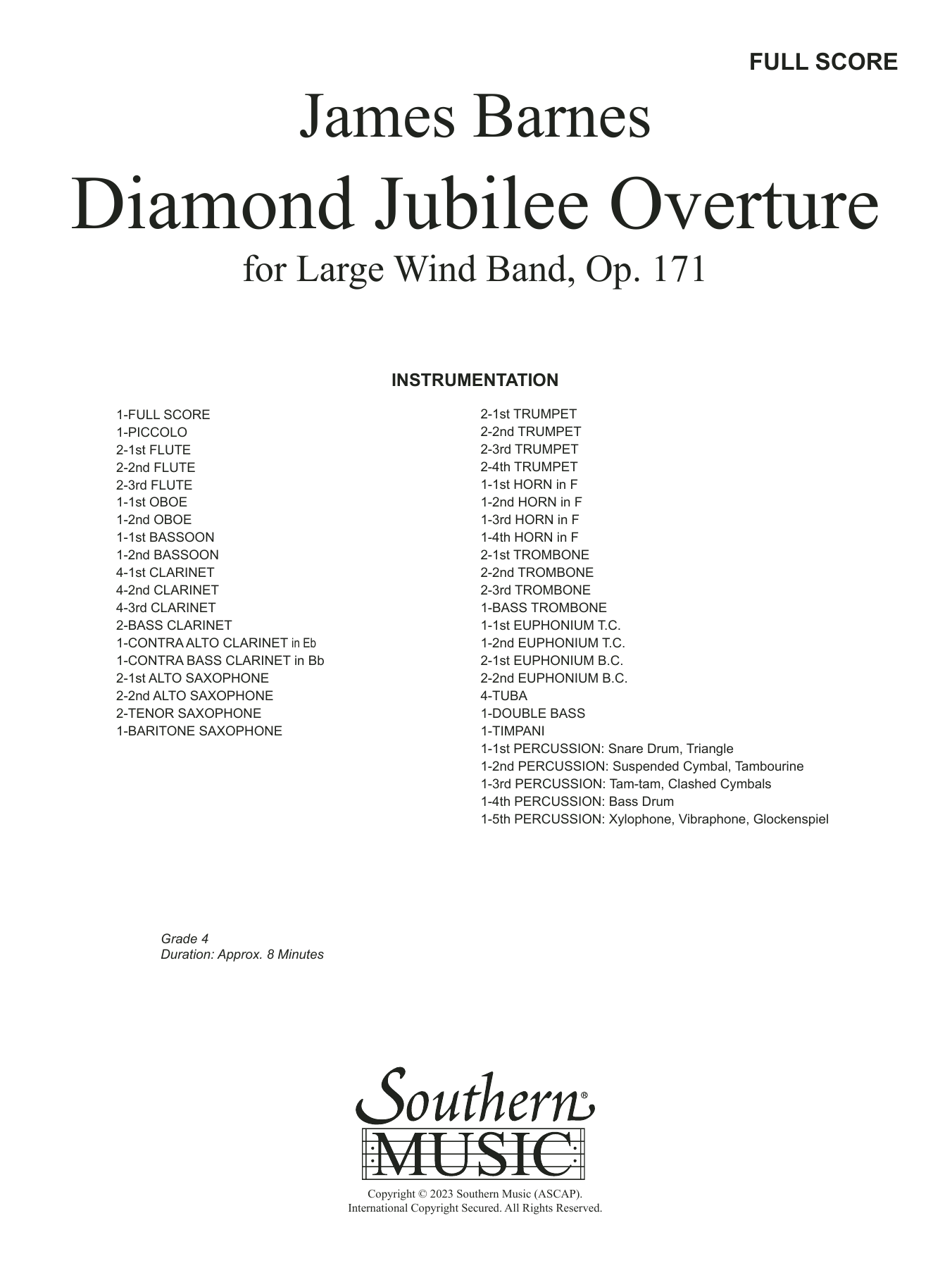

Diamond Jubilee Overture: Concert Band Conductor Score & Parts
By James Barnes
Grade: 4
Item: 35-PK01424873
$95.00
Pickup currently not available
Buy Extra Parts (Digital PDF Download)
Parts Added to Cart!
Description
Cast in the dark, dramatic key of F minor, Diamond Jubilee Overture is in a rather traditional overture form. A jutty introduction in low brass introduces the first theme, which is tossed between sections before a transition takes us to an allegro. Here a second, more melodic F minor theme appears. This second theme is intensely developed in multiple keys before the work slows down to an adagio, where a third melodic theme in Ab major first appears in clarinets. Several settings of this melody occur before the return of the jutty first theme, this time set in allegro fashion and introducing a short fughetta. The second theme then reappears before the work ends in a blazing, dramatic coda.


Diamond Jubilee Overture: Concert Band Conductor Score & Parts isn't in MakeMusic Cloud just yet...but it could be. Let us know you'd like to see it, and you'll help shape what comes next. In the meantime, start a free trial and dive into thousands of interactive titles your students can play along with today.
Request This Title
Tell us you want it.
Start Your Free Trial
Explore everything that's ready to play right now.
Sample Audio
No sample audio found.
Sample Video
No sample videos found.
Additional Details
Publisher:
Hal Leonard
SKU:
35-PK01424873
More about this title
About the Composer: James Barnes
James Barnes stands among the most frequently performed composers of concert band music in America. His output spans accessible educational works to sophisticated concert pieces, each marked by clear orchestration, memorable thematic material, and genuine understanding of what bands can achieve at every level.
Barnes has shaped generations of student musicians through his prolific catalog. His pieces consistently balance musical substance with practical considerations for student performers, making him a cornerstone of band repertoire from middle school through professional ensembles.
Why we love this
This overture delivers the formal architecture and thematic richness that give students a real taste of classical structure without requiring stratospheric technical demands. The key to its success is how Barnes stages his three distinct melodic ideas across the form, creating narrative momentum that keeps both performers and listeners engaged from the jutty brass introduction through that blazing final coda.
What to expect
Dark and propulsive from the opening, with the dramatic F minor writing creating tension that shifts when the Allegro arrives and sunlight appears in the second theme. The adagio brings genuine respite through the clarinets' singing melody before the work pivots back into that gripping final push, ending with real theatrical impact.
Who it's for
Grade 4 bands ready to tackle genuine overture form with clear harmonic and thematic logic. This works well for ensembles that have secure fundamentals and can manage sustained rhythmic energy across a longer work.
How to get the most out of it
- Shape the low brass introduction with a clear sense of dramatic weight. The 'juttiness' Barnes writes depends on articulation clarity and rhythmic precision from your trombone and bass section.
- Highlight the section-to-section tossing of the first theme by ensuring clean handoffs between parts. Slight dynamic peaks at each new entrance help the material breathe across the ensemble.
- Balance the Ab major adagio theme in the clarinets against the harmonic support underneath. This moment offers respite after the F minor intensity and deserves transparent, singing lines.
- Build intensity through the fughetta return of the first theme. Layered entrances work only if each voice maintains independence; resist the urge to blend everything uniformly.
How to use it
Open a concert with this to establish serious musical intent, or place it mid-program as a stylistic anchor between lighter fare and your band's feature work. The traditional overture form makes it an excellent teaching piece for students studying classical structure in a performance context.
Skills your students will build
- Identifying and tracking thematic material across key changes
- Balancing rhythmic precision in brass introductions and transitions
- Sustaining musical phrases across sectional exchanges
- Part independence in fugal writing
- Dynamic shaping in slow, sustained melodic passages
- Executing dramatic cadential gestures with ensemble unity