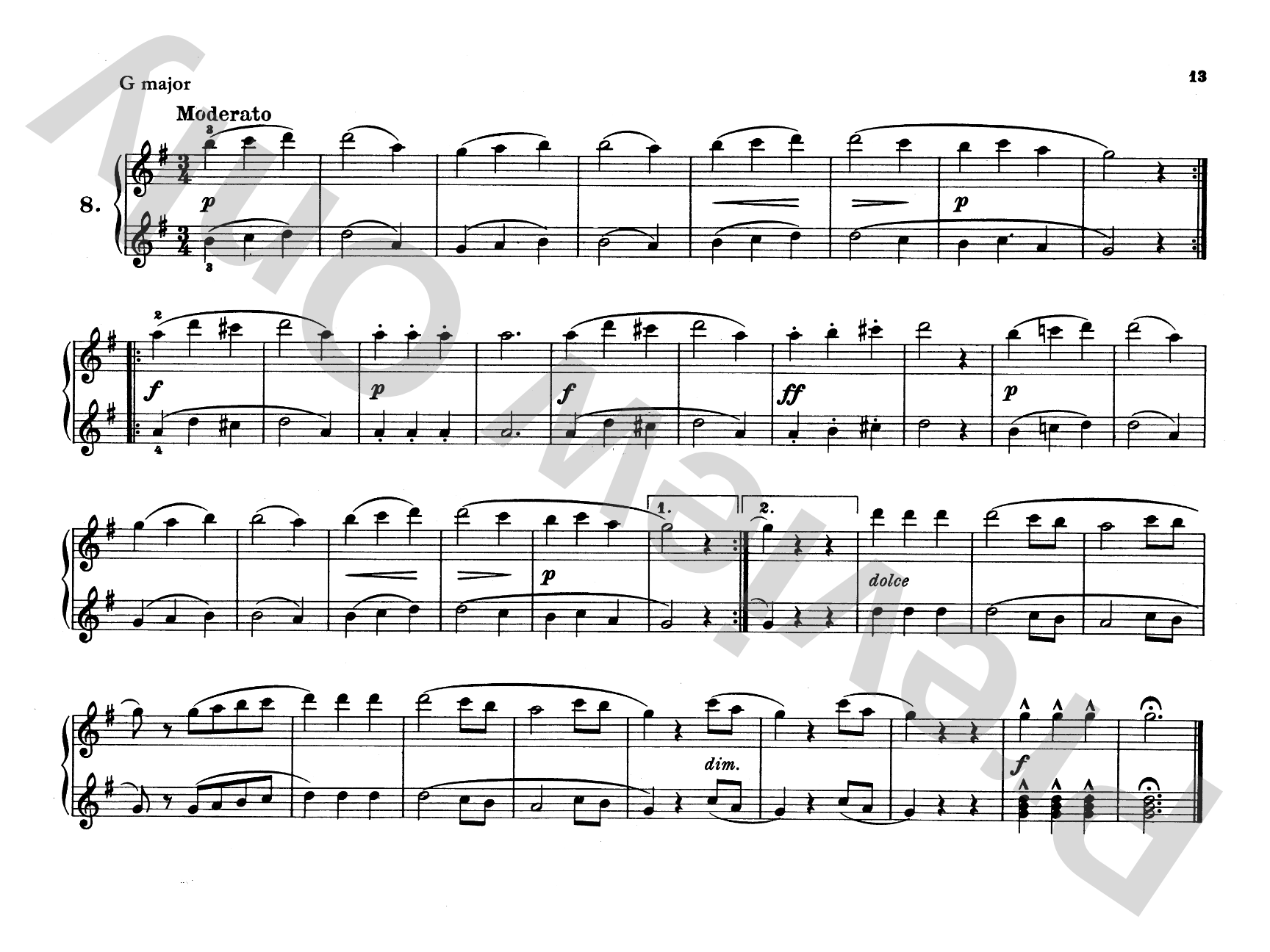
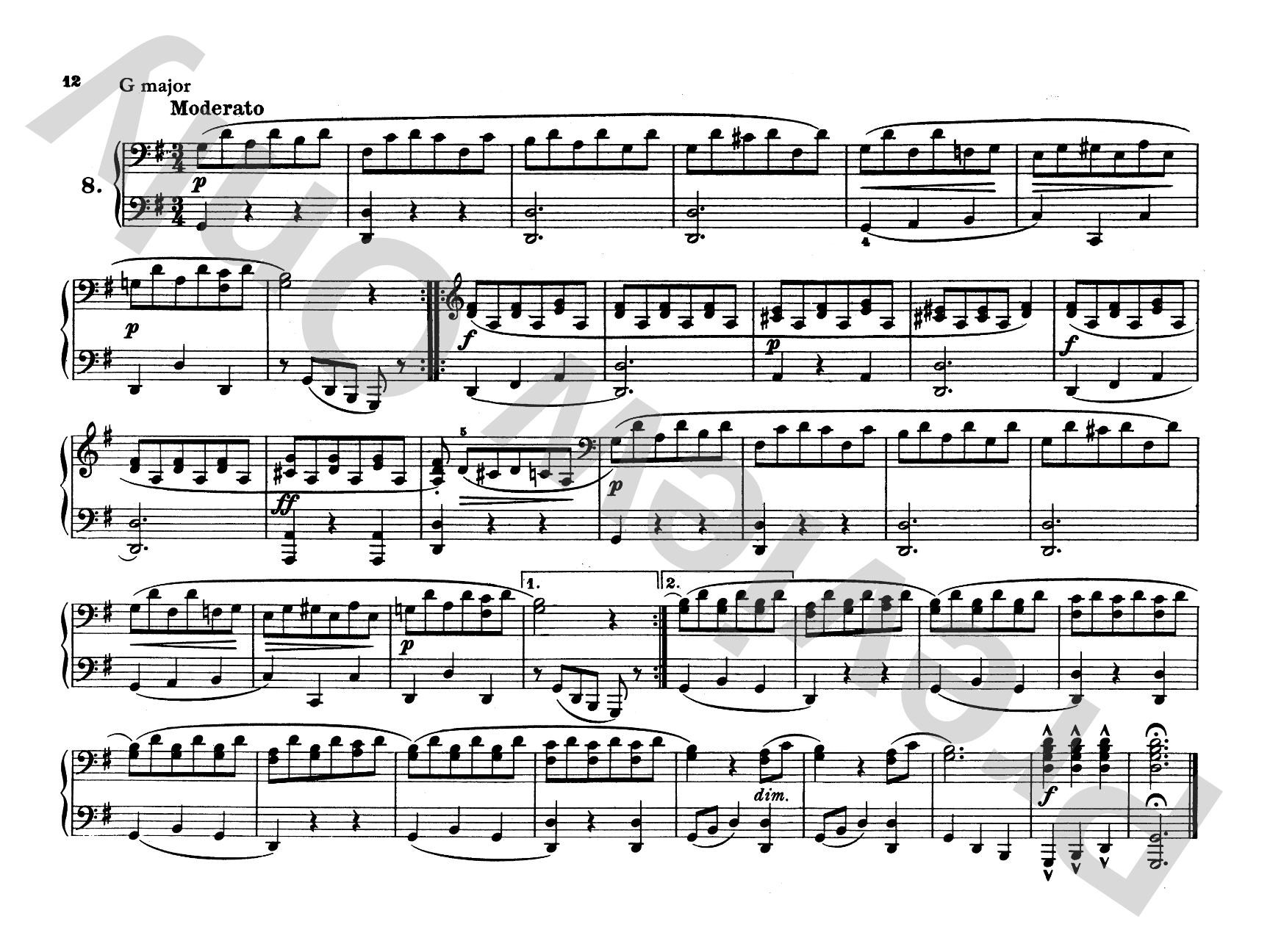
Diabelli: Melodious Exercises, Op. 149 Sheet Music Preview

Diabelli: Melodious Exercises, Op. 149

By Anton Diabelli

Level: Intermediate / Advanced

Item: 00-PC-0006987

Digital Download
$0.99
Description
Contents: Nos. 1-7, C Major-C Minor * Nos. 8-11, G Major-G Minor * Nos. 12-14, F Major-F Minor * Nos. 15-20, D Major-D Minor * Nos. 21-26, A Major-A Minor * Nos. 27-28, E Major-E Minor. The comb binding creates a lay-flat book that is perfect for study and performance.

Don't just read it, hear it, play along with it, and watch your students grow with it. In MakeMusic Cloud, Diabelli: Melodious Exercises, Op. 149 comes alive with professional accompaniment, adjustable tempo, and built-in practice tools that turn solo practice into real progress.

Sample Audio
No sample audio found.
Sample Video
Additional Details
Series: Kalmus Edition
Publisher: Alfred Music
Page Count: 40
SKU: 00-PC-0006987

More about this title

About the Composer: Anton Diabelli

Anton Diabelli (1781-1858) was an Austrian composer and music publisher whose name became synonymous with pedagogical excellence in early nineteenth-century piano instruction. Though best remembered today for the "Diabelli Variations" (which prompted Beethoven to write 33 variations on one of his simple themes), Diabelli was a prolific and respected teacher whose own compositions balanced accessibility with genuine musical substance. His gift lay in crafting exercises that never felt like drudgery; instead, they engaged students with melodic interest while systematically building technique.

Diabelli's output of instructional works shaped how generations of pianists learned their craft. Op. 149, the Melodious Exercises, exemplifies his philosophy: technical development wrapped in songlike material that rewards both player and listener. As a publisher, he recognized that students learned best when the music itself was worth playing, a principle that remains at the heart of effective music pedagogy.

Why we love this

Diabelli understood what many exercise composers miss: students need reason to care about what they're playing. These 28 exercises move through multiple keys with genuine melodic charm, making them far more engaging than typical pedagogical fare. The duet format adds another layer of value, transforming what could be solitary drill into genuine musical collaboration between pianist and partner.

What to expect

These exercises breathe with the lyricism of the Classical and early Romantic periods. Each piece unfolds like a short song, moving gracefully from key to key while technical demands build beneath the surface. Playing them feels less like work and more like discovering why these particular passages matter; music and craft have merged.

Who it's for

Intermediate to advanced pianists working on duet repertoire together will find this collection invaluable for developing balanced partnership playing and exploring multiple key centers in musically rewarding contexts. Teachers of intermediate students can assign individual exercises or pairs of exercises from this set to build facility in specific keys while keeping the student's musical appetite satisfied.

How to get the most out of it

  • Balance the primo and secondo parts by listening carefully during rehearsal. One partner may sit lower at the keyboard, so adjust hand position and dynamics to ensure both voices have clarity without either overwhelming the other.
  • Work through the key progressions in small groups (exploring C major-minor, then G major-minor, etc.) rather than running all 28 consecutively. This builds tonal awareness and prevents fatigue during practice.
  • Treat the lyrical sections as songs, not exercises. Shape phrases with singing tone and thoughtful rubato to bring out Diabelli's melodic intent; the technical gains will follow naturally from musical engagement.
  • Keep a steady tempo even in the gentler passages. The duet requires precise rhythmic coordination between hands and partners, and a relaxed but anchored pulse prevents uncertainty.

How to use it

Program these in a student recital as a polished duet or a series of linked short pieces, letting the key progressions create harmonic interest across the set. The comb binding and lay-flat format make them practical for rehearsal and performance alike, whether you're extracting individual exercises for curricular study or performing a group of them as complete musical statements.

Skills your students will build

  • Playing in multiple major and minor keys with fluency and awareness of tonal center
  • Balancing two independent melodic lines at one keyboard while maintaining unified rhythm
  • Listening and coordination skills required for ensemble playing on piano duet
  • Phrasing and voice leading across hand positions and between primo and secondo parts
  • Chord progression and harmonic understanding through exposure to Classical-era functional harmony

You May Also Like