
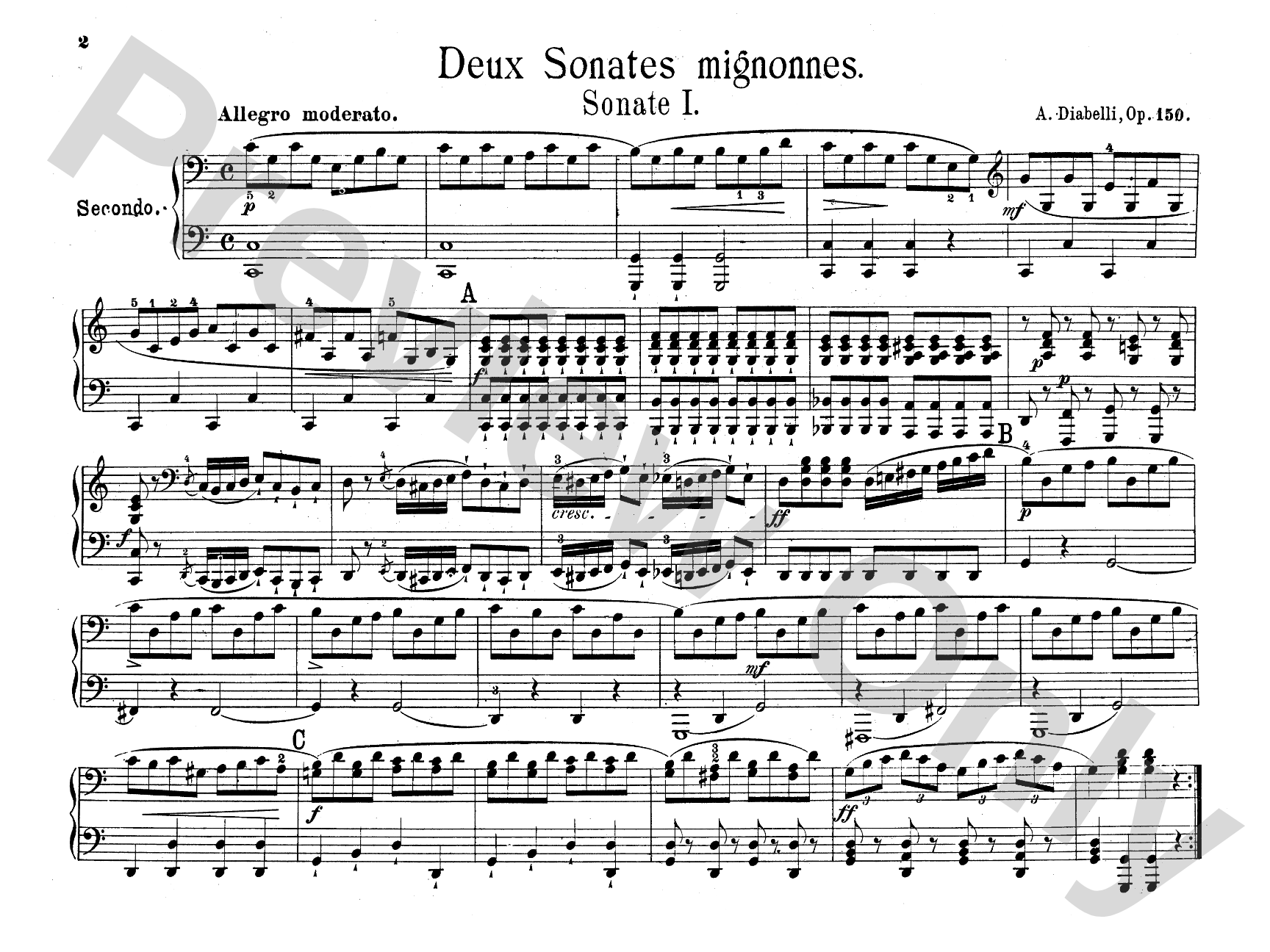
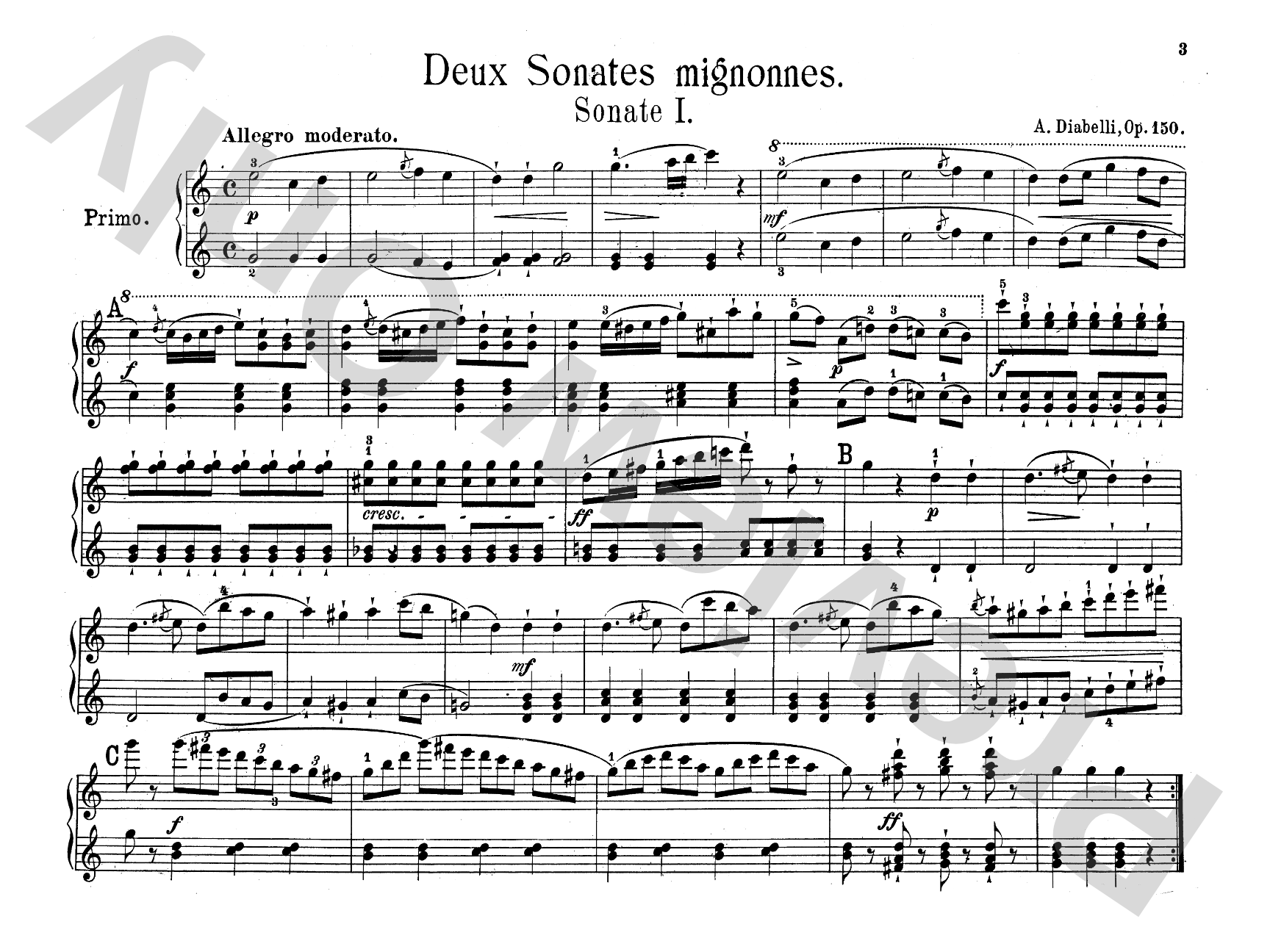
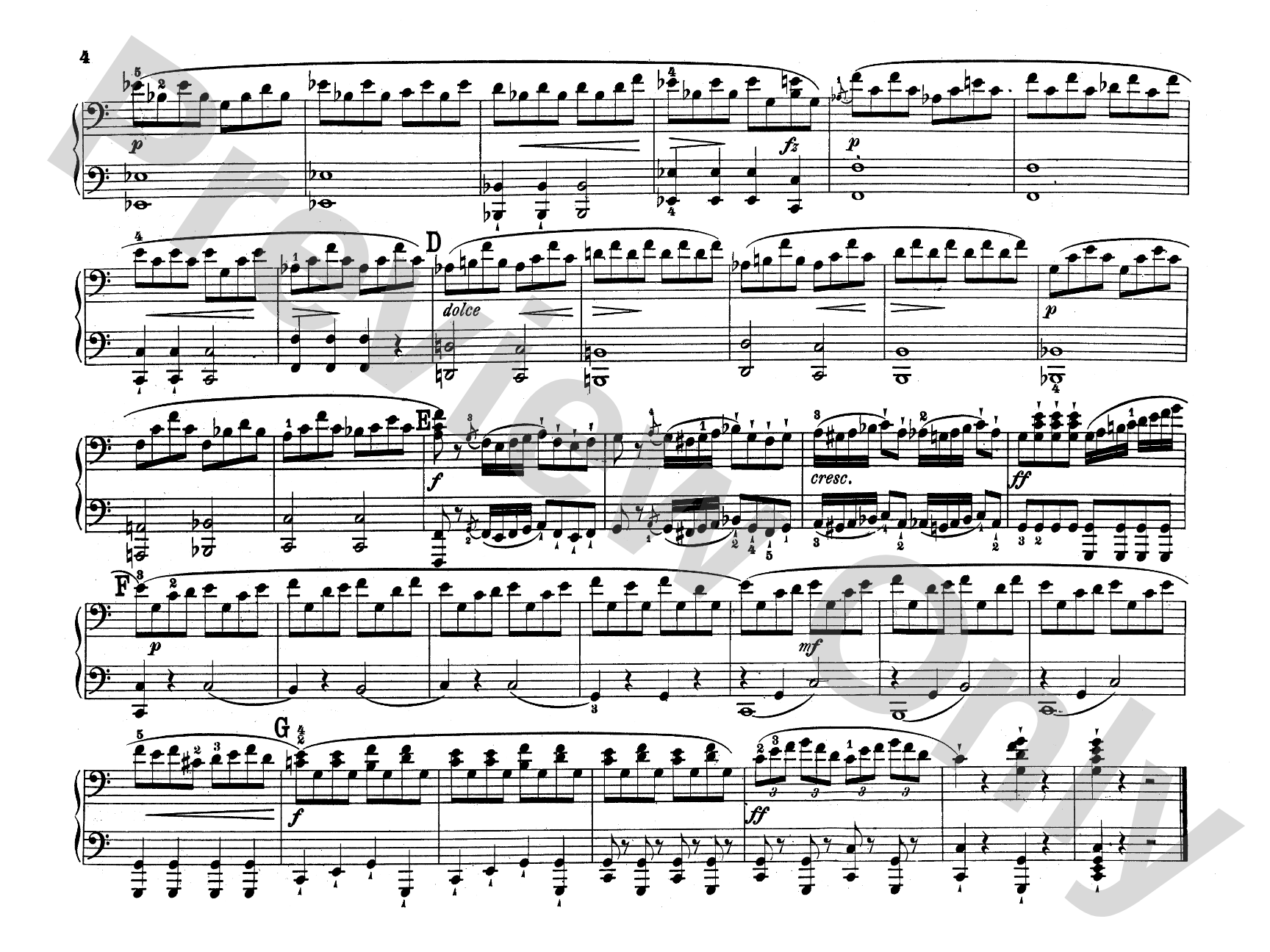
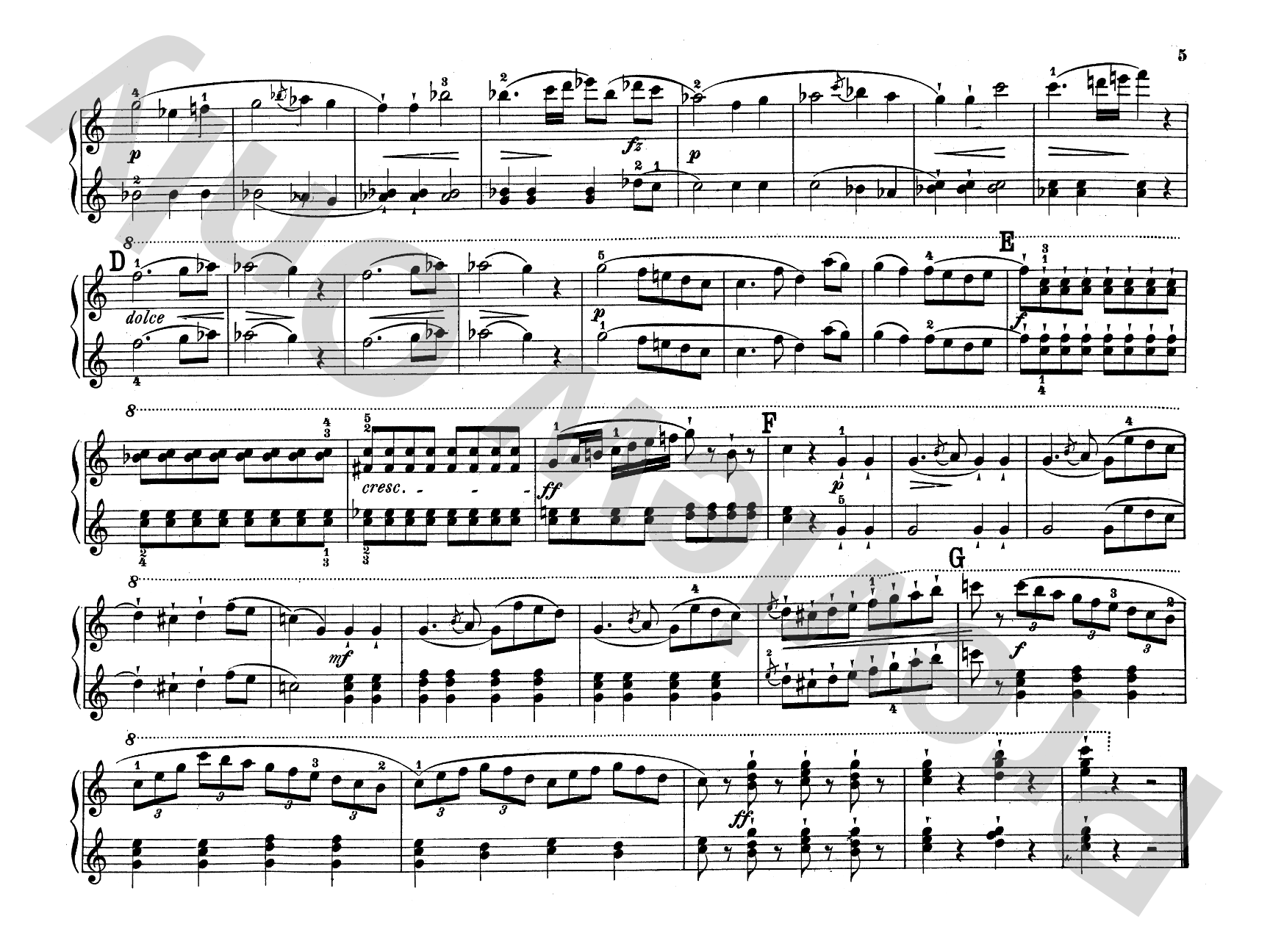
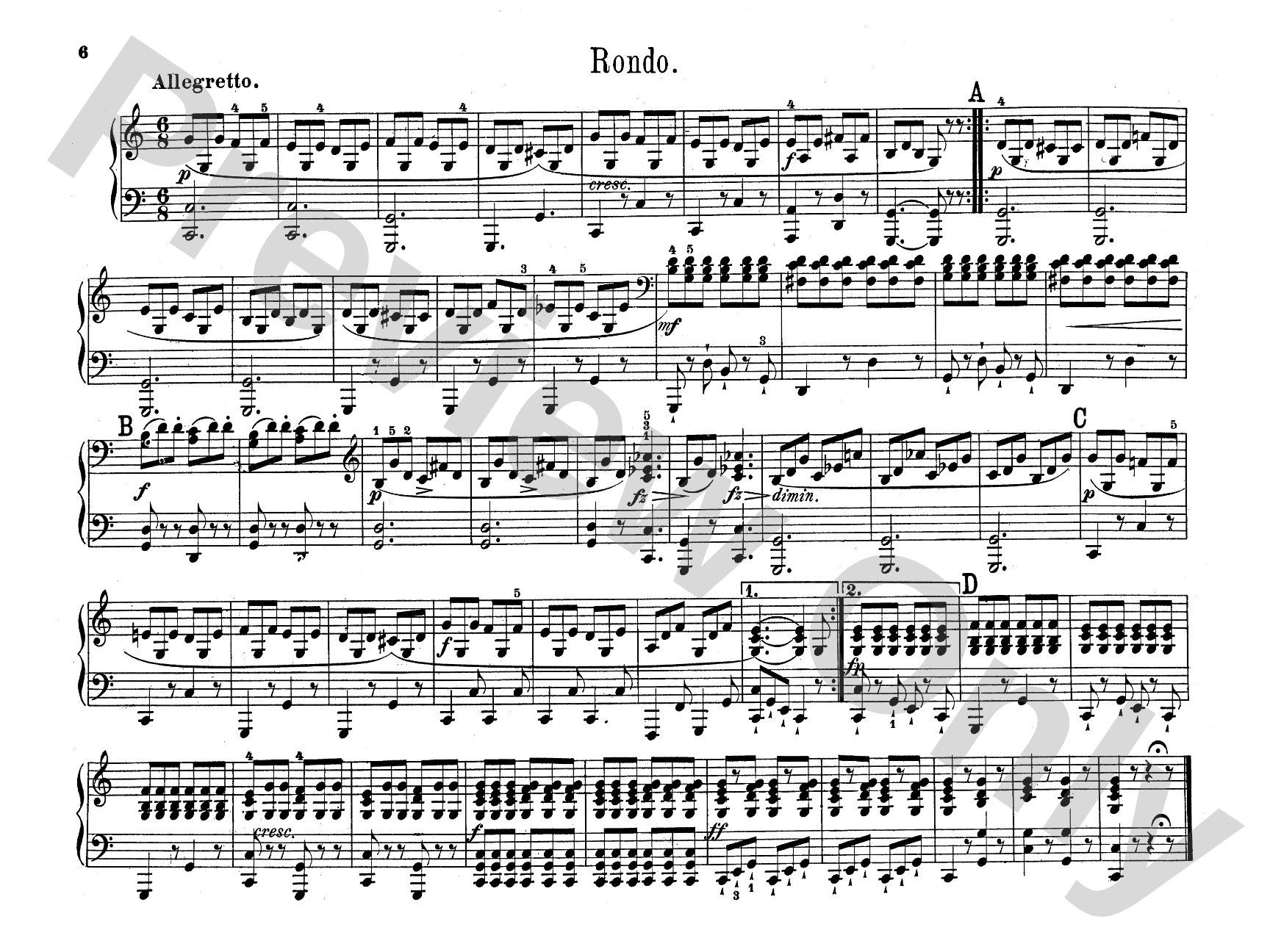
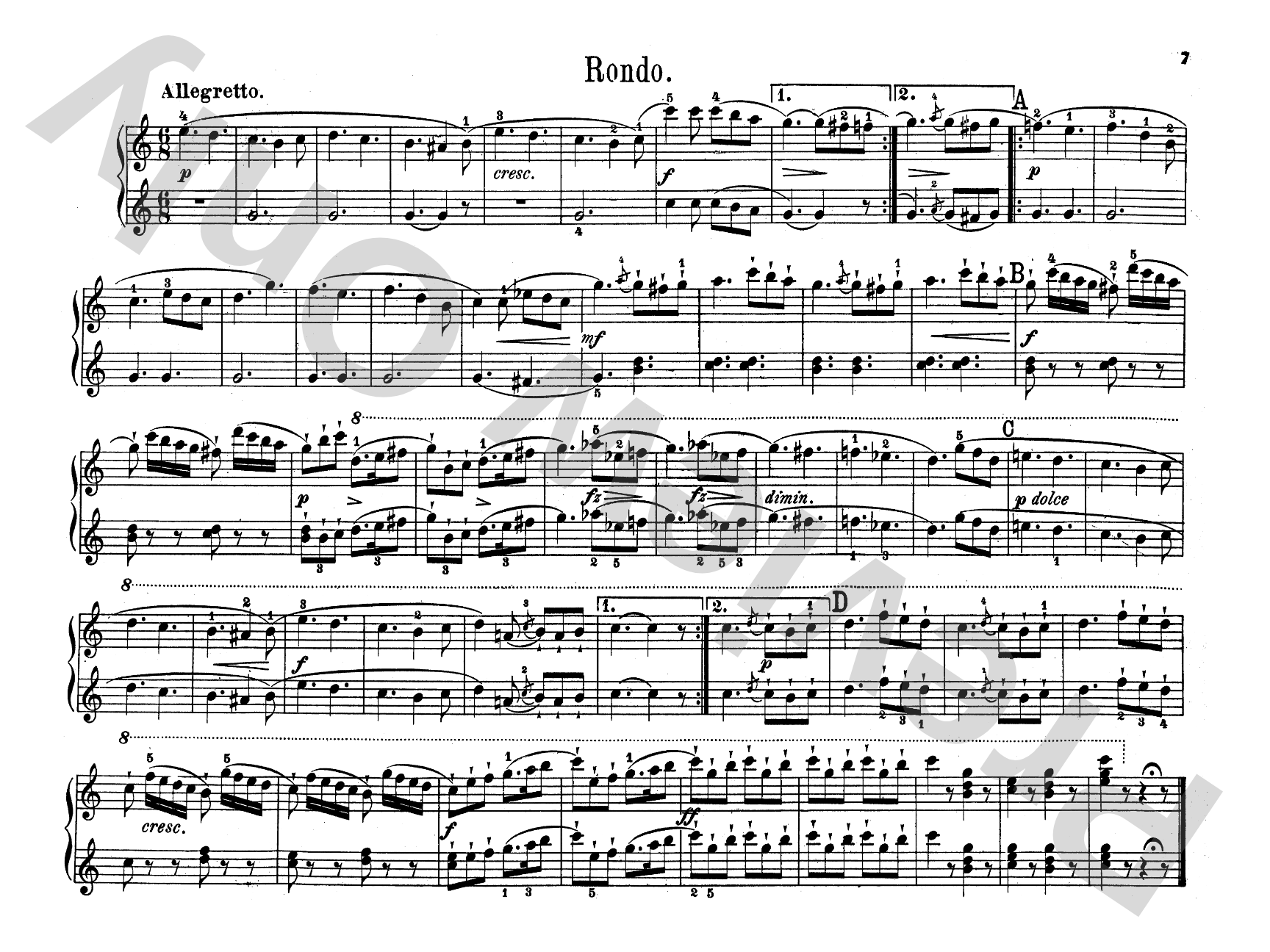

Diabelli: 2 Sonates Mignonnes and Rondeau Militaire: Piano Duet (1 Piano, 4 Hands) Comb Bound Book
By Anton Diabelli
Item: 00-PK-0003069

$8.99
Pickup currently not available
Buy Extra Parts (Digital PDF Download)
| Product | Price | Quantity |
|---|---|---|
| Diabelli: 2 Sonates Mignonnes and Rondeau Militaire | $1.99 | |
| Diabelli: 2 Sonates Mignonnes and Rondeau Militaire | $1.99 | |
| Diabelli: 2 Sonates Mignonnes and Rondeau Militaire | $1.99 |
Parts Added to Cart!
Related Items
Rondeau Militaire and Sonatas Mignonnes: Piano Duet (1 Piano, 4 Hands) Comb Bound Book |
$8.95
|
View |
Description
The comb binding creates a lay-flat book that is perfect for study and performance.


Don't just read it, hear it, play along with it, and watch your students grow with it. In MakeMusic Cloud, Diabelli: 2 Sonates Mignonnes and Rondeau Militaire: Piano Duet (1 Piano, 4 Hands) Comb Bound Book comes alive with professional accompaniment, adjustable tempo, and built-in practice tools that turn solo practice into real progress.
Open in the Player
Jump straight in and assign it today.
Start Your Free Trial
Open this title and explore the full library in minutes.
Sample Audio
No sample audio found.
Sample Video
No sample videos found.
Additional Details
Series:
Kalmus Edition
Publisher:
Alfred Music
Page Count:
20
SKU:
00-PK-0003069
More about this title
About the Composer: Anton Diabelli
Anton Diabelli (1781-1858) was an Austrian composer and music publisher whose works shaped early-19th-century pedagogy. Though he composed symphonies, masses, and operas, Diabelli became most celebrated for accessible keyboard music that bridged amateur and professional musicianship. His miniatures and duets were written expressly for students and household musicians, giving them repertoire that was both musically substantial and technically achievable.
Diabelli's legacy in music education is anchored by his understanding of what young players needed: clear forms, melodic interest, and manageable technical demands. As a publisher, he championed the work of composers like Schubert and Beethoven, but his own duets remain teaching staples because they balance charm with genuine musical content.
Why we love this
Diabelli understood how to write for two pianists at one instrument without sacrificing musical coherence or interest. These sonatas and rondo are efficient repositories of Classical and early Romantic language, offering duet partnerships genuine satisfaction in both parts rather than consigning one player to accompaniment patterns. The comb binding and manageable scope make this ideal for recital programming or studio collaborations where you need pieces that teach partnership without demanding advanced technique.
What to expect
Diabelli's sonatas breathe with the directness and luminosity of early-19th-century keyboard writing. The melodies unfold naturally, the forms are crystal clear, and the harmonic language sits comfortably under the hands. The Rondeau Militaire brings rhythmic vigor and character, evoking the march-like spirit of its title without demanding virtuosity.
Who it's for
This collection serves intermediate piano students ready for meaningful duet experience and piano teachers seeking repertoire that develops ensemble skills without overwhelming either partner technically. Studio pianists preparing for recitals or informal performances will find three polished pieces that showcase both players' abilities and reward collaboration.
How to get the most out of it
- Establish clear hand independence from the opening measures. Mark your own staff lightly to anticipate register changes and avoid collisions, especially where hands cross.
- Balance the melodic material between primo and secondo voices with attention to who carries the phrase at each moment. Listen through full rehearsals rather than sectional practice to develop natural give-and-take.
- Pedal sparingly and only when both players agree on its application. Shared pedal control is one of the technical challenges of one-piano duets; discuss timing at rehearsal rather than leaving it to chance.
- Shape the Rondeau Militaire with rhythmic crispness and uniform articulation between players. The character piece relies on precision and clarity to land its character effectively.
How to use it
Open a studio recital with one of the sonatas to demonstrate the range of your duet partnerships, or use the Rondeau Militaire as a spirited encore. These works also serve well in ensemble concerts or chamber evenings where you want repertoire that fills a 20th-century pedagogical gap with authentic Classical material.
Skills your students will build
- Hand independence and collision avoidance at one keyboard
- Ensemble listening and phrase coordination between two players
- Balance and voice leading in a shared texture
- Reading and executing Classical sonata form with a partner
- Stylistic articulation and pedaling appropriate to Classical keyboard writing