
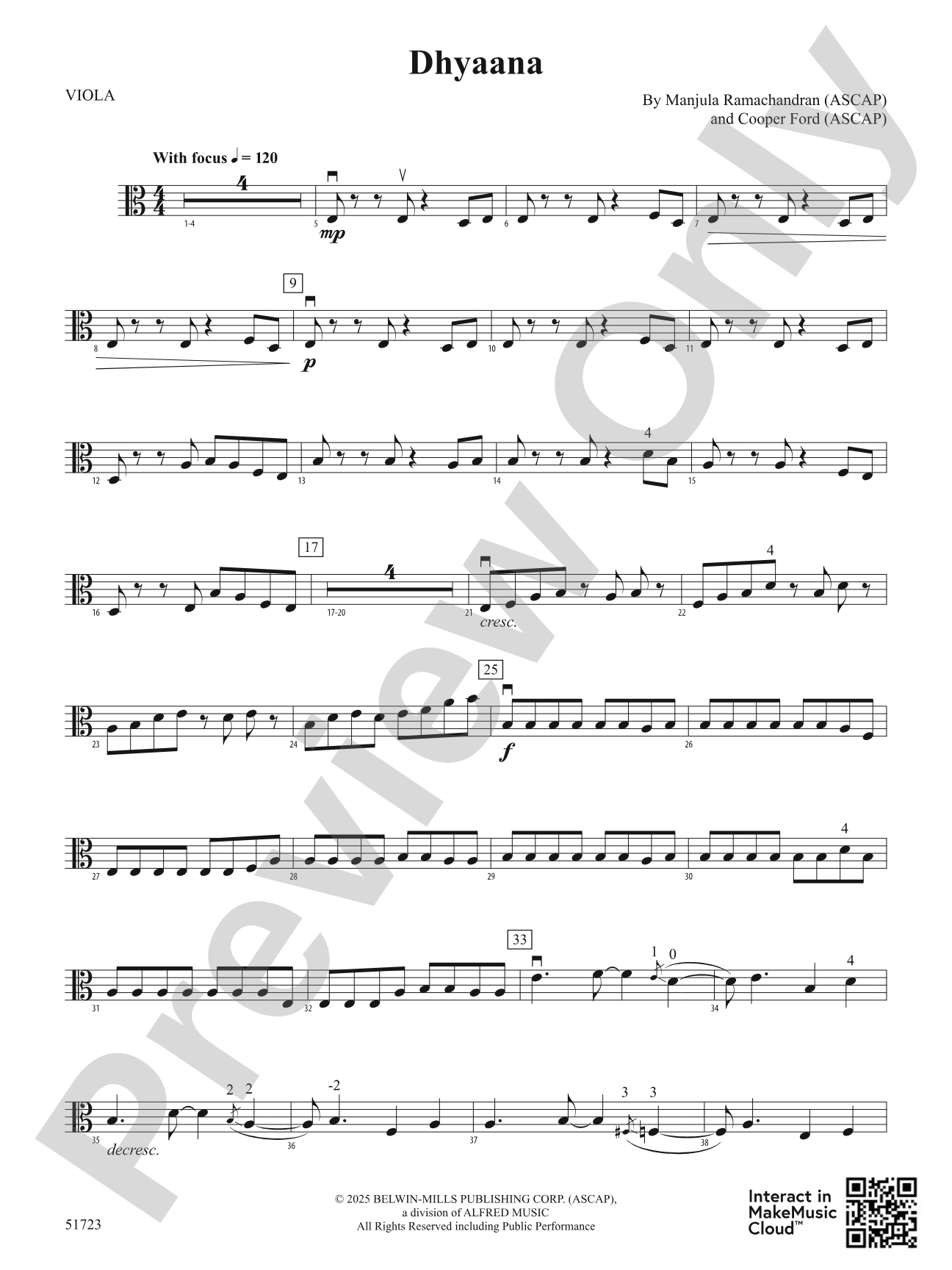

Dhyaana: Viola
By Manjula Ramachandran and Cooper Ford
Grade: 2.5
Item: 00-PC-0019477_VA1
$3.00
Pickup currently not available
Description
This is the perfect piece to introduce students to some of the unique sounds and basic techniques of Indian music. Authentically written and musically engaging, it features a strong melody and deliberate rhythmic drive.
Dhyaana is a Sanskrit word translated as contemplation or meditation. This is an aspect of Indian culture focused on cultivating serenity, focus, and self-awareness, often through music. Written in the Carnatic (South Indian) musical tradition, this piece, by Manjula Ramachandran and Cooper Ford, utilizes melodic patterns from the raaga Revathi as well as common rhythmic patterns often found in this style. Each part also includes some introductory gamakas---ornamentations that are a foundational part of this style---clearly marked with appropriate fingerings. (2:25)


Dhyaana is a Sanskrit word translated as contemplation or meditation. This is an aspect of Indian culture focused on cultivating serenity, focus, and self-awareness, often through music. Written in the Carnatic (South Indian) musical tradition, this piece, by Manjula Ramachandran and Cooper Ford, utilizes melodic patterns from the raaga Revathi as well as common rhythmic patterns often found in this style. Each part also includes some introductory gamakas---ornamentations that are a foundational part of this style---clearly marked with appropriate fingerings. (2:25)
Dhyaana: Viola isn't in MakeMusic Cloud just yet...but it could be. Let us know you'd like to see it, and you'll help shape what comes next. In the meantime, start a free trial and dive into thousands of interactive titles your students can play along with today.
Request This Title
Tell us you want it.
Start Your Free Trial
Explore everything that's ready to play right now.
Sample Audio
1
Audio File
--:--
0:00
0:00
Sample Video
Additional Details
Series:
Belwin Intermediate String Orchestra
Publisher:
Alfred Music
SKU:
00-PC-0019477_VA1
More about this title
About the Composer: Manjula Ramachandran

Manjula Ramachandran is a composer deeply rooted in South Indian classical music tradition who brings authentic Carnatic elements into contemporary ensemble writing. Her work bridges classical Indian aesthetics with accessible pedagogy, creating pieces that honor traditional musical systems while meeting students where they are in their musical development.
Cooper Ford is a string educator and composer known for writing repertoire that expands ensemble players' musical horizons. Ford's collaborations focus on introducing musicians to world musical traditions through carefully crafted, performable scores that respect both the source culture and the learning objectives of student ensembles.
Why we love this
Dhyaana accomplishes something rare at this level: it teaches authentic Indian musical concepts without reducing them to exoticism or oversimplification. The raaga Revathi and the ornamentations are real, the rhythmic patterns are genuine, and students emerge with actual knowledge of a major world musical tradition rather than a surface-level impression. For directors seeking to diversify their concert programming and deepen students' cultural literacy, this piece does both simultaneously.
What to expect
Dhyaana unfolds with focused intentionality. The opening melody, rooted in raaga Revathi, carries both introspection and forward momentum. Rhythmic patterns that might seem complex on first reading become hypnotic in performance, drawing listeners into a meditative state while the ornamentations add shimmer and texture without disrupting the piece's sense of calm purpose.
Who it's for
String orchestras at the upper elementary and early middle school level seeking a culturally grounded introduction to Indian classical music. This piece works equally well for ensembles performing at festivals or concerts where directors want to program music beyond the Western European canon.
How to get the most out of it
- Study the marked gamakas carefully with your section leaders before ensemble rehearsal. These ornamentations feel unfamiliar at first but become intuitive quickly with a few focused run-throughs at a slow tempo.
- Emphasize the deliberate rhythmic drive through consistent bow weight and articulation, even during sustained passages. The piece should feel propulsive, not languid, to honor the meditative clarity at its heart.
- Use the 2:25 duration as a guide for overall pacing, but allow the raaga melodies to breathe naturally. Avoid rushing ornamental figures in pursuit of tempo.
- Balance the melodic line across your first violins and featured sections with careful dynamic shaping. The strength of the melody is what makes this piece work for student musicians.
How to use it
Program this early in a concert to set a contemplative tone, or pair it with other multicultural selections to build a thematic set exploring music and meditation across cultures. The accessible difficulty level and strong pedagogical value also make it ideal for a concert dedicated to cultural expansion or for festival competition categories that welcome non-Western repertoire.
Skills your students will build
- Playing ornaments (gamakas) with accurate articulation and fingering
- Understanding raaga-based melodic construction and how it differs from Western scales
- Executing rhythmic patterns characteristic of Carnatic music
- Balancing ensemble sound while maintaining clarity in complex rhythmic textures
- Listening to and respecting non-Western musical aesthetic values