
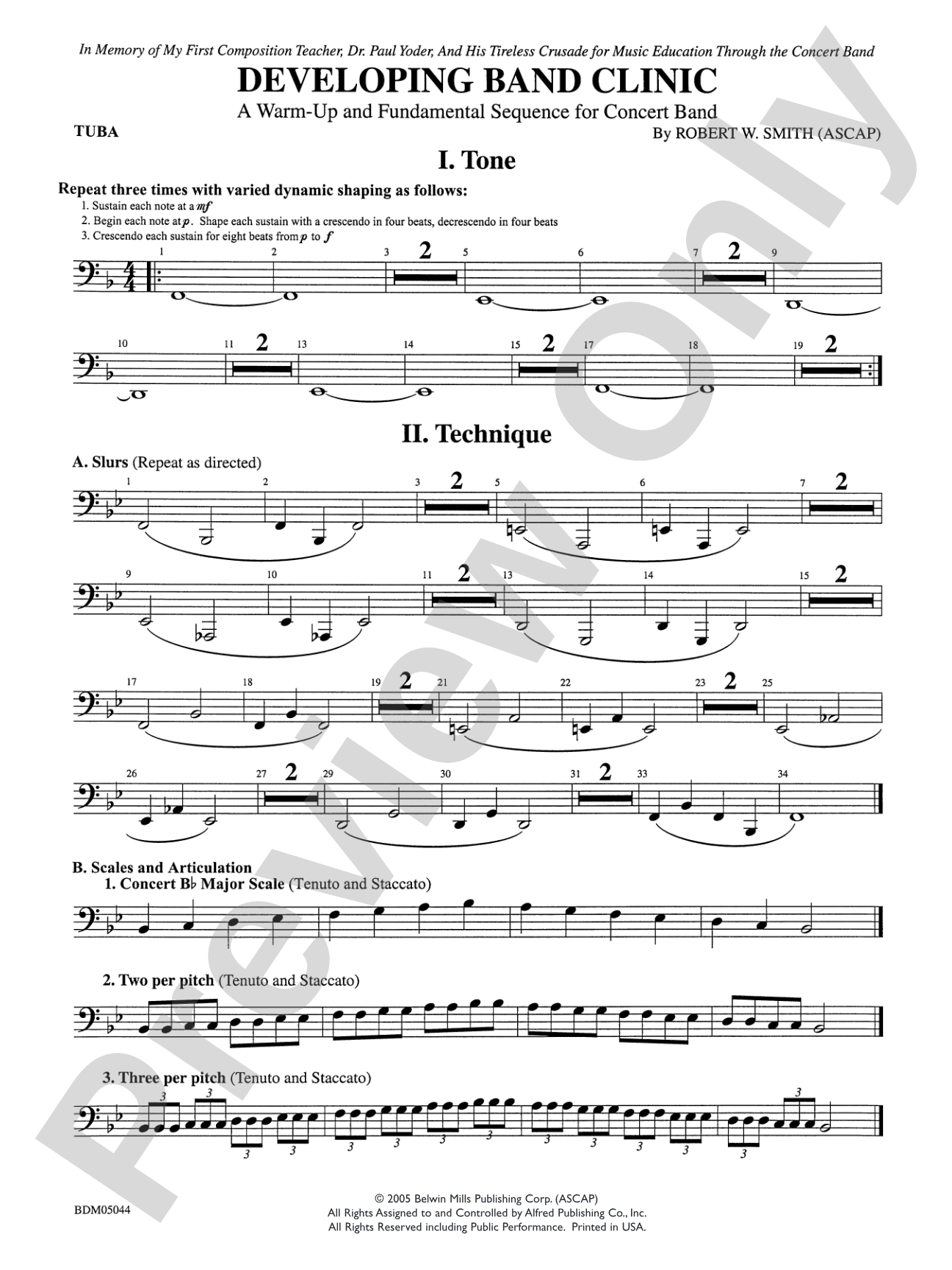

Developing Band Clinic (A Warm-Up and Fundamental Sequence for Concert Band): Tuba
A Warm-Up and Fundamental Sequence for Concert Band
By Robert W. Smith
Grade: 2 (Easy)
Item: 00-PC-0002206_TB1
$3.00
Pickup currently not available
Description
Progressive, in-depth and highly organized, this is the second of four comprehensive warm-up programs used by Robert W. Smith at the podium of every honor band he guest conducts. This warm up program is designed for use in any key with just a standard student part to be included in the band's folders. This Clinic will meet your daily warm-up needs, support your teaching objectives, and accommodate the National Standards for Music Education. There are four segments in each Clinic: tone, technique, theory and composition, and chorale. The recording included is only the fourth portion; the choral. (chorale only: 1:02)


Don't just read it, hear it, play along with it, and watch your students grow with it. In MakeMusic Cloud, Developing Band Clinic (A Warm-Up and Fundamental Sequence for Concert Band): Tuba comes alive with professional accompaniment, adjustable tempo, and built-in practice tools that turn solo practice into real progress.
Open in the Player
Jump straight in and assign it today.
Start Your Free Trial
Open this title and explore the full library in minutes.
Sample Audio
1
Audio File
--:--
0:00
0:00
Sample Video
No sample videos found.
Additional Details
Series:
Belwin Young Band
Publisher:
Alfred Music
Page Count:
372
SKU:
00-PC-0002206_TB1
More about this title
About the Composer: Robert W. Smith

Robert W. Smith has shaped the concert band and orchestral landscape through over 400 published compositions and arrangements, the majority released by Alfred Music. He holds degrees from Troy State University and the University of Miami, and his works span from accessible developing band literature to full symphonic scores performed across North America, Europe, Asia, and Australia.
Beyond the page, Smith's music has appeared in contexts ranging from Olympic broadcasts to the Macy's Thanksgiving Day Parade and major television productions. His two symphonies, The Divine Comedy and The Odyssey, have become touchstones for advancing musicians worldwide. As a guest conductor and clinician, he continues to refine warm-up and teaching sequences drawn directly from his podium experience.
Why we love this
This sequence reflects decades of conducting experience compressed into a single, reusable resource. Smith builds systematic progress through tone, technique, theory, and chorale work in every key, which means your students develop consistency without you recreating fundamentals from scratch each rehearsal. The organization alone saves preparation time while the pedagogical arc keeps advancing musicians engaged.
What to expect
Methodical and purposeful. Each segment builds with intention, moving from sound production through technical facility, harmonic understanding, and finally unified ensemble singing. The progression feels natural rather than piecemeal, grounding even beginning musicians in the logic behind warm-up structure.
Who it's for
Band directors working with Grade 2 ensembles who want a structured, repeatable warm-up framework that serves both immediate rehearsal needs and longer-term musicianship growth. This resource works equally well for middle school concert bands, developing high school groups, and community ensembles seeking daily organization.
How to get the most out of it
- Rotate through different keys each week rather than defaulting to concert B-flat; this builds transposition fluency and exposes intonation challenges your section leaders might otherwise avoid.
- Use the included chorale recording as a tuning reference after working through the first three segments. The delayed introduction of the recorded example lets students develop independent listening before comparing.
- Assign the theory and composition segment as a written exercise before rehearsal so students arrive with completed work; this turns warm-up time into active performance rather than worksheet completion.
- Select individual segments based on rehearsal priority rather than running all four every day. If you need focused tone work, isolate that section and extend it across a longer time frame.
How to use it
Open every rehearsal with one or two segments from this sequence, rotating through all four sections across the week so no element dominates daily time. The chorale portion works particularly well as the closing moment before tackling repertoire, settling the ensemble into focused ensemble work. Over months of consistent use, you'll notice students internalizing the pitch centers and technical foundations that transfer directly to concert music.
Skills your students will build
- Long tone control and breath support consistency across multiple registers
- Major scale patterns and transposition fluency across concert keys
- Reading mixed meters and coordinating rhythmic subdivisions
- Harmonic listening and vertical tuning through chorale singing
- Independent music reading without conductor cues