
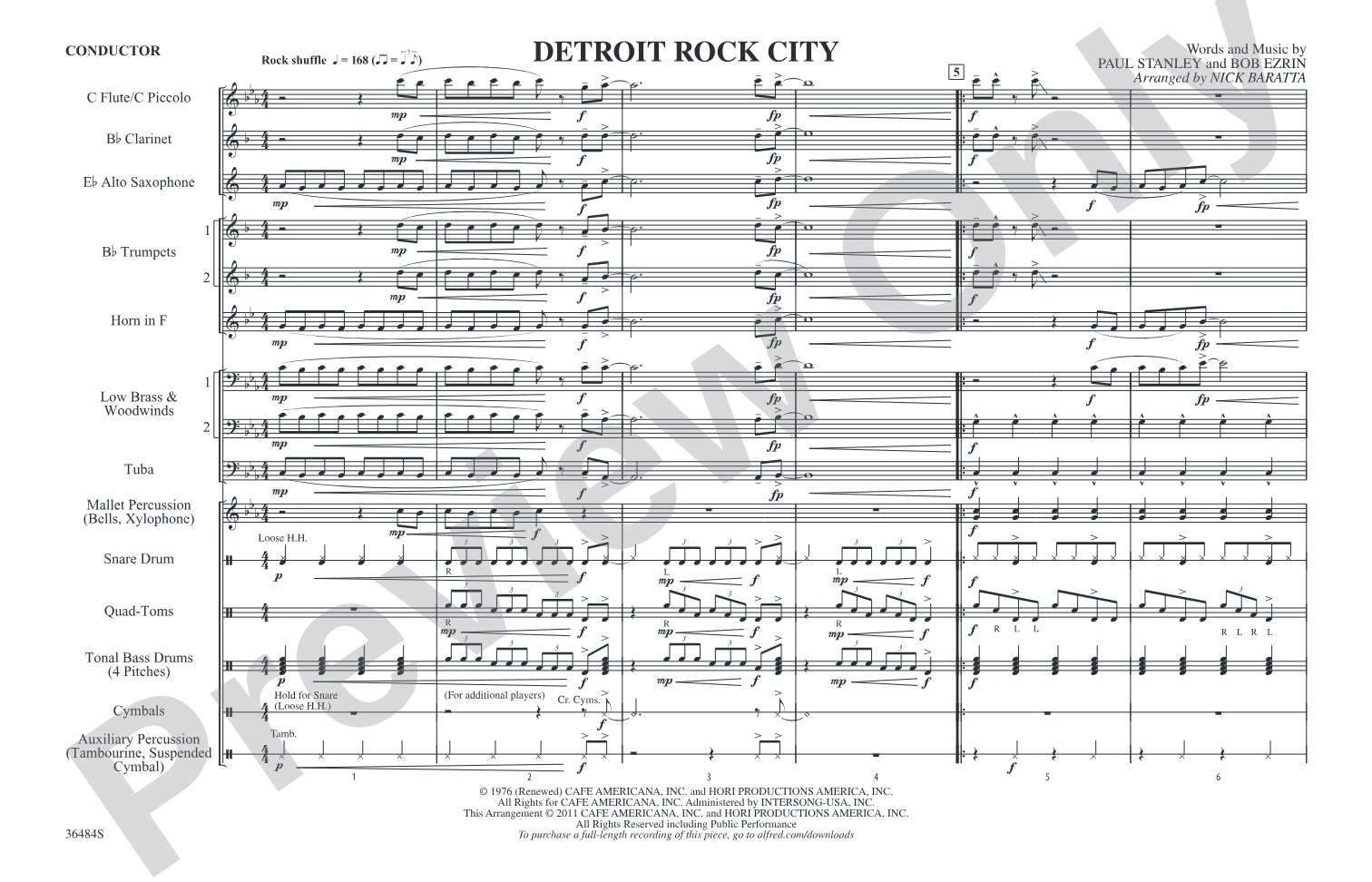
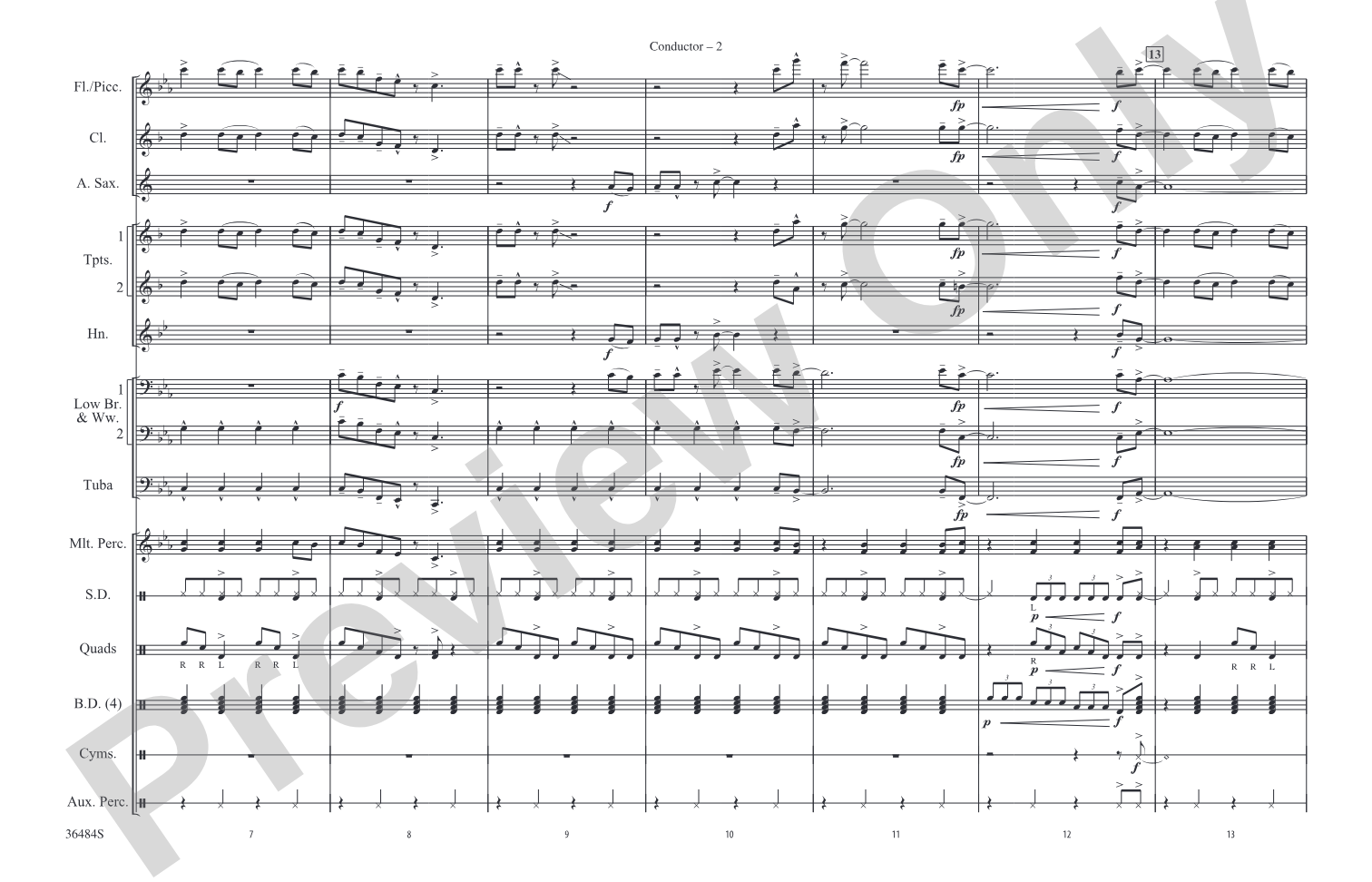
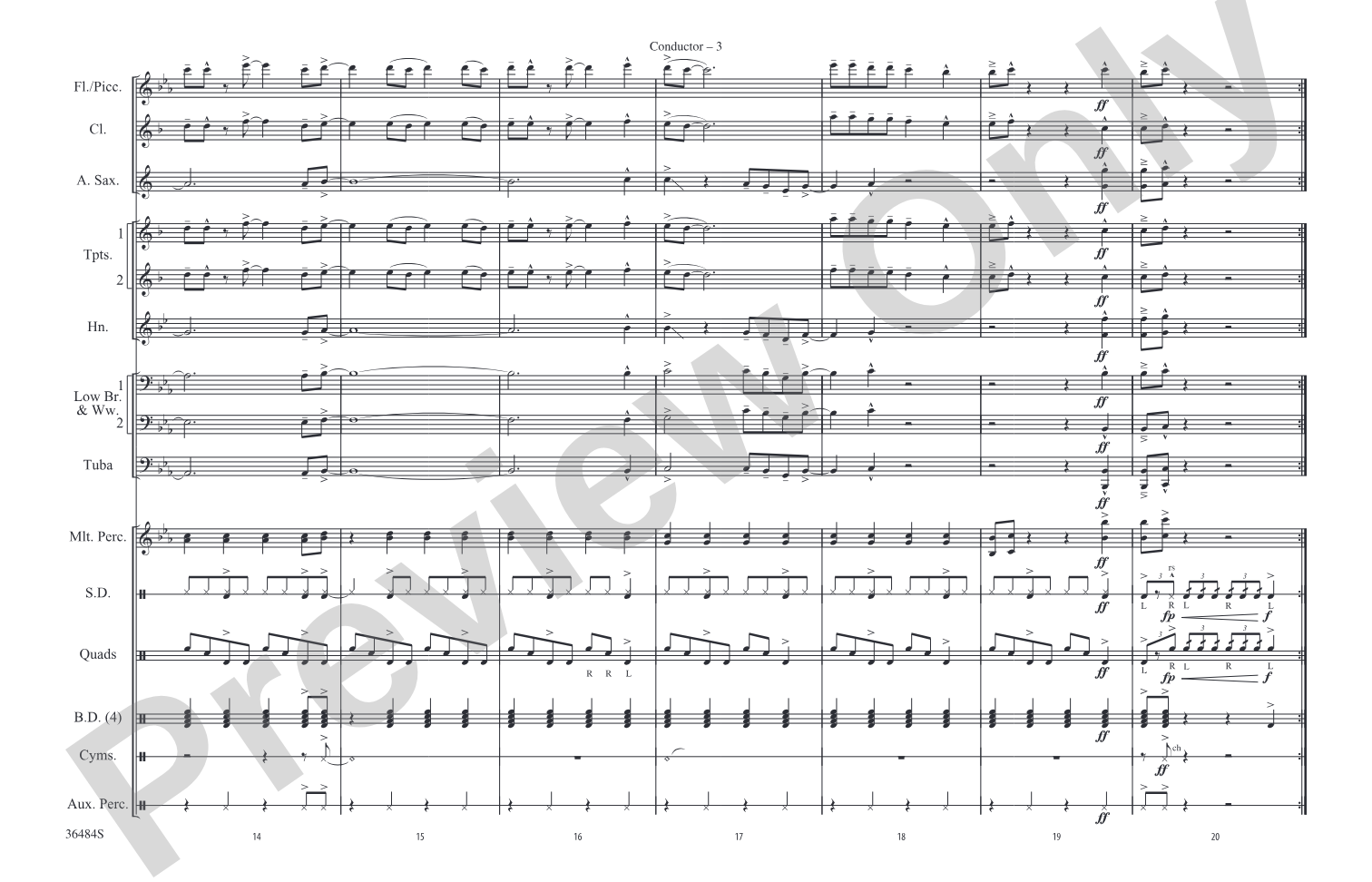
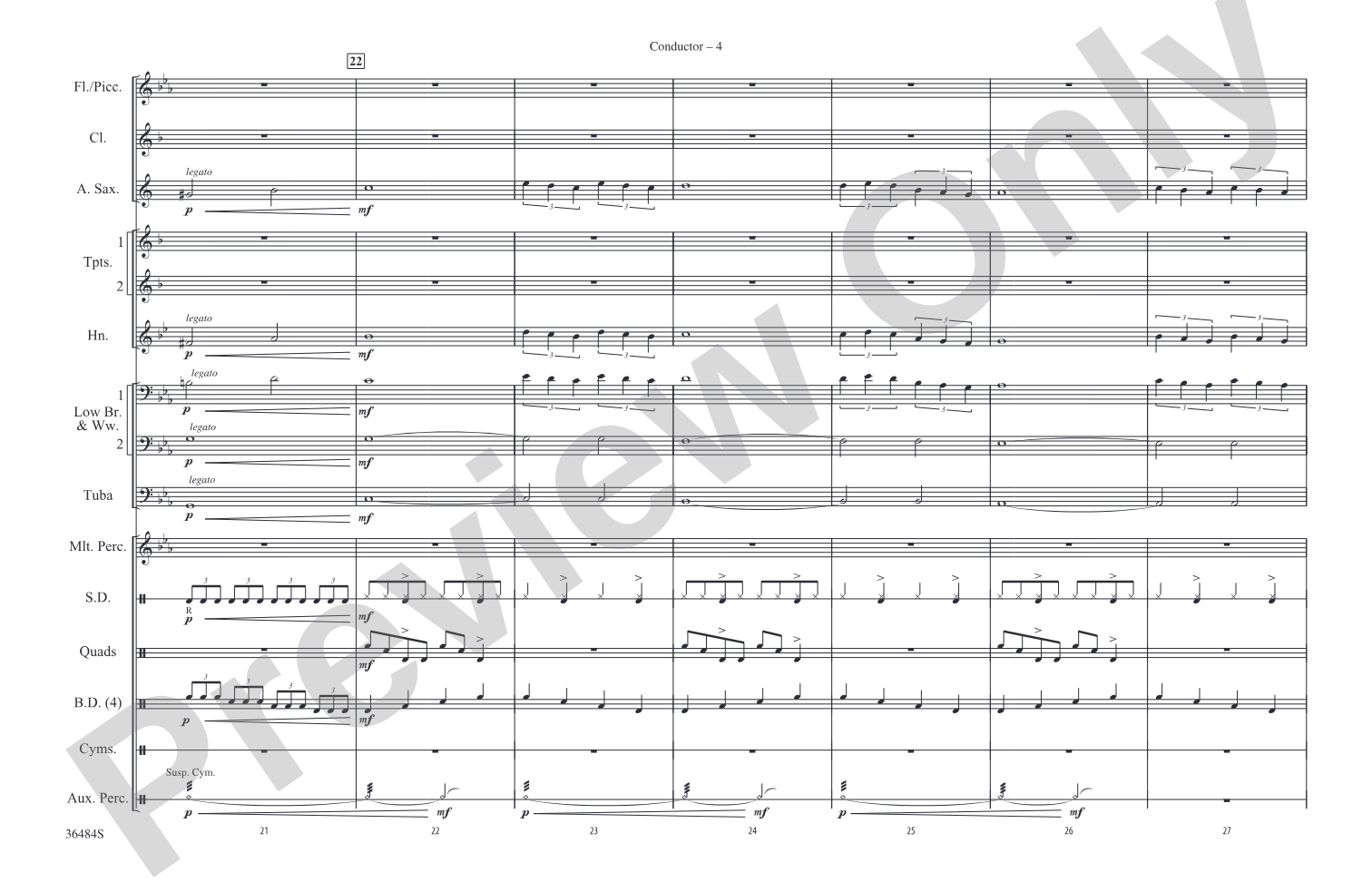
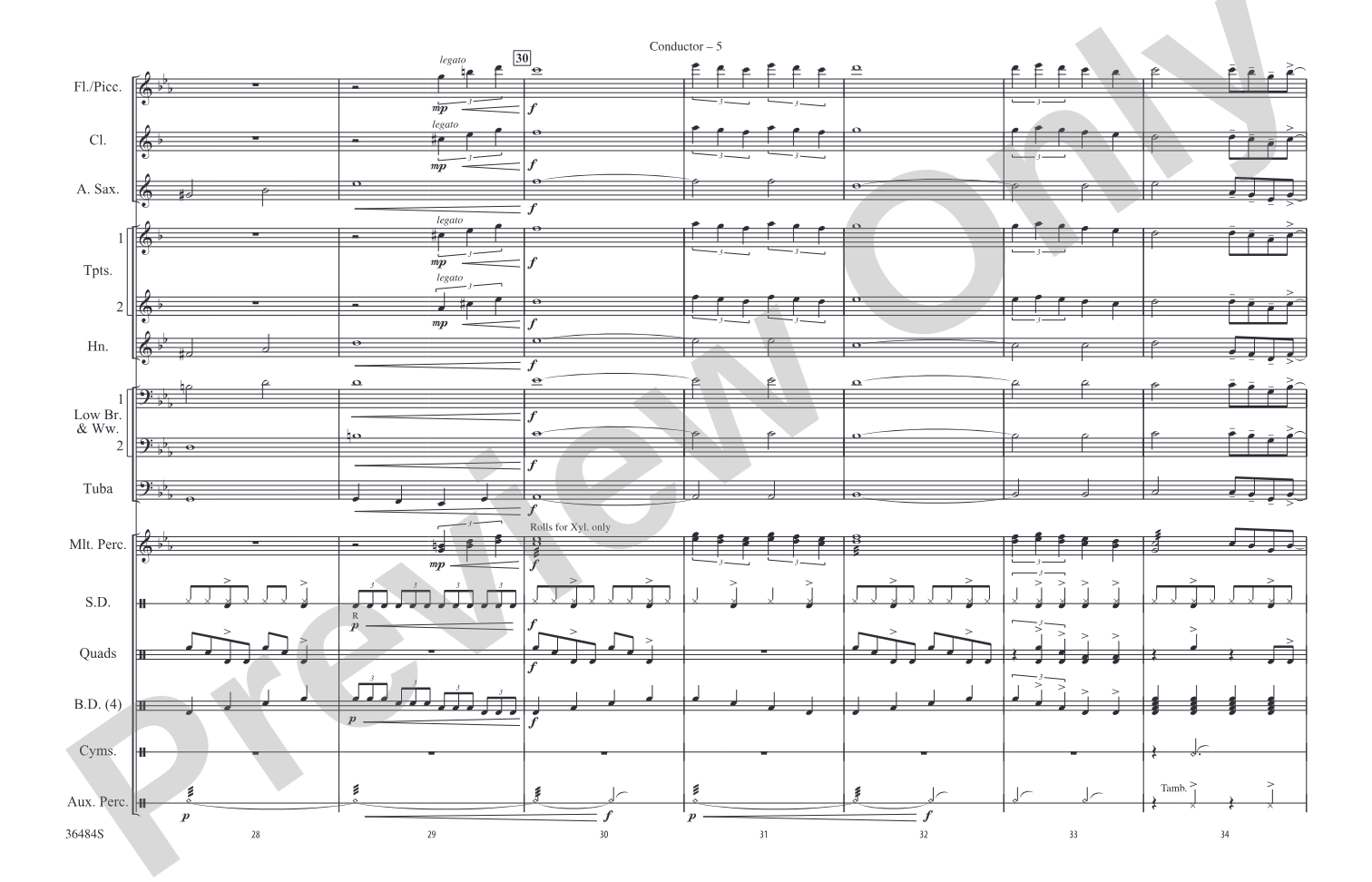
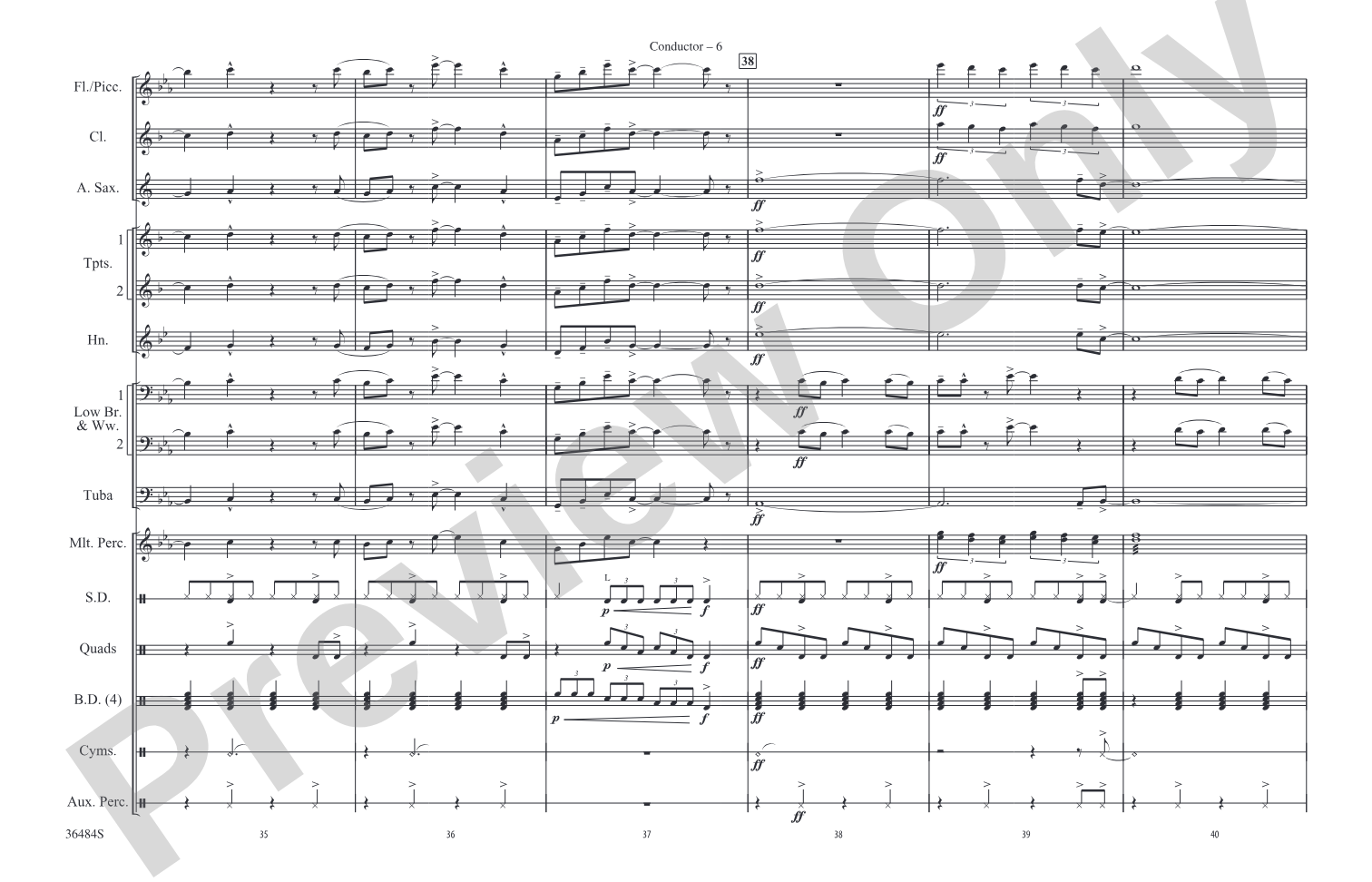
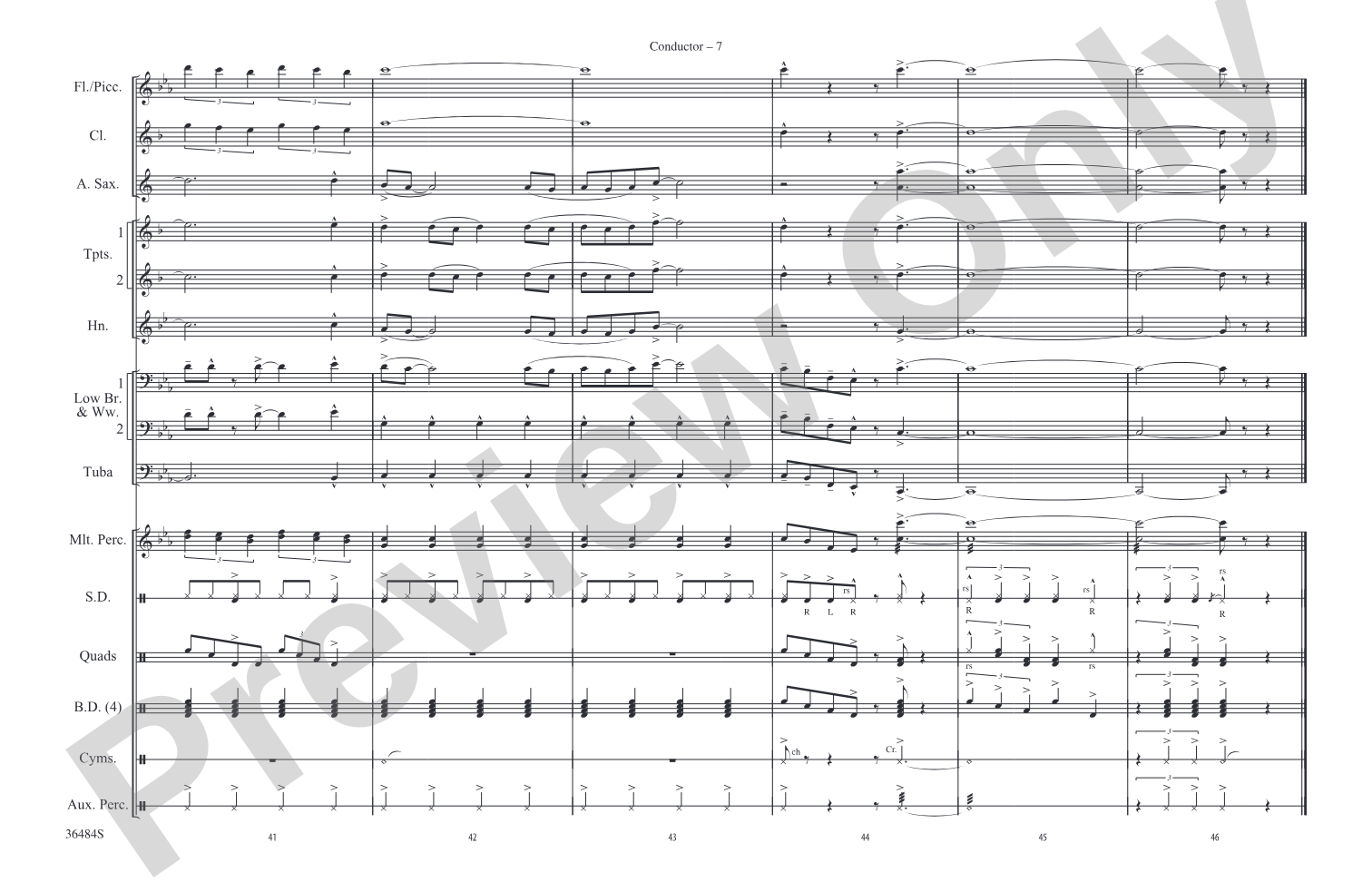

Detroit Rock City: Marching Band Conductor Score & Parts
Words and music by Paul Stanley and Bob Ezrin [KISS] / arr. Nick Baratta
Grade: 3 (Medium)
Item: 00-PK-0007964

$50.00
One moment…
Description
The rock group KISS is still going strong. Here is one of their biggest hits in a driving rock-shuffle chart from arranger Nick Baratta. It has lots of rhythmic drive that makes it perfect for the stands, pep band, and dance or drill team groups.


Don't just read it, hear it, play along with it, and watch your students grow with it. In MakeMusic Cloud, Detroit Rock City: Marching Band Conductor Score & Parts comes alive with professional accompaniment, adjustable tempo, and built-in practice tools that turn solo practice into real progress.
Open in the Player
Jump straight in and assign it today.
Start Your Free Trial
Open this title and explore the full library in minutes.
Sample Audio
1
Audio File
--:--
0:00
0:00
Sample Video
No sample videos found.
Additional Details
Series:
Mega Sounds for Marching Band
Publisher:
Alfred Music
Page Count:
110
SKU:
00-PK-0007964
More about this title
About the Composer: Paul Stanley
Paul Stanley co-founded KISS in 1973 and has been the band's primary songwriter and frontman throughout their five-decade career. His songwriting, often co-written with Bob Ezrin and other collaborators, brought arena rock anthems to millions of listeners worldwide. Stanley's melodies and rhythmic sensibilities translate surprisingly well to the marching arts, where his knack for memorable hooks and driving grooves energizes performers and audiences alike.
Why we love this
Nick Baratta's arrangement captures the swagger and relentless energy of the original without losing what makes the song instantly recognizable. The rock-shuffle foundation keeps the band locked in together, and the scoring provides real work for every section while staying accessible at Grade 3. Your students will feel like rock stars the moment they open their parts.
What to expect
Raw, propulsive energy wrapped in a groove that locks in hard. The rock-shuffle gives the march a swagger that straight-ahead rock would miss, and Baratta's orchestration keeps things lean and mean. From the opening note, this arrangement announces itself with confidence and attitude.
Who it's for
Marching band directors looking for crowd-pleasing repertoire that excites students and audiences in equal measure. Pep bands and drill teams will especially appreciate the rhythmic drive and compact arrangement, which works in both competitive and entertainment contexts. Any program that needs a modern rock selection that speaks to students without condescending to them.
How to get the most out of it
- Nail the articulation on the main riff in the reeds and brass. This chart lives or dies on crisp attacks that snap without sounding precious.
- Let the bass section anchor the shuffle feel. Marching bass drums and tuba need to stay relaxed and behind the beat just enough to create pocket and groove.
- Bring out the percussion hits that punctuate the sections. They're not just timekeeping; they're part of the arrangement's attitude.
- Keep the tempo steady and slightly brisk. This tune has energy built into it, but rushing kills the shuffle pocket.
How to use it
This works best in the second half of a program where you've established your band's chops and can afford to let loose a little. Pair it with a ballad or classical selection earlier in the show to frame it as a statement piece rather than filler. It's equally at home at pep assemblies, halftime shows, or band competitions where energy and engagement matter.
Skills your students will build
- Rock-shuffle articulation and phrasing
- Locked rhythmic ensemble playing in syncopated contexts
- Balancing written precision with groove and pocket feel
- Section independence within a cohesive arrangement
- Reading and executing a contemporary rock chart