Desperate Pursuit: Baritone B.C. Sheet Music Preview

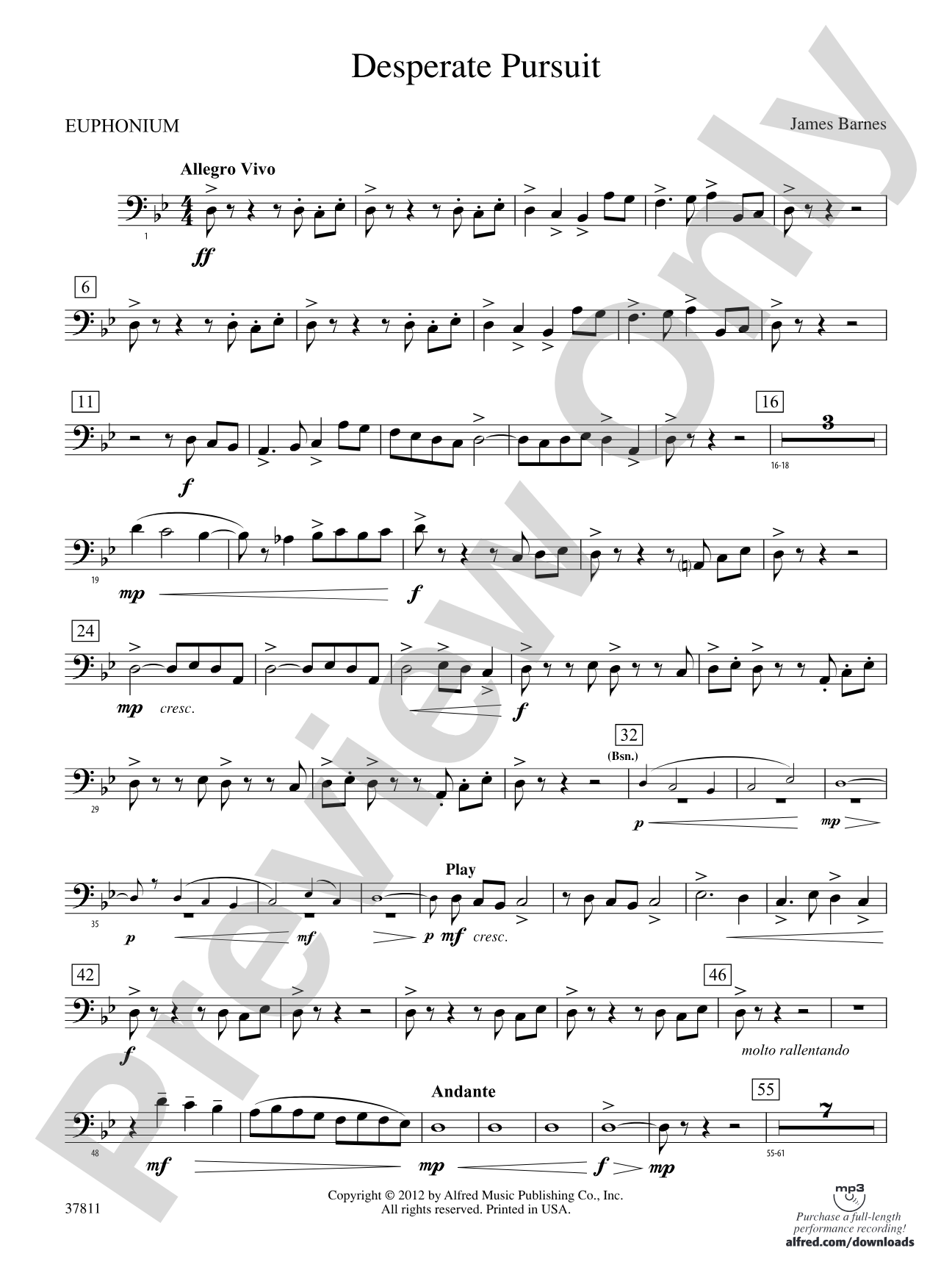
Desperate Pursuit: Baritone B.C.

By James Barnes

Grade: 2.5 (Medium Easy)

Item: 00-PC-0015341_BBC1

Digital Download
$3.00
Description
"Desperate Pursuit" is a driving and dramatic overture from the pen of award-winning composer, James Barnes. Based on the D Phrygian scale, the piece gets its name from the rapid, rhythmic motion of the piece. The intensity of Phrygian mode, colorful low woodwind and wispy percussion writing in the contrasting lyrical section of the work, and the dramatic, pulsating timpani part throughout the piece combine to bring a frantic quality to the music. (3:50)

Don't just read it, hear it, play along with it, and watch your students grow with it. In MakeMusic Cloud, Desperate Pursuit: Baritone B.C. comes alive with professional accompaniment, adjustable tempo, and built-in practice tools that turn solo practice into real progress.

Sample Audio
0:00
0:00
Sample Video
Additional Details
Series: Young Symphonic
Publisher: Alfred Music
Page Count: 268
SKU: 00-PC-0015341_BBC1

More about this title

About the Composer: James Barnes

James Barnes stands among the most performed American composers for concert band, with a catalog spanning overtures, suites, and extended works that balance accessibility with musical substance. His compositions have earned widespread adoption in educational settings, particularly for their ability to engage young musicians while introducing them to sophisticated harmonic language and orchestration.

Why we love this

Barnes writes overtures that sound mature and performance-ready at a medium-easy level, and this one uses modal harmony in a genuinely musical way rather than as a gimmick. The pulsating timpani part and low woodwind colors give your band something distinctive to latch onto, making rehearsals focused and results impressive without requiring virtuosic players.

What to expect

Restless and energetic, with a sense of forward momentum driven by repeated rhythmic figures and modal color that feels contemporary without being trendy. The contrast between the frenetic opening and closing passages and the hushed, lyrical middle section creates dramatic shape, building from urgency to fragile beauty and back again.

Who it's for

Concert bands at the middle school through early high school level will find this accessible enough to execute well while still sounding concert-worthy. The moderate demands across the ensemble make it suitable for mixed-ability groups while the distinctive harmonic language keeps stronger players engaged.

How to get the most out of it

  • Establish the D Phrygian tonality from the opening: the raised second scale degree is what gives this mode its exotic edge, so voice it clearly in the woodwind chorale sections and let it breathe.
  • Lock the rhythmic motion between the snare drum and the faster rhythmic figures in the upper woodwinds during the driving sections; this partnership propels the piece forward and prevents it from sounding scattered.
  • Shape the lyrical contrast with warm, legato phrasing in the lower instruments while keeping the wispy percussion accompaniment delicate and restrained so the melodic line stands clearly.
  • Build the timpani part gradually across the piece; it should feel like a constant pulse that intensifies rather than a prominent feature from the start.

How to use it

Program this as an opener that captures attention immediately, or pair it with a lyrical chorale and a lighter closing piece to showcase your band's range. Its 3:50 length makes it flexible for concert programming, and the dramatic arc works equally well in festival competition or a standard concert context.

Skills your students will build

  • Playing in modal tonality (D Phrygian mode)
  • Rhythmic precision and subdivision in driving passages
  • Dynamic contrast and phrasing in legato sections
  • Ensemble balance when layering multiple rhythmic motifs
  • Timpani independence and control in pulsating parts

You May Also Like