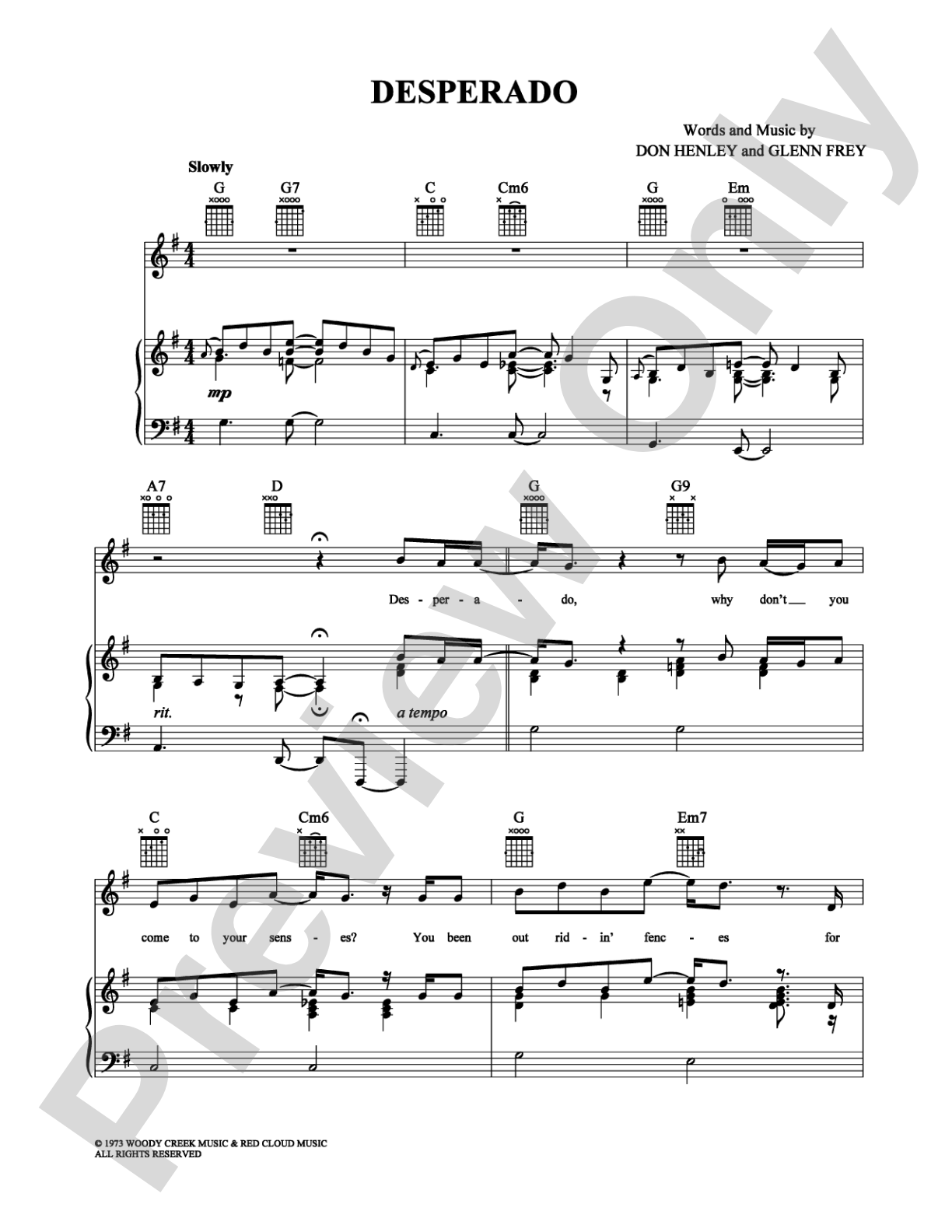
Desperado: Piano/Vocal/Chords Digital Sheet Music

Desperado: Piano/Vocal/Chords Digital Sheet Music

Eagles, Don Henley, Clint Black, Linda Ronstadt, Judy Collins

Item: 00-PS-0002405

Digital Download
$3.99
Description

Desperado: Piano/Vocal/Chords Digital Sheet Music isn't in MakeMusic Cloud just yet...but it could be. Let us know you'd like to see it, and you'll help shape what comes next. In the meantime, start a free trial and dive into thousands of interactive titles your students can play along with today.

Sample Audio
No sample audio found.
Sample Video
Additional Details
SKU: 00-PS-0002405

More about this title

About the Artist: Eagles

The Eagles emerged from the Los Angeles country rock scene in the early 1970s and became one of the most commercially successful bands in American music history. Their sophisticated arrangements, layered vocal harmonies, and blend of rock, country, and pop influences set a standard for studio craftsmanship that influenced generations of musicians. The band's catalog includes some of the most enduring songs in popular music, performed countless times across genres and styles.

Why we love this

This song teaches the architecture of a classic pop ballad: how restraint builds emotional weight, how chord movement can underscore lyrical vulnerability, and how vocal melody can sit comfortably over jazz-influenced harmonies. The piano/vocal/chord format gives students and teachers a direct window into the compositional choices that made this recording iconic, while remaining fully accessible for classroom performance and study.

What to expect

The song settles into a minor key world of regret and longing, with chord movements that feel like sighs. Each verse pulls inward; the melody sits close to the piano, intimate and conversational. There's a weariness here, but also a kind of dignity, as though the narrator has made peace with difficult truths.

Who it's for

Pianists learning to accompany singers will benefit from the full chord voicings and the interplay between melody and harmony. Vocalists preparing audition material or building a repertoire of standards will find this piece teaches phrasing, dynamics, and emotional control. Music teachers can use this as a model for discussing how popular songs are structured and how chord changes function expressively rather than decoratively.

How to get the most out of it

  • Treat the chord changes as harmonic landmarks rather than obstacles. Let your left hand voice the chords deliberately, emphasizing the smooth voice leading that gives the song its reflective quality.
  • The vocal line sits in an intimate range. Resist the urge to oversell emotionally; the restraint in the original arrangement is part of what makes the song resonate.
  • Balance the piano accompaniment so it supports rather than dominates the voice. This is a song about space and breath, not density.
  • Pay attention to any sustained chords or rubato markings in the sheet music. Small tempo flexibility, especially in the verse sections, honors the original performance style.

How to use it

This works well in a concert exploring how rock and country traditions intersect with pop songwriting. Pair it with other 1970s singer-songwriter material or use it as an encore that shifts the emotional temperature of a program. It's also valuable as a teaching piece for piano students moving into jazz-influenced popular music or for singers working on emotional authenticity and restraint.

Skills your students will build

  • Reading and voicing jazz-influenced chord progressions on piano
  • Accompanying a vocalist with sensitivity and harmonic awareness
  • Phrasing a melody across longer musical phrases rather than in short bursts
  • Understanding how minor keys and suspended chords create emotional weight
  • Balancing technical execution with interpretive subtlety

You May Also Like