Desert Sands: Piano Sheet Music Preview

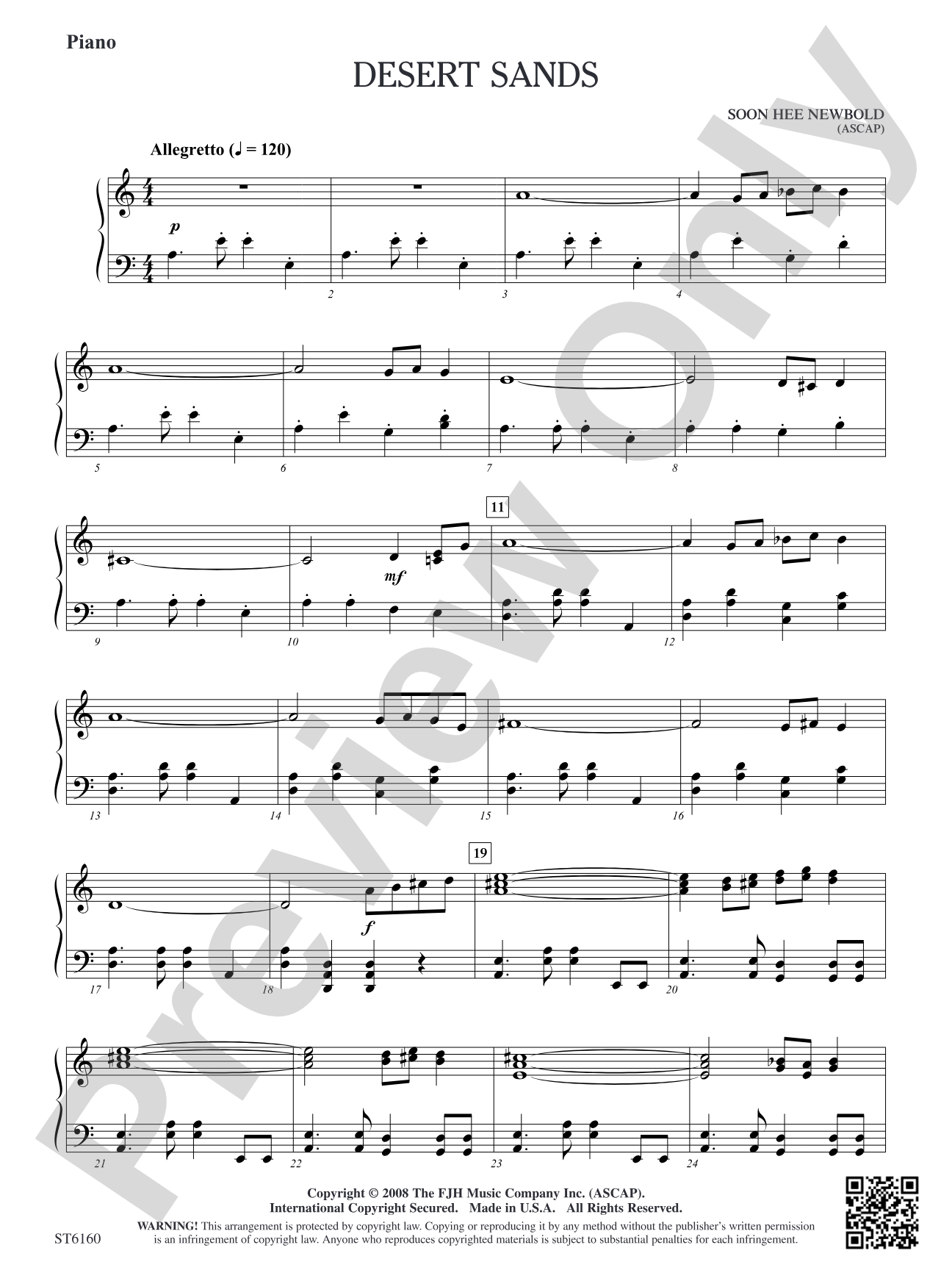
Desert Sands: Piano

By Soon Hee Newbold

Grade: 1.5

Item: 98-PC-DST6160_K

Digital Download
$7.00
Description
A unique and colorful piece for this level, Desert Sands introduces limited low first and second fingers to beginning players. The result is a fun, ethnic sounding piece accessible to young orchestras as they imagine caravans traveling across the desert.

Don't just read it, hear it, play along with it, and watch your students grow with it. In MakeMusic Cloud, Desert Sands: Piano comes alive with professional accompaniment, adjustable tempo, and built-in practice tools that turn solo practice into real progress.

Sample Audio
0:00
0:00
Sample Video
Additional Details
Series: FJH Beginning Strings
Publisher: The FJH Music Company, Inc.
SKU: 98-PC-DST6160_K

More about this title

About the Composer: Soon Hee Newbold

Soon Hee Newbold

Soon Hee Newbold draws on a lifetime of musical exploration across continents to craft works that blend cultural traditions with accessible scoring. A trained pianist and violinist from age five, she has performed as a concert artist in professional ensembles worldwide and brings that performance experience directly into her compositional voice.

As a composer, Newbold's catalogue spans everything from professional symphony orchestras to beginning elementary ensembles, with performances at Carnegie Hall, the Kennedy Center, Lincoln Center, and the Midwest Band and Orchestra Clinic. Her work as a guest clinician and keynote speaker, combined with conducting experience across the U.S., Europe, Australia, and Asia, has shaped her deep understanding of what each ensemble level needs. Beyond concert music, she has also composed for film and recording projects in Hollywood.

Why we love this

Newbold captures the wonder of travel and unfamiliar landscapes through music that young orchestras can actually play, which is harder than it sounds at this level. The ethnic coloring feels authentic rather than superficial, giving students immediate connection to the story without requiring technical skills they haven't yet developed. Beginning players respond to pieces that transport them somewhere; this one does exactly that.

What to expect

Warm, shimmering, and gently exotic, like watching heat rise off dunes at sunrise. The piece unfolds with patience and grace, inviting listeners into a journey without demanding virtuosity from the players carrying them there. Young orchestras discover they can create something atmospheric and evocative.

Who it's for

String orchestras in their first year of study, especially those ready to move beyond unison exercise arrangements into genuine repertoire with character. This works beautifully for groups balancing technique-building with the motivational boost that comes from playing something that tells a story and sounds complete.

How to get the most out of it

  • Establish a steady, unhurried pulse from the first rehearsal. The programmatic intent depends on orchestras hearing a caravan's patient, rhythmic journey rather than rushing toward the destination.
  • Balance the melodic line between first and second violins carefully; both parts carry the story, and clarity matters more than traditional voice leading at this level.
  • Experiment with slight dynamic shaping within phrases to suggest the landscape shifting and changing as the caravan moves through different terrain.
  • Use the limited left hand fingering as a teaching moment: highlight how much color and character Newbold achieves without demanding low positions, which builds student confidence.

How to use it

Place this early in a concert to set a calm, imaginative tone before moving into more energetic selections. It pairs well in a thematic program exploring world cultures or travel, or use it as a confidence builder for beginning orchestras preparing for their first formal performance.

Skills your students will build

  • Reading and executing low first finger placement (violin/viola)
  • Sustaining long tones with consistent tone quality across the ensemble
  • Responding to programmatic cues and creating character through dynamics
  • Balance and blend between first and second violins in shared melodic material
  • Rhythmic precision in quarter note and eighth note figures

You May Also Like