
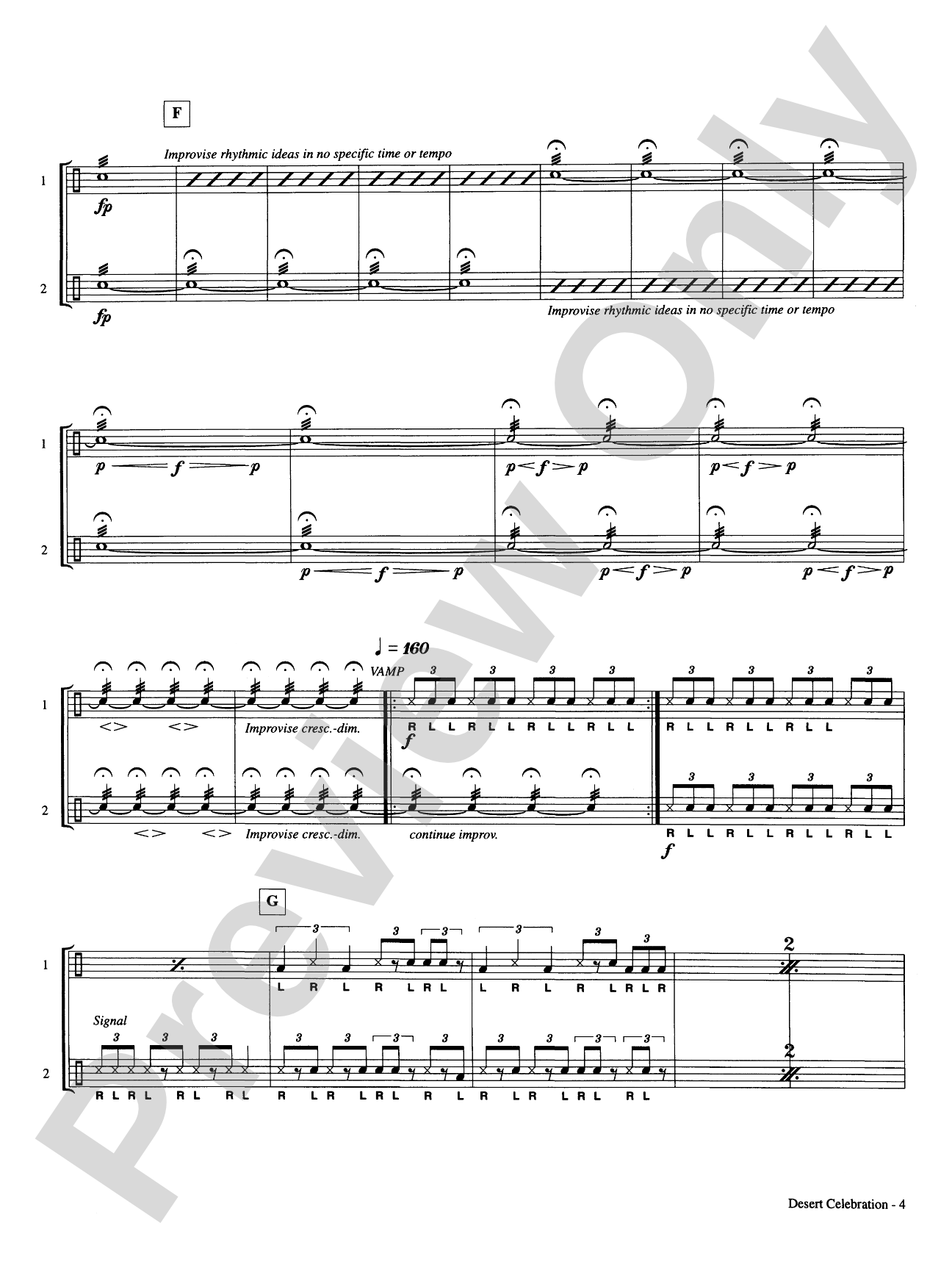
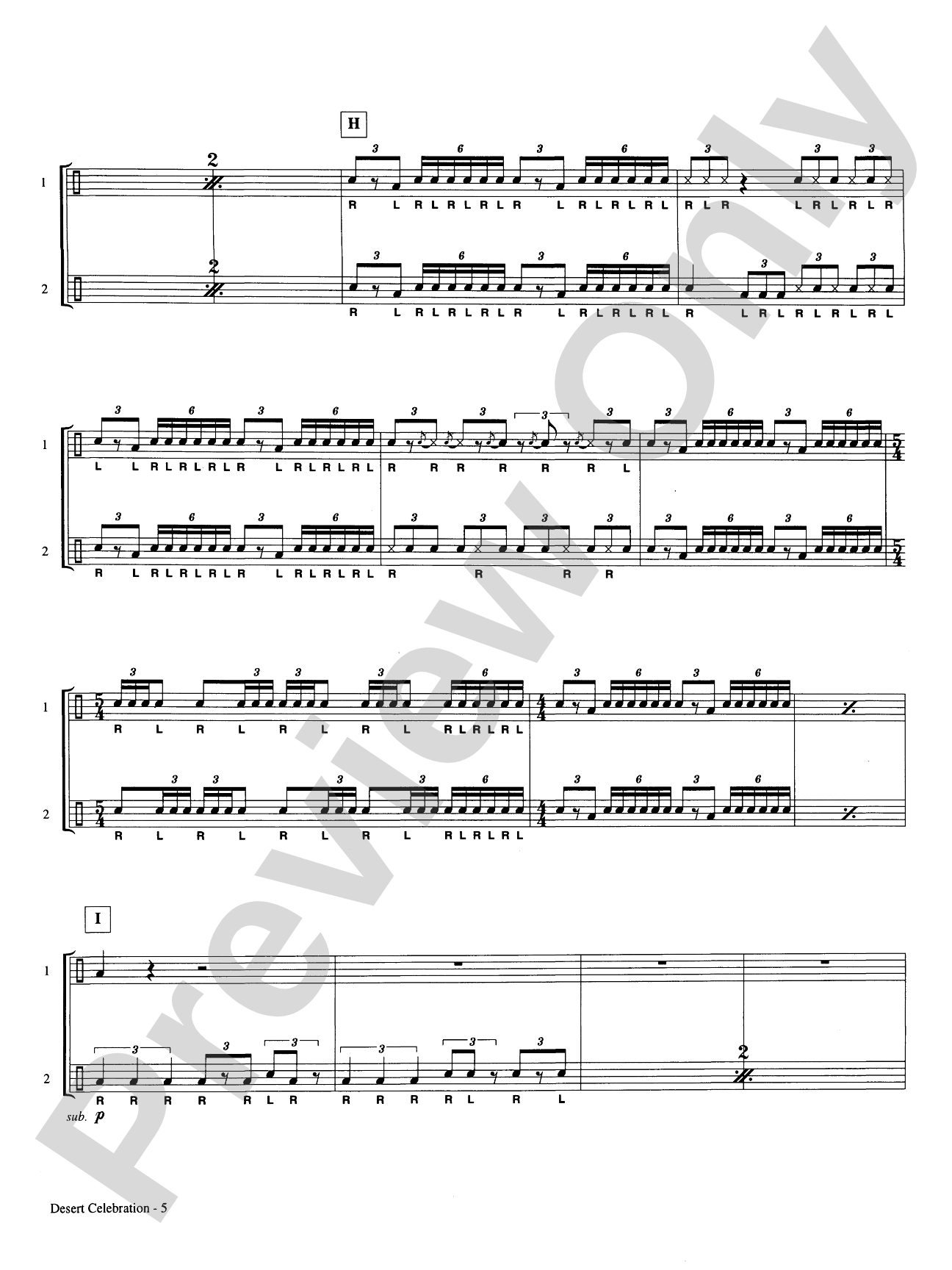
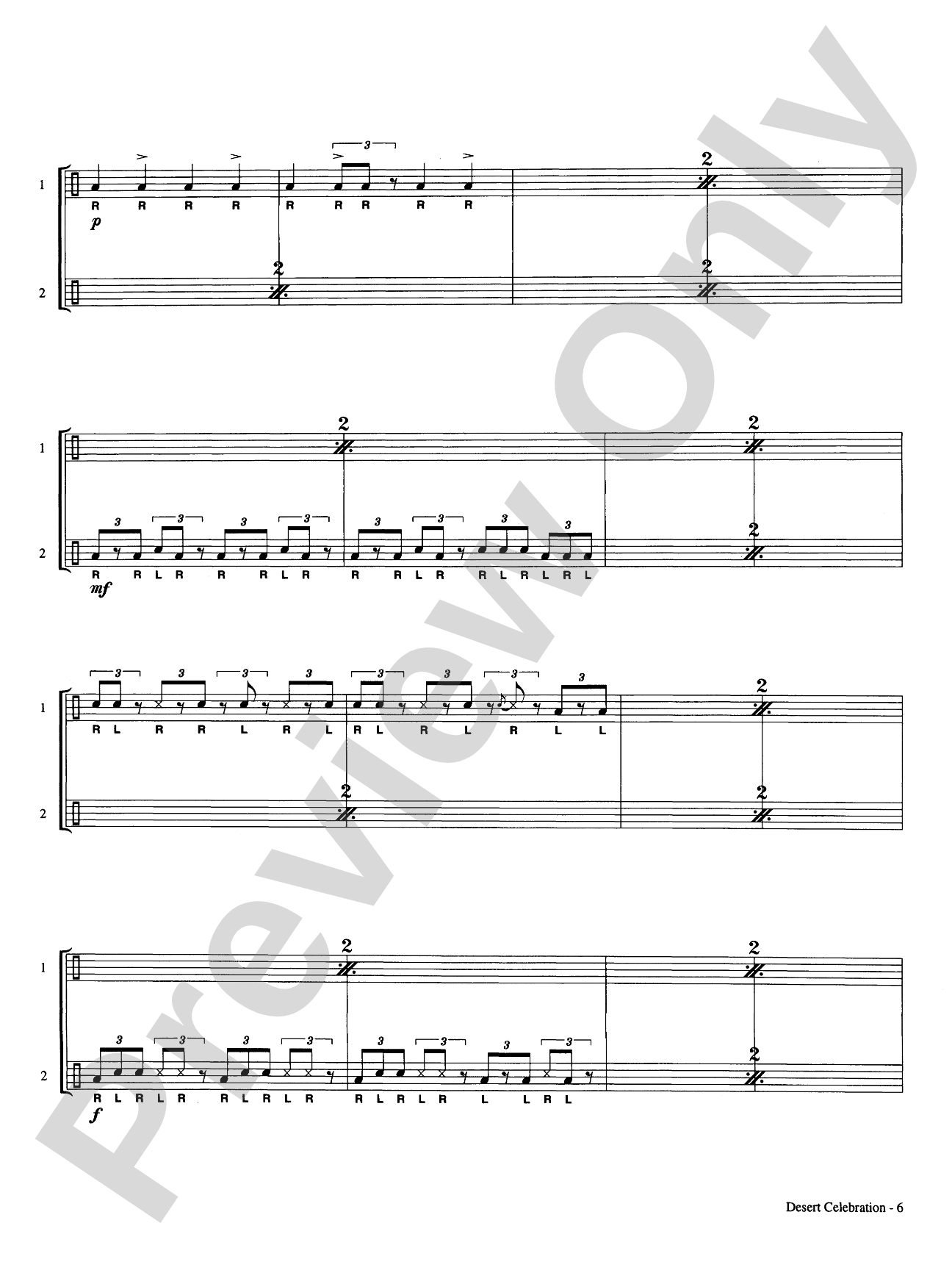
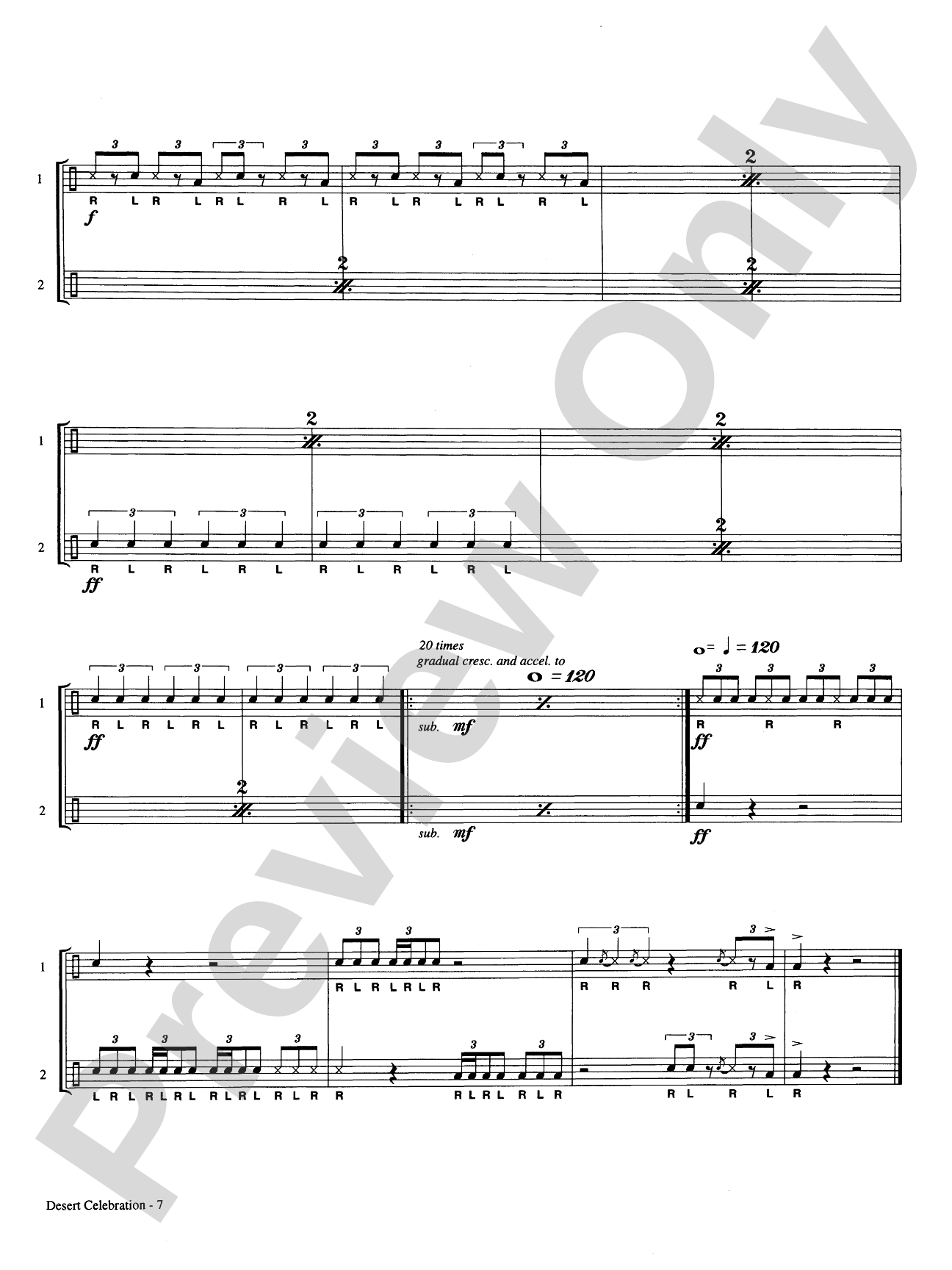

Desert Celebration for Two Djembes: Djembe Duet Part(s)
By Matt Savage
Level: Intermediate
Item: 00-PK-0006860

$12.95
Pickup currently not available
Buy Extra Parts (Digital PDF Download)
| Product | Price | Quantity |
|---|---|---|
| Desert Celebration for Two Djembes: 1st Percussion | $3.00 | |
| Desert Celebration for Two Djembes: 2nd Percussion | $3.00 |
Parts Added to Cart!
Related Items
Desert Celebration for Two Djembes: Djembe Duet Part(s) |
$12.95
|
View |
Description
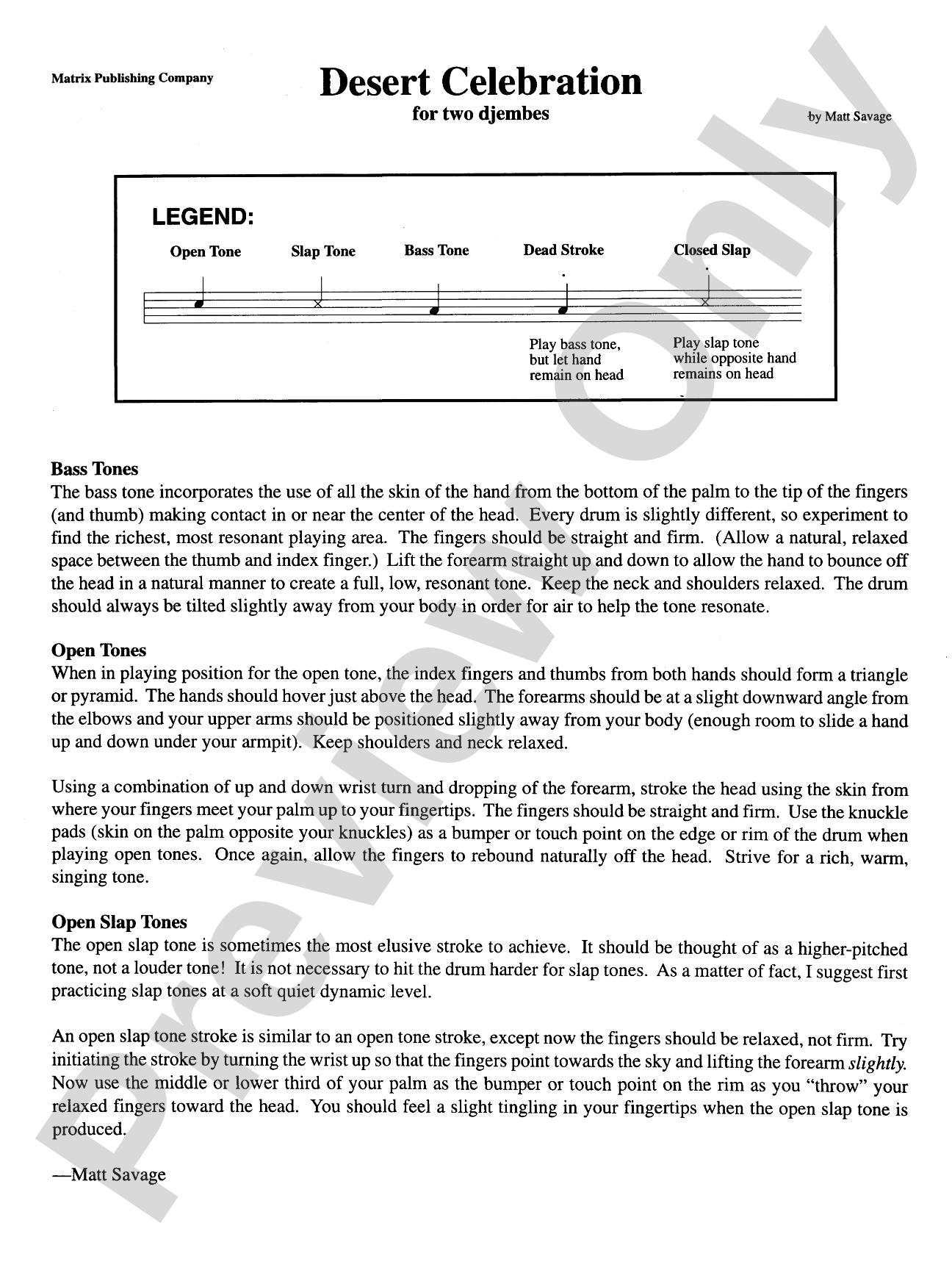
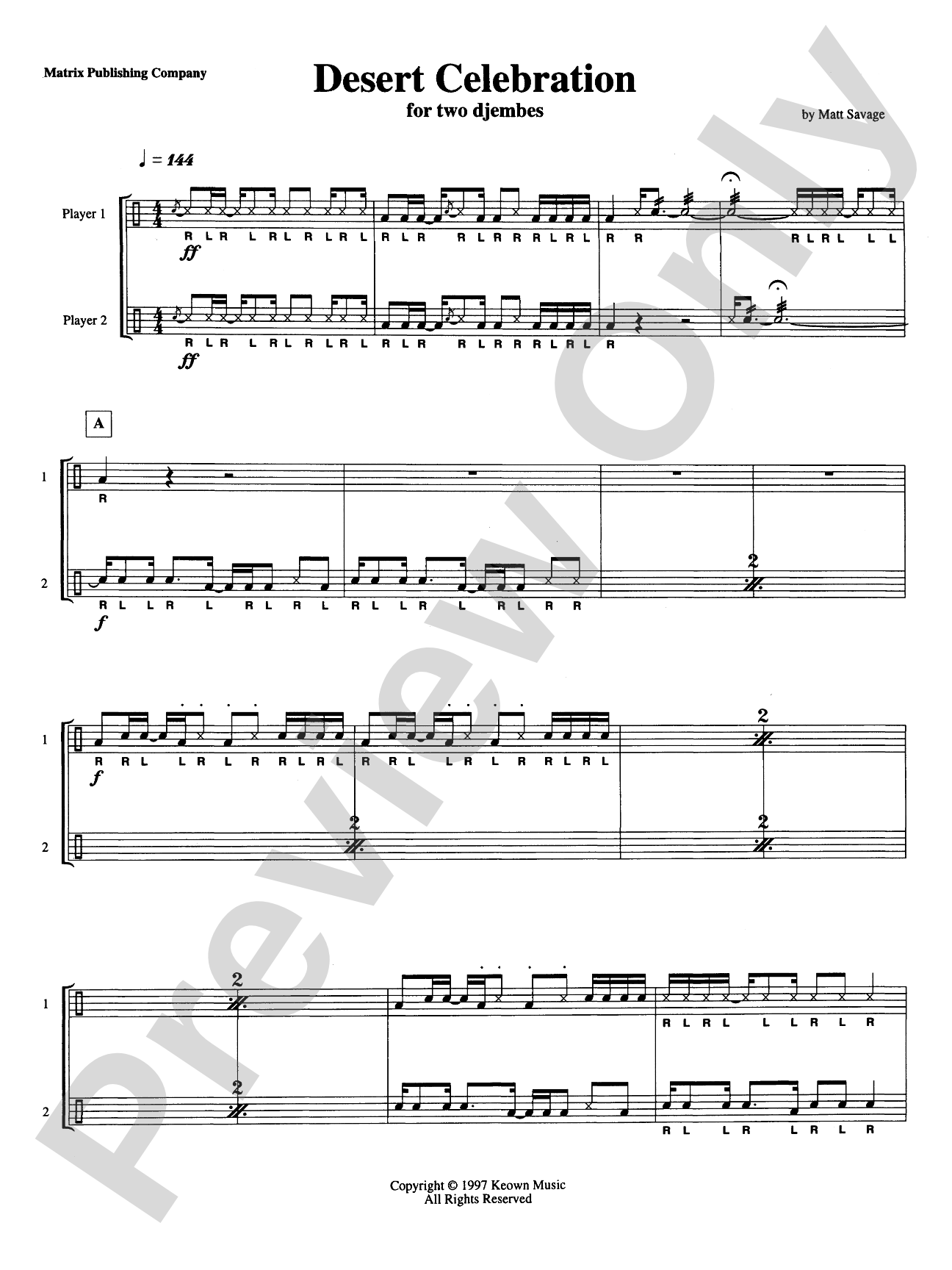
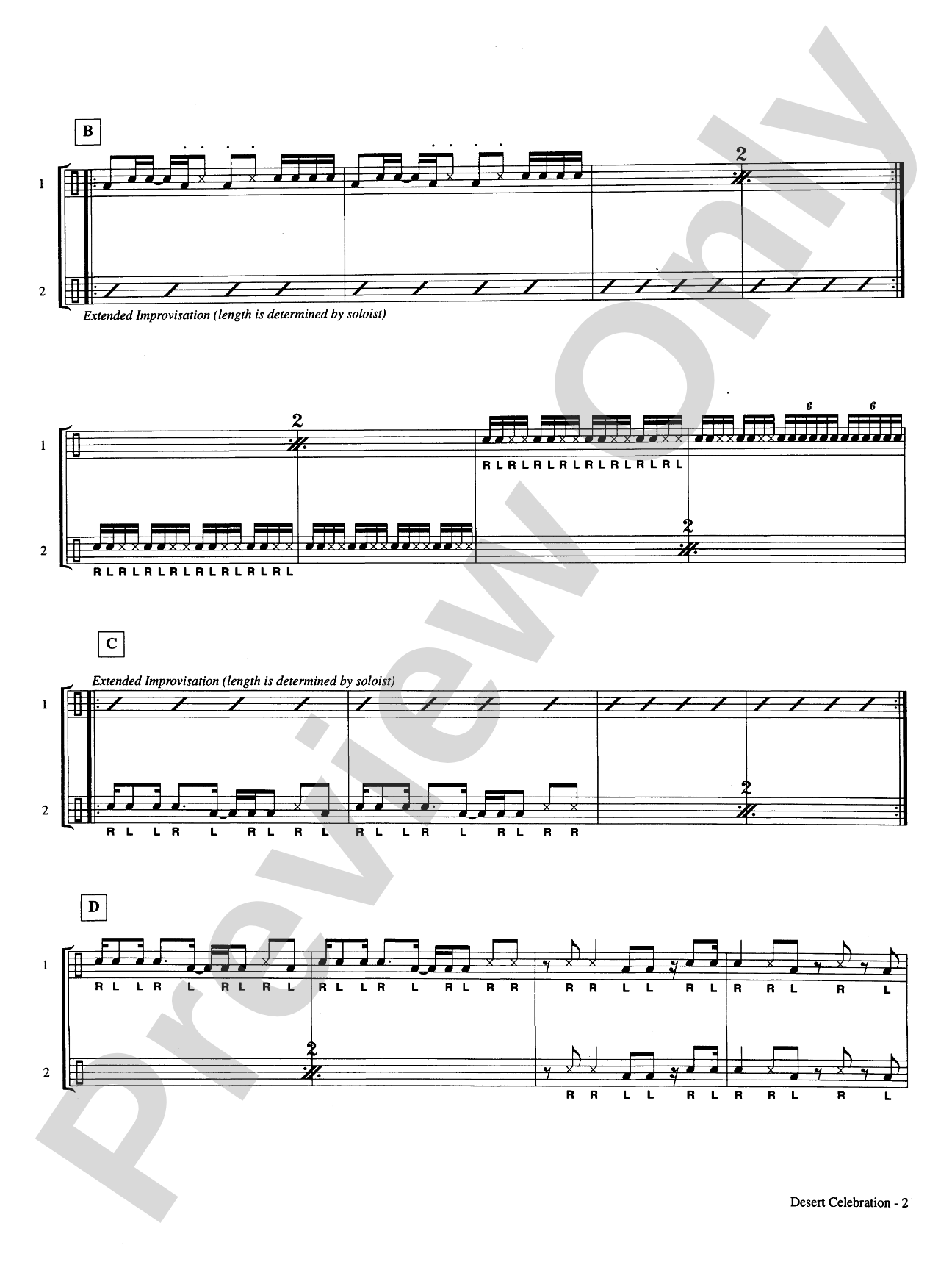
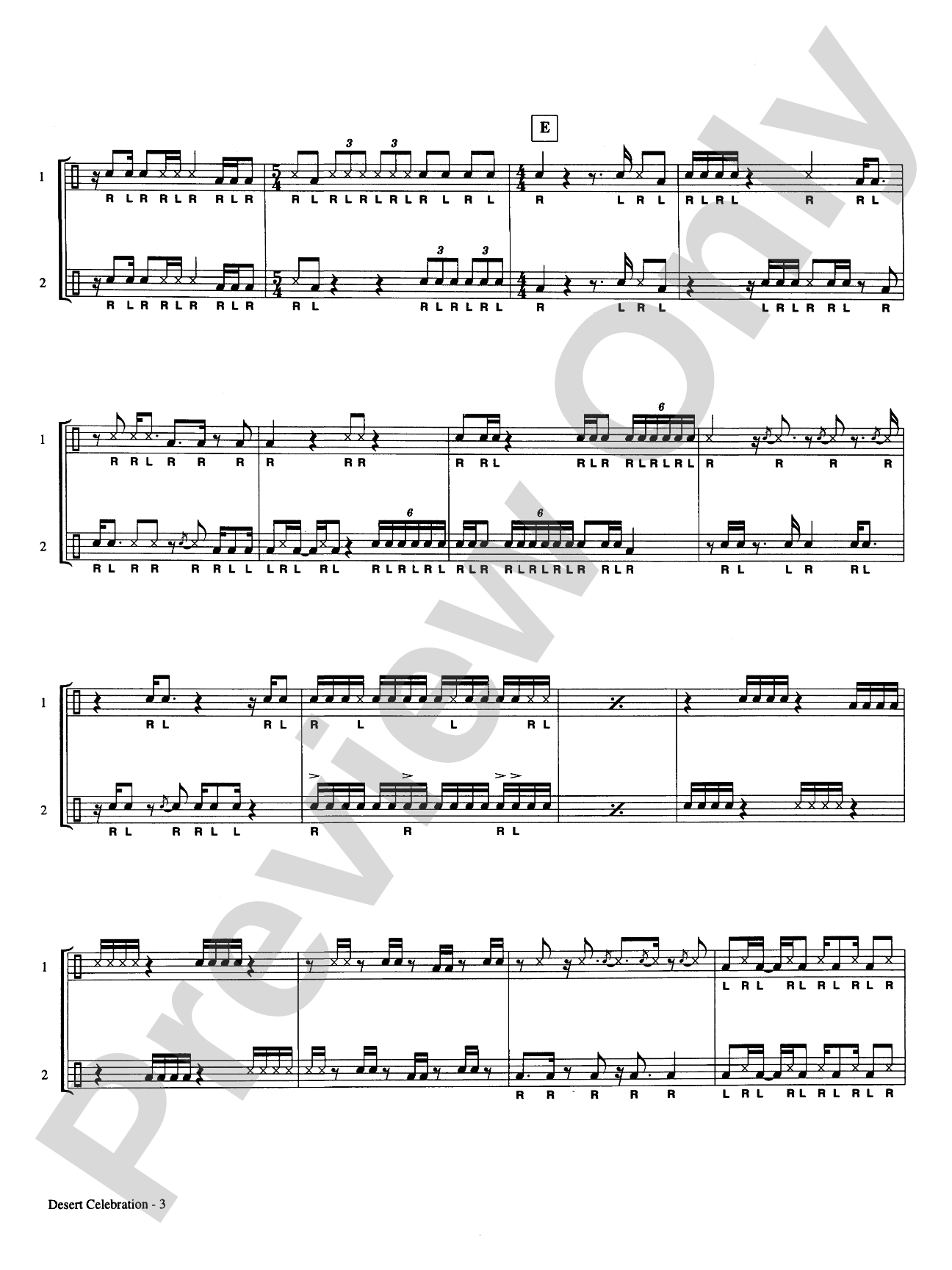
This duet for two djembes includes techniques of how to play open tone, slap tone, bass tone, dead stroke and closed slap directly from the author, Matt Savage. This is a wonderful duet that captures the essence and beauty of the djembe drum.


Don't just read it, hear it, play along with it, and watch your students grow with it. In MakeMusic Cloud, Desert Celebration for Two Djembes: Djembe Duet Part(s) comes alive with professional accompaniment, adjustable tempo, and built-in practice tools that turn solo practice into real progress.
Open in the Player
Jump straight in and assign it today.
Start Your Free Trial
Open this title and explore the full library in minutes.
Sample Audio
No sample audio found.
Sample Video
No sample videos found.
Additional Details
Publisher:
Alfred Music
Page Count:
16
SKU:
00-PK-0006860
Instrumentation:
Djembe Duet
More about this title
Why we love this
Savage writes with genuine understanding of djembe pedagogy. Rather than treating the instrument as an exotic ornament, he builds the duet around five core techniques, making technical mastery inseparable from musical expression. Pairs beautifully with world music units or as a bridge between rhythm studies and ensemble performance.
What to expect
Desert Celebration captures the warmth and rhythmic complexity of West African djembe traditions. The interplay between the two parts creates layers of texture, moving between call-and-response passages and synchronized grooves that feel both grounded and vibrant. It's music that breathes with cultural authenticity while remaining accessible to learning musicians.
Who it's for
Intermediate percussionists ready to move beyond single-drum technique into ensemble djembe playing. This duet works for music classes studying world percussion traditions, percussion ensemble electives, or lesson studio pairs preparing for recital. Players need prior djembe experience; this assumes familiarity with basic hand positions.
How to get the most out of it
- Establish a consistent grip before the first rehearsal. Open tone, slap tone, and bass tone each demand different hand positions and contact points; spending five minutes aligning hand placement between players prevents months of uneven tone quality.
- Record yourselves weekly and listen back together. The djembes' tonal range can mask timing discrepancies, especially where the parts overlap. Playback reveals synchronization issues that ears alone miss in the room.
- Practice the dead stroke and closed slap passages separately at half tempo. These techniques require precise muting control; rushing them while building muscle memory leads to sloppy execution under performance pressure.
- Lock the bass tones first. Once both players can match the low-end rhythm and timbre, the upper techniques sit naturally on top. This inverts typical rehearsal order but works well for hand percussion.
How to use it
Feature this as the centerpiece of a world percussion concert segment, pairing it with other non-Western instruments or styles. It also serves as a capstone project for djembe units in general music or percussion classes, giving students a high-impact duet to perform for peers. The 16-page length makes it substantial enough for a meaningful rehearsal arc without overwhelming a typical ensemble timeline.
Skills your students will build
- Producing clean open tone, slap tone, bass tone, dead stroke, and closed slap on the djembe
- Listening and synchronizing two independent rhythmic parts
- Reading and performing world percussion notation
- Building hand endurance and consistency across an extended duet
- Responding to dynamic and tonal cues from a musical partner