Der Vogelfanger Bin Ich Ja Sheet Music Preview

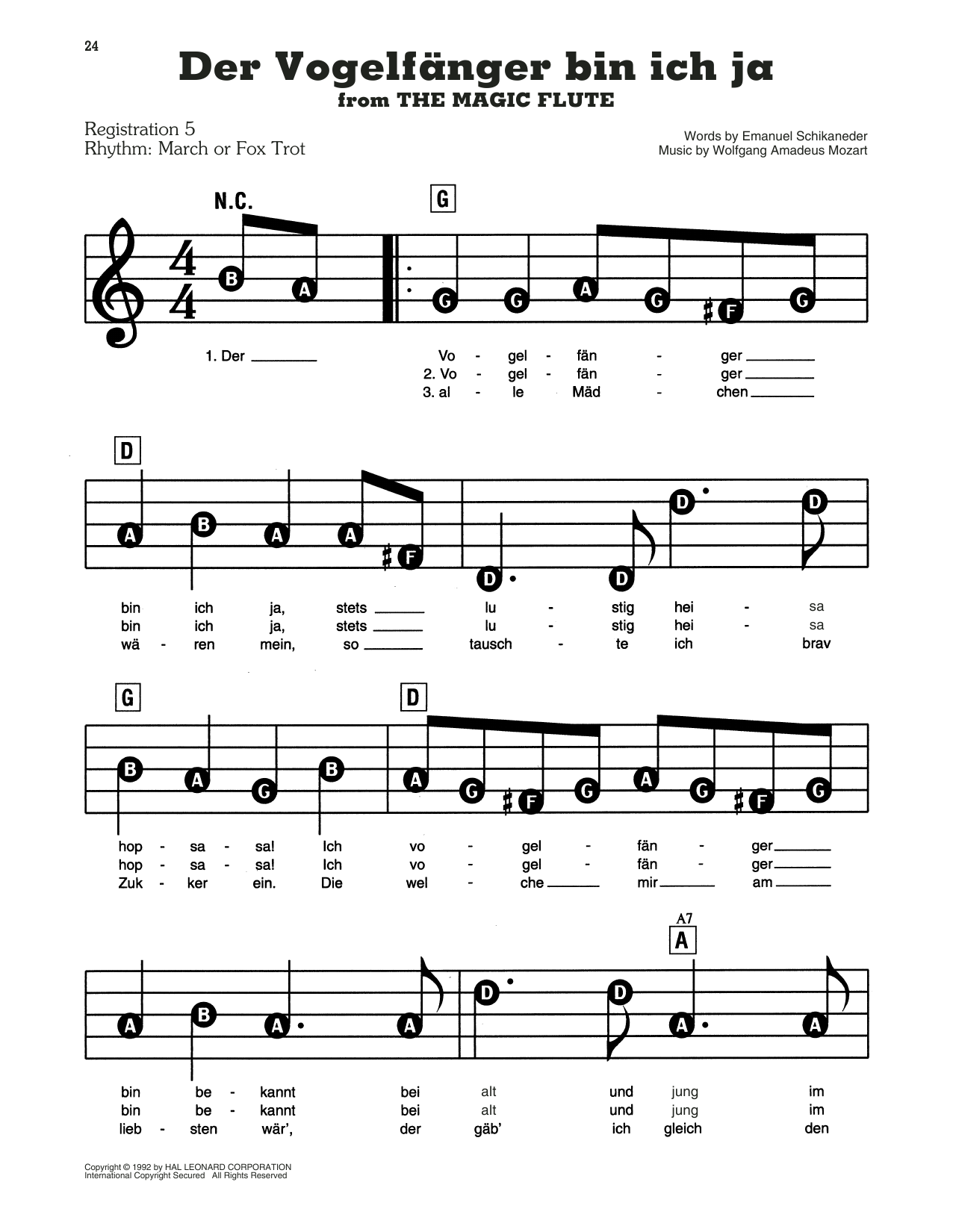
Der Vogelfanger Bin Ich Ja: E-Z Play Today

Item: 35-DS00836500

Digital Download
$4.99
Description

Der Vogelfanger Bin Ich Ja: E-Z Play Today isn't in MakeMusic Cloud just yet...but it could be. Let us know you'd like to see it, and you'll help shape what comes next. In the meantime, start a free trial and dive into thousands of interactive titles your students can play along with today.

Sample Audio
No sample audio found.
Sample Video
Additional Details
Publisher: Hal Leonard
Page Count: 3
SKU: 35-DS00836500

More about this title

About the Creator: Wolfgang Amadeus Mozart

Wolfgang Amadeus Mozart (1756–1791) composed "Der Vogelfänger bin ich ja" as the opening aria of his 1791 singspiel Die Zauberflöte (The Magic Flute). This deceptively simple character introduction has become one of the most recognizable melodies in opera, performed by generations of singers across every vocal range and style.

The aria's genius lies in its directness. Papageno, the bird catcher, introduces himself with music that matches his personality: unpretentious, charming, and immediately memorable. Mozart's melodic gift shines brightest in moments like these, where sophisticated composition serves the drama rather than overshadowing it.

Why we love this

This E-Z Play arrangement captures the infectious charm of one of opera's most beloved melodies without demanding advanced technique. Students get immediate satisfaction playing a piece they recognize, which builds confidence and reinforces the connection between classical repertoire and living musical culture.

What to expect

Cheerful and direct, with an almost conversational quality. The music bounces along with gentle humor and warmth, inviting the listener into Papageno's world of bird catching and simple pleasures. There's no drama or struggle here, just straightforward charm.

Who it's for

Pianists moving beyond beginner method books who want to explore actual opera repertoire. The three-page length makes it manageable for intermediate students while the familiar melody rewards careful practice with quick results.

How to get the most out of it

  • Keep the phrasing light and conversational. Papageno sings to the audience like he's telling a story, so resist the urge to phrase everything in neat four-bar blocks.
  • The tempo should bounce along without rushing. Think of a gentle walk rather than a march; let the character's personality breathe through your tempo choices.
  • Balance brightness in the right hand with a transparent left hand accompaniment so the melody stays front and center.

How to use it

Pair this with other opera excerpts to create a "Voices from Opera" recital section, or program it as a palate cleanser between weightier works. Students often recognize this melody from animated films and popular culture, making it a natural bridge between classical music and the repertoire they already know.

Skills your students will build

  • Playing with character and personality rather than mechanical precision
  • Managing phrase direction over longer melodic lines
  • Balancing melody against accompaniment
  • Recognizing and interpreting compositional context (opera staging informs musical choices)

You May Also Like