
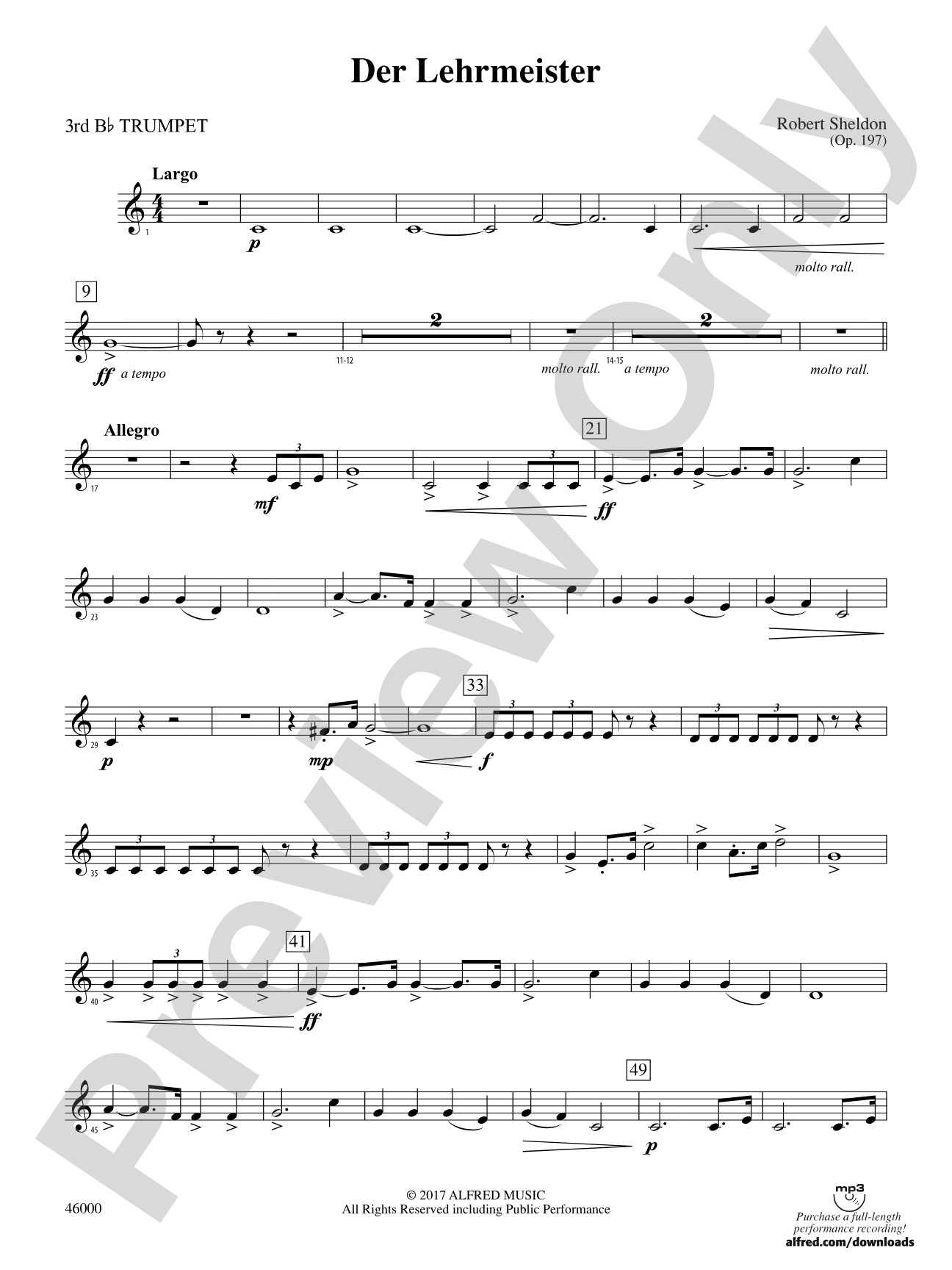

Der Lehrmeister: 3rd B-flat Trumpet
By Robert Sheldon
Grade: 3.5 (Medium)
Item: 00-PC-0017726_T3
$3.00
Pickup currently not available
Description
The title of this piece translates from German to "The Master Teacher." Commissioned by the Florida Bandmasters Association in memory of Jack Crew, this piece serves to honor the memory of one of the all-time great teachers and musicians in our world of band music. The piece is written in a style reminiscent of Richard Strauss, one of Jack's favorite composers. (5:10)


Don't just read it, hear it, play along with it, and watch your students grow with it. In MakeMusic Cloud, Der Lehrmeister: 3rd B-flat Trumpet comes alive with professional accompaniment, adjustable tempo, and built-in practice tools that turn solo practice into real progress.
Open in the Player
Jump straight in and assign it today.
Start Your Free Trial
Open this title and explore the full library in minutes.
Sample Audio
1
Audio File
--:--
0:00
0:00
Sample Video
Additional Details
Series:
Alfred Concert Band
Publisher:
Alfred Music
Page Count:
270
SKU:
00-PC-0017726_T3
More about this title
About the Composer: Robert Sheldon

Robert Sheldon stands among the most frequently performed wind band composers of our time. His works appear on honor band lists worldwide and have been performed at Carnegie Hall, Orchestra Hall, the Kennedy Center, and the Sydney Opera House. He has received major awards from the American School Band Directors Association, Phi Beta Mu, and ASCAP, and holds an honorary doctorate from VanderCook College of Music.
Beyond composition, Sheldon serves as lead author of Sound Innovations for Concert Band and maintains an active schedule as guest conductor for All-State and Regional ensembles. He regularly conducts clinics at universities and state music education conferences, and has worked with ensembles across North America, Europe, Asia, and Australia. His prolific output of new commissions and publications continues to shape contemporary concert band repertoire.
Why we love this
Sheldon captures something essential about why bands gather and play together. By anchoring this tribute in the Richard Strauss idiom, he honors both Jack Crew's musical tastes and the symphonic ambitions of the concert band itself, creating a piece that feels substantial without overwhelming a Grade 3.5 ensemble. The commemorative context gives students a genuine reason to invest in musicality and ensemble blend.
What to expect
Dignified and reflective, Der Lehrmeister evokes the Romantic warmth of Strauss through a concert band lens. The music moves with purpose and clarity, never rushing; it invites the ensemble and audience into a moment of genuine tribute and musical expression.
Who it's for
This work suits concert bands seeking repertoire that combines musical substance with ensemble accessibility. The Grade 3.5 difficulty level allows solid intermediate bands to tackle a piece of real artistic value without overextending technical resources, making it ideal for concert programming or festival appearances.
How to get the most out of it
- Balance the lyrical passages by keeping inner voices transparent; Strauss-influenced writing depends on clear voice independence, not thickness.
- Shape the longer phrases with subtle dynamic contours rather than sudden changes; this music breathes in longer arcs.
- Establish steady conduct patterns that allow ensemble members to anticipate phrasing; Sheldon's melodies reward predictable tempo and clear beat.
- Give yourself time in rehearsal to discuss who Jack Crew was and what this piece honors; context transforms technical execution into meaningful performance.
How to use it
Open a concert with this piece to set a thoughtful tone, or place it as the emotional centerpiece of a program that honors mentorship and legacy in music education. Its five-minute duration and moderate demands make it a natural choice for festivals where bands program meaningful concert literature alongside contest pieces.
Skills your students will build
- Phrasing in longer melodic lines with dynamic shape and direction
- Balance and independence of inner voices in four-part harmony
- Sustained singing tone and legit playing technique across the ensemble
- Responding to subtle conductor gestures and clear beat patterns
- Ensemble blend and intonation at moderate dynamic levels