

Deo Dicamus Gratias: SATB Choral Octavo
By Brian Lewis
Item: 00-PO-0003232
$1.90
Minimum order quantity: 20 copies
Pickup currently not available
Description
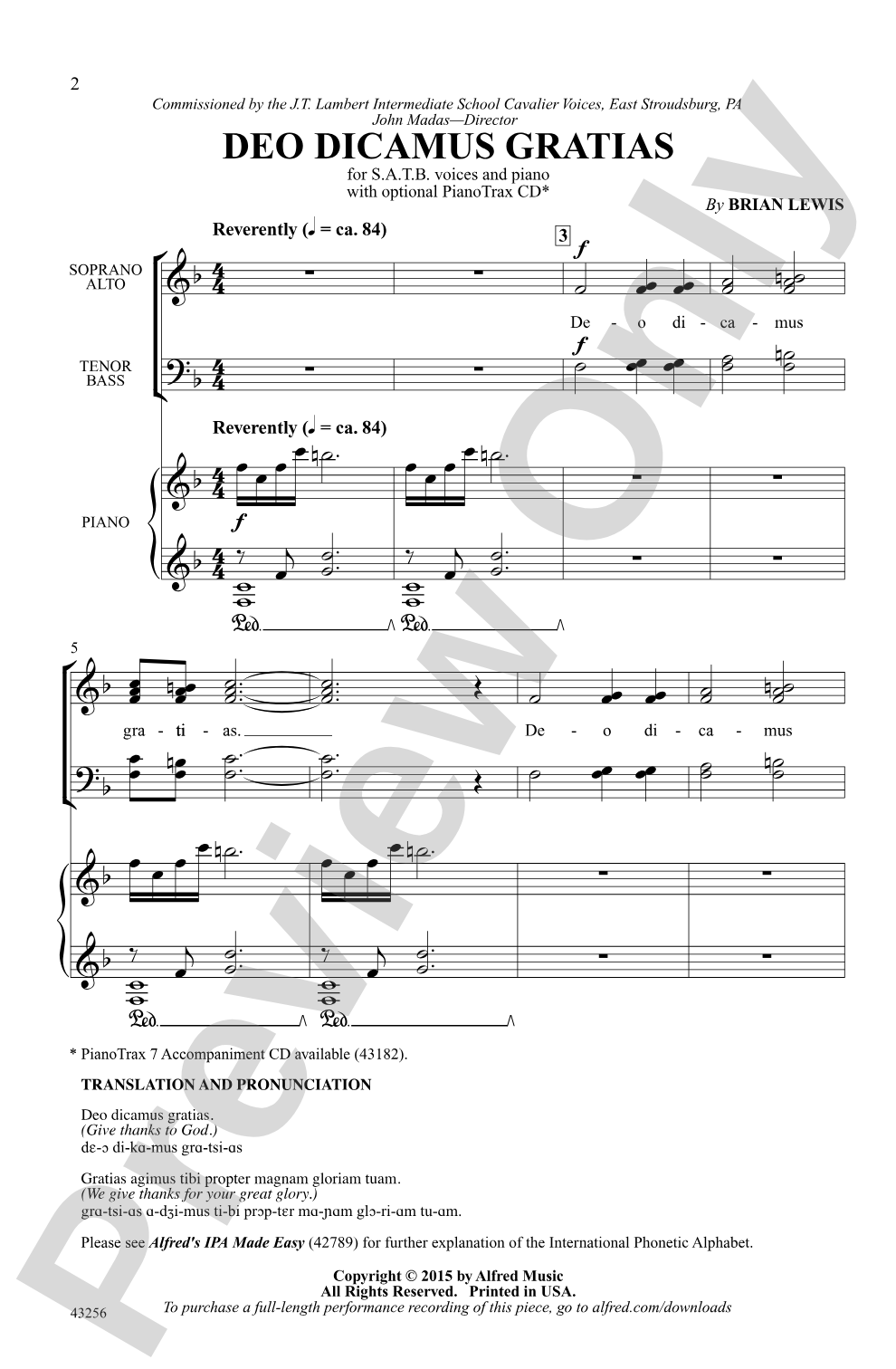
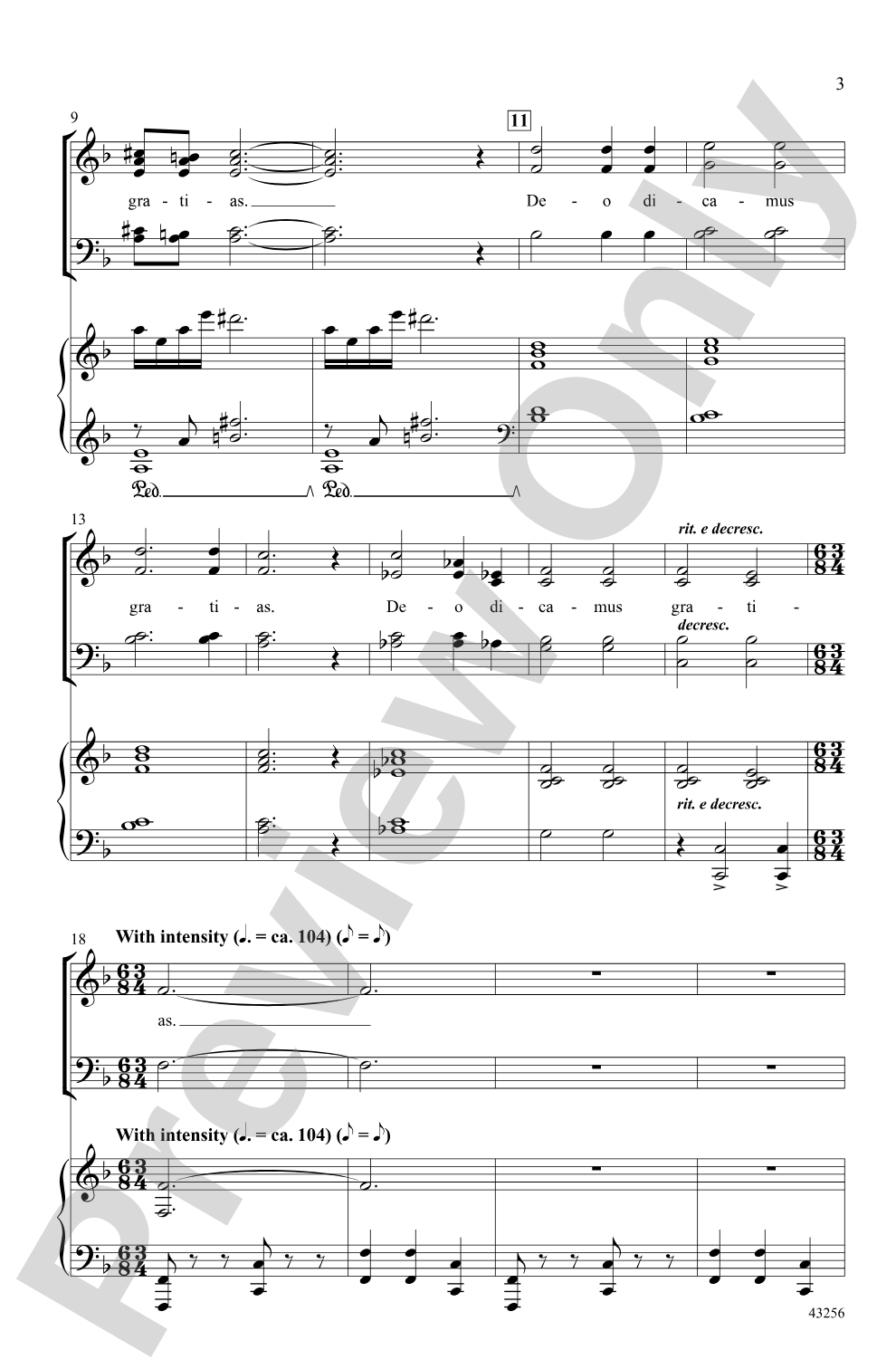
Voices fan out from a unison pitch and blossom into rich choral sonorities during the hushed introduction of this resplendent work. Next, an intense compound meter exposition is energized by the percussive piano part. In the flowing middle section, the tension of dissonance is beautifully resolved through each sequential phrase. A terrific concert and festival piece.


Deo Dicamus Gratias: SATB Choral Octavo isn't in MakeMusic Cloud just yet...but it could be. Let us know you'd like to see it, and you'll help shape what comes next. In the meantime, start a free trial and dive into thousands of interactive titles your students can play along with today.
Request This Title
Tell us you want it.
Start Your Free Trial
Explore everything that's ready to play right now.
Sample Audio
1
Audio File
--:--
0:00
0:00
Sample Video
No sample videos found.
Additional Details
Series:
Alfred Choral Designs
Publisher:
Alfred Music
Page Count:
12
SKU:
00-PO-0003232
More about this title
About the Composer: Brian Lewis
Brian Lewis studied composition at Baldwin-Wallace Conservatory in Berea, Ohio, then pursued conducting and teaching credentials at Western Michigan University. After several years in Michigan public schools, he relocated to California to complete the USC Scoring for Motion Pictures and Television program, bringing film composition techniques into his choral writing. He has served as composer in residence at Portage Northern High School in Michigan, where ensembles have premiered his commissioned works including Sanctus.
Why we love this
Lewis writes for SATB with real harmonic sophistication, moving from deceptively simple unison textures into layered, dissonant writing that resolves with genuine emotional payoff. The percussive piano part energizes the compound meter section without overwhelming the voices, and the piece balances lyrical flow with structural clarity, making it rewarding for both the ensemble and the audience. It works equally well as a concert closer or festival selection.
What to expect
The piece unfolds like a prayer that begins in quiet contemplation and gradually opens into something expansive and affirming. The piano writing carries a rhythmic vitality that propels the choir forward, while the harmonic language moves through dissonance with purpose, creating moments of real harmonic and emotional resolution that feel earned.
Who it's for
This octavo serves established SATB programs capable of handling four-part independence and harmonic sophistication. It works for choirs seeking concert and festival repertoire with genuine musical substance and contemporary choral craft.
How to get the most out of it
- Shape the opening unison phrase with particular care so the fan-out into four-part harmony lands with crystalline clarity; this moment sets the entire work's architectural foundation.
- Anchor the compound meter exposition in the rhythm section by having the ensemble lock with the piano's percussive impulses; the intensity comes from rhythmic precision, not from vocal force.
- Highlight the sequential resolutions in the middle section by singing through the dissonance without losing line integrity; let each voice part expose its own melodic shape within the harmonic progression.
- Maintain forward momentum in the hushed passages; silence and restraint require as much ensemble discipline as full voice passages.
How to use it
Program this as a concert centerpiece or festival selection where you want to showcase your choir's harmonic sophistication and ability to sustain sensitive textures. Its twelve pages and concert-festival designation make it ideal for spring concerts or festival competitions where you need a single strong work that demonstrates musicianship across multiple dimensions.
Skills your students will build
- Part independence and voice leading within four-part texture
- Reading and performing in compound meter
- Harmonic awareness and resolution of dissonance
- Dynamic and textural control in sustained passages
- Rhythmic coordination with piano accompaniment