

Dennis Alexander's Favorite Solos, Book 1: 10 of His Original Piano Solos: Piano
10 of His Original Piano Solos
By Dennis Alexander
Level: Elementary / Late Elementary
Item: 00-PB-0000880
$6.99
Pickup currently not available
Related Items
Dennis Alexander's Favorite Solos, Book 1: Piano Book |
$6.95
|
View |
Description
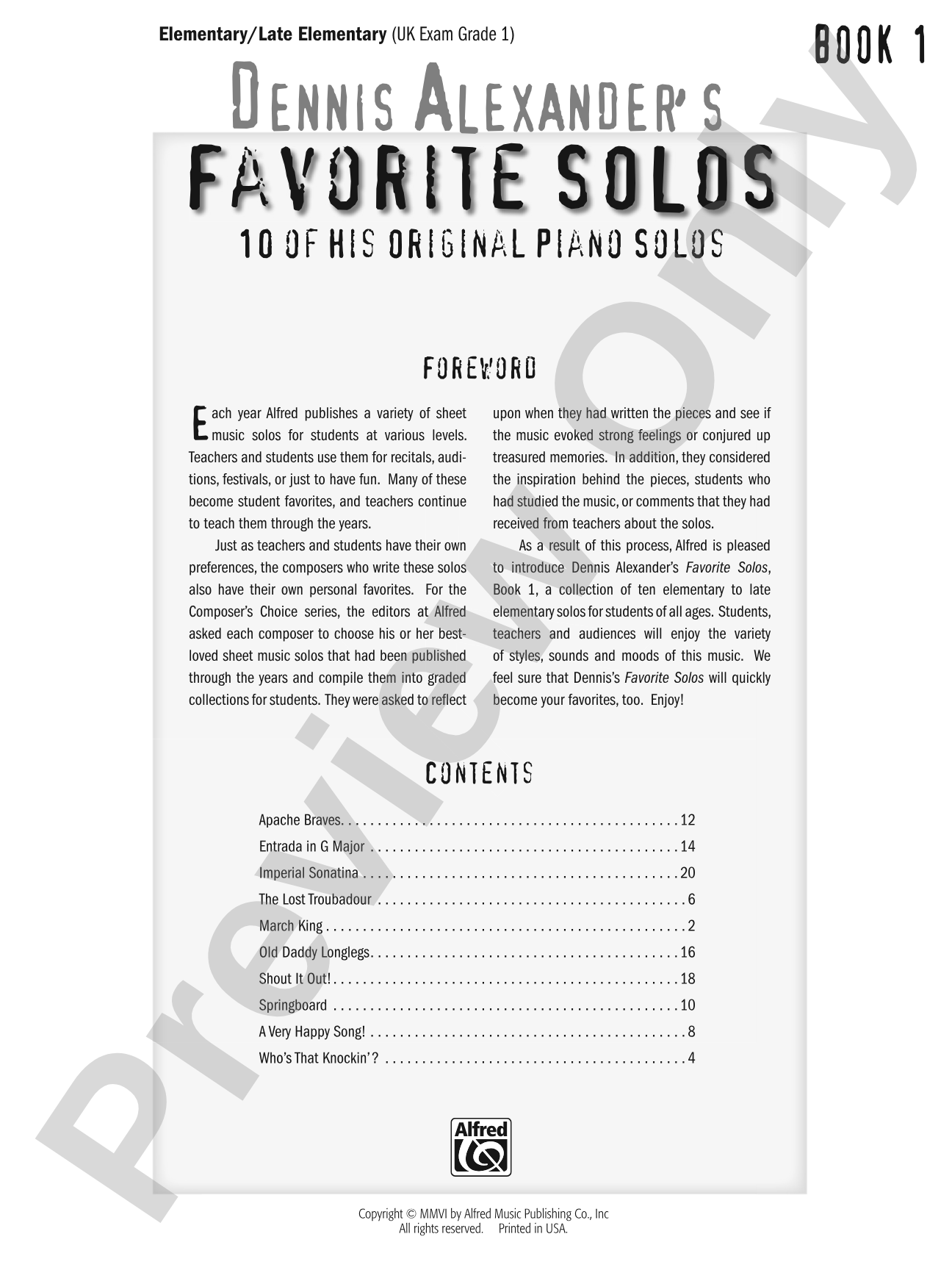
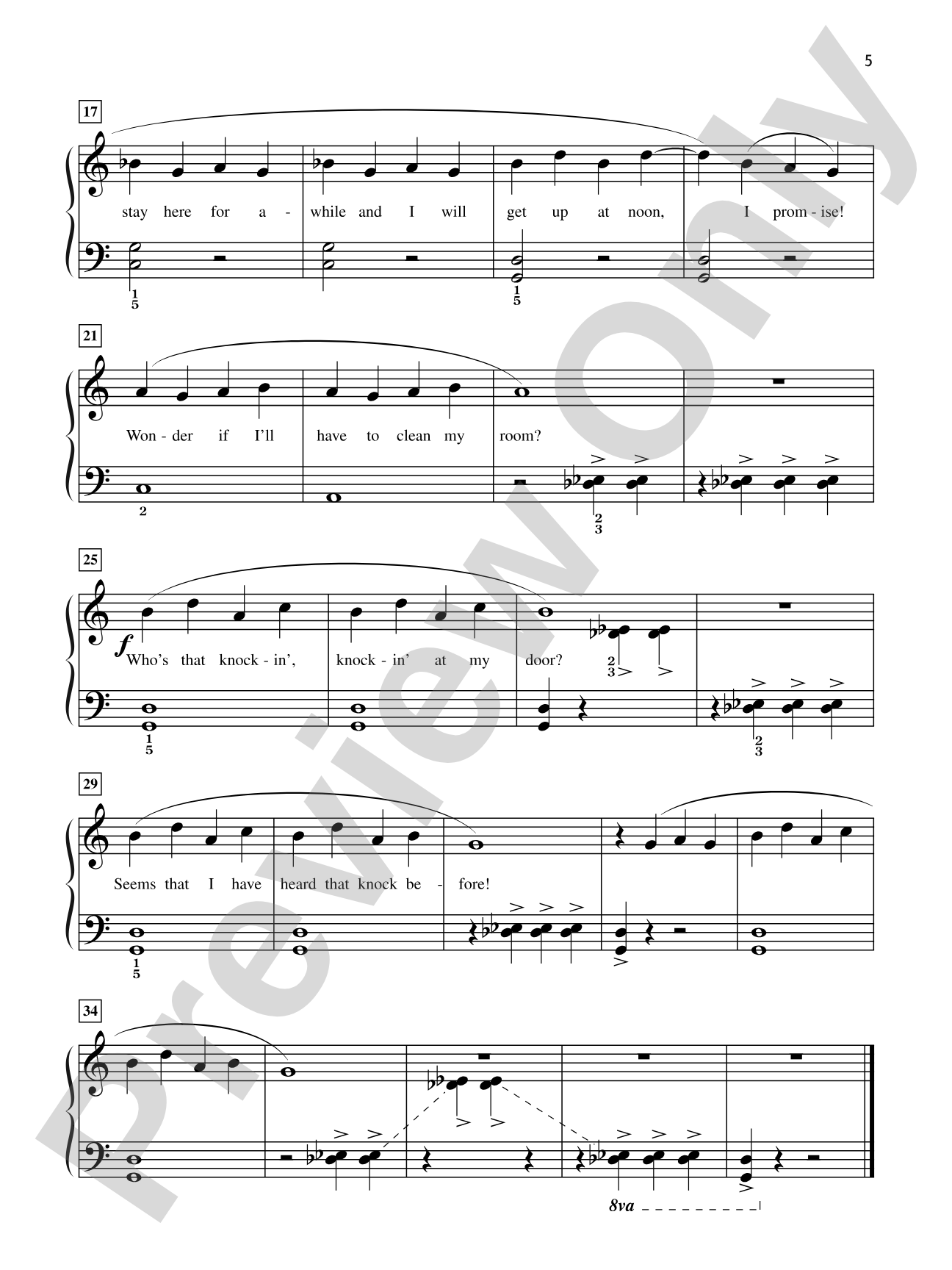
The contents of this book have been personally selected by Dennis Alexander as some of his all-time favorite sheet music solos. Many of the solos are among the most requested by piano teachers and students alike. The varied styles of each piece makes this book a valuable supplement to most piano methods. This book contains 10 elementary to late elementary pieces including: Apache Braves * Entrada in G Major * Imperial Sonatina * The Lost Troubadour * March King * Old Daddy Longlegs * Shout It Out! * Springboard * A Very Happy Song! * Who's That Knockin'? A Federation Festivals 2020-2024 selection. A Federation Festivals 2024-2028 selection.


Dennis Alexander's Favorite Solos, Book 1: 10 of His Original Piano Solos: Piano isn't in MakeMusic Cloud just yet...but it could be. Let us know you'd like to see it, and you'll help shape what comes next. In the meantime, start a free trial and dive into thousands of interactive titles your students can play along with today.
Request This Title
Tell us you want it.
Start Your Free Trial
Explore everything that's ready to play right now.
Sample Audio
No sample audio found.
Sample Video
No sample videos found.
Additional Details
Series:
Favorite Solos
Publisher:
Alfred Music
Page Count:
24
SKU:
00-PB-0000880
More about this title
About the Composer: Dennis Alexander

Dennis Alexander has shaped generations of young pianists through over 400 compositions and recordings published since 1986, establishing himself as one of the most sought-after voices in educational piano literature. A Kansas native educated at the University of Kansas, he spent 24 years teaching piano pedagogy at the University of Montana while serving as department chair, then continued his teaching career at Cal State Fullerton and Cal State Northridge before relocating to Albuquerque. His work extends far beyond the studio: he has performed at Carnegie Recital Hall, served as collaborative pianist for internationally recognized soloists and chamber groups, and traveled extensively as a clinician and adjudicator at national music teachers conventions and competitions across Asia and North America.
Why we love this
Alexander curated this collection himself, which means you're getting pieces he knows work in real teaching situations. The variety across 10 pieces gives you stylistic range (march, sonatina, character pieces) at a consistent elementary-to-late elementary level, making it genuinely useful as a supplement rather than another single-style book. Recognition as a Federation Festivals selection for two consecutive quadrenniums validates what teachers already knew: these solos engage students while building genuine musicianship.
What to expect
This book moves across landscapes: marches that stride with purpose, sonatas that ask for shape and phrasing, character pieces that hint at storytelling without demanding virtuosity. Each solo sits comfortably under the hand while inviting students to think about how to color a melody, where to breathe, and what personality a piece can have.
Who it's for
Elementary to late elementary pianists seeking a curated selection of accessible solos that bridge foundational technique and early musical expression. Piano teachers working with students ready for Festival competition or those needing supplementary repertoire that covers multiple musical styles and moods without stepping too far outside their technical range.
How to get the most out of it
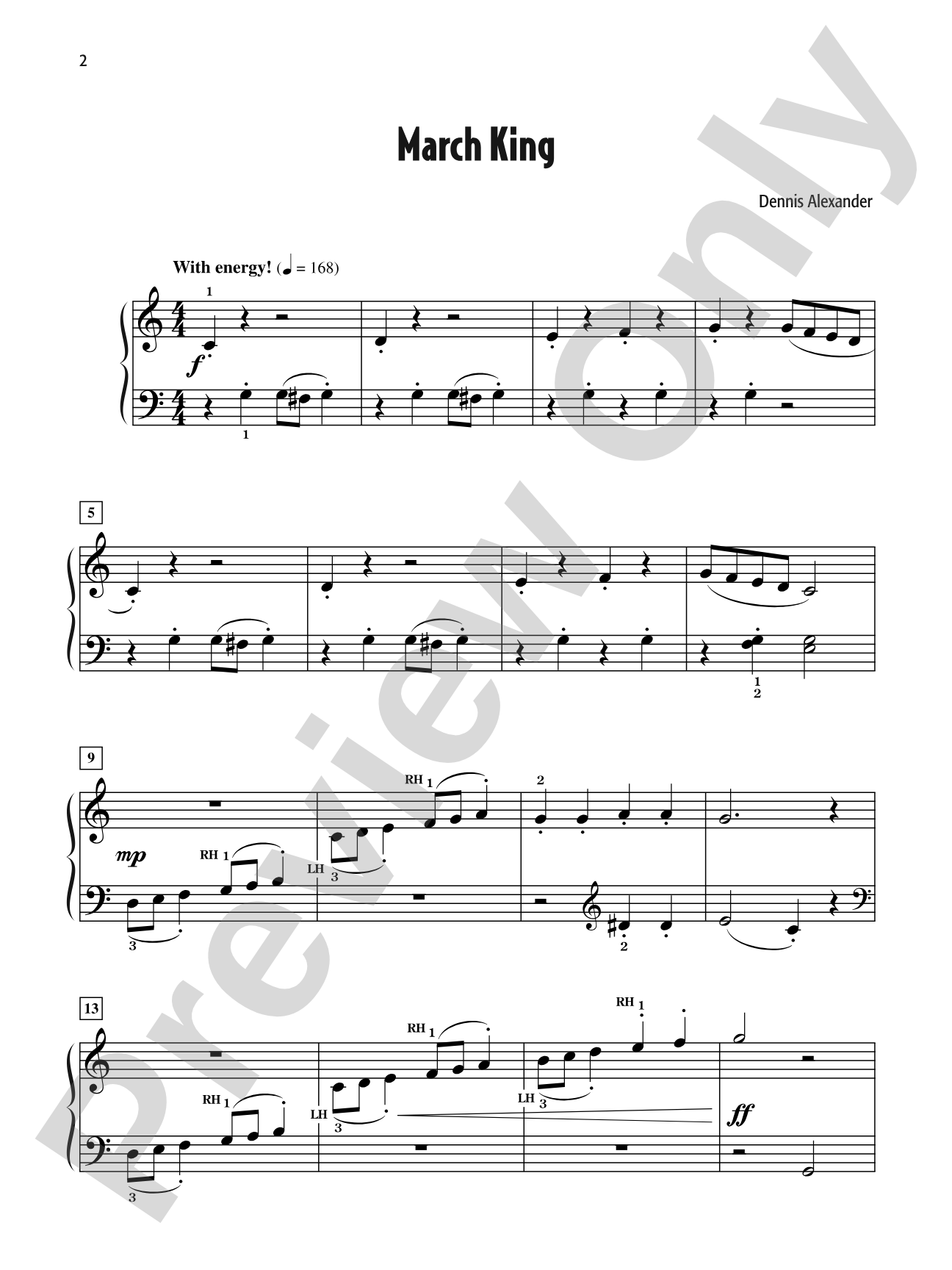
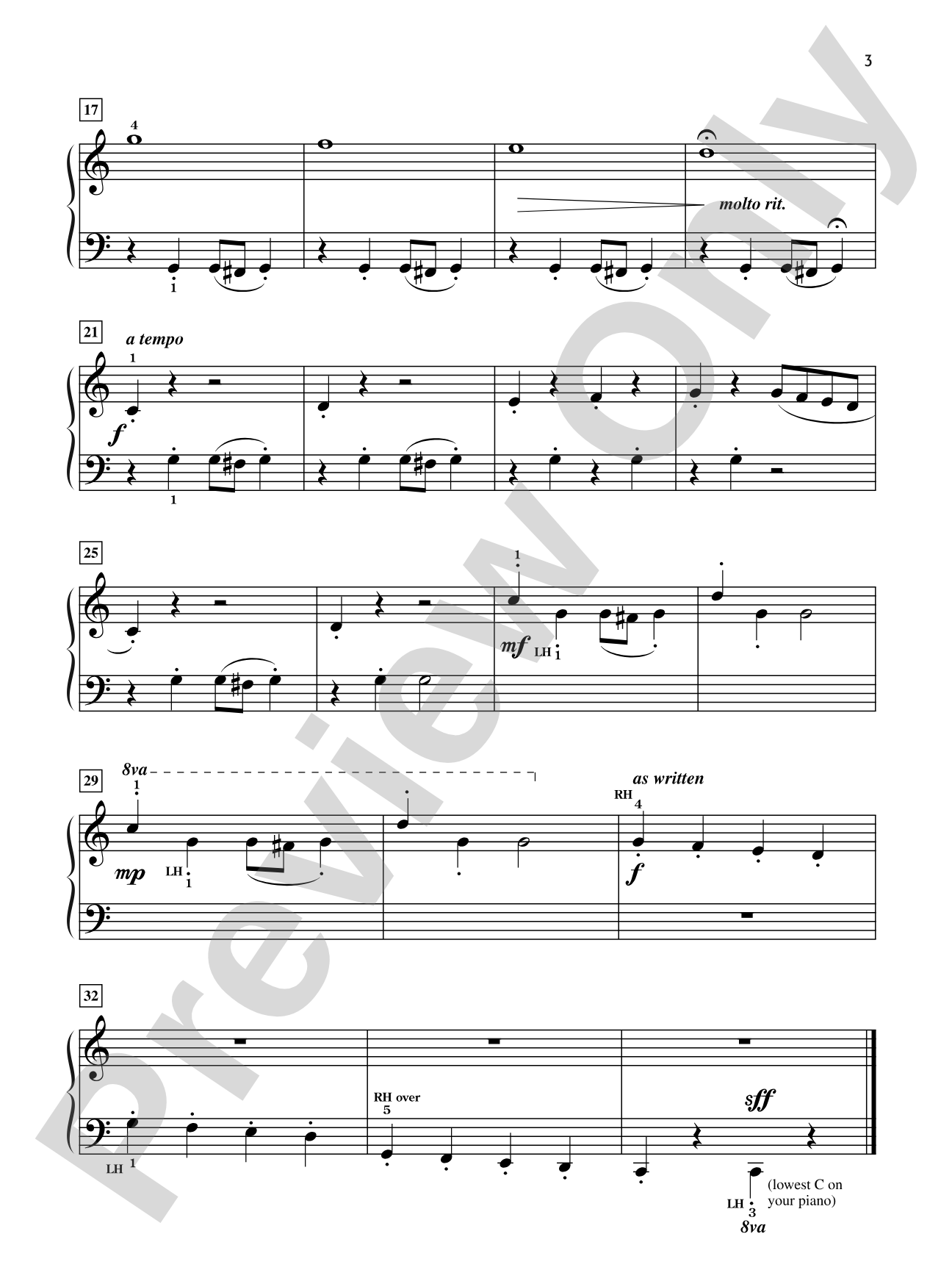
- Establish a steady pulse in the march pieces (March King) before adding any rubato; let the rhythmic clarity anchor the character
- Experiment with tone color in the descriptive pieces like Old Daddy Longlegs and The Lost Troubadour by varying pedal placement and release to shape the mood
- Balance the hands independently in Springboard and Entrada in G Major so neither part overwhelms; think orchestration rather than foreground-background
- Use the variety of tempos and styles across the collection to develop interpretive flexibility; none of these should sound interchangeable
How to use it
Pull solos from this collection for student recitals when you want variety without the overhead of managing ten different book adoptions. Use pairs of contrasting pieces (a march alongside a lyrical character piece) to demonstrate interpretive range in studio performance days. The Federation selection status makes it ideal for building a competition-ready repertoire across multiple students at the same level.
Skills your students will build
- Shaping phrases with pedal (especially in slower, lyrical pieces)
- Independent hand coordination in pieces with contrasting right and left hand patterns
- Musical interpretation and expressive choices within an elementary technical framework
- Reading and executing varying time signatures and tempo markings across different musical styles
- Building confidence with program variety (marches, sonatinas, character pieces, descriptive solos)