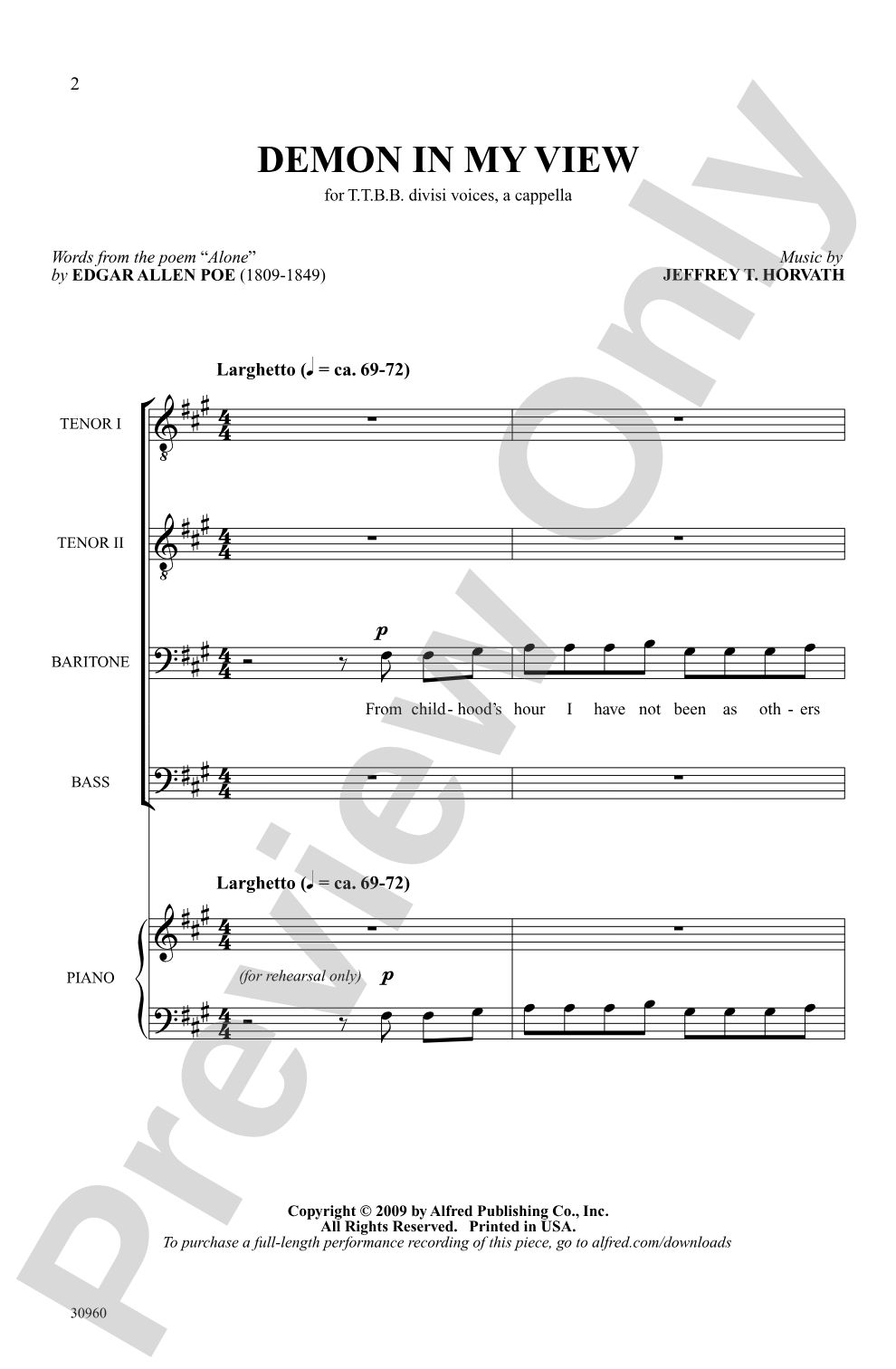
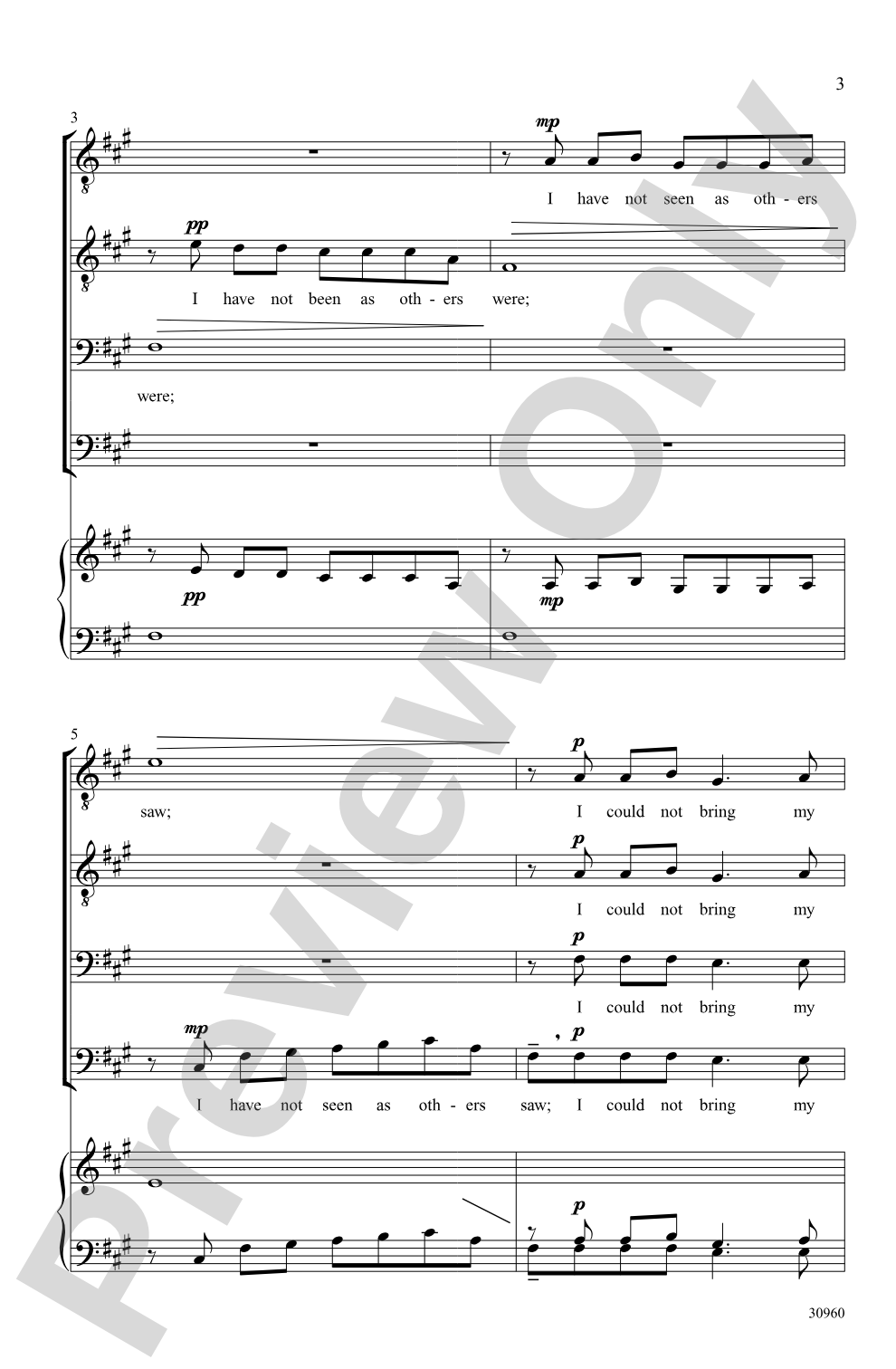
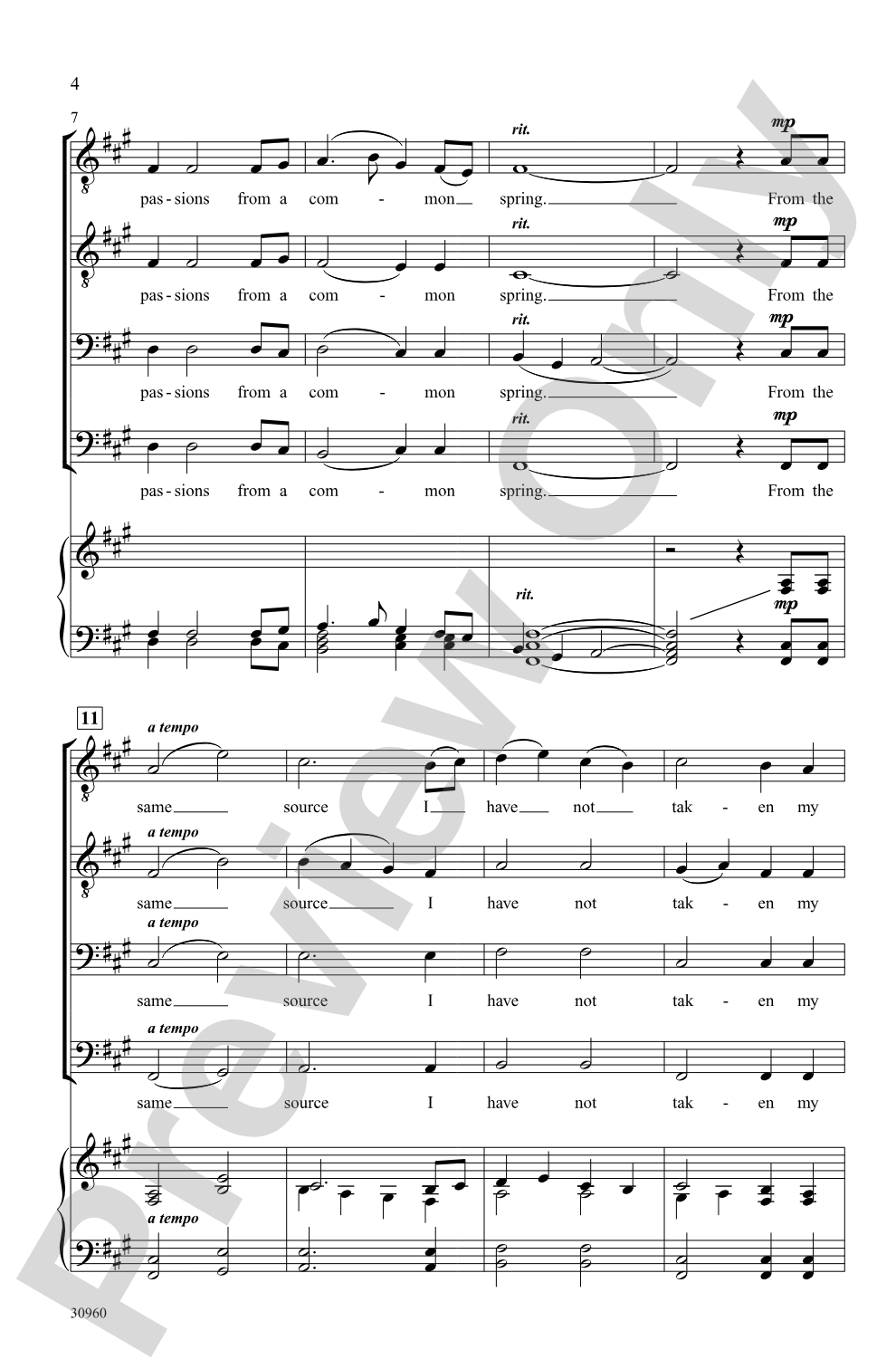
Demon in My View Sheet Music Preview

Demon in My View: TTBB, a cappella Choral Octavo

Words from the poem "Alone" by Edgar Allan Poe, music by Jeffrey T. Horvath

Item: 00-PO-0000721

Digital Download
$2.25

Minimum order quantity: 20 copies

Description
Written specifically for divisi men's choirs, this a cappella setting of the Edgar Allen Poe poem "Alone" opens with slow and rich homophonic singing, then moves into an intricate and fast-moving section, ending once again softly and rubato. Recorded by the Miami University Men's Glee Club, Dr. Ethan Sperry, Director.

Demon in My View: TTBB, a cappella Choral Octavo isn't in MakeMusic Cloud just yet...but it could be. Let us know you'd like to see it, and you'll help shape what comes next. In the meantime, start a free trial and dive into thousands of interactive titles your students can play along with today.

Sample Audio
0:00
0:00
Sample Video
Additional Details
Series: Lawson-Gould
Publisher: Alfred Music
Page Count: 12
SKU: 00-PO-0000721

More about this title

Why we love this

Horvath's setting honors Poe's dark introspection while giving men's choirs a piece that demands real musical maturity. The shift from sustained homophonic writing into intricate divisi passages keeps singers engaged and gives you multiple rehearsal angles to work with, and the recorded reference from Miami University's Men's Glee Club provides a clear model for interpretation.

What to expect

The piece opens with the gravity of Poe's solitude, voices moving in unhurried unison that feels both intimate and monumental. Then the music splinters into rapid, almost unsettled counterpoint before settling back into that same haunting calm, as if the speaker has cycled through their isolation and returned, changed, to where they began.

Who it's for

Men's choirs at the high school and college level looking for repertoire that combines literary substance with musical sophistication. Directors working with singers who have solid ensemble skills and are ready to handle divisi writing will find this piece both rewarding and festival-ready.

How to get the most out of it

  • Balance the opening homophonic section with warm, blended tone; the richness comes from synchronized vowel placement and consistent air support across all four parts, not volume.
  • Prepare the fast-moving section with careful part isolation beforehand. Once singers lock the rhythmic precision, the complexity becomes musicality rather than technical burden.
  • Shape the final soft return to the opening material with intentional rubato and diminuendo. This requires trust between conductor and singers, so conduct this section loosely and let the ensemble breathe together.

How to use it

Program this alongside other literary or art-song influenced choral works to build a thematic concert half, or place it as a dramatic centerpiece in a mixed program where it can stand apart from lighter fare. It's also strong contest material for men's choirs seeking challenging yet singable a cappella repertoire.

Skills your students will build

  • Reading divisi TTBB voicings with multiple rhythmic layers
  • Sustaining homophonic blend and intonation across longer phrases
  • Executing quick rhythmic entrances and fast-moving passagework in a cappella context
  • Interpreting rubato and dynamic shape in unaccompanied singing
  • Connecting lyrical text to musical architecture

You May Also Like