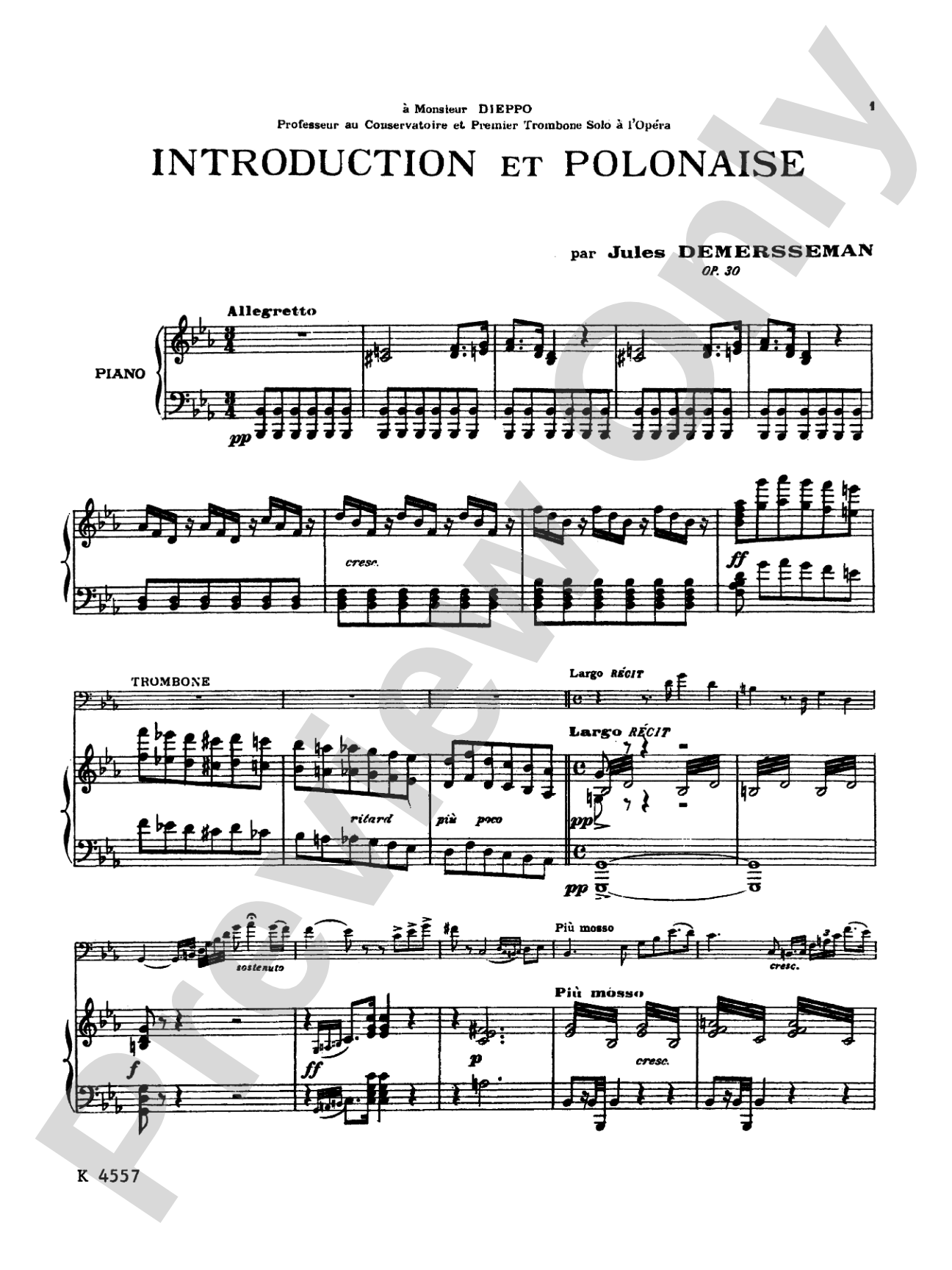
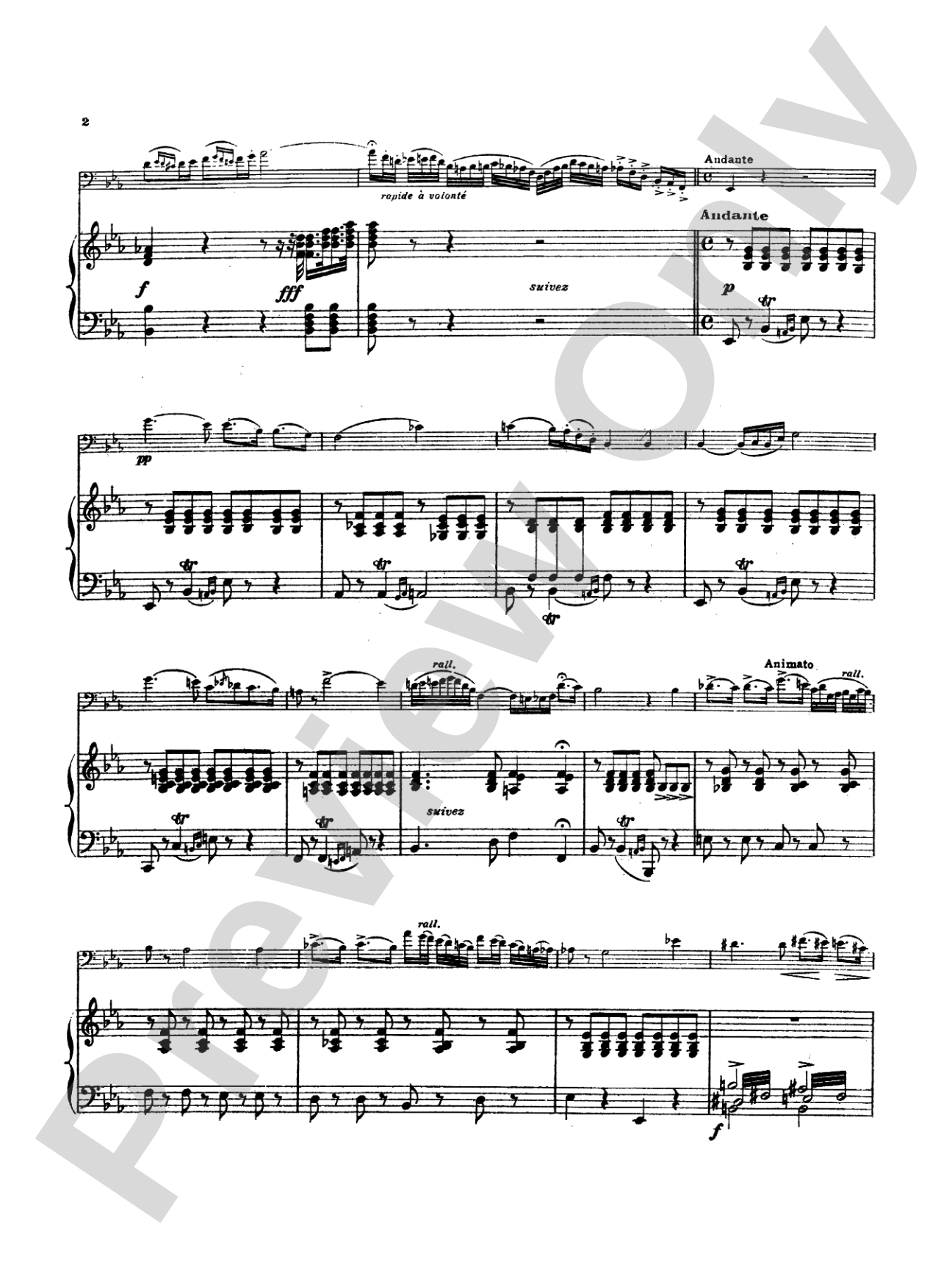
Demersseman: Introduction and Polonaise Sheet Music Preview

Demersseman: Introduction and Polonaise

By Jules Demersseman

Item: 00-PC-0010725

Digital Download
$8.99
Description
A Trombone solo, composed by Jules Demersseman.

Don't just read it, hear it, play along with it, and watch your students grow with it. In MakeMusic Cloud, Demersseman: Introduction and Polonaise comes alive with professional accompaniment, adjustable tempo, and built-in practice tools that turn solo practice into real progress.

Sample Audio
No sample audio found.
Sample Video
Additional Details
Series: Kalmus Edition
Publisher: Alfred Music
Page Count: 20
SKU: 00-PC-0010725

More about this title

About the Composer: Jules Demersseman

Jules Demersseman (1814-1887) was a French cornet virtuoso and composer whose technical brilliance shaped the brass solo repertoire of the 19th century. His works for cornet and other brass instruments became staples of the concert and competition circuit, prized for their demanding passagework and lyrical demands. Though less frequently performed today than his contemporaries, his compositions remain essential studies for brass players seeking to master Romantic-era virtuosity.

Why we love this

This piece showcases what makes Demersseman essential for advanced trombonists: a formal structure that balances technical display with genuine musical substance. The Introduction and Polonaise pairing gives students access to a complete, polished concert work that demands both lyrical control and confident execution of rapid passagework, all within a framework that audiences find immediately satisfying.

What to expect

The Introduction unfolds with aristocratic poise, moving between moments of lyrical reflection and passages that hint at the energy to come. Once the polonaise arrives, the character becomes animated and dance-like, requiring the trombonist to project confidence and elegance while navigating the technical demands without sounding merely mechanical.

Who it's for

Advanced high school and undergraduate trombonists preparing for solo competitions, auditions, or recitals will find this a rewarding and substantive choice. This piece assumes confident command of the instrument's range, facility with rapid articulation, and musical maturity to sustain longer phrases.

How to get the most out of it

  • Shape the Introduction as a genuine narrative arc rather than a technical prelude; the introduction exists to set up the polonaise, so listen for where the music builds dramatic tension and where it recedes.
  • Approach the polonaise's rhythmic character with precision but not rigidity; a subtle swing to the characteristic rhythm will enliven the dance character without sacrificing clarity.
  • Mark the transitions between slower and faster sections carefully in rehearsal so that tempo shifts feel inevitable rather than abrupt.
  • Balance technical passages with the underlying harmonic movement; speed without direction becomes empty display.

How to use it

This works beautifully as a solo feature in a wind ensemble or brass concert, where it stands as a complete artistic statement. The 20-page score suggests substantial substance; program it where you can give the performer adequate rehearsal time and where the audience is prepared for a thoughtful, virtuosic brass work rather than a short novelty.

Skills your students will build

  • Sustaining long, singing lines over rapid harmonic changes
  • Articulation clarity in rapid passage work
  • Formal awareness and structural phrasing across multiple sections
  • Balancing technical display with musical expression
  • Control of upper register passagework
  • Dance rhythm interpretation and character projection

You May Also Like