

Delaware: The First State - Piano Suite: Piano
By Bernadine Johnson
Level: Late Intermediate
Item: 00-PB-0000691
$5.50
Pickup currently not available
Related Items
Delaware: The First State: Piano Sheet |
$5.50
|
View |
Description
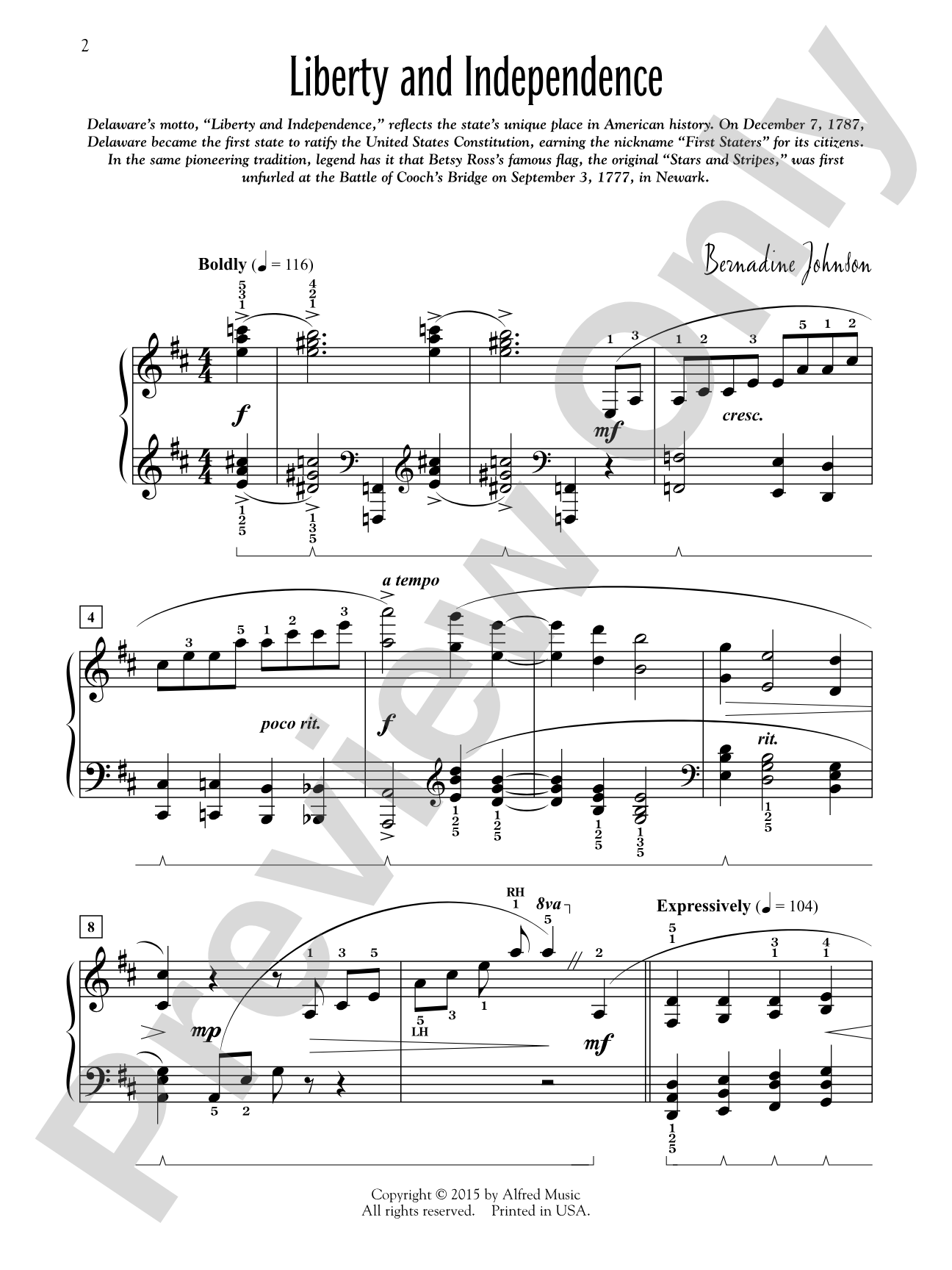
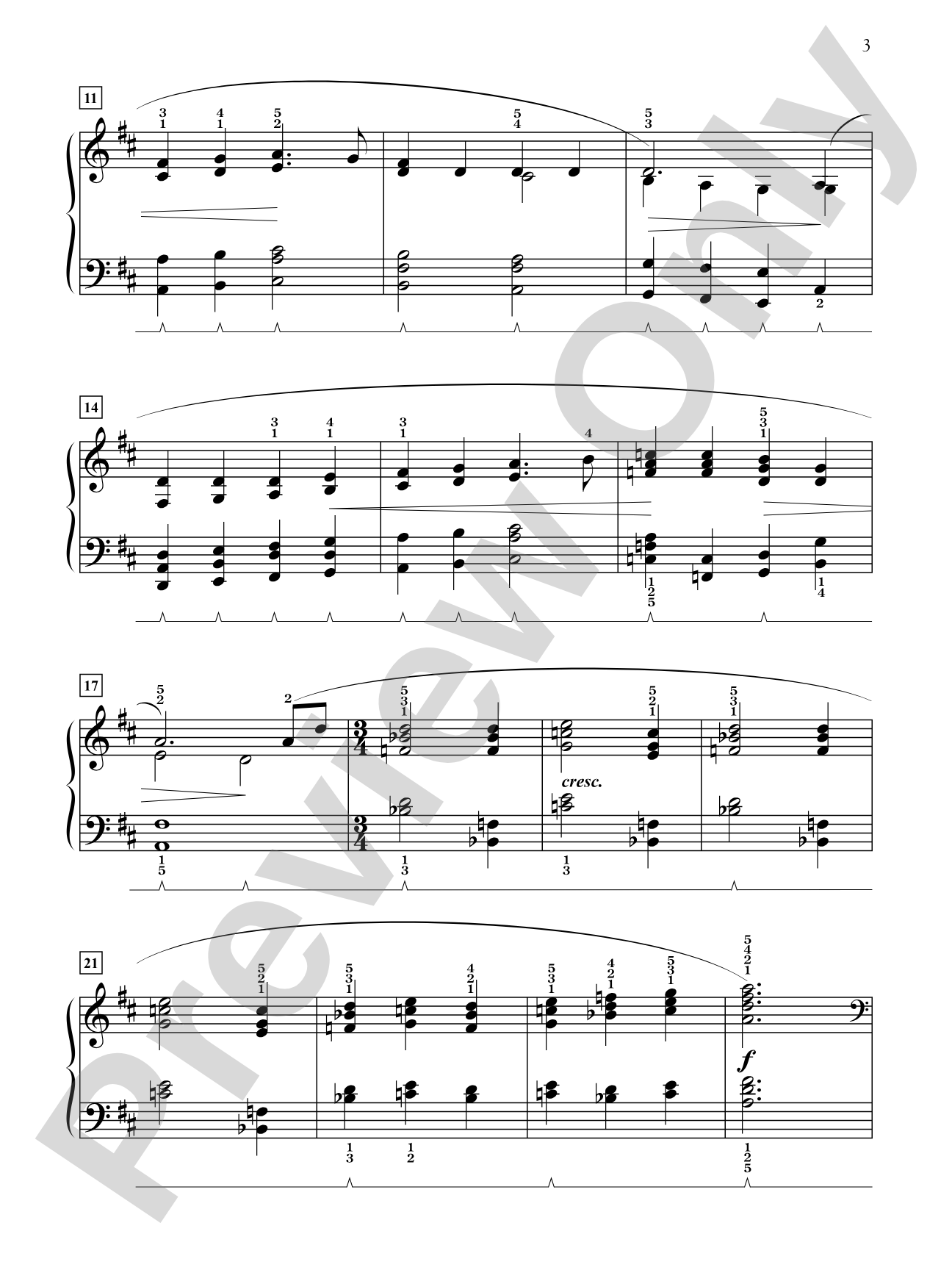
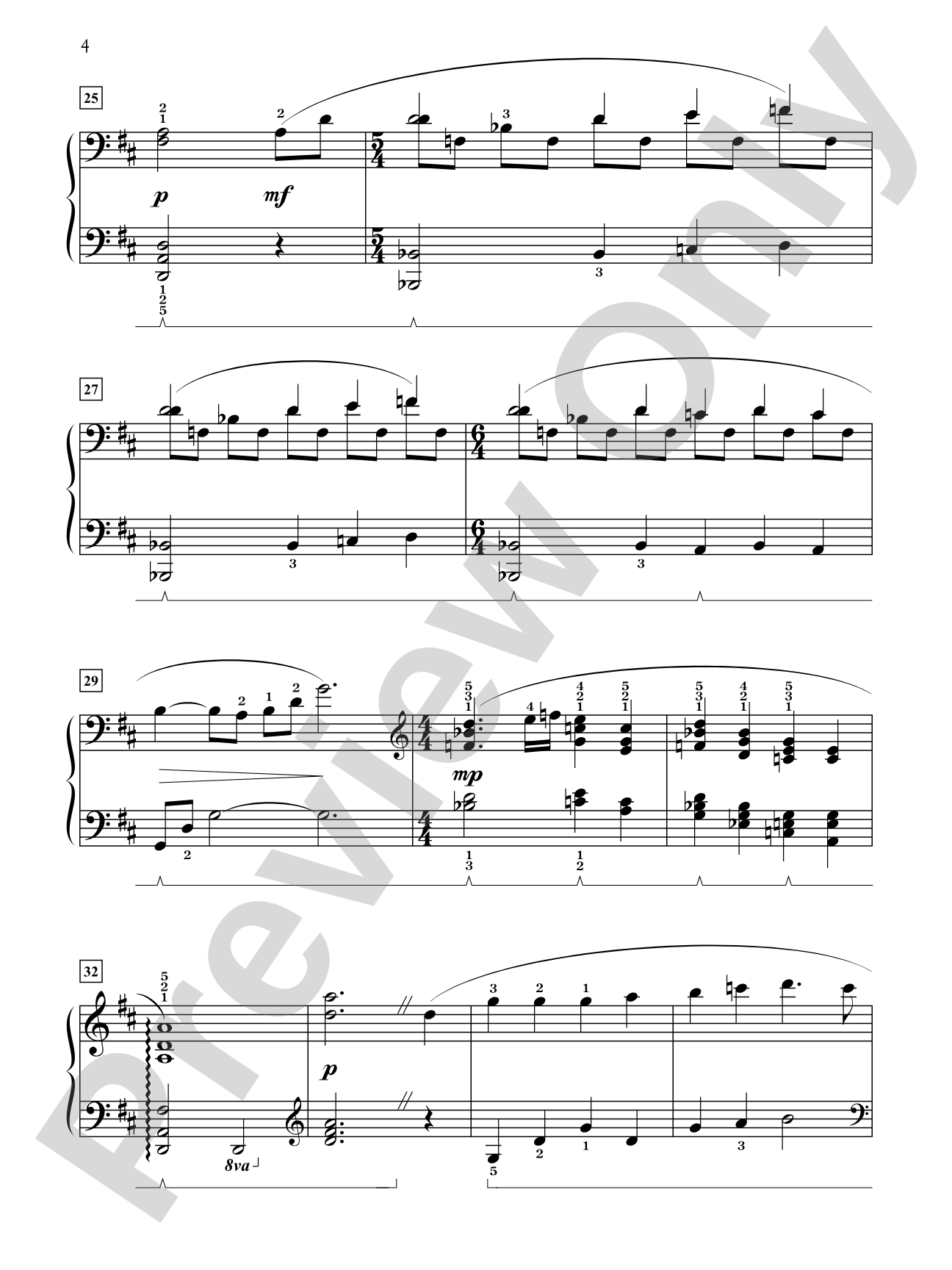
Delaware: The First State is a musical portrayal of some of our nation's early history. "Liberty and Independence" is bold and distinctive, representing freedom. It includes octaves, full bitonal chords, and a few measures of irregular meter. The middle section represents a more traditional chord structure and simpler harmonies. "The Delaware Coast" is flowing, with a left hand melody throughout that frequently crosses over the right hand. Constantly moving 16th notes depict the gentle simplicity of the breezy coastline. "Peaches and Holly Rag" concludes this suite on a happy, lighthearted note. It begins in F major, moves to B-flat major, and ends in the original key of F major. A Joplinesque feel is achieved through a syncopated melody and steady quarter-note bass line. There are octaves and abundant leaps in the left hand as well as mixed articulations between the hands. A Federation Festivals 2020-2024 selection.


Delaware: The First State - Piano Suite: Piano isn't in MakeMusic Cloud just yet...but it could be. Let us know you'd like to see it, and you'll help shape what comes next. In the meantime, start a free trial and dive into thousands of interactive titles your students can play along with today.
Request This Title
Tell us you want it.
Start Your Free Trial
Explore everything that's ready to play right now.
Sample Audio
No sample audio found.
Sample Video
No sample videos found.
Additional Details
Series:
Recital Suite Series
Publisher:
Alfred Music
Page Count:
12
SKU:
00-PB-0000691
More about this title
About the Composer: Bernadine Johnson

Bernadine Johnson earned her B.A. in Music Education from Indiana Wesleyan University and has spent decades building a thriving piano studio in Fremont, Michigan, where she teaches students across all ages and ability levels. Her contributions to music education extend far beyond private instruction: she's served as faculty at Blue Lake Fine Arts Camp, adjudicated for the Michigan State Band & Orchestra Association, and clinicked at Indiana Wesleyan's Piano Pedagogy Conference. Johnson is deeply embedded in the professional teaching community through memberships in the Grand Rapids Piano Teacher's Forum, Michigan Music Teacher's Association, and Newaygo County Piano Teacher's Group, earning the Newaygo County Cultural Programs Award in recognition of her advocacy for the arts.
As a composer and arranger, Johnson has co-authored innovative Alfred publications including A Night at the Ballet and A Night at the Opera, along with numerous solo works and her suite Scenes from The Nutcracker. Her writing demonstrates a gift for making substantial musical concepts accessible to intermediate players while maintaining genuine artistic merit.
Why we love this
Johnson captures American musical heritage with writing that never feels didactic or oversimplified. Each movement of this suite stands on its own musically while building a coherent narrative, and she uses texture and harmony as storytelling tools rather than relying on obvious programmatic devices. The technical demands are real enough to keep late intermediate students engaged but structured so that solid foundational skills are sufficient to succeed.
What to expect
Bold proclamations give way to gentle motion, then swing into infectious syncopation. Johnson moves you from the declarative independence of the opening through the meditative coastline to the playful, almost ragtime energy of the closing. The piece breathes like a well-paced concert rather than a collection of etudes.
Who it's for
Late intermediate pianists ready to tackle mixed meters, crossing hands, and textural variety without needing pieces that feel juvenile. This suite works equally well for students preparing festival repertoire or building recital programs that span different moods and technical challenges.
How to get the most out of it
- In "Liberty and Independence," the irregular meter sections require deliberate counting; mark your beats clearly before learning the notes, especially where bitonal chords sit across the bar line.
- Keep the 16th-note figuration in "The Delaware Coast" even and unhurried; this isn't a race. The melody in the left hand needs time to sing, so resist the urge to let technique overtake musicality.
- Attack "Peaches and Holly Rag" with rhythmic precision. The syncopation only lands when the steady quarter-note bass is truly rock-solid, so build from the left hand up.
- The hand-crossing passages in the final movement benefit from slow-tempo practice with separate hands first, then with deliberate attention to the visual geography of the keyboard before bringing up tempo.
How to use it
Program this as a complete recital suite to anchor a student concert, or use individual movements to balance a mixed-repertoire program. The stylistic range makes it especially useful when you need to demonstrate that a student can navigate from contemporary concert music through impressionistic textures to rhythmic precision. Its Federation Festivals selection status also makes it a solid choice for students working toward competition goals.
Skills your students will build
- Reading and executing irregular meter changes (introduction and middle section of first movement)
- Playing bitonal and dense harmonic structures with clarity and control
- Executing hand-crossing patterns with rhythmic precision and independence
- Managing constantly moving 16th-note figurations without loss of phrase shape
- Controlling mixed articulations (staccato, legato, accent) between the hands
- Navigating quick key modulations and understanding harmonic progressions
- Performing syncopated rhythms with a steady underlying pulse