
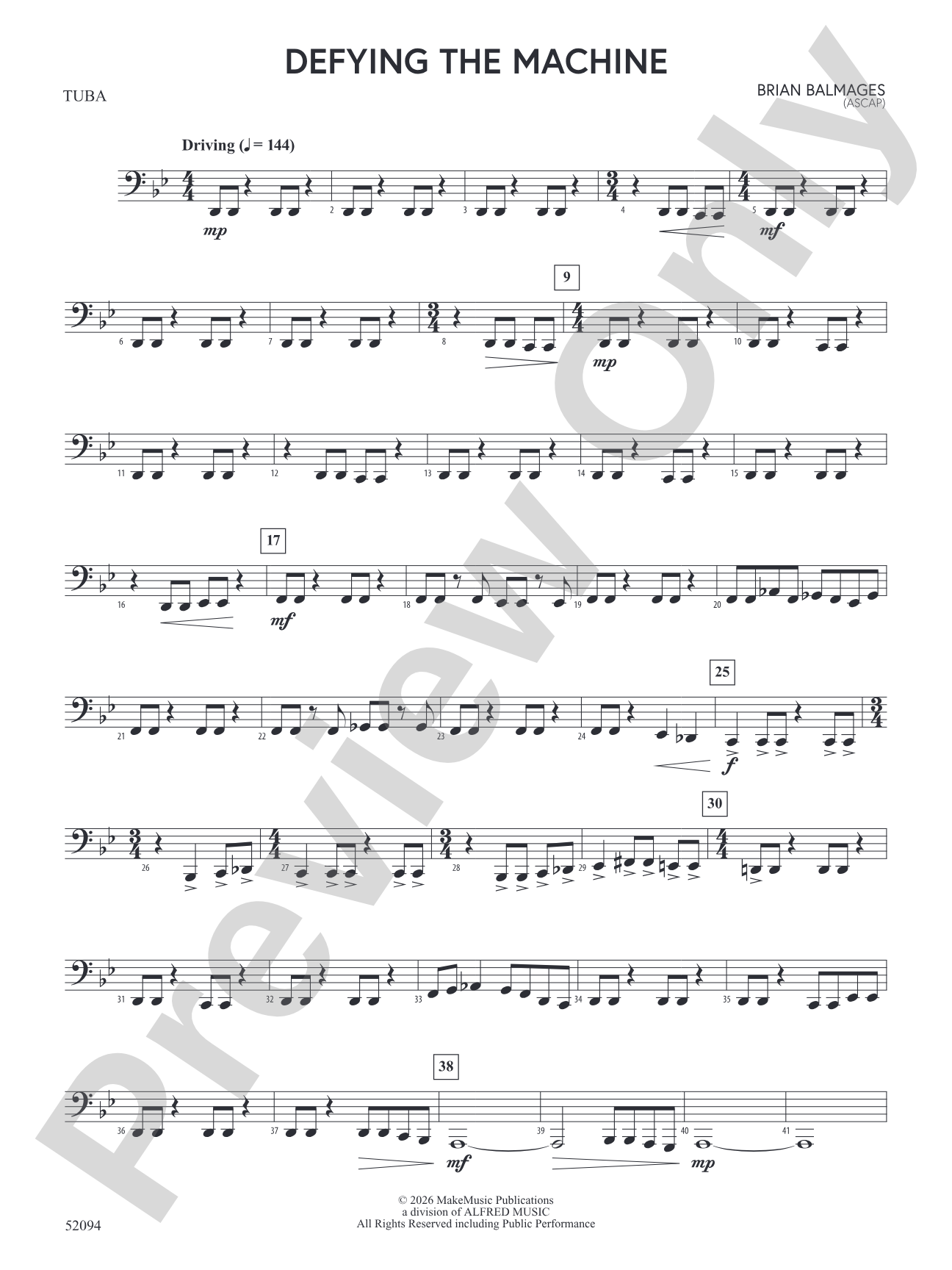

Defying the Machine: Tuba
By Brian Balmages
Grade: 2.5
Item: 00-PC-0019807_TB1
$3.00
Pickup currently not available
Description
Defying the Machine is a highly rhythmic and energetic work by Brian Balmages that explores a visceral conflict between relentless, mechanized efficiency and the enduring value of handmade craftsmanship. Driving rhythms and metallic textures clash with warm, expressive colors, creating a powerful contemporary soundscape. A tribute to the human spirit's resistance against the digital world. (3:40)


Don't just read it, hear it, play along with it, and watch your students grow with it. In MakeMusic Cloud, Defying the Machine: Tuba comes alive with professional accompaniment, adjustable tempo, and built-in practice tools that turn solo practice into real progress.
Open in the Player
Jump straight in and assign it today.
Start Your Free Trial
Open this title and explore the full library in minutes.
Sample Audio
1
Audio File
--:--
0:00
0:00
Sample Video
Additional Details
Series:
MakeMusic Young Band
Publisher:
MakeMusic Publications
SKU:
00-PC-0019807_TB1
More about this title
About the Composer: Brian Balmages

Brian Balmages has established himself as a composer and conductor working across orchestral, band, and chamber music repertoires. His works have been performed by ensembles ranging from professional symphony orchestras to elementary school groups at venues including Carnegie Hall, the Kennedy Center, and Sydney Opera House. He received the A. Austin Harding Award from the American School Band Directors Association, won the 2020 NBA William D. Revelli Composition Contest for Love and Light, and holds membership in the American Bandmasters Association.
Balmages earned the inaugural James Madison University Distinguished Alumni Award from the School of Visual and Performing Arts and was commissioned by the University of Miami to compose music for the inauguration of the institution's 6th president. His music was performed at the 2013 Presidential Inaugural Prayer Service. As a conductor, he regularly guest conducts all-state and regional ensembles, university groups, and professional orchestras worldwide. He currently serves as Director of MakeMusic Publications and Digital Education for Alfred and MakeMusic.
Why we love this
Balmages captures the aesthetic of modern student bands here—propulsive, inventive, and built on accessible but genuinely sophisticated rhythmic layering. The conceptual frame (mechanization versus human craft) gives students something real to play toward, and the Grade 2.5 orchestration demands nothing impossible while keeping every section engaged with distinctive material. This piece wins festivals because it sounds exactly like what contemporary concert bands should sound like.
What to expect
Defying the Machine pulses with propulsive forward motion, layered with textures that suggest industrial precision clashing against something more organic and warm. The driving rhythms create visceral energy, while the interplay between mechanical efficiency and expressive melody generates genuine dramatic tension without sacrificing the accessibility that makes young bands want to play it.
Who it's for
Concert bands at the Grade 2-3 level who are ready for contemporary repertoire with real compositional sophistication. This works particularly well for groups preparing festival or contest submissions and for ensembles seeking pieces that resonate with students' own creative instincts about sound and meaning.
How to get the most out of it
- Establish the rhythmic foundation firmly in the low brass and percussion; this piece builds its entire architecture from the relentless pulse, so lock that in first.
- Balance the metallic textures (woodwinds on sharp articulations, high brass stabs) against the warmer melodic colors; they're meant to collide, not blur.
- Shape the dynamic contours deliberately rather than playing continuously forte; the contrast between mechanized efficiency and expressive warmth only registers when you create real sonic space between them.
- Pay attention to articulation precision in fast passages; cleanness here is what generates the visceral energy the piece needs.
How to use it
Program this as a centerpiece of a concert exploring contemporary band repertoire or as a festival entry that demonstrates your ensemble's command of modern idioms. It also pairs well alongside traditional classics, showing audiences how the concert band repertoire has evolved while maintaining the clarity and energy that define the medium.
Skills your students will build
- Layered rhythmic precision while maintaining independent parts
- Articulation control and clarity in fast, complex textures
- Dynamic contrast and balance between competing musical ideas
- Reading contemporary notation and extended techniques
- Connection between musical concept (human versus machine) and interpretive choice