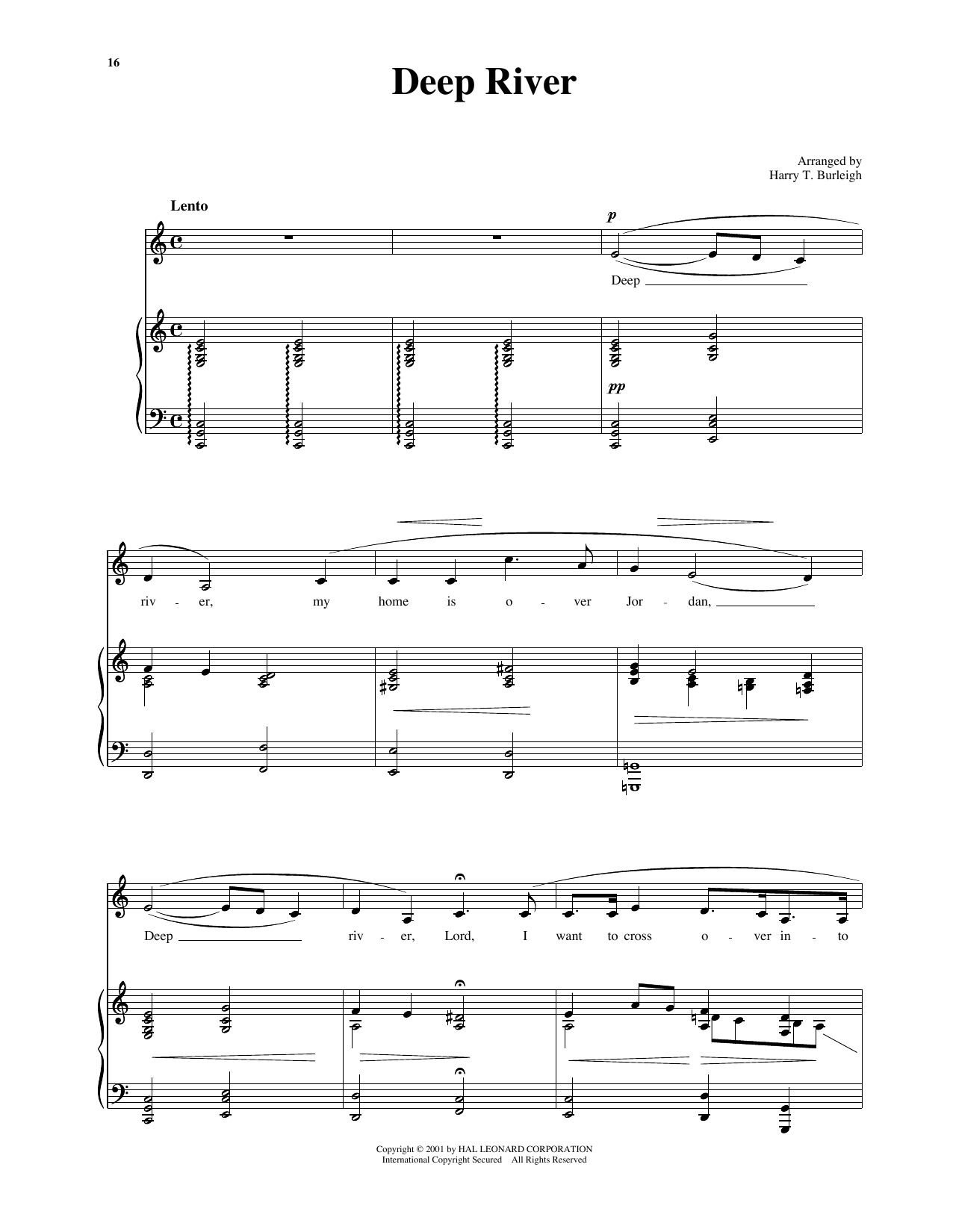
Deep River (arr. Harry T. Burleigh) Sheet Music Preview

Deep River (arr. Harry T. Burleigh): Piano Vocal

As performed by African American Spiritual / Arranged by Richard Walters / Arranged by Harry T. Burleigh

Item: 35-DS01824084

Digital Download
$5.99
Description

Deep River (arr. Harry T. Burleigh): Piano Vocal isn't in MakeMusic Cloud just yet...but it could be. Let us know you'd like to see it, and you'll help shape what comes next. In the meantime, start a free trial and dive into thousands of interactive titles your students can play along with today.

Sample Audio
No sample audio found.
Sample Video
Additional Details
Publisher: Hal Leonard
Page Count: 3
SKU: 35-DS01824084

More about this title

About the Artist: African American Spiritual

African American spirituals emerged from the enslaved communities of the American South, blending African musical traditions, Christian theology, and the search for hope amid profound suffering. These songs became the foundation of American vocal music, influencing everything from blues and jazz to concert art song. Their melodies are direct, memorable, and emotionally unguarded; their texts layer spiritual meaning with coded references to freedom and resilience. Spirituals remain central to the American musical canon because they speak truthfully about the human condition and the power of collective voice.

Why we love this

Harry T. Burleigh's arrangement of "Deep River" is a masterclass in vocal writing for low voices. Rather than forcing the spiritual into a limited range, Walters and Burleigh honor the natural placement and warmth of the low voice, making this a rare find for baritones and basses who deserve repertoire that sits comfortably. The piano part is elegant without being intrusive, supporting the vocalist's narrative without competing for attention.

What to expect

"Deep River" carries a quiet dignity. The melody yearns without desperation, and there's a sense of spiritual geography in the harmonic progression, as though the river itself is present in the piano writing. Singing this piece requires emotional stillness rather than dramatic display; the power comes from truth of expression.

Who it's for

Low voice singers preparing recital or competition repertoire will find this arrangement sits beautifully in their range without transposition. It works equally well for singers building a foundation in American vocal literature, whether in private lessons or vocal performance classes.

How to get the most out of it

  • Let the river imagery guide your phrasing. The melody should flow like water, avoiding rigid rhythmic placement in favor of natural speech rhythm and emotional breathing.
  • The pianistic texture in the accompaniment suggests restraint. Resist the urge to add weight or romantic fullness; clarity and transparency serve the text better.
  • Honor the spiritual's dual nature as both intimate prayer and communal testimony. Find the balance between personal vulnerability and universal resonance in your tone quality.

How to use it

This arrangement fits naturally on a recital exploring African American contributions to vocal art song, or as a centerpiece on a program of spirituals arranged for solo voice. It also serves as an excellent teaching piece for understanding how early 20th-century arrangers approached traditional material with respect for the original while expanding its concert potential.

Skills your students will build

  • Lyrical phrasing in spirituals, including rubato that serves textual meaning
  • Sustaining legit vocal tone in the lower passagio
  • Understanding arranged spirituals in the concert tradition
  • Collaborative listening between singer and accompanist in a sparse texture

You May Also Like