

Deedle Deedle Dai: 2-Part Choral Octavo
Hanukkah Is the Reason Why
Words and music by Lois Brownsey and Marti Lunn Lantz
Item: 00-PO-0002360
$2.05
Minimum order quantity: 20 copies
Pickup currently not available
Description
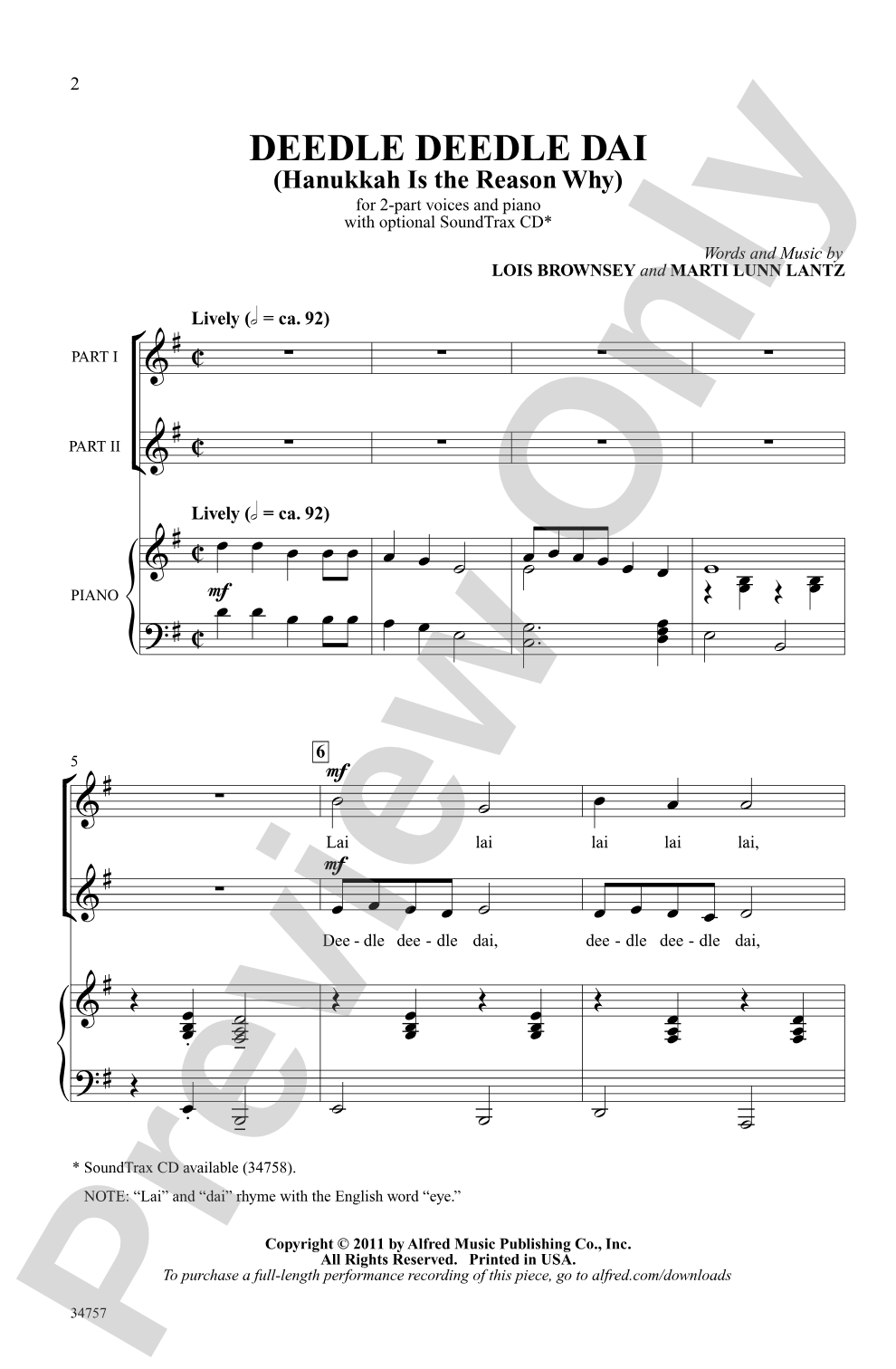
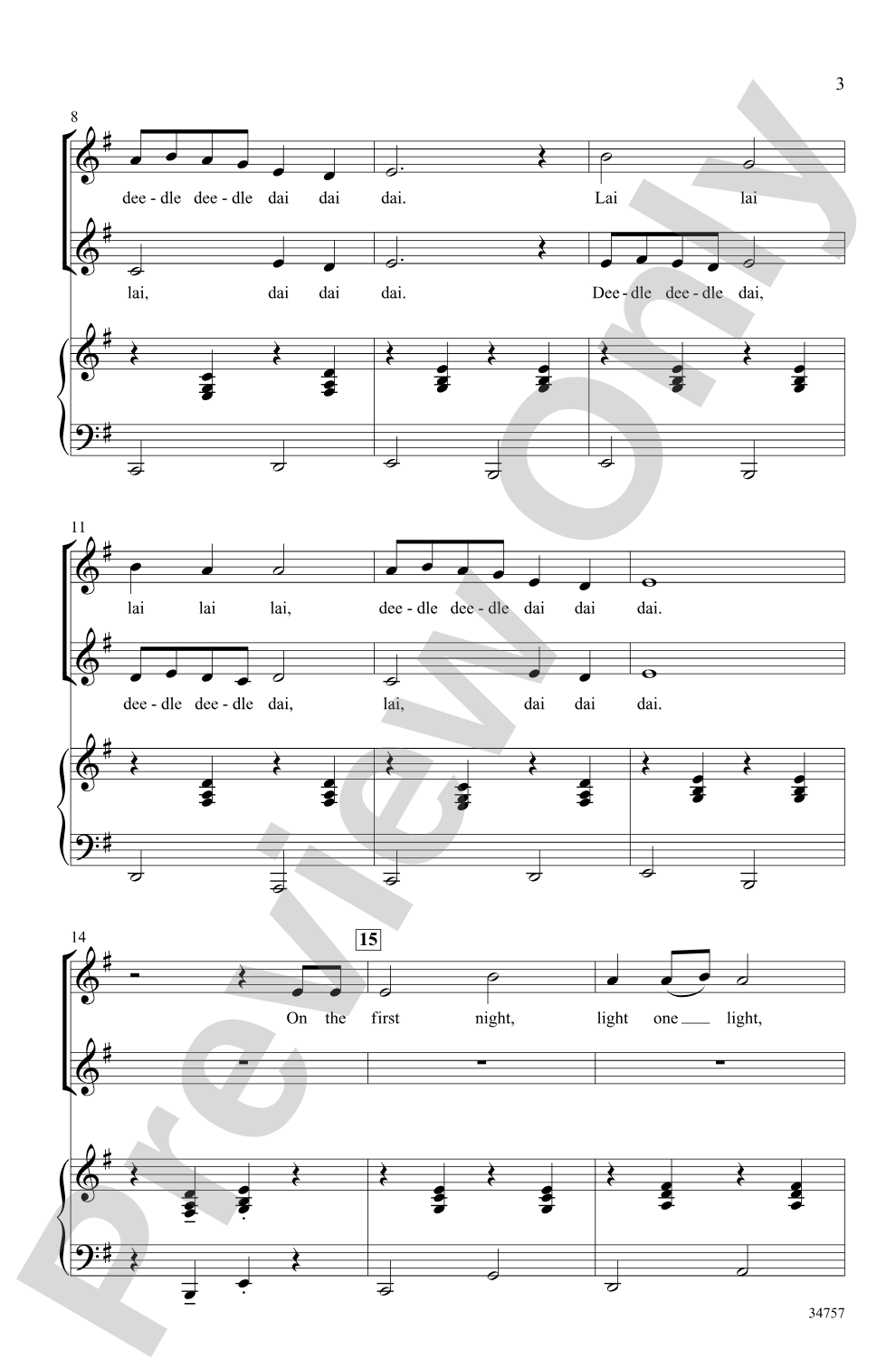
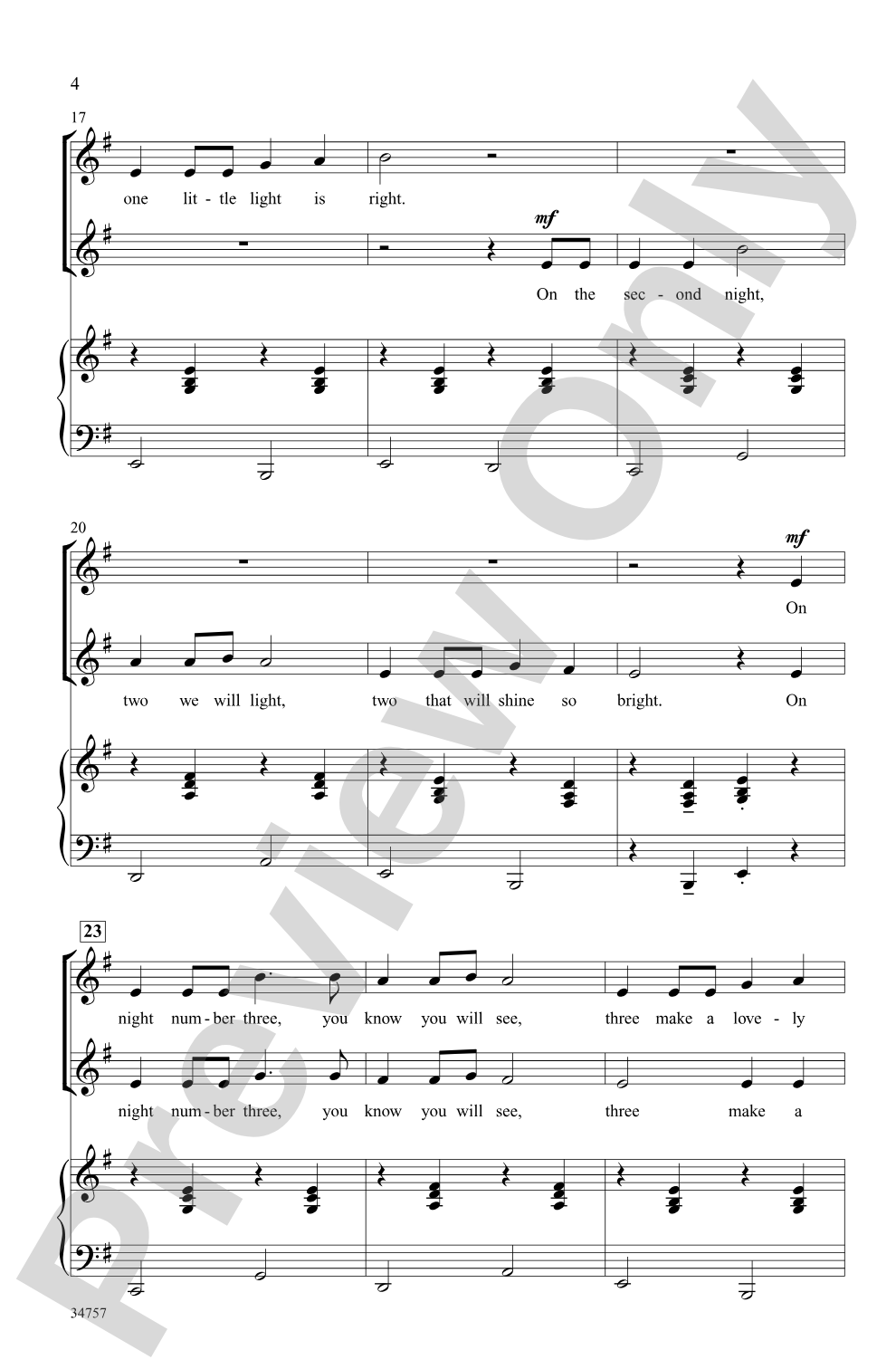
Fun-filled verses account for each of the eight nights and lights of the season, while two memorable melodies (sung simultaneously and on Hebrew-sounding syllables) provide the festive chorus for this original Hanukkah song. The best of its kind!


Deedle Deedle Dai: 2-Part Choral Octavo isn't in MakeMusic Cloud just yet...but it could be. Let us know you'd like to see it, and you'll help shape what comes next. In the meantime, start a free trial and dive into thousands of interactive titles your students can play along with today.
Request This Title
Tell us you want it.
Start Your Free Trial
Explore everything that's ready to play right now.
Sample Audio
1
Audio File
--:--
0:00
0:00
Sample Video
No sample videos found.
Additional Details
Series:
Alfred Choral Designs
Publisher:
Alfred Music
Page Count:
12
SKU:
00-PO-0002360
More about this title
About the Composer: Lois Brownsey

Lois Brownsey studied at Temple University and the Guitar Workshop in Philadelphia, where she developed skills across instrumental and vocal performance. Her long career in musical theatre and live performance spanning rock, pop, and blues bands shaped her distinctive compositional voice. Alongside her writing partner Marti Lunn Lantz, she has created numerous choral works and song collections with Alfred Music that celebrate cultural traditions and seasonal themes. Beyond composition, Brownsey has worked as a session vocalist and jingle writer for major corporations, and now operates Red Rock recording Studios in Pennsylvania's Pocono Mountains with her husband, recording engineer Kent Heckman.
Brownsey and Lantz are known for their collaborative work in multicultural music education. Their published collections include Celebrations around the World and The Wonders of the Earth, and they have co-written holiday pieces with other prominent choral arrangers. Since the 1970s, Brownsey has remained actively engaged in the arts community while bringing her performance experience directly into the studio and composition process.
Why we love this
The dual melodies create an engaging textural moment when sung simultaneously, and the Hebrew-sounding syllables give singers immediate access to the cultural sound of the piece without requiring translation work. Eight distinct verses tied to each night keep the narrative fresh throughout, so the piece works equally well as a single concert moment or broken into sections across your season.
What to expect
Festive and joyful, with an immediately recognizable character drawn from the composer's attention to cultural sound. The simultaneous melodies create a bright, energetic texture that feels celebratory without sacrificing musicality.
Who it's for
This piece is designed for choirs that want a contemporary Hanukkah song with enough substance to engage singers beyond novelty. Middle school through adult choirs will find the 2-part voicing accessible while the eight distinct verses and dual melody line keep performers engaged with real musical material.
How to get the most out of it
- Blend the two melodic lines by having singers practice their parts separately first, then gradually mix the voicings at rehearsal so each part locks into its own contour before joining.
- Pay attention to the syllabic text in the chorus; these Hebrew-sounding vocables will feel unfamiliar to many singers, so isolate and drill them independently of the melody to build confidence.
- The recorded accompaniment captures the intended rhythmic energy and festive character; use it in final rehearsals to show singers how the piece sits within its full arrangement.
- Balance the two melody lines so neither overwhelms, especially in the verses where harmonic interest depends on both parts remaining equally present.
How to use it
Program this as the anchor for a Hanukkah concert or multicultural winter celebration where its eight verses let you highlight each night of the festival. It also works beautifully in a broader holiday concert that celebrates multiple traditions, giving your Jewish singers and families representation beyond secular winter fare.
Skills your students will build
- Singing non-English text with cultural awareness and authentic sound production
- Blending two independent melodic lines into unified ensemble texture
- Reading and performing 2-part harmony with rhythmic independence
- Sustaining musical engagement across an extended narrative structure with multiple verses