Dedicatum: B-flat Tenor Saxophone Sheet Music Preview

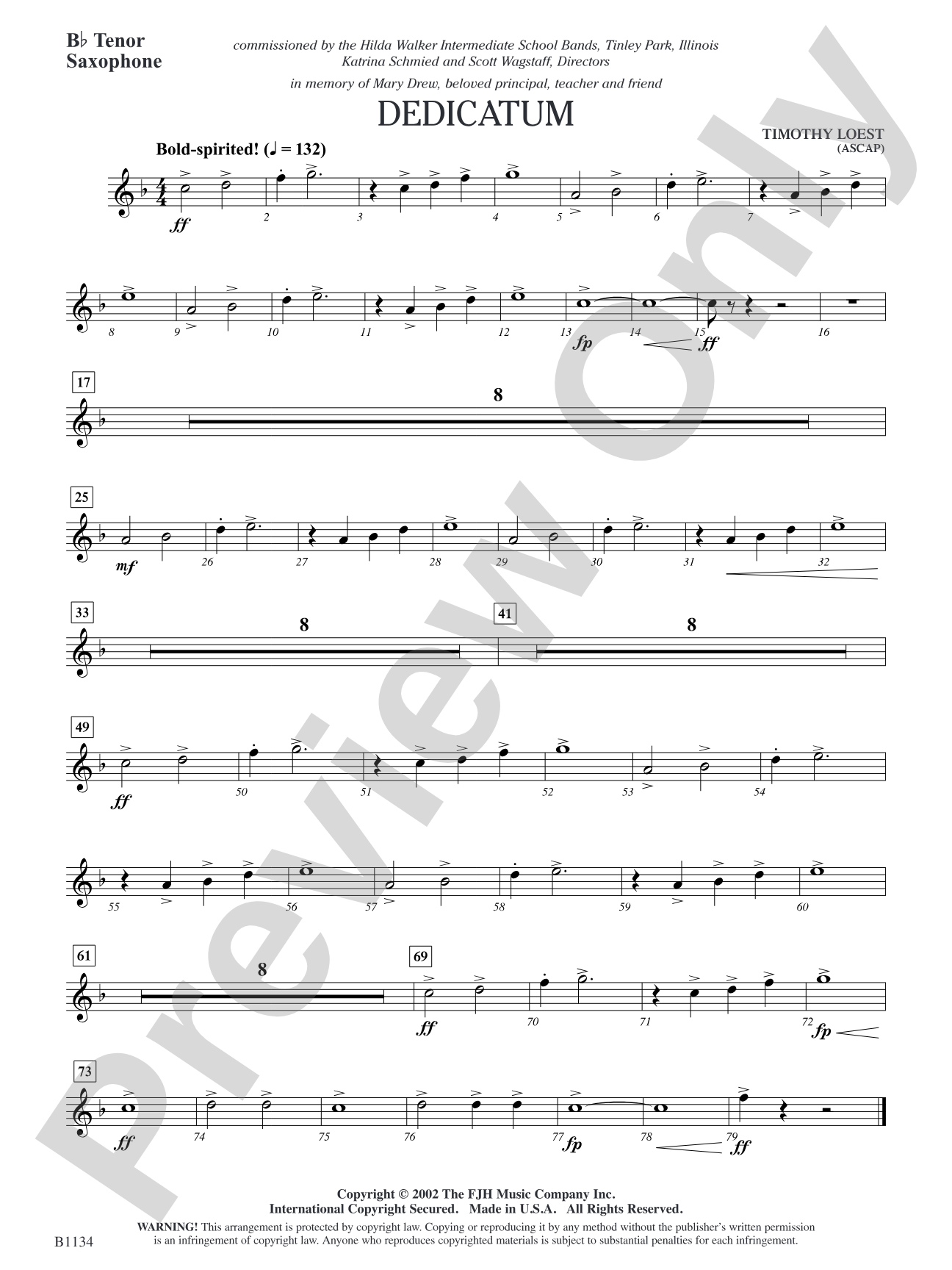
Dedicatum: B-flat Tenor Saxophone

By Timothy Loest

Grade: 1.5

Item: 98-PC-DB1134_TX1

Digital Download
$7.00
Description
This exciting new overture begins with a bold unison statement presented under an upper woodwind ostinato. The unison statement continues to develop until it is presented in full harmony. Softer treatments of the melody along with lyrical passages full of suspensions all contribute to the overall quality of the piece. Excellent writing! (2:30)

Dedicatum: B-flat Tenor Saxophone isn't in MakeMusic Cloud just yet...but it could be. Let us know you'd like to see it, and you'll help shape what comes next. In the meantime, start a free trial and dive into thousands of interactive titles your students can play along with today.

Sample Audio
0:00
0:00
Sample Video
Additional Details
Series: FJH Developing Band
Publisher: The FJH Music Company, Inc.
SKU: 98-PC-DB1134_TX1

More about this title

About the Composer: Timothy Loest

Timothy Loest

Timothy Loest has spent over three decades in the classroom, where he developed a reputation for composing music that young ensembles can genuinely enjoy performing. His works are heard regularly in concert halls and on national television, and his 2017 composition Cloud Gate drew an audience of over 5,000 at Chicago's Millennium Park. In recognition of his contributions to music education, he received the Illinois Grade School Music Association's Cloyd Myers Memorial Award for Excellence in Music Education that same year.

Loest's prolific output spans multiple publishers since his first publication in 1995, and he co-authored several widely adopted band methods including Measures of Success and the Beyond series (Warm-ups, Rhythms, and Chorales). In 2022, he founded Fanfare Music Press to ensure the highest quality standards in band composition and arrangement. He holds degrees from Illinois State University and Northwestern University, and his music has appeared on shows including The Tonight Show Starring Jimmy Fallon and Good Morning America.

Why we love this

Loest crafts overtures that feel genuinely purposeful at the 1.5 grade level, never settling for simple filler. The architecture here is particularly strong: a bold unison opening that gradually builds harmonic richness rewards student musicians with real compositional storytelling, and the softer, lyrical sections with suspensions give developing players something musically sophisticated to sink their teeth into. This is the kind of opener that elevates a concert program without overextending a young ensemble.

What to expect

Dedicatum opens with conviction and confidence, establishing a sense of purpose from the first measure. As the unison melody blooms into full harmony and softer, suspension-filled passages emerge, the piece unfolds like a well-told story, balancing strength with vulnerability.

Who it's for

Beginning and early-intermediate concert band students ready to explore more sophisticated harmonic language. This piece works well for ensembles with developing tonal control and balance skills, offering them material that sounds polished without requiring advanced technical demands.

How to get the most out of it

  • Balance the upper woodwind ostinato carefully during the opening statement; it should shimmer above the unison line rather than compete for attention.
  • Shape the transition to full harmony deliberately. The moment when the unison expands into harmony is a chance to show tonal growth, not just add more notes.
  • Lean into the suspensions in the lyrical passages. Young players often rush resolution, so give them time to hear how dissonance resolves, making those moments feel intentional rather than accidental.

How to use it

This is ideal as an opening concert selection. At just 2:30, it sets a strong tone without monopolizing rehearsal time, and the blend of bold writing and lyrical depth gives directors a chance to showcase both the energy and musicality of their young ensemble.

Skills your students will build

  • Ensemble balance and blend, particularly unison vs. secondary voices
  • Harmonic awareness through the unison-to-harmony transition
  • Sustaining tone through suspension resolutions
  • Dynamic control and phrasing in lyrical passages

You May Also Like