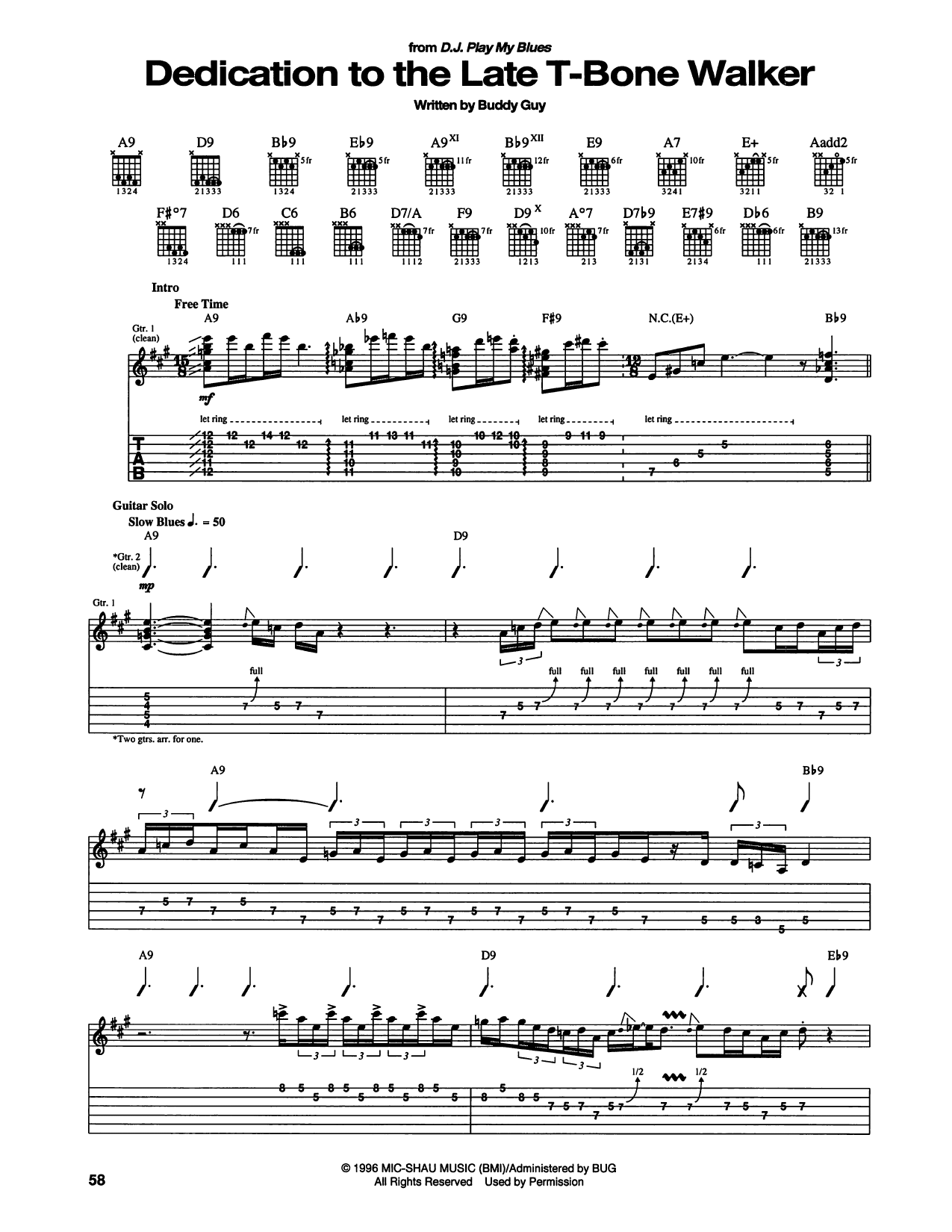
Buddy Guy stands as one of the most influential electric blues guitarists of the past seven decades, bridging traditional Chicago blues with modern rock sensibilities. His expressive, high-energy playing style and willingness to push the boundaries of the instrument have earned him a Grammy Lifetime Achievement Award and recognition as a foundational figure for countless rock and blues musicians.
Why we love this
This tribute captures the raw emotional vocabulary that defines Buddy Guy's approach to blues guitar. Teaching students to decode the phrasing, dynamics, and tonal choices in this piece opens doors to understanding how blues masters communicate feeling through the instrument rather than just playing notes.
What to expect
A deeply personal moment of respect and remembrance channeled through the language of the blues. Buddy's guitar speaks in warm tones and deliberate phrasing, balancing restraint with moments of passionate intensity that honor T-Bone Walker's legacy.
Who it's for
Intermediate to advanced guitarists ready to engage with authentic blues vocabulary and the specific techniques that define Buddy Guy's sound. This works well for students exploring blues history, electric guitar expression, or preparing repertoire that celebrates the genre's living masters.
How to get the most out of it
Study the bends and vibrato carefully from the tab. Buddy's tone relies heavily on how long he holds notes and how he shapes them with his left hand; rushing through these gestures loses the music's soul.
Listen to multiple recordings before you begin. The tab is one snapshot of this tribute, but hearing Buddy's own interpretation will teach you rhythmic flexibility and phrasing choices that notation alone cannot convey.
Pay attention to dynamics and dynamics shifts between sections. What reads as single notes in tab often contains subtle volume swells or attacks that give the phrase its character.
How to use it
Feature this during a blues history unit or a program celebrating influential guitarists and their mentors. It also serves as an ideal study piece for intermediate ensemble members looking to develop their solo voice outside of classical or jazz contexts.
Skills your students will build
Interpreting blues articulation and vibrato from tablature
Understanding phrasing and dynamics in expressive soloing
Applying bends, slides, and other blues-specific techniques with musical intent
Developing sensitivity to note duration and space in musical storytelling
You May Also Like
Scan to Complete Your Purchase
Use your phone's camera to scan the code below
You'll log in on your phone and the order will be added to your account