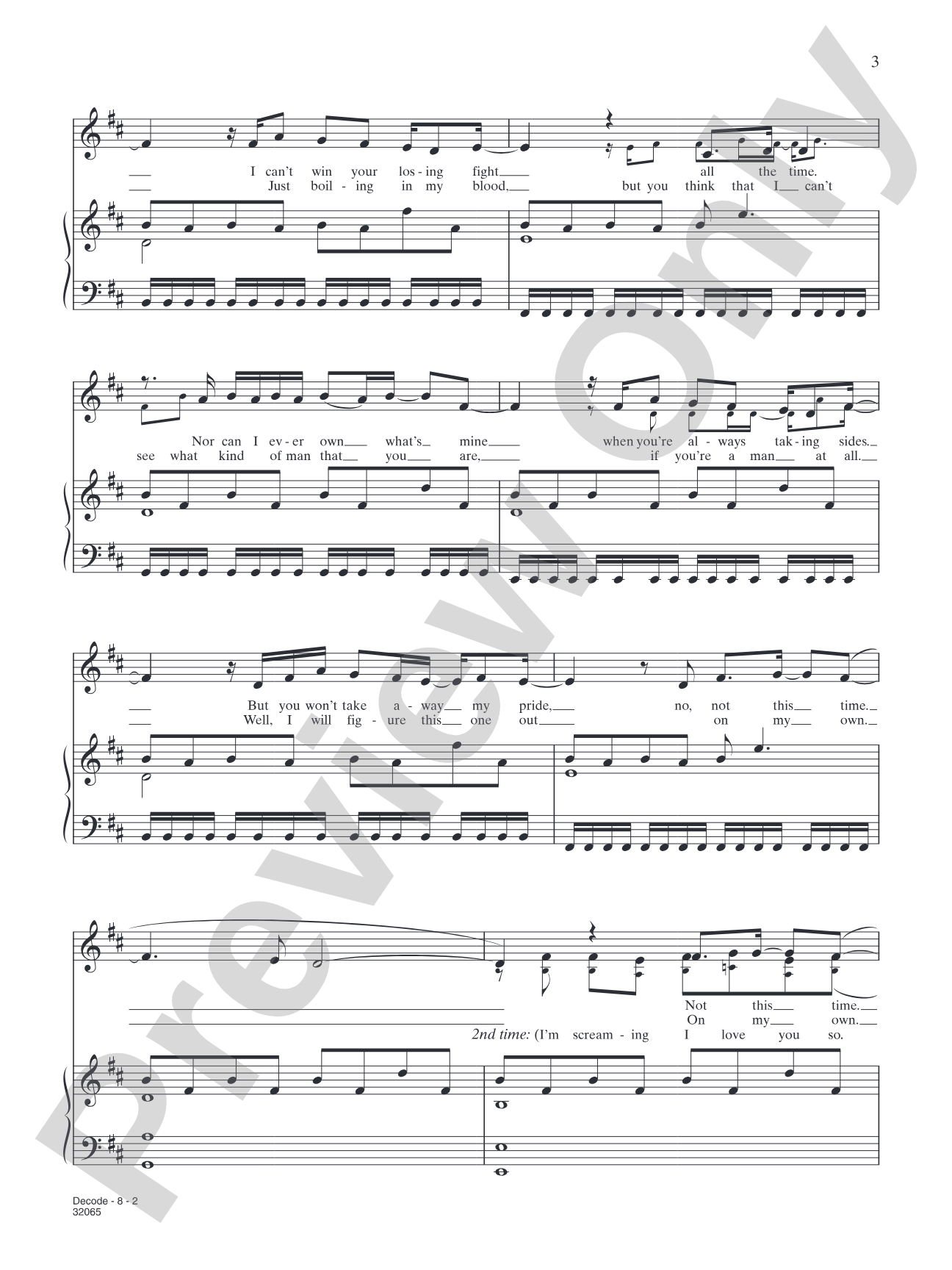
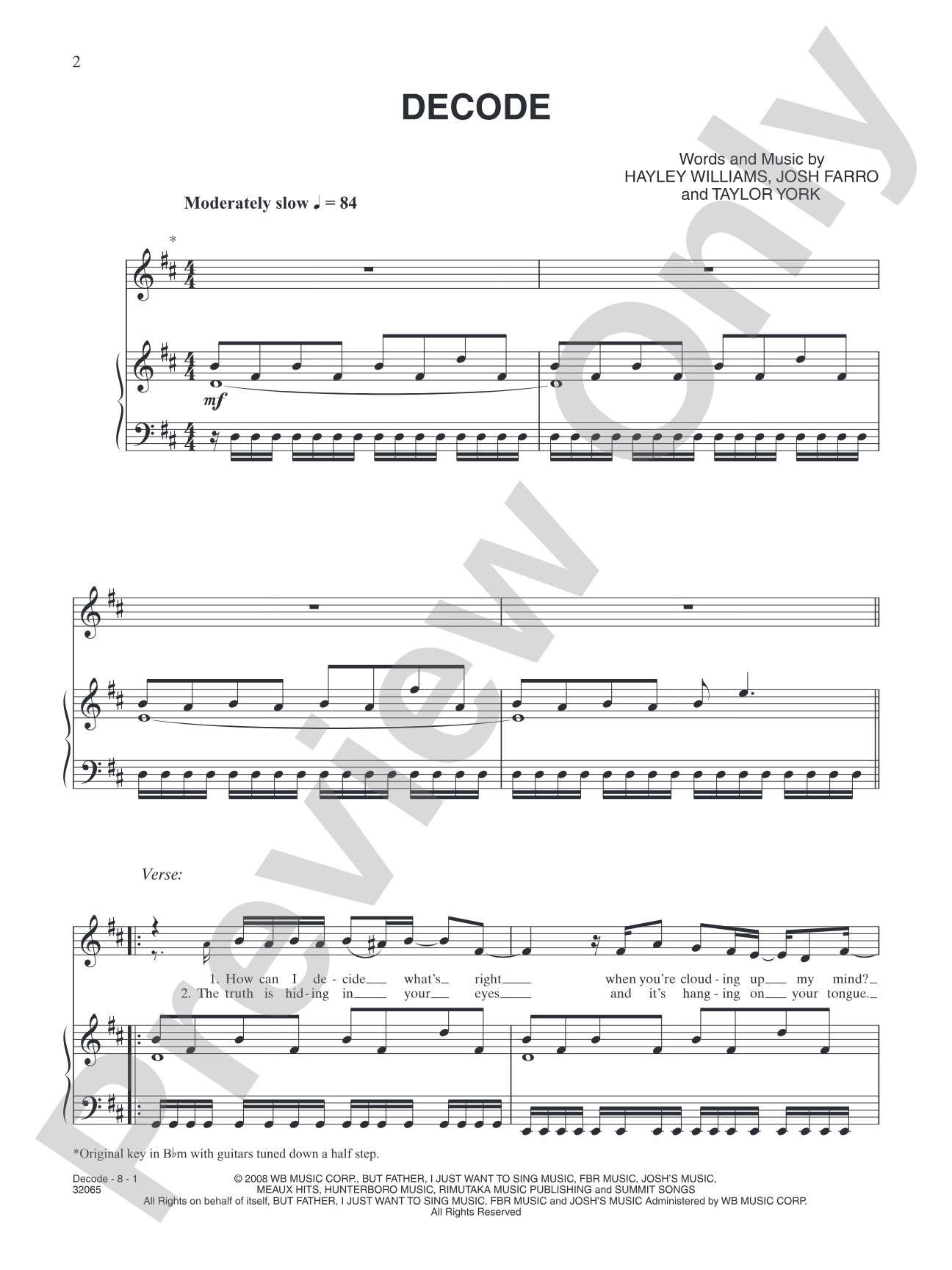
Decode Sheet Music Preview

Decode: Piano/Vocal/Chords

Words and music by Hayley Williams, Josh Farro, and Taylor York / recorded by Paramore

Item: 00-PS-0000088

Digital Download
$3.99

One moment…

Description
American rock band, Paramore partners up with the phenomenally popular movie, Twilight, to release "Decode." Claiming spots on the music chart throughout the world, "Decode" complements the movie it was inspired by with thick tension and angst. Alfred Music is proud to offer the Original Sheet Music Edition of the single "Decode," professionally arranged for Piano/Vocal/Chords.

Decode: Piano/Vocal/Chords isn't in MakeMusic Cloud just yet...but it could be. Let us know you'd like to see it, and you'll help shape what comes next. In the meantime, start a free trial and dive into thousands of interactive titles your students can play along with today.

Sample Audio
No sample audio found.
Sample Video
Additional Details
Series: Original Sheet Music Edition
Publisher: Alfred Music
Page Count: 10
SKU: 00-PS-0000088

More about this title

About the Composer: Hayley Williams

Hayley Williams is the lead vocalist and primary songwriter for Paramore, the rock band that emerged from Franklin, Tennessee in the early 2000s. Her songwriting combines introspective lyrics with driving instrumentation, establishing her as a distinctive voice in modern rock. Williams co-wrote "Decode" alongside bandmates Josh Farro and Taylor York, demonstrating the collaborative creative process that defines Paramore's sound.

Why we love this

This arrangement captures the cinematic intensity that made "Decode" a standout on the Twilight soundtrack while remaining accessible for pianists and vocalists working in popular music contexts. The piano/vocal/chords format gives performers flexibility to interpret the song with their ensemble or as a solo feature, making it work equally well in a rock showcase or contemporary music recital. The 10-page score strikes a balance between authenticity and playability.

What to expect

"Decode" surrounds you with brooding, atmospheric tension that pulls inward rather than exploding outward. The composition uses thick harmonic layers and restrained dynamics to create unease; it's a song about frustration and emotional complexity that unfolds rather than assaults. The piano/vocal texture emphasizes intimacy even when the full rock arrangement would feel massive.

Who it's for

This sheet music serves vocalists and pianists studying contemporary rock songwriting, young musicians building their repertoire with popular hits, and music programs looking to program recognizable material that connects with student audiences. It works equally well for solo vocalists preparing recital repertoire or pianists accompanying singers in rehearsal and performance settings.

How to get the most out of it

  • Lean into the tension built through the chord progressions; resist rushing the tempo even when the rhythm feels driving, as the anxiety in the song lives in space between notes.
  • Let the vocal line breathe on phrases that land on held notes or rests; "Decode" benefits from dramatic pacing rather than technical perfection.
  • Balance vocal dynamics carefully if performing with piano accompaniment; the chords provide substantial harmonic weight, so the voice needs clarity without oversinging.
  • Use the chord symbols to inform your interpretation at the keyboard; they suggest the harmonic color and emotional weight underneath the melody.

How to use it

This piece fits naturally into a contemporary music or rock repertoire concert, especially when grouped with other film soundtrack music or popular songwriting from the 2000s. Consider pairing it with similar artists or songs that explore emotional depth through indie and alternative rock; its recognizable melody and cinematic context make it an effective bridge between classical and popular music programming. The vocal solo format makes it suitable for student recitals or young artist showcases.

Skills your students will build

  • Reading and performing contemporary rock chord progressions (triadic and extended harmonies)
  • Coordinating vocal phrasing with piano accompaniment patterns
  • Interpreting dynamics and tension in popular music without a full band arrangement
  • Managing rhythmic precision in syncopated patterns typical of modern rock
  • Translating chord symbols into expressive piano voicing choices

You May Also Like