

Deck the Nutcracker Hall: SAB Choral Octavo
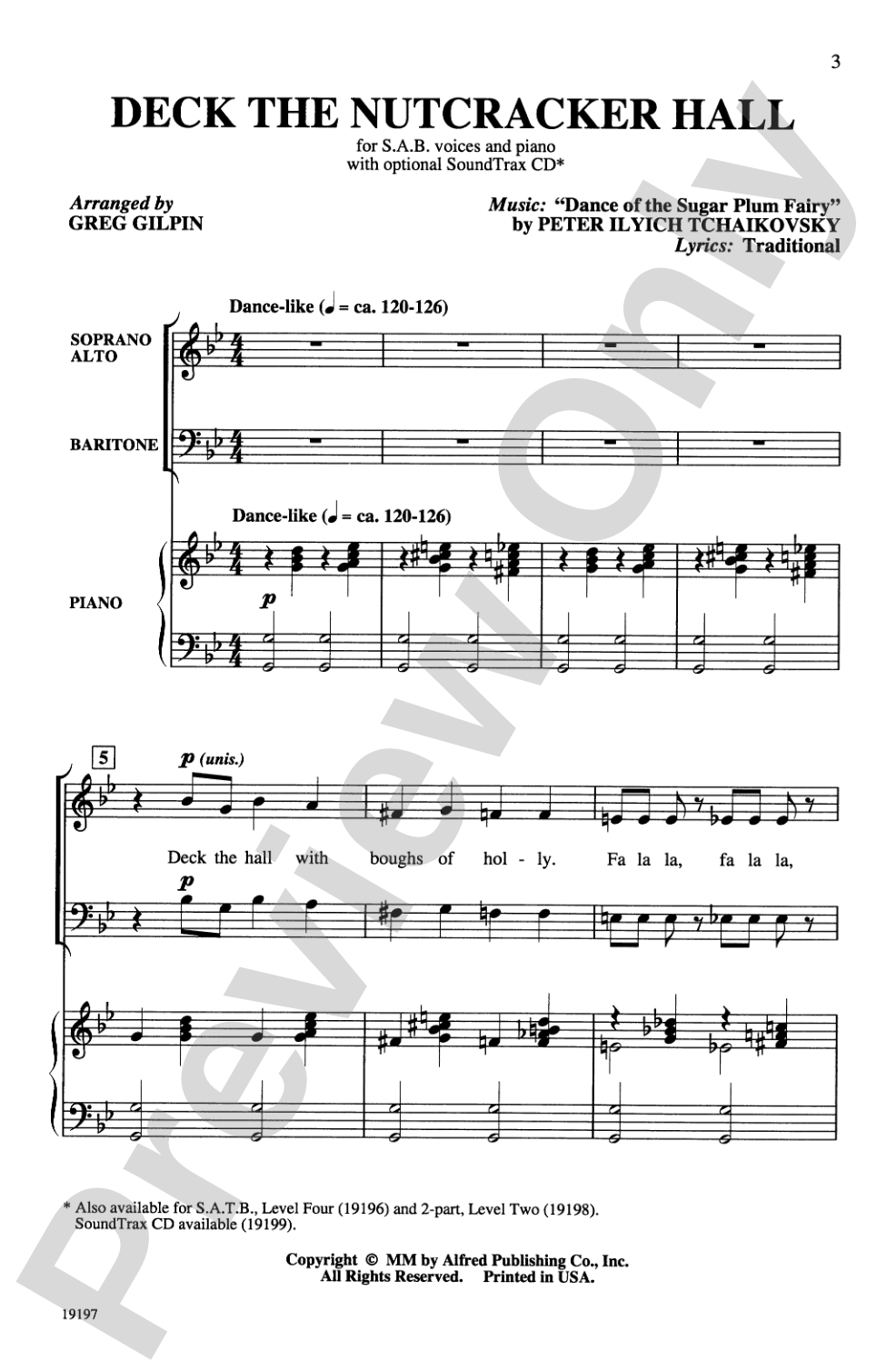
Deck the Hall / Dance of the Sugar Plum Fairy
Music by Peter Ilyich Tchaikovsky / arr. Greg Gilpin
Item: 00-PO-0004137
$2.25
Minimum order quantity: 20 copies
Pickup currently not available
Related Items
Deck the Nutcracker Hall: SATB Choral Octavo |
$2.25
|
View | |
Deck the Nutcracker Hall: 2-Part Choral Octavo |
$2.25
|
View | |
Deck the Nutcracker Hall: SATB Choral Octavo |
$2.25
|
View | |
Deck the Nutcracker Hall: SAB Choral Octavo |
$2.25
|
View | |
Deck the Nutcracker Hall: 2-Part Choral Octavo |
$2.25
|
View | |
Deck the Nutcracker Hall: Choral Octavo SoundTrax CD |
$27.99
|
View |
Description
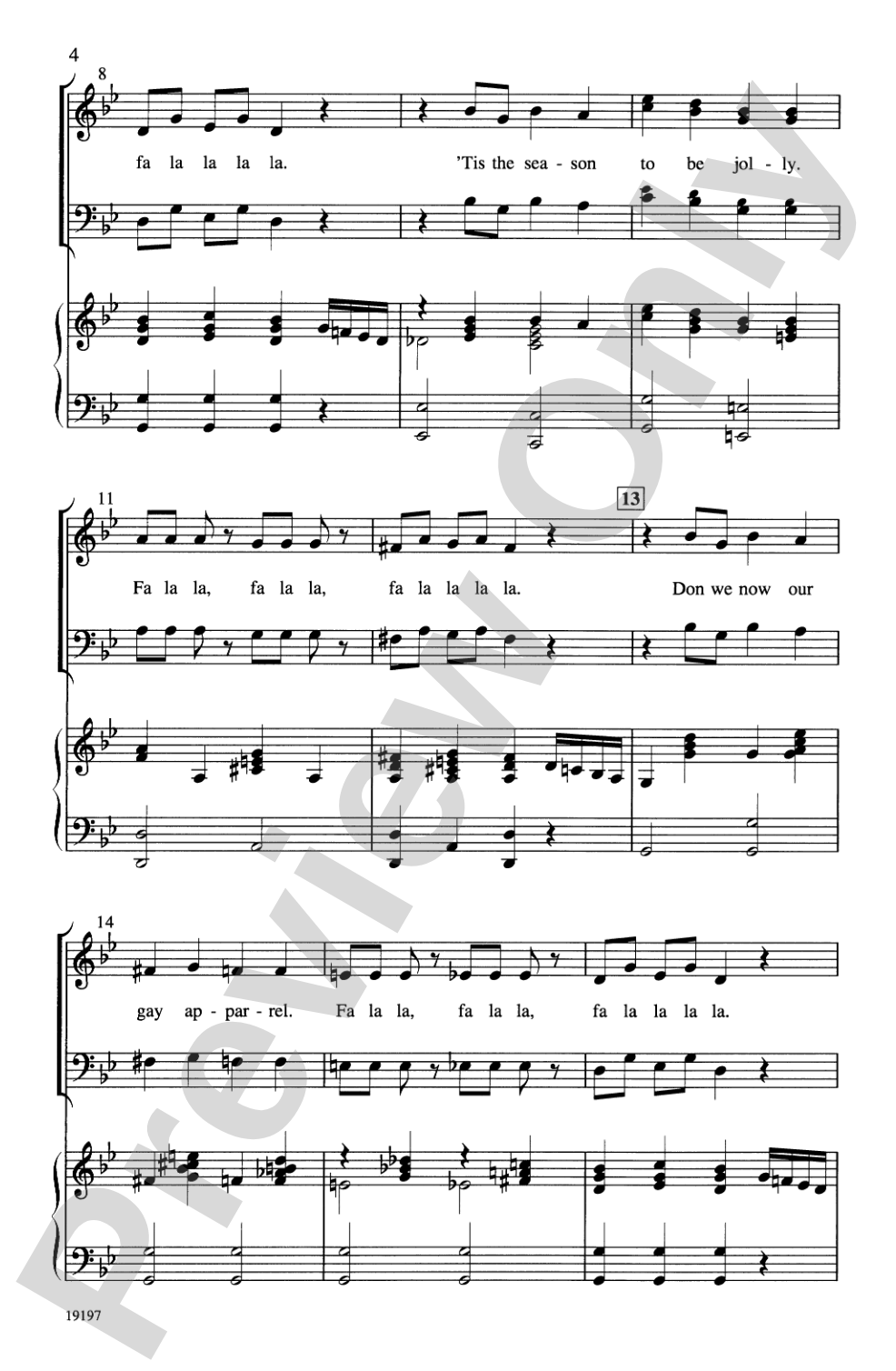
The most ingenious pairing of words and music we've heard in years: the text of "Deck the Hall" set to Tchaikovsky's "Dance of the Sugar Plum Fairy." You won't believe how easily the "fa la la's" fit to this universal holiday favorite from The Nutcracker Suite. The holiday text is secular so it's ideal for December concerts, and it's surprisingly easy to sing. It's one of those "Why didn't I think of that?" pieces. The fully orchestrated SoundTrax CD is based on Tchaikovsky's original orchestration.


Deck the Nutcracker Hall: SAB Choral Octavo isn't in MakeMusic Cloud just yet...but it could be. Let us know you'd like to see it, and you'll help shape what comes next. In the meantime, start a free trial and dive into thousands of interactive titles your students can play along with today.
Request This Title
Tell us you want it.
Start Your Free Trial
Explore everything that's ready to play right now.
Sample Audio
1
Audio File
--:--
0:00
0:00
Sample Video
No sample videos found.
Additional Details
Series:
Alfred Archive Edition: Alfred Choral Designs
Publisher:
Alfred Music
Page Count:
12
SKU:
00-PO-0004137
More about this title
About the Composer: Peter Ilyich Tchaikovsky
Peter Ilyich Tchaikovsky (1840-1893) stands as one of the most performed composers in concert halls worldwide, and for good reason: his gift for melody and orchestral color remains unmatched. His ballet scores, particularly The Nutcracker Suite, have become synonymous with the holiday season, reaching audiences far beyond the concert hall through film, ice shows, and countless arrangements.
For music educators, Tchaikovsky's work offers a masterclass in orchestration and emotional directness. His melodies sing naturally, his harmonic language balances accessibility with sophistication, and his structural clarity makes his music ideal for teaching both performers and listeners how great music works.
Why we love this
Greg Gilpin's arrangement proves that inspired musical wit lives in the gap between two great ideas. The fact that "Deck the Hall" fits so seamlessly into "Dance of the Sugar Plum Fairy" feels like a discovered secret rather than a forced novelty, and your singers will feel that magic the moment they nail the first phrase. Paired with a fully orchestrated accompaniment based on Tchaikovsky's original, this becomes a centerpiece for holiday programming that audiences genuinely anticipate.
What to expect
This piece has the luminous quality of a music box opened on Christmas morning: familiar, delightful, and touched with something almost magical. The juxtaposition of the traditional carol text with Tchaikovsky's dainty, ethereal waltz creates a gentle surprise that feels both playful and genuinely moving.
Who it's for
Choirs seeking a showstopper that works equally well for mixed voices, intermediate ensemble skills, and secular December programming. Directors who want something audiences recognize but haven't heard a thousand times, and singers who enjoy the novelty of performing a beloved melody through an unexpected musical lens.
How to get the most out of it
- Balance the text clarity with Tchaikovsky's delicate orchestral color. The arrangement only works if listeners can hear both the words and the instrumental magic underneath.
- Shape the "fa la la's" as musical phrases, not rhythmic interruptions. They deserve the same legit musicality you'd give to any other melodic gesture.
- Use the SoundTrax accompaniment as your rehearsal anchor early on, but coach singers to feel the orchestra's pulse rather than simply follow it. Independence within the ensemble matters here.
- Let the SAB voicing breathe; resist the urge to oversing. The elegance of this arrangement lives in restraint and clarity.
How to use it
Anchor your December concert's first half with this piece. Its accessibility and immediate charm make it perfect for warming the audience early, and it pairs beautifully with heavier or darker selections later in the program. The secular text makes it suitable for school and community venues where you need flexibility around religious content.
Skills your students will build
- Singing legit, supported tone in a higher register
- Phrase shaping within a simple, repetitive harmonic structure
- Coordinate articulation and text clarity across a SAB voicing
- Understanding arrangement as a creative art form (not just 'simplifying' existing music)