
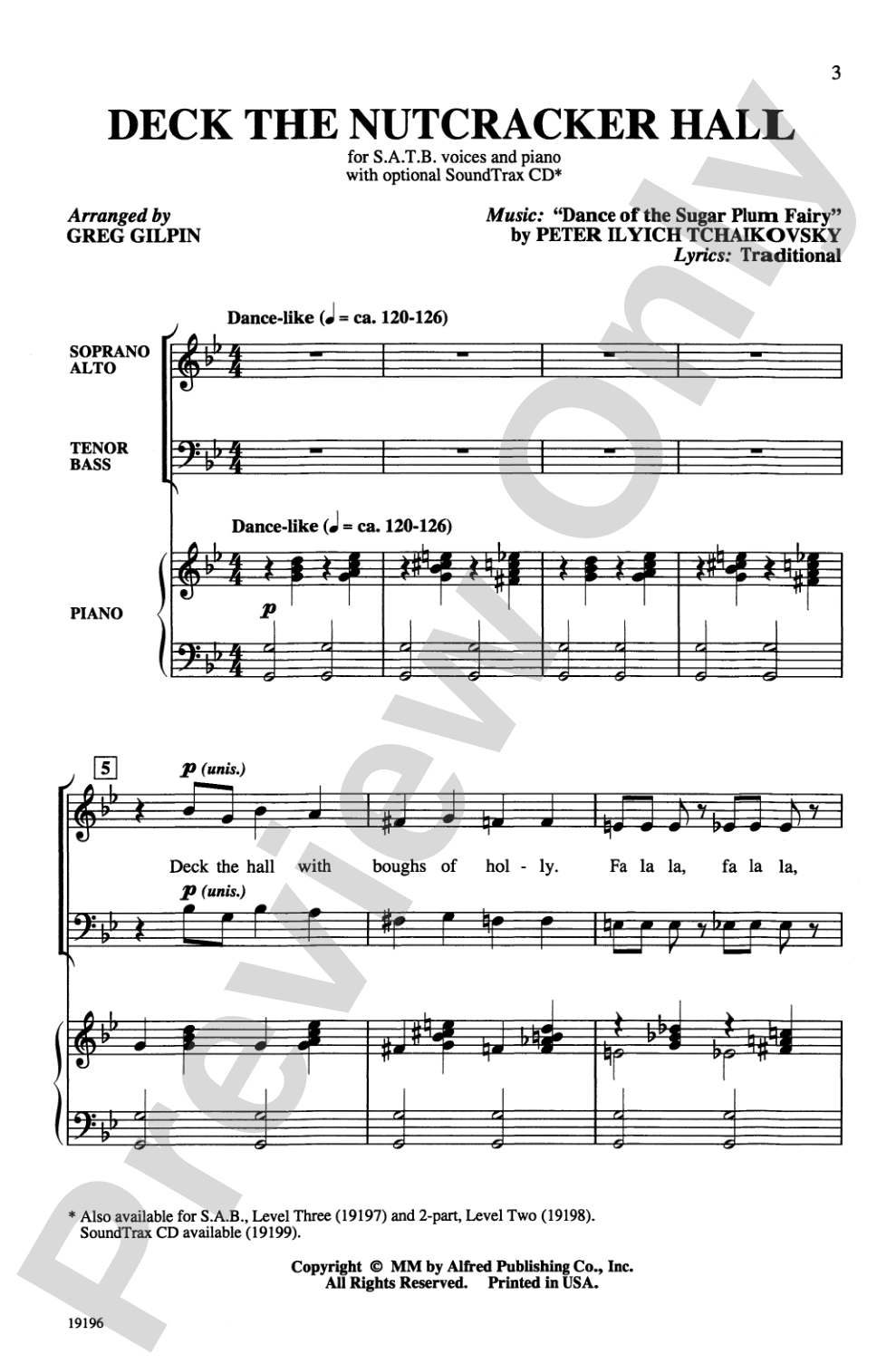

Deck the Nutcracker Hall: SATB Choral Octavo
Deck the Hall / Dance of the Sugar Plum Fairy
Music by Peter Ilyich Tchaikovsky / arr. Greg Gilpin
Item: 00-PO-0004136

$2.25
Minimum order quantity: 20 copies
Pickup currently not available
Related Items
Deck the Nutcracker Hall: SAB Choral Octavo |
$2.25
|
View | |
Deck the Nutcracker Hall: 2-Part Choral Octavo |
$2.25
|
View | |
Deck the Nutcracker Hall: SATB Choral Octavo |
$2.25
|
View | |
Deck the Nutcracker Hall: SAB Choral Octavo |
$2.25
|
View | |
Deck the Nutcracker Hall: 2-Part Choral Octavo |
$2.25
|
View | |
Deck the Nutcracker Hall: Choral Octavo SoundTrax CD |
$27.99
|
View |
Description
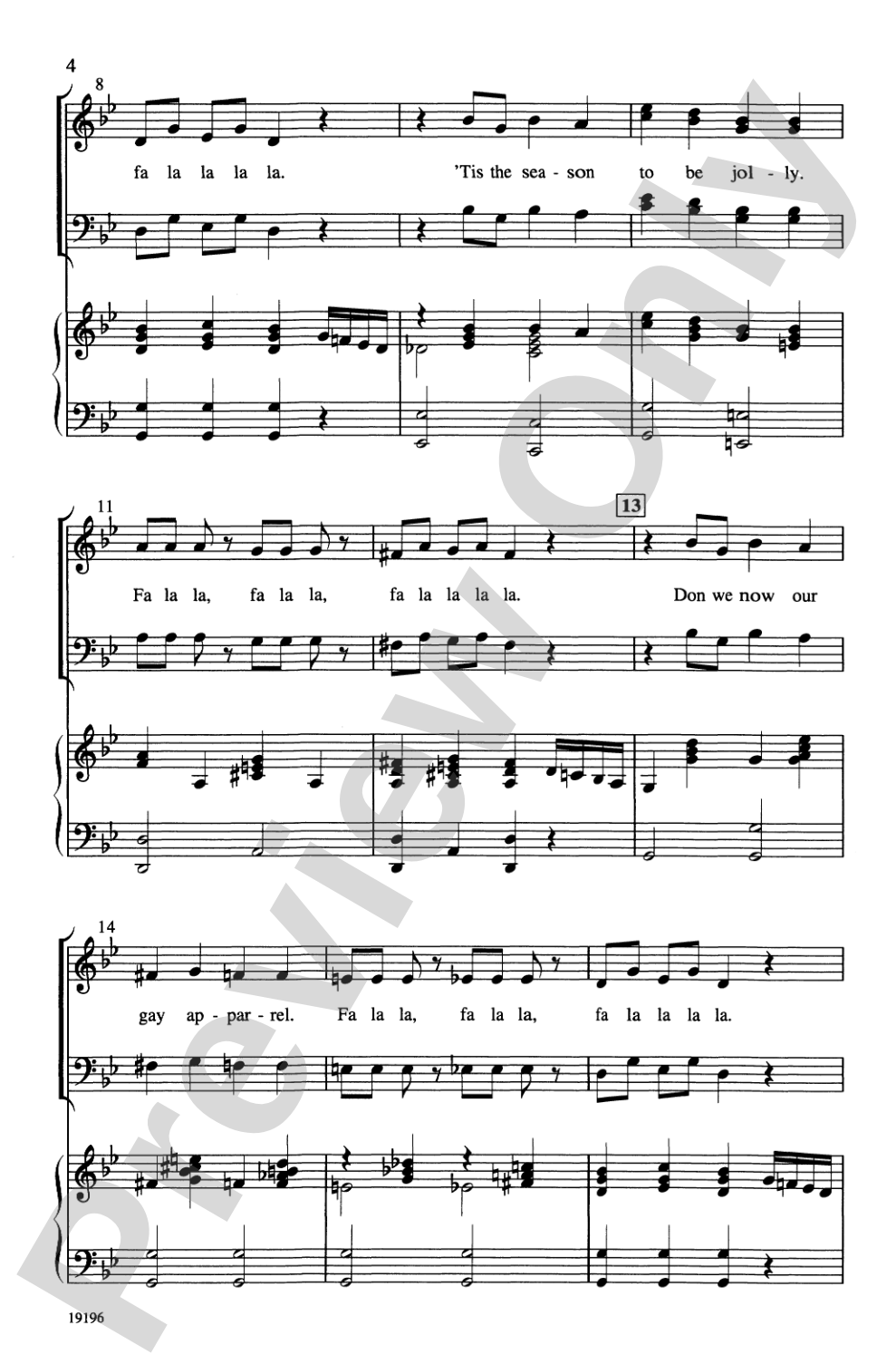
The most ingenious pairing of words and music we've heard in years: the text of "Deck the Hall" set to Tchaikovsky's "Dance of the Sugar Plum Fairy." You won't believe how easily the "fa la la's" fit to this universal holiday favorite from The Nutcracker Suite. The holiday text is secular so it's ideal for December concerts, and it's surprisingly easy to sing. It's one of those "Why didn't I think of that?" pieces. The fully orchestrated SoundTrax CD is based on Tchaikovsky's original orchestration.


Don't just read it, hear it, play along with it, and watch your students grow with it. In MakeMusic Cloud, Deck the Nutcracker Hall: SATB Choral Octavo comes alive with professional accompaniment, adjustable tempo, and built-in practice tools that turn solo practice into real progress.
Open in the Player
Jump straight in and assign it today.
Start Your Free Trial
Open this title and explore the full library in minutes.
Sample Audio
1
Audio File
--:--
0:00
0:00
Sample Video
No sample videos found.
Additional Details
Series:
Alfred Archive Edition: Alfred Choral Designs
Publisher:
Alfred Music
Page Count:
12
SKU:
00-PO-0004136
More about this title
About the Composer: Peter Ilyich Tchaikovsky
Tchaikovsky (1840-1893) stands among the most performed composers in the world, yet his music emerged from a deeply personal artistic struggle. A Russian master of melody and orchestration, he composed across every genre—ballet, opera, symphony, concerto—and his gift for creating music that feels both intellectually sophisticated and emotionally direct has made his work endure in concert halls and classrooms for over a century.
The Nutcracker Suite, premiered in 1892, represents Tchaikovsky's genius for orchestral color and his ability to capture character through pure instrumental music. The "Dance of the Sugar Plum Fairy" has become one of the most recognizable melodies in classical music, which makes it an ideal foundation for creative arrangements that introduce new generations to his compositional voice.
Why we love this
Greg Gilpin's arrangement captures something rare: a concept so clever it feels inevitable in hindsight. The text of "Deck the Hall" aligns with Tchaikovsky's elegant melody as if they were written for each other, and the piece carries genuine musical substance beneath its novelty. For December programming, this bridges the gap between secular holiday tradition and classical repertoire in a way that audiences find genuinely delightful.
What to expect
Elegant and playful at once. The familiar text feels fresh over Tchikovsky's sophisticated melody, while the "fa la la's" and the melody's natural lift give the piece an almost balletic quality. It's festive without being cute, classical without being intimidating.
Who it's for
Singers in school choirs, community choirs, church choirs, and madrigal groups who want a secular holiday piece with substance and charm. This works well for mixed ensembles at intermediate to advanced levels who can handle the orchestral independence and want something beyond straightforward carols.
How to get the most out of it
- Shape the melody with warmth and elegance rather than rhythmic precision; this is Tchaikovsky, not a march. Let the beauty of his writing emerge through careful phrase control.
- Balance the "fa la la's" so they sit underneath the main melodic line. These familiar syllables should dance lightly, not overshadow the harmony or the orchestral accompaniment.
- Record a rehearsal run-through with the SoundTrax accompaniment early in preparation. Having the full orchestration from the start helps singers understand the musical context and locks in ensemble balance.
- Pay attention to vowel unification in the sustained passages. Tchaikovsky's harmonies will ring clearly only if vowel shaping is consistent across all four parts.
How to use it
Position this as a centerpiece in a December concert or as a palate-cleanser between heavier choral works. Its secular nature makes it ideal for school and community venues where holiday programming needs breadth. Pair it with a more traditional carol to create a satisfying "then and now" moment in your concert arc.
Skills your students will build
- Singing over orchestral accompaniment with accurate ensemble entrances and balance
- Sustaining elegance across legato, lyrical lines in SATB voicing
- Understanding how familiar text can be reset to classical melodies while maintaining both integrity and charm
- Clarity and blend in syllabic "fa la la" sections within a homophonic texture