
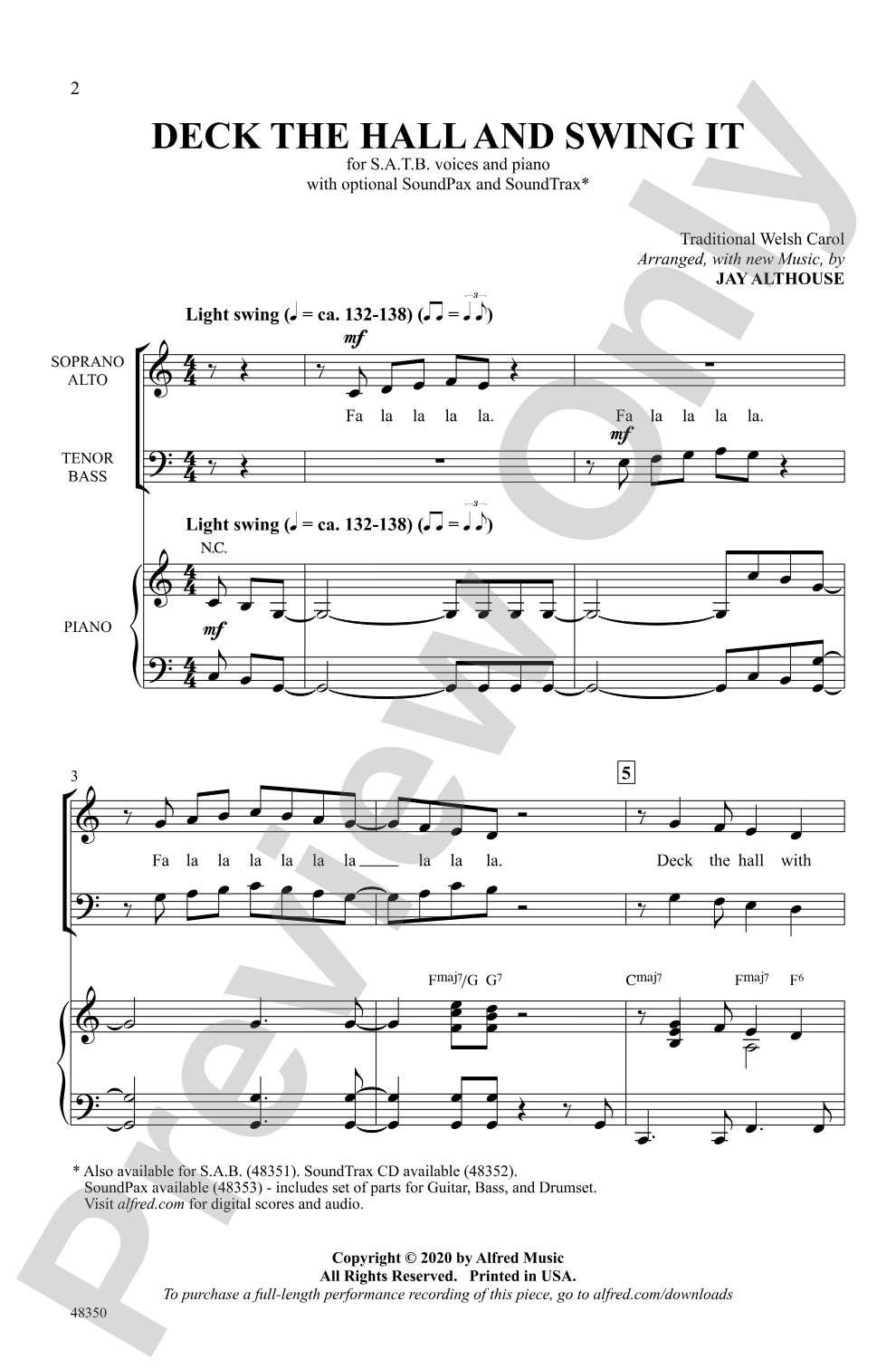
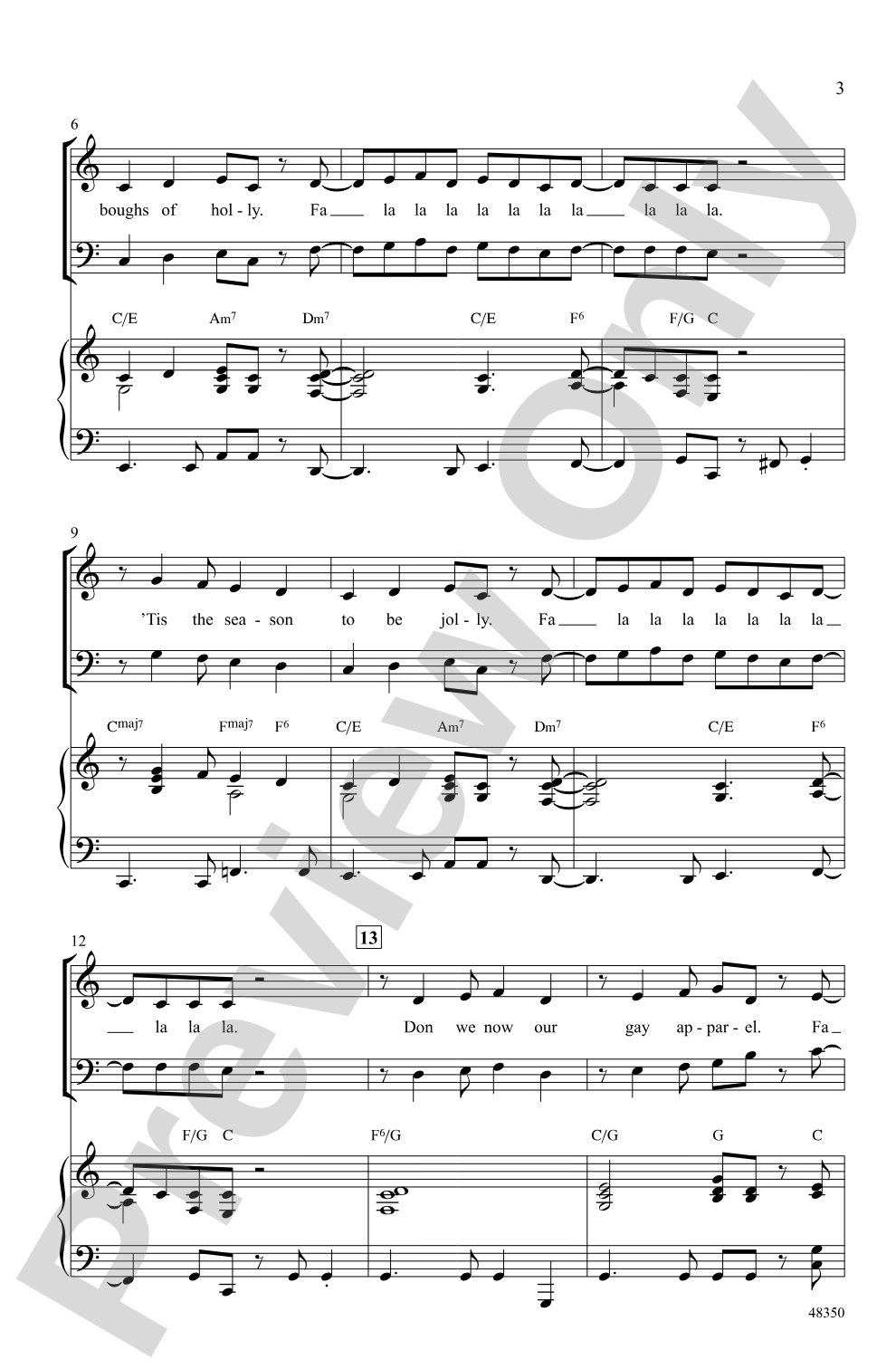
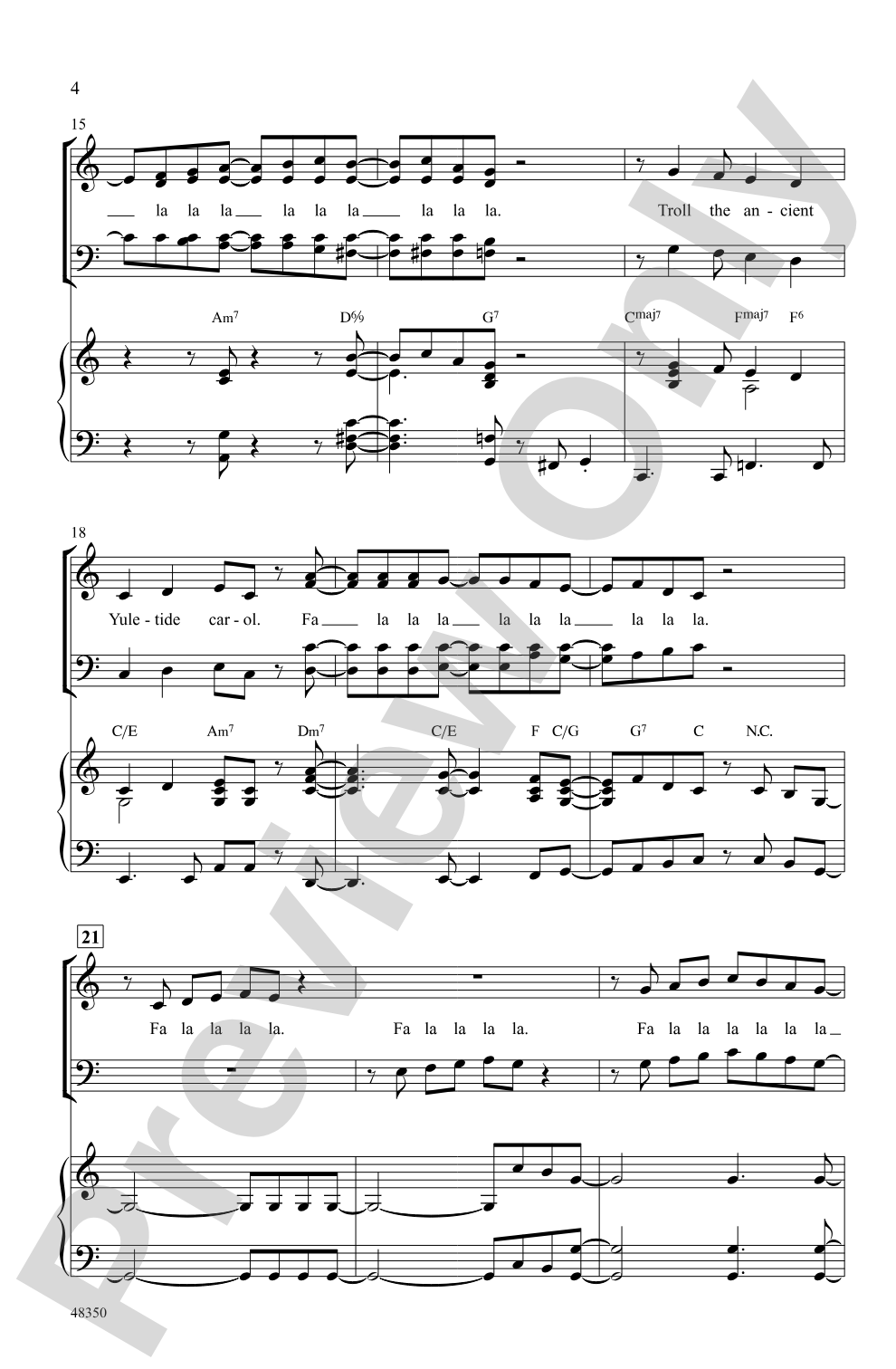

Deck the Hall and Swing It: SATB Choral Octavo
Traditional Welsh Carol / arr., with new music, by Jay Althouse
Item: 00-PO-0006335

$2.05
Minimum order quantity: 20 copies
Pickup currently not available
Related Items
Deck the Hall and Swing It: SoundTrax Digital Audio Download |
$29.99
|
View | |
Deck the Hall and Swing It: SAB Choral Octavo |
$2.05
|
View | |
Deck the Hall and Swing It: Choral SoundPax |
$15.00
|
View | |
Deck the Hall and Swing It: SATB Choral Octavo |
$2.05
|
View | |
Deck the Hall and Swing It: SAB Choral Octavo |
$2.05
|
View | |
Deck the Hall and Swing It: Choral Octavo SoundTrax CD |
$29.99
|
View | |
Deck the Hall and Swing It: Choral SoundPax |
$15.00
|
View |
Description
Crisp and cool as a peppermint stick, this re-imagined carol is refreshing in every way. From the light swing rhythms of the familiar melody to a jazz fantasia of "Fa la la's" in counterpoint, it's just the right blend of familiar, fun, and festive! A rhythm section SoundTrax is available.


Don't just read it, hear it, play along with it, and watch your students grow with it. In MakeMusic Cloud, Deck the Hall and Swing It: SATB Choral Octavo comes alive with professional accompaniment, adjustable tempo, and built-in practice tools that turn solo practice into real progress.
Open in the Player
Jump straight in and assign it today.
Start Your Free Trial
Open this title and explore the full library in minutes.
Sample Audio
1
Audio File
--:--
0:00
0:00
Sample Video
Additional Details
Series:
Alfred Choral Designs
Publisher:
Alfred Music
Page Count:
12
SKU:
00-PO-0006335
More about this title
About the Arranger: Jay Althouse

Jay Althouse studied music education at Indiana University of Pennsylvania, earning both a bachelor's degree and a master's degree in music from the same institution, where he later received the Distinguished Alumni award. His career spans composition, publishing, and music education; he spent eight years as a rights and licenses administrator for a major educational publisher and served on the Executive Board of the Music Publishers Association of America.
As a composer, Althouse has created over 800 choral works performed across the English-speaking world. He holds membership in ASCAP and is a regular recipient of the ASCAP Special Award. Beyond composition, he has co-written children's musicals with Sally K. Albrecht, edited vocal solo collections, and authored instructional resources including The Complete Choral Warm-up Book, Accent on Composers, and classroom reproducibles. Althouse and Albrecht co-wrote I Hear America Singing, performed by the San Francisco Girls and Boys Choirs at President Barack Obama's 2009 inauguration. He has served on the board of the North Carolina Master Chorale and currently advises the National Folk Art Society of America.
Why we love this
Althouse captures something genuinely appealing here: the arrangement respects the carol's DNA while swinging it into a fresh groove that feels both accessible and sophisticated. The counterpoint writing on the "Fa la la's" gives your singers something engaging to balance against the familiar melody, and the overall energy feels earned rather than gimmicky.
What to expect
Crisp and bright, like stepping into freshly falling snow. The swing rhythms give it forward momentum while the counterpoint weaving keeps things lively and fun; it never tips into precious or oversentimental.
Who it's for
Choirs at the intermediate level and above who want to program something festive without retreating into straight arrangements. Your singers should be comfortable with jazz idioms and rhythmic independence, and your audience should appreciate a blend of tradition and contemporary flair.
How to get the most out of it
- Keep the swing rhythms conversational and easy rather than metronomic; a light, dancing quality matters more than rigid precision.
- Balance the jazz harmonies carefully in rehearsal so the familiar melody still anchors the chord changes for listeners unfamiliar with the arrangement.
- If using the SoundTrax rhythm section accompaniment, let your singers rehearse with it early and often so the swing feel settles into their bodies before performance.
How to use it
Place this in a winter concert where it can sit comfortably alongside both traditional carols and newer seasonal repertoire. It works especially well in programs that mix classical, jazz, and popular styles, and it's the kind of piece that draws genuine smiles without sacrificing musicality.
Skills your students will build
- Singing in swing style and jazz idioms
- Maintaining an independent line while hearing jazz harmonies in other parts
- Reading and executing syncopated rhythms typical of jazz arrangements
- Balancing a primary melody line with counterpoint in a four-part texture