
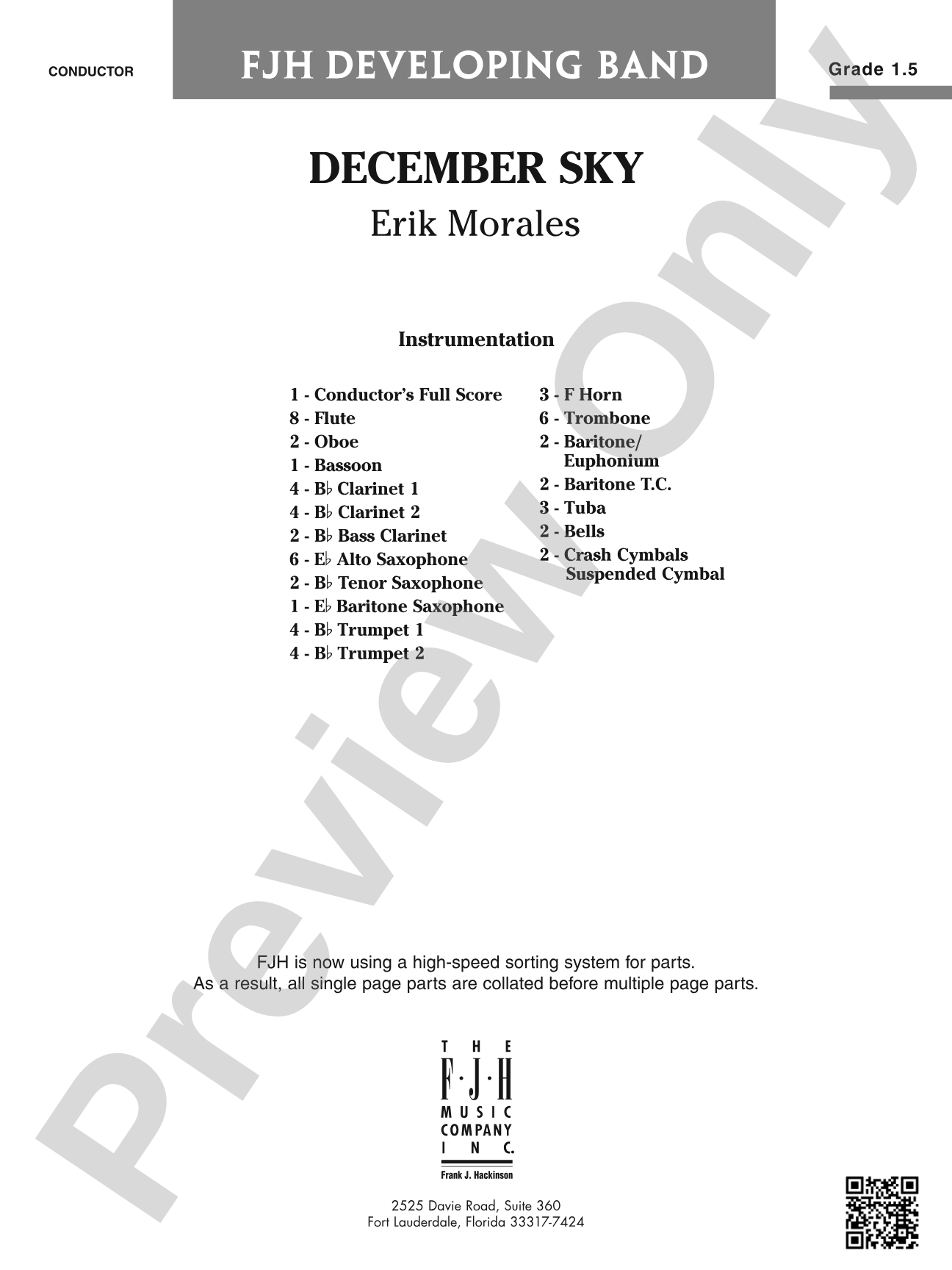
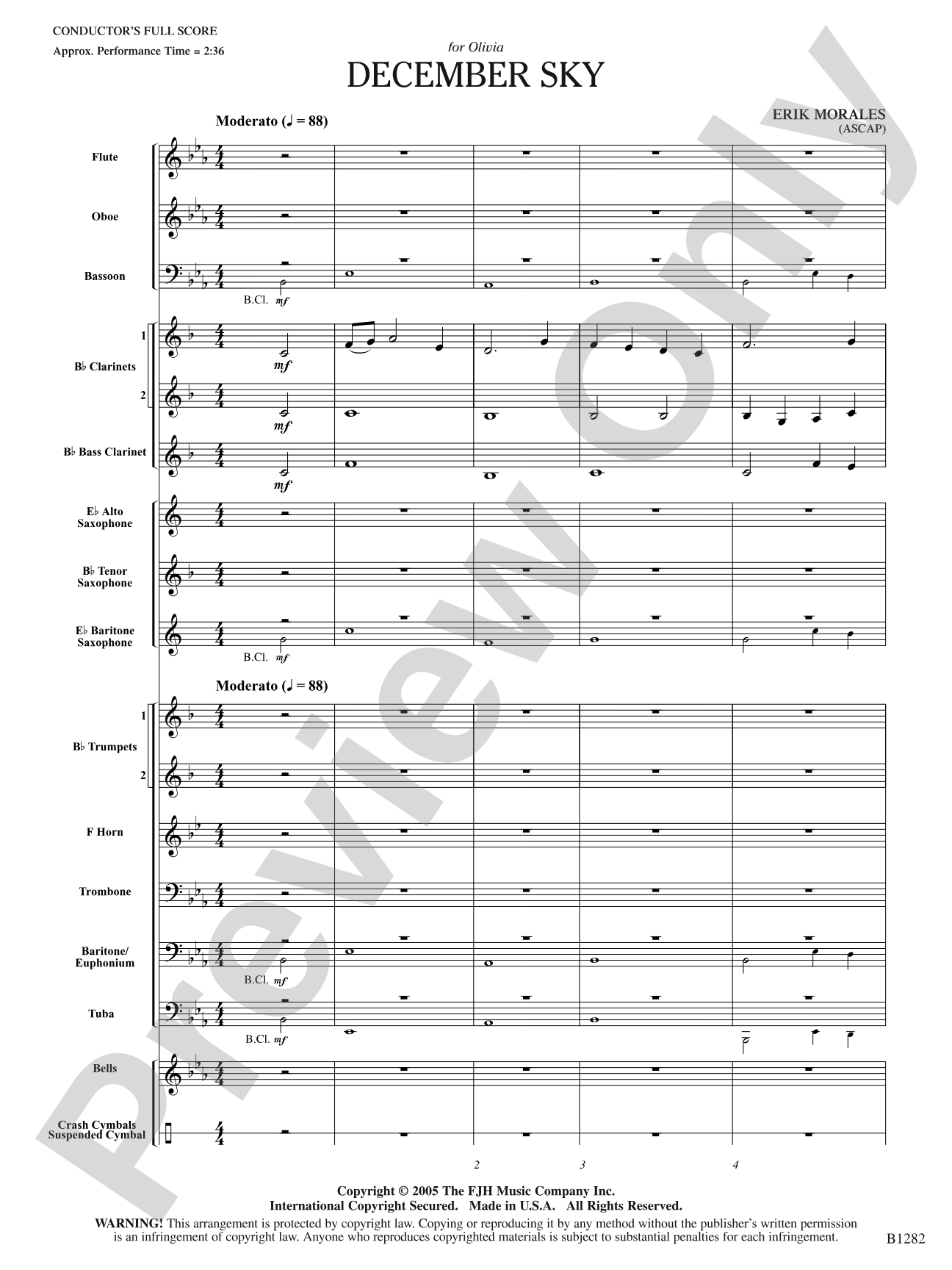
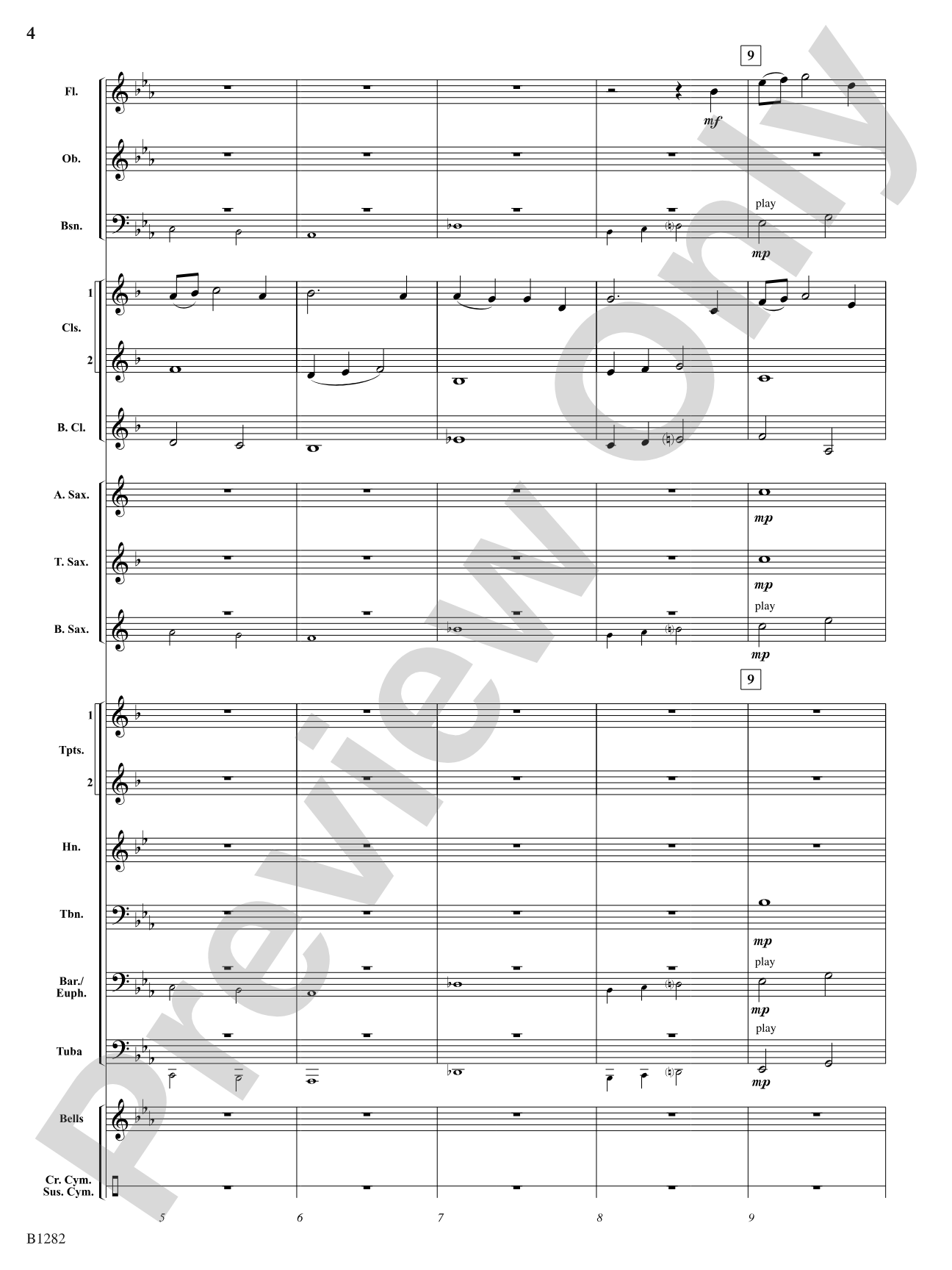
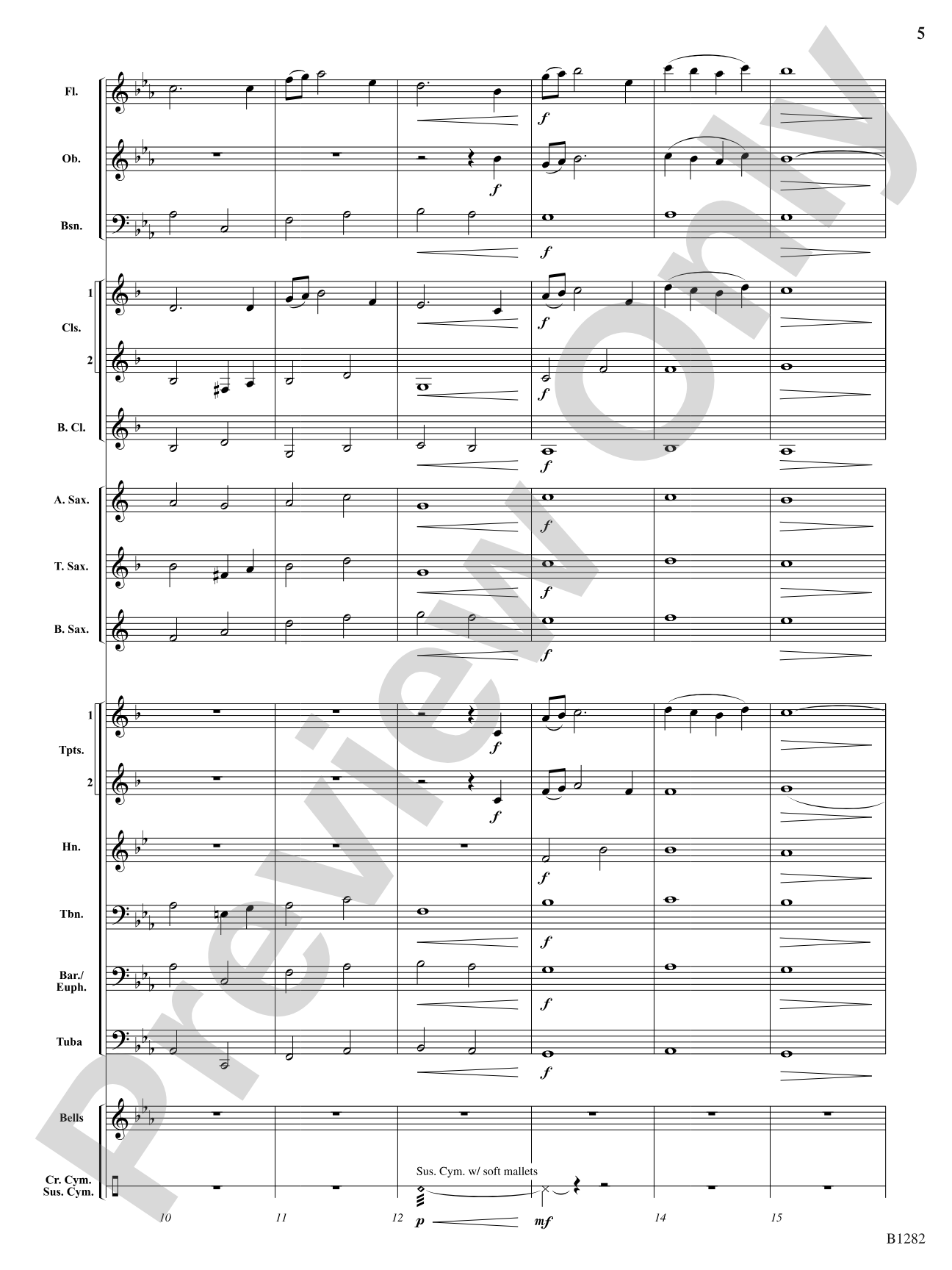
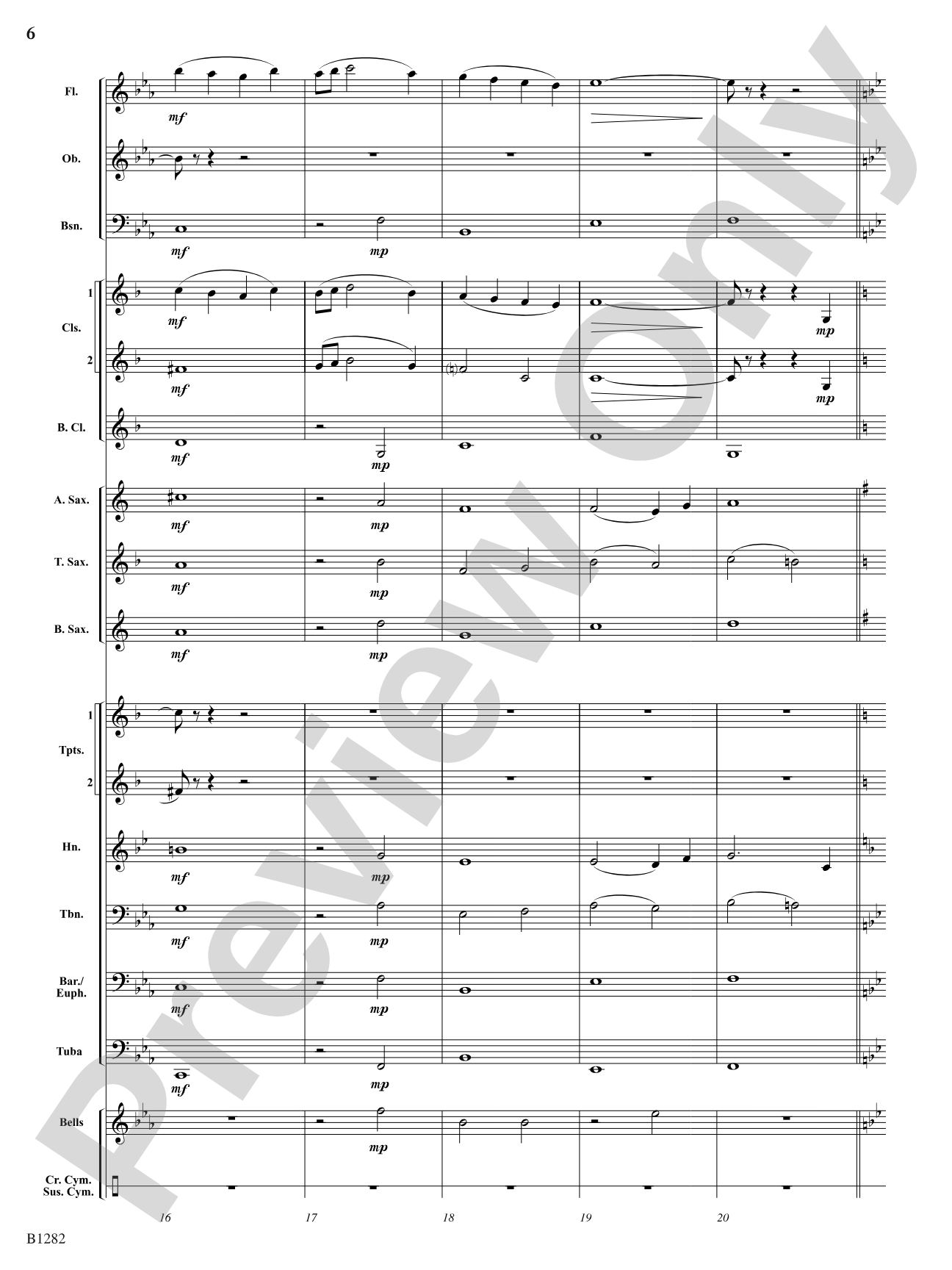

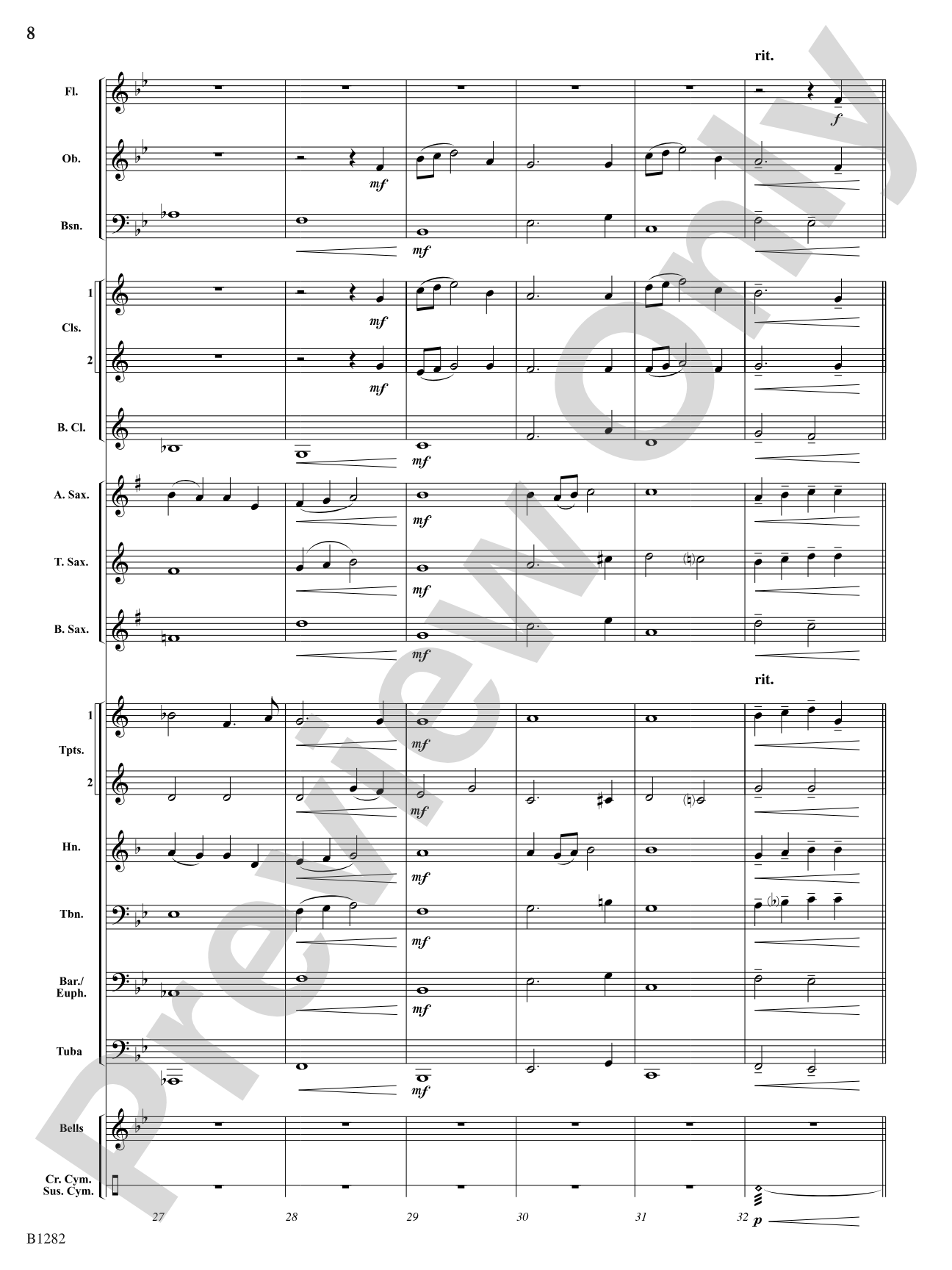
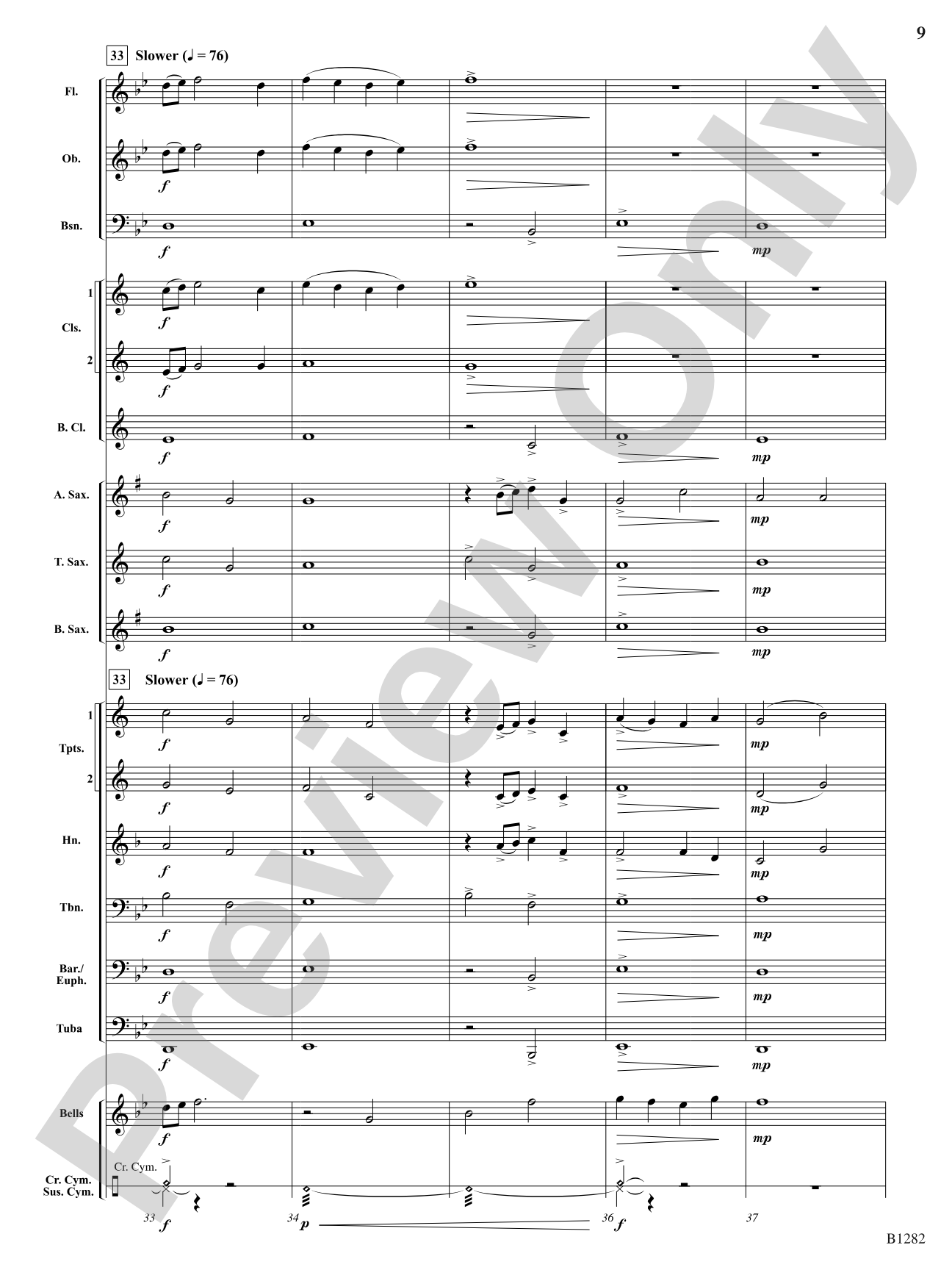
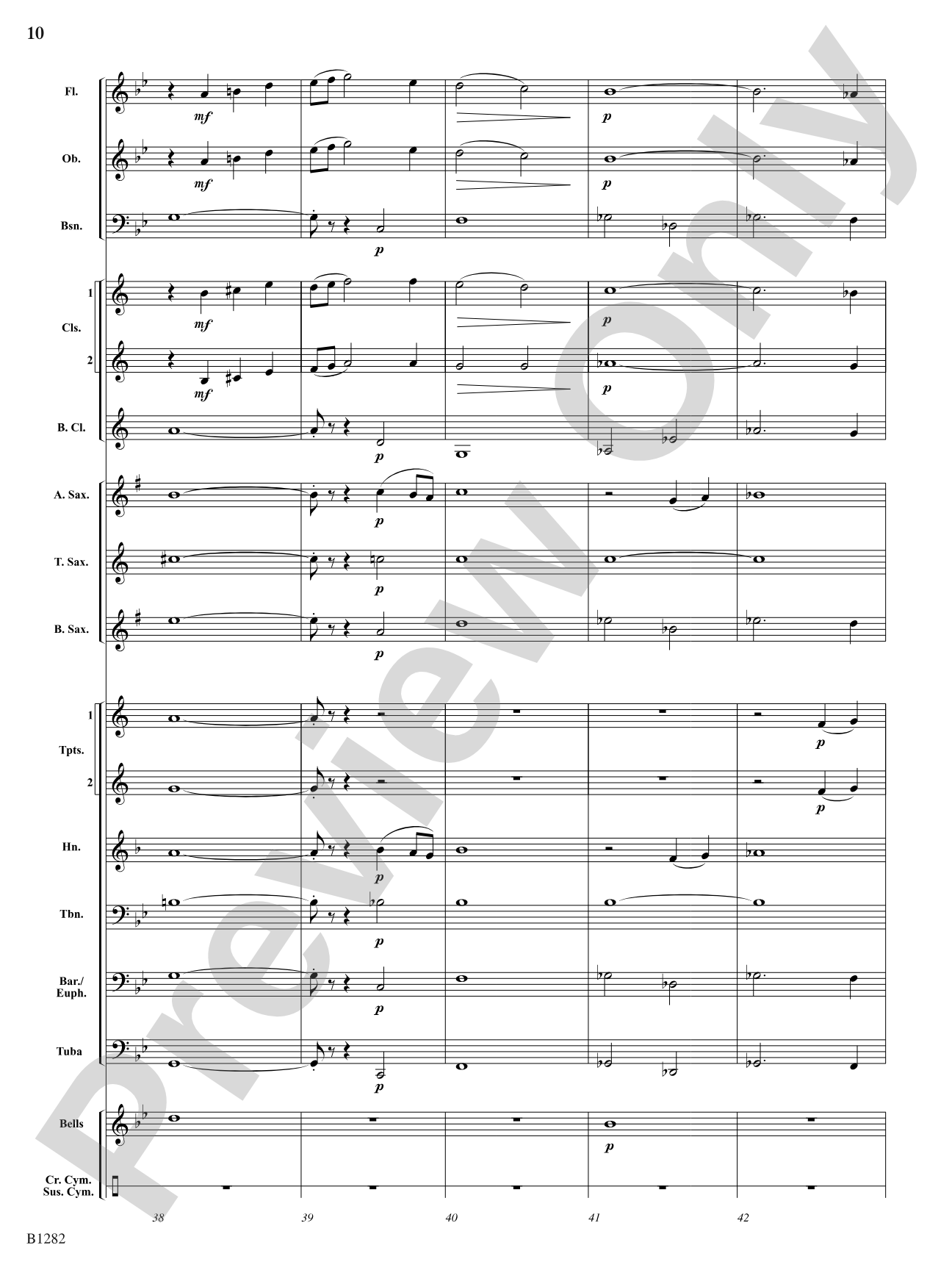
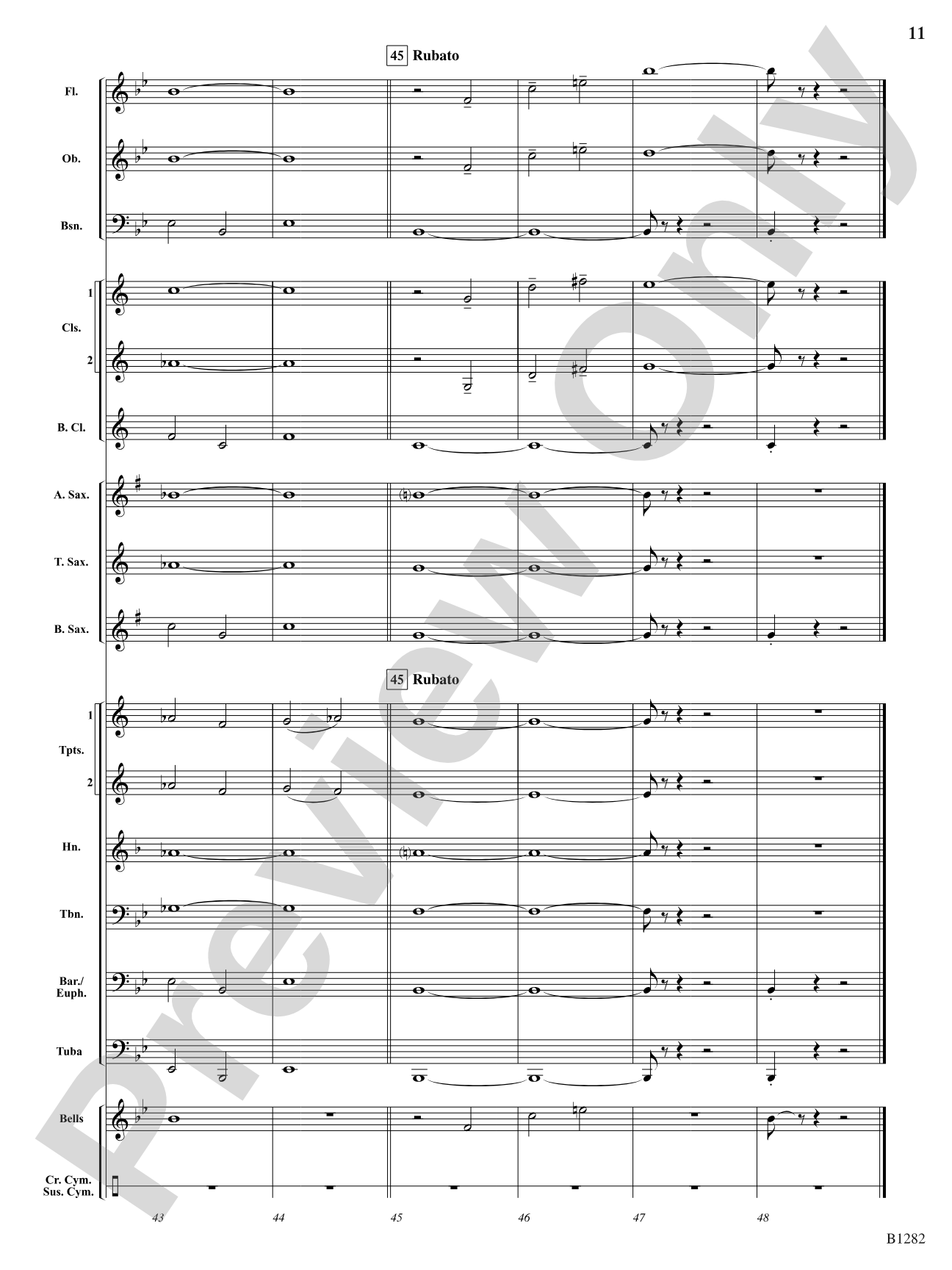

December Sky: Score
By Erik Morales
Grade: 1.5
Item: 98-DB1282S
$11.00
Pickup currently not available
Description
This beautiful yet simple ballad evokes the images of a clear night sky and its humbling grandeur. While all individual parts are quite playable, the work uses interesting harmonies and careful orchestration to make your group shine. A great way to develop musicality, and a gem that surely belongs on your next concert.


Don't just read it, hear it, play along with it, and watch your students grow with it. In MakeMusic Cloud, December Sky: Score comes alive with professional accompaniment, adjustable tempo, and built-in practice tools that turn solo practice into real progress.
Open in the Player
Jump straight in and assign it today.
Start Your Free Trial
Open this title and explore the full library in minutes.
Sample Audio
1
Audio File
--:--
0:00
0:00
Sample Video
No sample videos found.
Additional Details
Series:
FJH Developing Band
Publisher:
The FJH Music Company, Inc.
SKU:
98-DB1282S
More about this title
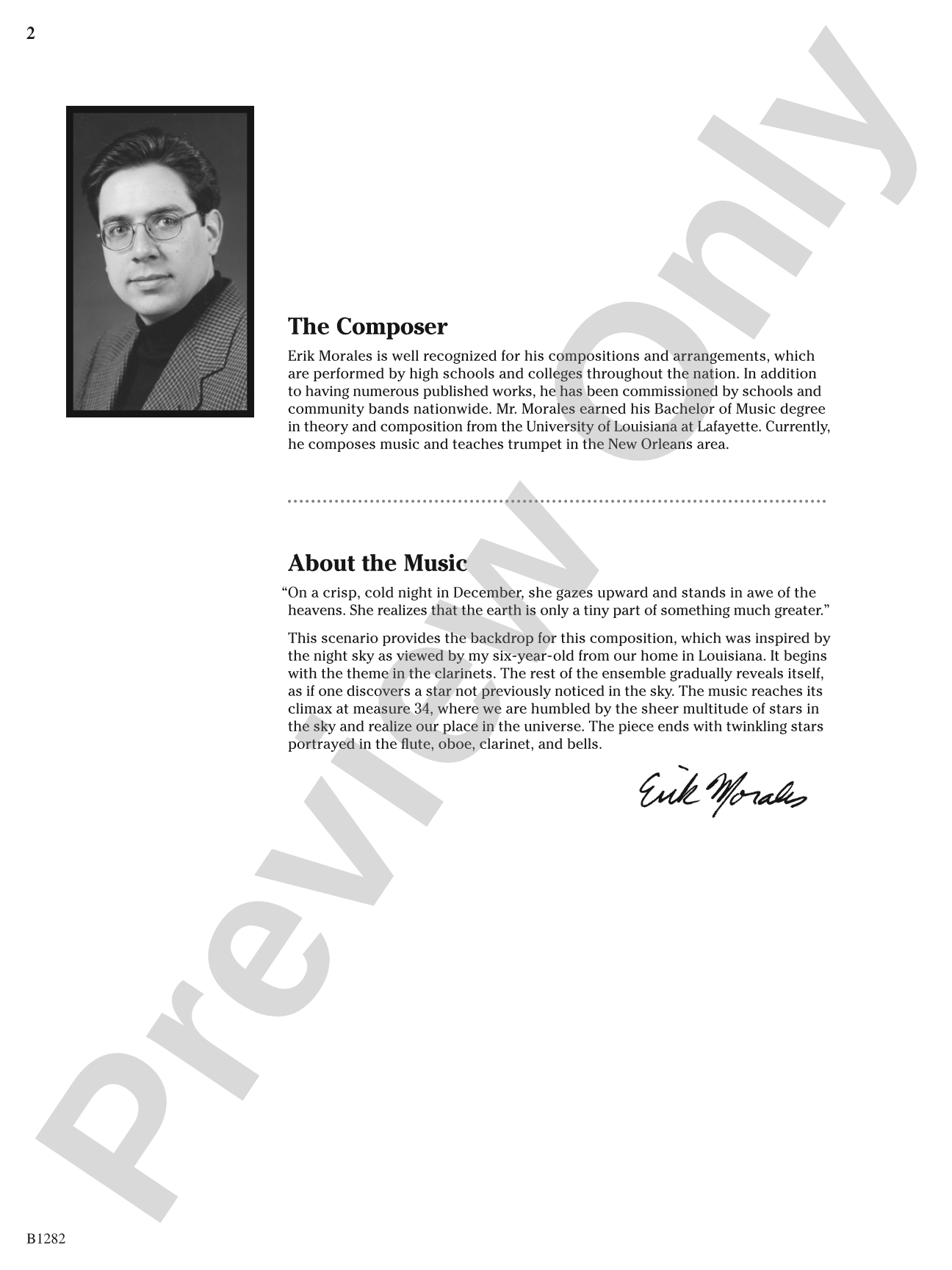
About the Composer: Erik Morales

Erik Morales (born December 10, 1966, in New York City) has established himself as a prolific composer whose work spans classical, jazz, and commercial idioms. Over 150 publications showcase his gift for balancing artistic ambition with pedagogical accessibility across wind, orchestral, jazz, and chamber settings. His trumpet compositions have earned particular acclaim, including first-place awards at the 2006 and 2008 National Trumpet Competitions, and in 2016 he was inducted into the Louisiana Association for Jazz Education's Hall of Fame.
Moreover, he began composing during high school in south Florida, when a former band director commissioned his first arrangements for marching band in 1985. Morales studied composition at Florida International University and completed his bachelor's degree at the University of Louisiana, Lafayette (1989). Schools and organizations nationwide continue to commission his works, reflecting his sustained commitment to creating music that serves both ensemble development and musical growth.
Why we love this
This ballad demonstrates why Morales is so valued in the developing band repertoire: the orchestration reveals harmonic sophistication without demanding technical virtuosity from individual players. The writing builds musicality naturally, allowing younger ensembles to discover what careful voice leading and texture can express, which keeps students engaged long after their first read-through.
What to expect
Clear, hushed, and introspective. The work evokes late-evening stillness and the quiet wonder of looking up at stars, with harmonies that feel both simple and subtly rich. The orchestration creates warmth and depth without grandiosity, inviting the ensemble to discover beauty in restraint.
Who it's for
Developing concert bands at the 1.5 grade level who are ready to move beyond strictly technical music toward pieces that demand musical sensitivity and blend. Directors seeking repertoire that challenges ensemble maturity without overwhelming less-experienced players will find this an excellent fit.
How to get the most out of it
- Shape the melodic line with consistent phrase breathing; mark breath points that support the lyrical arc rather than technique.
- Balance the harmonic colors by attending to dynamic relationships between voices; the interesting orchestration only resonates when each part layer is heard.
- Resist over-articulation. The ballad character asks for legit, connected playing across all sections to honor the evening-sky imagery.
- Bring the ensemble to a unified tempo before rehearsals begin; ballads expose rhythmic untidiness quickly, so anchor pulse early.
How to use it
Program this as a quiet moment on a concert heavy with faster, louder works. Its ballad character and manageable difficulty make it ideal for mid-season programming when you want to build confidence and musicianship without technical strain. It also works well for contest or festival appearances where judges value interpretive maturity over flashiness.
Skills your students will build
- Sustaining long-term phrase shapes through breath management
- Balancing and blending harmonic voices
- Reading and executing interesting harmonic progressions at the 1.5 grade level
- Maintaining ensemble unity in slower tempos
- Developing dynamic sensitivity and listening within the ensemble