December 1963 (Oh, What A Night) (arr. Alan Billingsley) Sheet Music Preview

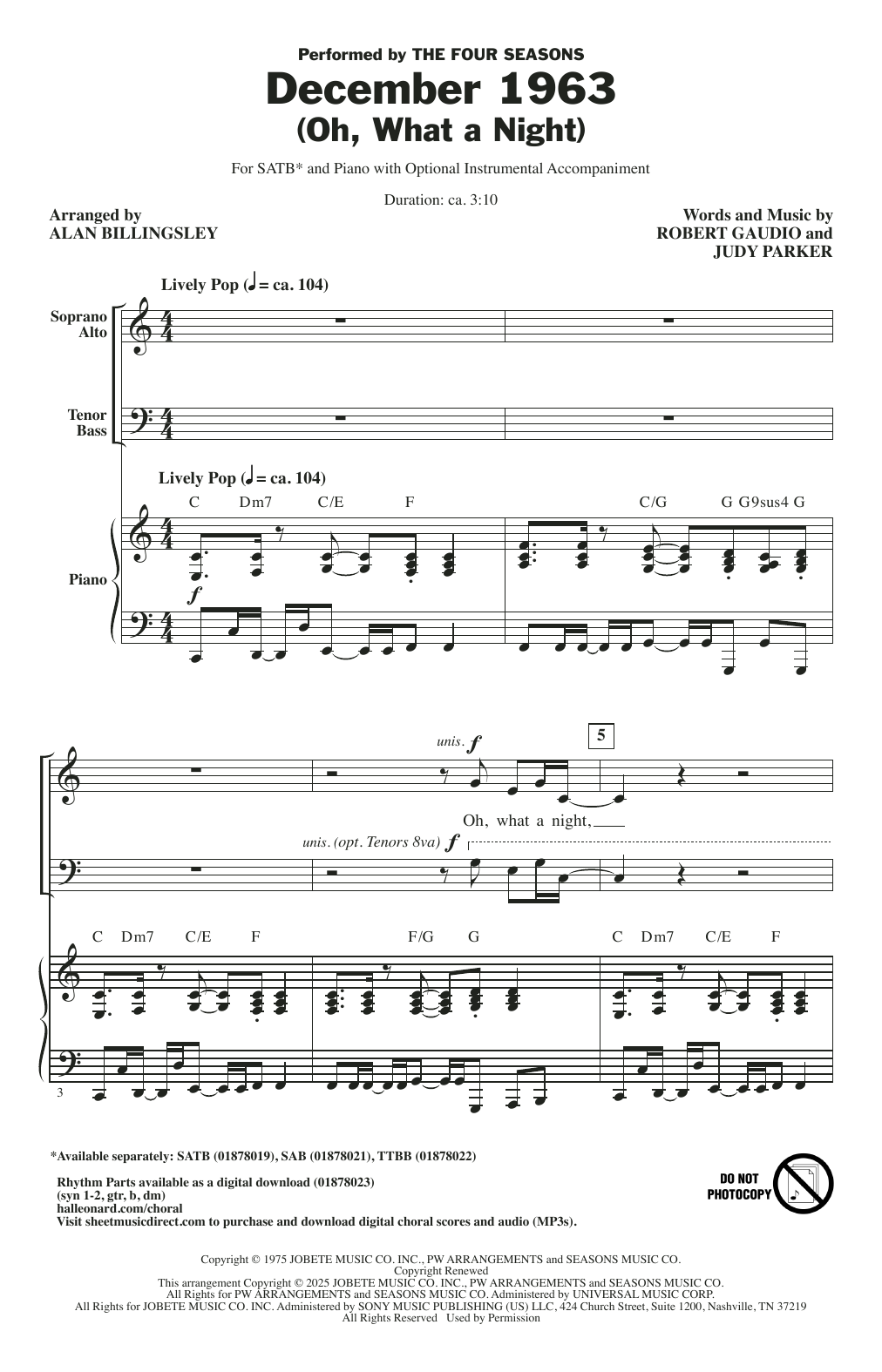
December 1963 (Oh, What A Night) (arr. Alan Billingsley): SATB Choral Octavo

As performed by The Four Seasons / Arranged by Alan Billingsley

Item: 35-DS01721507

Digital Download
$2.75
Description

December 1963 (Oh, What A Night) (arr. Alan Billingsley): SATB Choral Octavo isn't in MakeMusic Cloud just yet...but it could be. Let us know you'd like to see it, and you'll help shape what comes next. In the meantime, start a free trial and dive into thousands of interactive titles your students can play along with today.

Sample Audio
No sample audio found.
Sample Video
Additional Details
Publisher: Hal Leonard
Page Count: 14
SKU: 35-DS01721507

More about this title

About the Artist: The Four Seasons

The Four Seasons emerged from Newark, New Jersey in the early 1960s to become one of the most commercially successful vocal groups in popular music history. Their tight harmonies, infectious energy, and knack for crafting unforgettable melodies made them icons of the doo-wop and pop-rock era. "December 1963 (Oh, What A Night)" stands as their signature hit, a song that captures the exuberance and romantic excitement that defined their sound.

For music educators, The Four Seasons represent an important bridge between traditional vocal music and contemporary pop. Their emphasis on precise harmony and ensemble cohesion offers genuine pedagogical value alongside the sheer joy of performing their hits. Alan Billingsley's arrangement honors the group's legacy while making the piece accessible to high school and community choirs.

Why we love this

Billingsley captures the infectious spirit of the original while building in the harmonic complexity and layering that engages singers across all four parts. The arrangement respects what made the song immortal (that unforgettable melody and the propulsive rhythm) while giving your choir genuine music to sing rather than a surface-level cover. A song this joyful and this singable tends to energize both rehearsals and audiences.

What to expect

Pure nostalgic joy wrapped in a groove that makes you want to move. The song radiates warmth and youthful exuberance, the kind of infectious happiness that comes from singing in ensemble with precision and purpose. There's a sweetness in the harmonic language that feels both earnest and celebratory.

Who it's for

This arrangement suits high school choirs, community choirs, and college groups looking for a pop standard with real musical substance. Directors want a song that satisfies both audience and singers, and this delivers on both counts. The 14-page score suggests a straightforward arrangement that respects the original without requiring vocal gymnastics.

How to get the most out of it

  • Balance the syllabic text delivery in the verses to maintain clarity; this isn't legit singing and shouldn't sound precious, but every word should land.
  • Anchor the rhythmic precision with your rhythm section or accompaniment track. The groove is everything here, and any rhythmic slippage immediately undercuts the song's infectious quality.
  • Shape the bridge section to build momentum into the final chorus rather than letting it settle. This is where the arrangement likely opens up dramatically.
  • Commit fully to the vowel unification in the sustained moments; any vowel drifting between parts will expose tuning issues in this relatively simple harmonic context.

How to use it

Pair this with other doo-wop or early 1960s pop standards to create a retro concert program that appeals to families and traditionalists while staying current with contemporary tastes. It works equally well as a high-energy opener, a crowd-pleasing encore, or the centerpiece of a themed pops concert. Consider programming it near holiday season concerts, where the December reference adds thematic resonance.

Skills your students will build

  • Maintaining rhythmic precision in syncopated pop contexts
  • Balancing articulation and vowel consistency in syllabic text-setting
  • Blending four-part harmony in contemporary chord structures
  • Interpreting rhythmic notation in pop and doo-wop styles
  • Building ensemble cohesion through groove-based accompaniment

You May Also Like