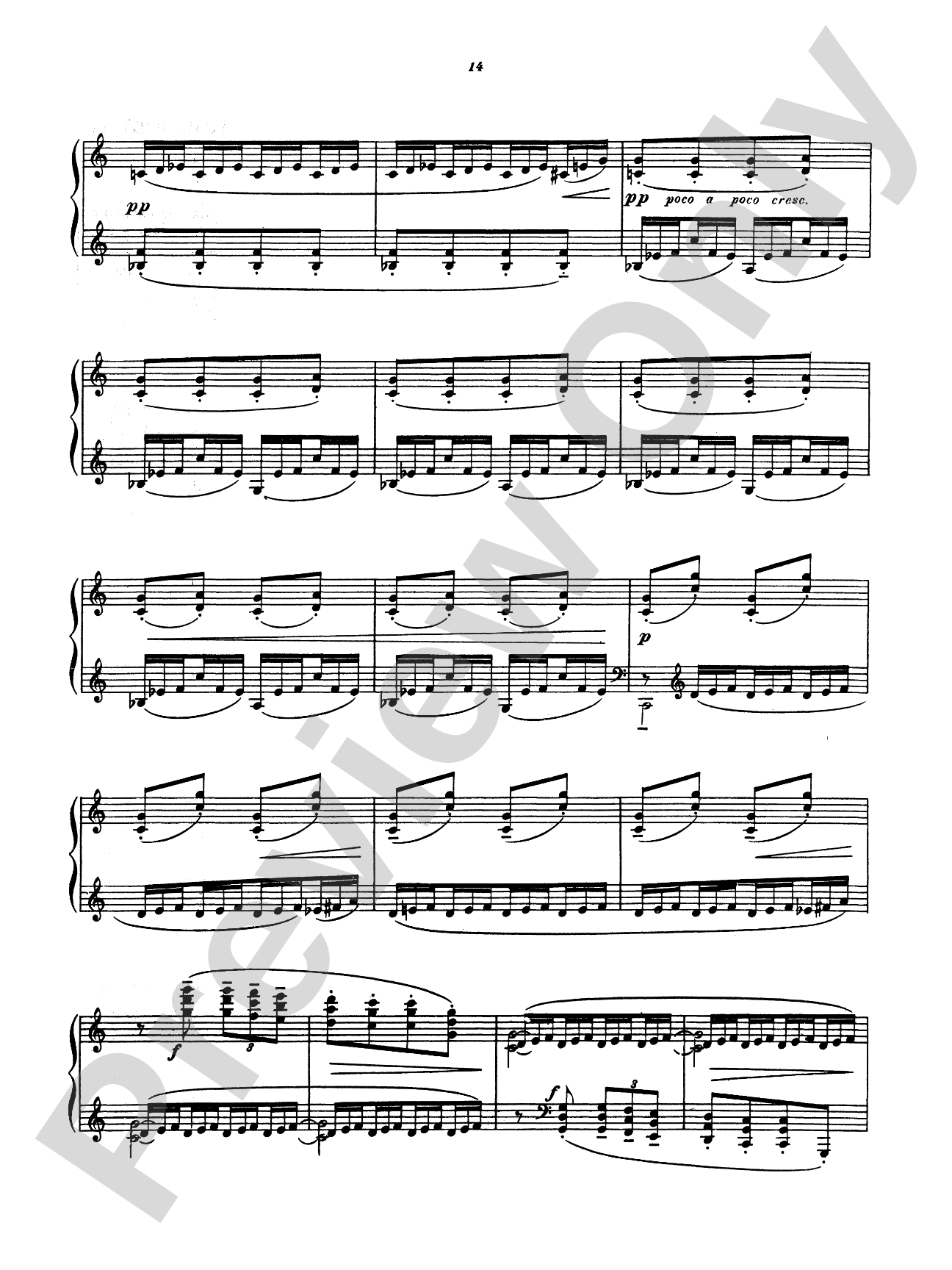
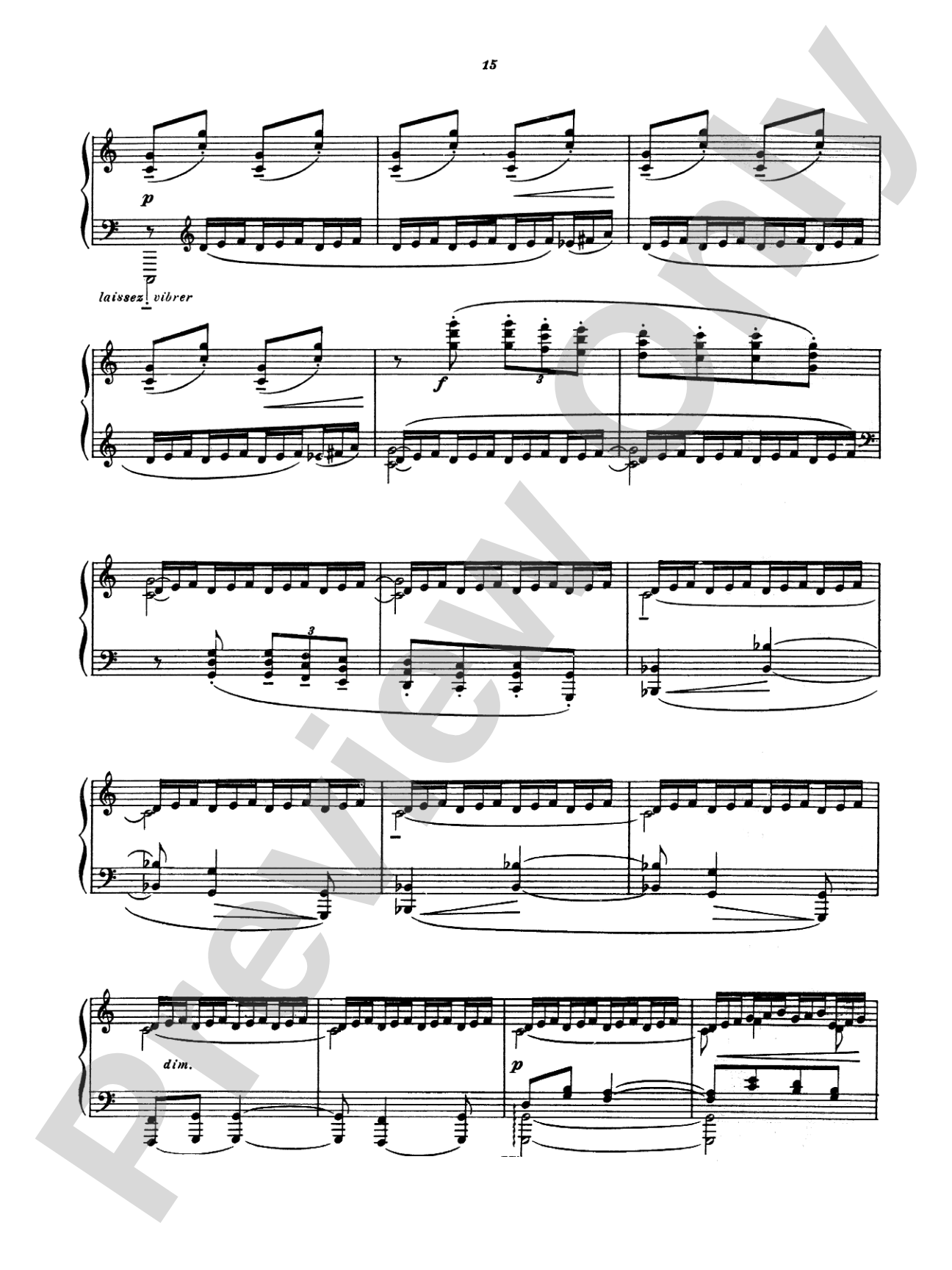
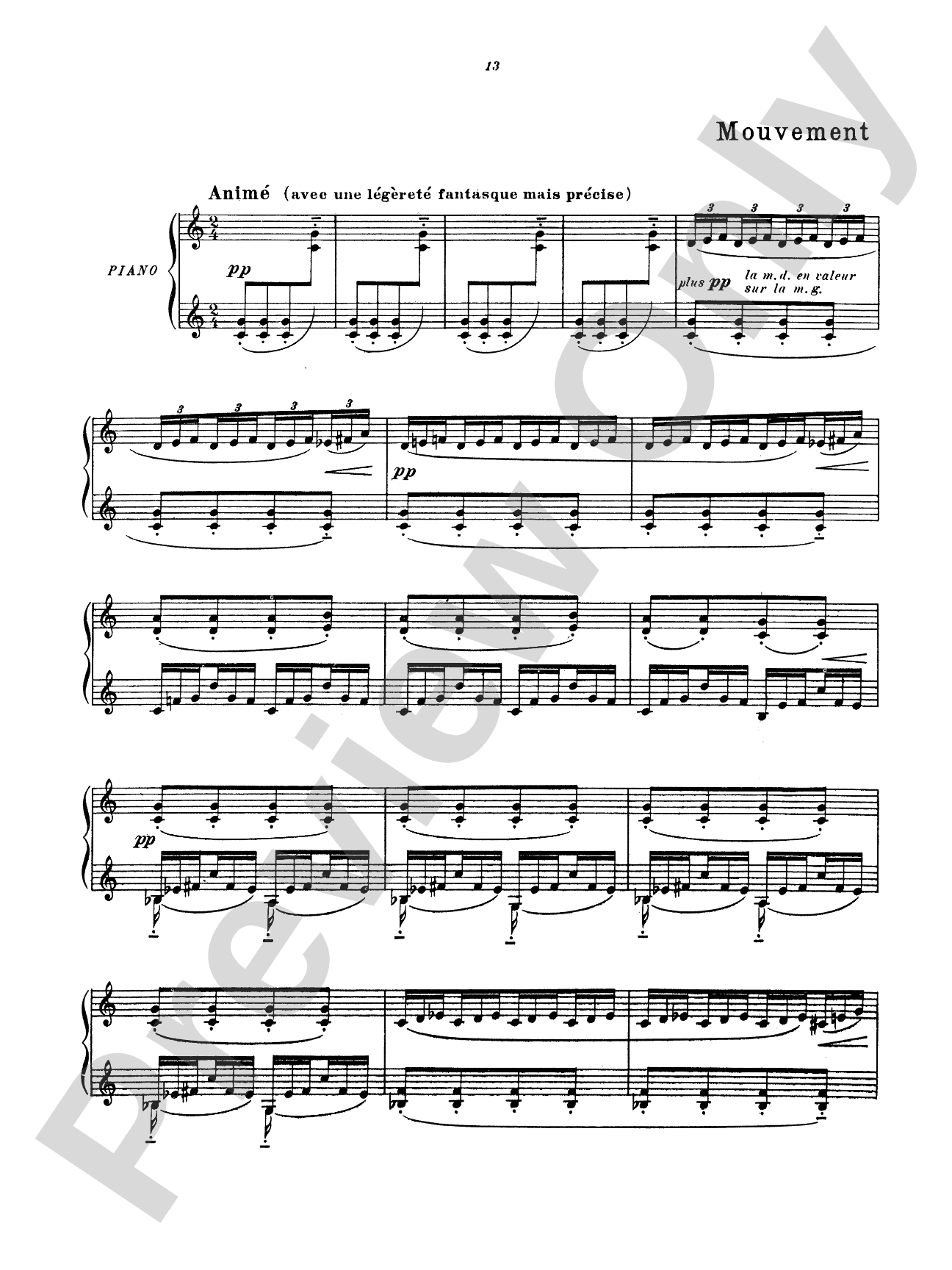
Debussy: Reflets Dans L'eau Sheet Music Preview

Debussy: Reflets Dans L'eau

By Claude Debussy

Level: Advanced

Item: 00-PC-0006917

Digital Download
$1.99
Description
Expertly arranged piano solo from our Kalmus Edition.

Don't just read it, hear it, play along with it, and watch your students grow with it. In MakeMusic Cloud, Debussy: Reflets Dans L'eau comes alive with professional accompaniment, adjustable tempo, and built-in practice tools that turn solo practice into real progress.

Sample Audio
No sample audio found.
Sample Video
Additional Details
Series: Kalmus Edition
Publisher: Alfred Music
Page Count: 28
SKU: 00-PC-0006917

More about this title

About the Composer: Claude Debussy

Claude Debussy (1862-1918) fundamentally transformed how composers approached harmony, orchestration, and form in the late 19th and early 20th centuries. His piano works, in particular, demonstrate a revolutionary approach to the instrument: rather than exploiting its virtuosic capabilities in the Romantic tradition, Debussy treated the piano as an impressionistic canvas, layering colors and sonorities to evoke atmosphere and emotion. His influence on twentieth-century music cannot be overstated, shaping everything from modernism to jazz.

Why we love this

Reflets dans l'eau sits at the heart of advanced piano pedagogy because it demands complete technical command while rewarding expressive sophistication. The piece trains the ear and hands to think in terms of harmonic color and textural nuance rather than melodic line, making it an essential bridge between Romantic virtuosity and modern pianism. Programming this work signals serious musical ambition and gives advanced students a masterwork that rewards years of study.

What to expect

Water in motion, fractured by light. The opening gesture ripples outward, suggesting movement without narrative direction, while the harmonic language shimmers with unexpected color changes and modal inflections. There is contemplation here, and subtle drama, but no storm; instead, the piece evokes the quiet moment of watching reflections shift as the surface of water responds to wind and light.

Who it's for

Advanced pianists ready to engage with early twentieth-century harmonic language and impressionistic compositional technique will find this work both rewarding and demanding. Students preparing for college auditions, competitions, or recital programs benefit from the technical polish and musical maturity this piece demands. Teachers seeking repertoire that bridges late Romanticism and modernism have an essential reference point.

How to get the most out of it

  • Build the opening arpeggiations with absolute clarity in the upper register; the reflective title depends on hearing each note distinctly against the rippling accompaniment
  • Approach pedal changes with precision, shifting just as harmonies change to avoid muddiness while preserving the impressionistic wash of color
  • Shape the harmonic progressions rather than individual melodic phrases; think in terms of shifting sonorities and allow rubato to emerge naturally from the harmonic rhythm
  • Differentiate the textural layers through dynamic subtlety rather than obvious contrasts; the illusion of depth comes from voices heard at different distances

How to use it

This work opens possibilities for thematic recital programming around water, nature, or impressionism; pair it with other Debussy piano works or with orchestral impressionists like Ravel. It also functions as a natural culmination of an advanced student's recital, offering the technical and interpretive challenges that justify a full program. Consider programming it in a concert focused on twentieth-century innovation or early modernism to establish historical context.

Skills your students will build

  • Pedal technique and harmonic awareness (identifying when to shift pedal based on harmonic change rather than counting)
  • Voice independence and textural layering (maintaining the accompaniment pattern while shaping multiple melodic strands)
  • Impressionistic harmony and quartal/quintal sonorities (recognizing non-functional harmony and harmonic color as primary compositional tool)
  • Rhythmic flexibility and rubato (shaping tempo based on harmonic and emotional content rather than mechanical meter)
  • Dynamic subtlety and color variation (creating illusion of depth and distance through refined dynamic control rather than dramatic contrast)

You May Also Like