

Debussy: Preludes (Volume II)
By Claude Debussy
Level: Advanced
Item: 00-PC-0014155
$0.99
Pickup currently not available
Description
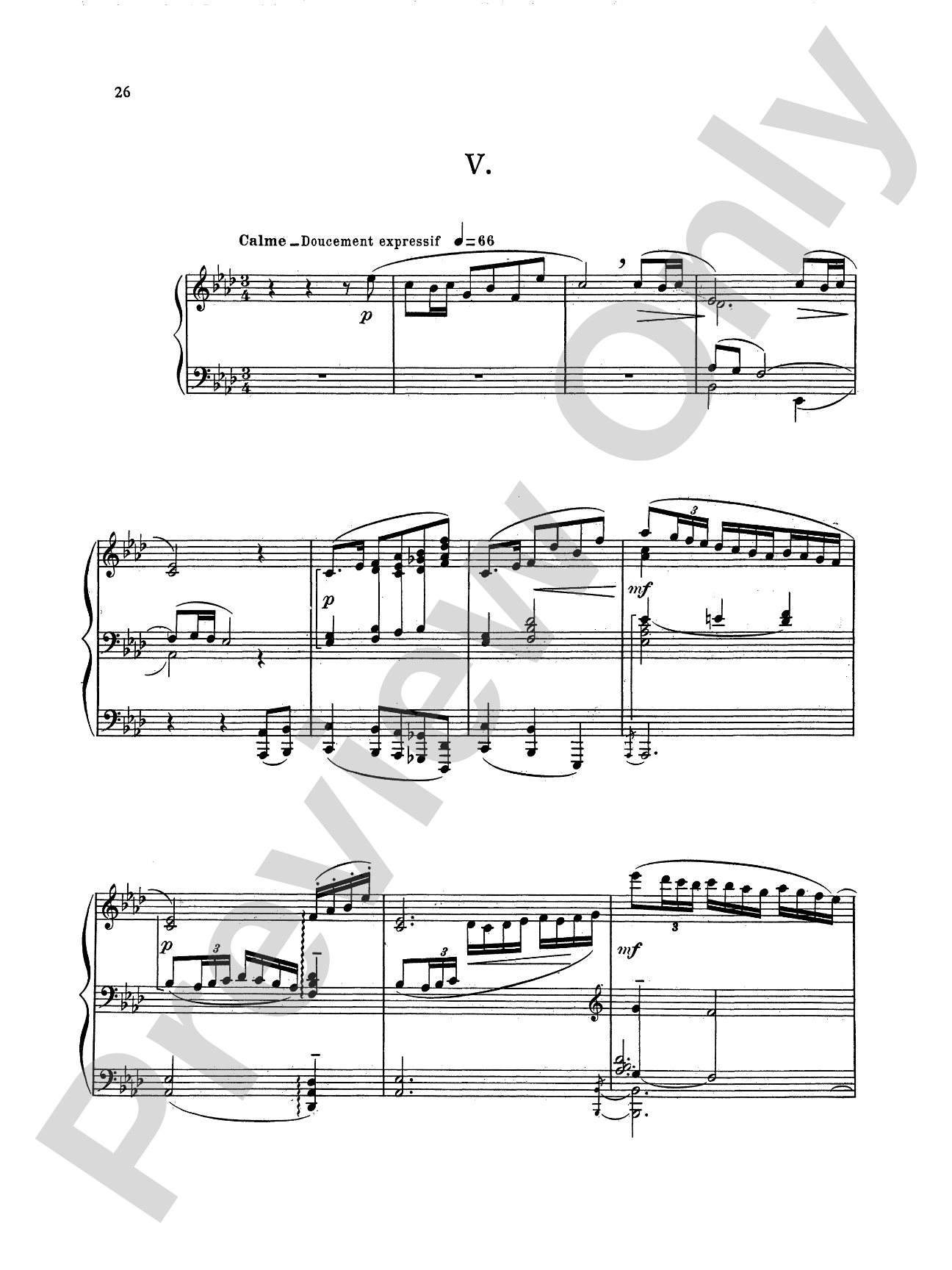
A collection of piano Preludes by Claude Debussy. Songs: * Brouillards * Feuilles mortes * La Puerta del Vino * "Les Fées sont d'exquises danseuses" * Bruyéres * General Lavine - eccentric * La terrasse des audiences du clair de lune * Ondine * Hommage á S. Pickwick Esq. P.P.M.P.C. * Canope * Les tierces alterneées * Feux d'Artifice.


Don't just read it, hear it, play along with it, and watch your students grow with it. In MakeMusic Cloud, Debussy: Preludes (Volume II) comes alive with professional accompaniment, adjustable tempo, and built-in practice tools that turn solo practice into real progress.
Open in the Player
Jump straight in and assign it today.
Start Your Free Trial
Open this title and explore the full library in minutes.
Sample Audio
No sample audio found.
Sample Video
No sample videos found.
Additional Details
Series:
Kalmus Edition
Publisher:
Alfred Music
Page Count:
84
SKU:
00-PC-0014155
More about this title
About the Composer: Claude Debussy
Claude Debussy (1862-1918) fundamentally reshaped what piano music could express. As a composer, he moved beyond the Romantic era's emphasis on grand gestures and thick textures, instead cultivating a sound world built from color, atmosphere, and the subtle manipulation of timbre. His two sets of Preludes represent the pinnacle of his pianistic writing, combining technical innovation with poetic sensibility that influenced generations of composers and pianists.
Why we love this
This collection showcases Debussy's mature voice across twelve diverse miniatures, each a study in sonic possibility rather than formal convention. Advanced students encounter real compositional thinking here, where harmonic language, textural exploration, and programmatic suggestion converge in ways that demand both technical control and imaginative interpretation. Programming these works signals a student's arrival at genuine artistic maturity.
What to expect
These Preludes inhabit a liminal space between impressionistic painting and modernist composition. Listening and playing through them, you encounter floating harmonies, shimmering textures, and moments of crystalline clarity. The collection moves from the misty abstraction of Brouillards through the rhythmic exoticism of La Puerta del Vino to the fireworks chaos of Feux d'Artifice, creating a journey through different sonic environments and emotional territories.
Who it's for
Advanced pianists preparing for auditions, competitions, or advanced-level recitals will find essential repertoire here. Students studying composition or music theory benefit from Debussy's harmonic innovations and structural approaches. Teachers seeking to expand their studio's exposure to early 20th-century piano literature will value the range of musical ideas compressed into these twelve pieces.
How to get the most out of it
- Treat the pedal as an instrument itself. Debussy's pedal markings are compositional decisions, not suggestions; experiment with half-pedaling and rapid pedal changes to achieve the specific coloristic effects each prelude requires.
- Approach dynamics as tonal coloration rather than mere volume. A pianissimo passage in Ondine functions differently than a fortissimo moment in Feux d'Artifice; think in terms of brightness, warmth, and resonance alongside traditional dynamic control.
- Listen intently to the harmonic language in passages that feel ambiguous or unresolved. Many of these pieces resist traditional functional harmony; identifying the underlying sonorities and their relationships will clarify phrasing and structure.
- Study the program titles before rehearsing. Brouillards evokes mist, La Puerta del Vino suggests Spanish architecture and rhythm, Ondine depicts water sprites. These images inform tempo, color, and rhythmic flexibility in ways that pure notation cannot convey.
How to use it
Individual Preludes work beautifully as standalone recital pieces, either opening a program to set an intimate tone or appearing mid-program as a palette cleanser. Consider programming two or three contrasting pieces from this collection across a recital rather than presenting them as a block, allowing each one's unique character to register fully. For advanced students preparing for music school auditions, selections from Volume II demonstrate both technical command and interpretive sophistication.
Skills your students will build
- Pedal technique and tonal coloration through varied pedal applications
- Harmonic analysis of non-functional and modal progressions
- Rhythmic flexibility and rubato appropriate to impressionistic music
- Left-hand independence and textural clarity in complex harmonic contexts
- Interpretation of programmatic content without literal descriptiveness
- Control of dynamic nuance across a wide range of volumes and timbral qualities